

If you’re looking for more fun, digital dartboards might be your best choice. They offer a variety of game modes, automatic scoring, and interactive features that keep you engaged longer. Plus, online play and detailed stats make it easy to compete and improve. Traditional dartboards focus on skill and feel, appealing to purists. Curious about how each option can spice up your game? Keep going to discover which suits your style best.
Key Takeaways
- Digital dartboards offer a variety of game modes and instant feedback, enhancing engagement and fun for players of all skill levels.
- Traditional darts emphasize skill, tactile feedback, and social rituals, appealing to purists who find joy in craftsmanship.
- Digital boards support multiplayer online play, challenges, and customization, providing a dynamic and interactive gaming experience.
- The physical feel and artistry of steel-tip darts on a bristle board can be more satisfying for those who enjoy the traditional tactile experience.
- Digital dartboards often include fun features like sound effects, lighting, and analytics, making gameplay more lively and entertaining.
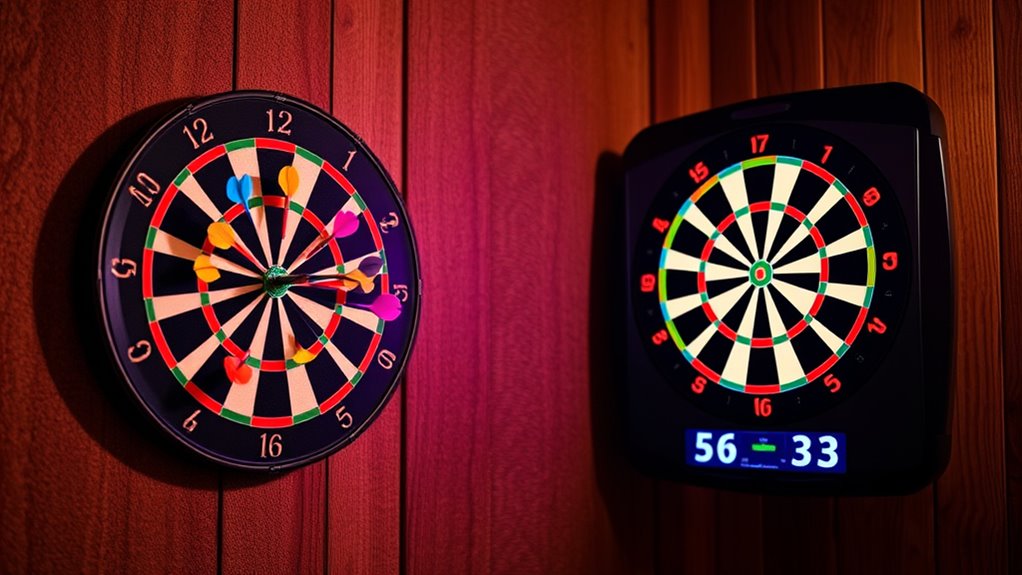
When choosing between traditional darts and digital dartboards, understanding their key differences can help you find the best fit for your gameplay. Digital dartboards use sensors or cameras to track where your darts land and automatically calculate scores, which reduces the chance of human error. This means fewer disputes over scores and a smoother game experience. On the other hand, traditional dartboards rely on players manually keeping score, which can sometimes lead to miscounts or disagreements, especially during intense matches. Advanced computer vision and machine learning in smart dartboards enable real-time scoring and detailed data analysis, giving you instant feedback on your performance. Scores and stats are often displayed on connected screens or apps, providing an interactive experience that’s more engaging. Plus, digital boards can connect online, offering leaderboards and multiplayer modes that let you compete with players worldwide, adding a social dimension to your game.
Digital dartboards offer real-time scoring, data analysis, and online multiplayer features for a more interactive and accurate gameplay experience.
When it comes to game variety and customization, digital dartboards shine. They typically feature numerous game modes, such as 01 games, Around the World, Killer, and custom options, giving you more ways to enjoy darts beyond the standard rules. Some smart boards even let you select difficulty levels and customize scoring settings, tailoring the experience to your skill level or mood. Online-enabled boards facilitate matchmaking and rankings, allowing you to challenge players from across the globe. Many interactive boards also include features like shot tracking and heatmaps, which help you improve your skills by analyzing your throws over time. This technology also enables real-time feedback and coaching, making it easier for beginners to learn and progress.
Social and competitive features are another advantage digital dartboards offer. They support multiplayer sessions with up to 12 players in doubles or six in singles, making them perfect for larger groups. Automated scorekeeping and performance feedback help keep the game flowing smoothly and maintain the competitive spirit. Online play extends your social reach, letting you compete or practice with friends or players worldwide. Additionally, digital boards often include avatars, challenges, and interactive displays that boost engagement and make the game more lively. Moreover, the tactile feedback provided by traditional steel-tip darts can be a significant part of the authentic experience, which digital boards may not replicate perfectly.
The physical experience varies drastically. Traditional dartboards use steel-tip darts and a bristle surface, demanding skill, precision, and focus. They provide tactile feedback and a classic feel appreciated by purists. Electronic boards generally use soft-tip darts, which are safer and easier to use, especially for beginners. Some models support steel-tips with advanced sensors and cameras, merging traditional feel with modern tech. Digital boards may have lighting effects and sound features, adding a fun atmosphere to your game, while traditional boards require less maintenance but need occasional bristle replacement.
In terms of setup and maintenance, digital dartboards often need batteries, power supplies, or Bluetooth connections, with occasional software updates or calibration. They’re portable and easy to set up, but they rely on technology support. Traditional boards are straightforward, easy to mount, and require minimal upkeep—mainly replacing worn-out bristles over time. For learning and engagement, digital boards offer instant feedback, analytics, and coaching tips, helping you track progress and improve faster. Overall, both options have their appeal, but your choice depends on whether you prefer the classic tactile experience or the high-tech, data-driven features for fun and competition.
Frequently Asked Questions
How Long Does a Digital Dartboard Typically Last?
A digital dartboard typically lasts around 2 to 5 years with regular use and proper care. You’ll need to watch out for common issues like sensor degradation, stuck segments, or electronic failures, which can shorten its lifespan. To extend its life, avoid spills, use recommended darts, and clean it gently. Heavy daily use might push you closer to the lower end of that range, but with good maintenance, it can serve you well longer.
Can Digital Dartboards Be Used Outdoors?
Yes, you can use digital dartboards outdoors, especially if they’re battery-powered and weather-resistant. Look for models with easy setup, bright displays for sunlight visibility, and secure mounting options. Soft tip darts make playing safer outside, and multiple game modes boost fun. Just guarantee the board is durable enough to handle outdoor conditions. With the right features, digital dartboards become versatile and enjoyable for outdoor gatherings.
Are Digital Dartboards Suitable for Professional Tournaments?
You might wonder if digital dartboards work in professional tournaments. While they offer accurate scoring and reduce errors, they often don’t meet all equipment standards, like those for steel-tip darts. Major organizations prefer traditional boards for consistency and atmosphere. If you’re thinking about using digital boards professionally, you’ll need to verify they comply with rules and gain recognition, which currently limits their suitability for top-level competitions.
Do Digital Dartboards Require Wi-Fi or Internet Connection?
Did you know that over 60% of digital dartboards rely on internet connections? When you ask if digital dartboards require Wi-Fi or internet, the answer depends on the model. Many need a wired connection for peak performance, especially for online play or quick response times. Others support wireless or Bluetooth, which works well for local scoring but may introduce lag. Always check your model’s specific requirements for the best experience.
How Easy Is It to Switch Between Different Dart Games on Digital Boards?
Switching between different dart games on digital boards is straightforward. You typically press a dedicated “GAME” button to scroll through options or navigate a menu with arrow buttons. Many boards also have a “SELECT” button for difficulty levels or game modes. Using these controls, you can easily switch, start, or reset games without hassle, allowing you to focus on playing and enjoying your time.
Conclusion
Ultimately, whether you prefer traditional darts or digital dartboards depends on what sparks your interest. If you want the classic feel and a social vibe, darts are your go-to. But if you’re after high-tech features and endless game options, digital boards won’t disappoint. Remember, it’s all about finding what makes you tick—sometimes, you’ve got to try both to see which hits the mark. After all, you won’t know until you give it a shot.