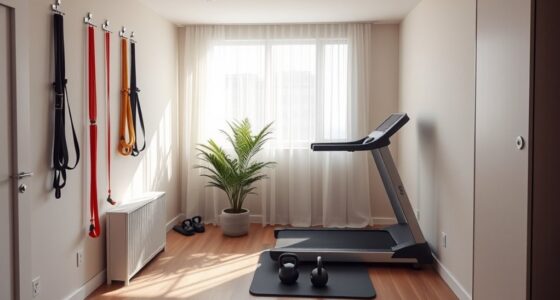
To set up a yoga studio at home, choose a spacious, peaceful spot with good lighting and ventilation, ideally near a window. Use a sturdy floor or support it with a thick yoga mat for comfort. Keep essential props like blankets, belts, or cushions organized and easily accessible. Decorate minimally with calming elements like plants or candles, and add soft lighting or soothing music. Properly maintaining and tidying your space will help create a focused, relaxing environment—keep exploring for more tips!

Get home appliances delivered free with Prime
- Fast, free delivery on millions of items
- Prime Video, Amazon Music and more included
- Member-only deals all year
Key Takeaways
- Choose a quiet, well-ventilated space with natural light and enough room for movement and equipment.
- Use supportive flooring like wood or cork and add a comfortable yoga mat for stability.
- Organize essential props such as blocks, blankets, and straps in accessible storage to keep the area tidy.
- Decorate minimally with calming elements like plants, soft lighting, and aromatherapy to create a relaxing atmosphere.
- Maintain cleanliness by clearing clutter after each session and ensuring proper ventilation for fresh air.
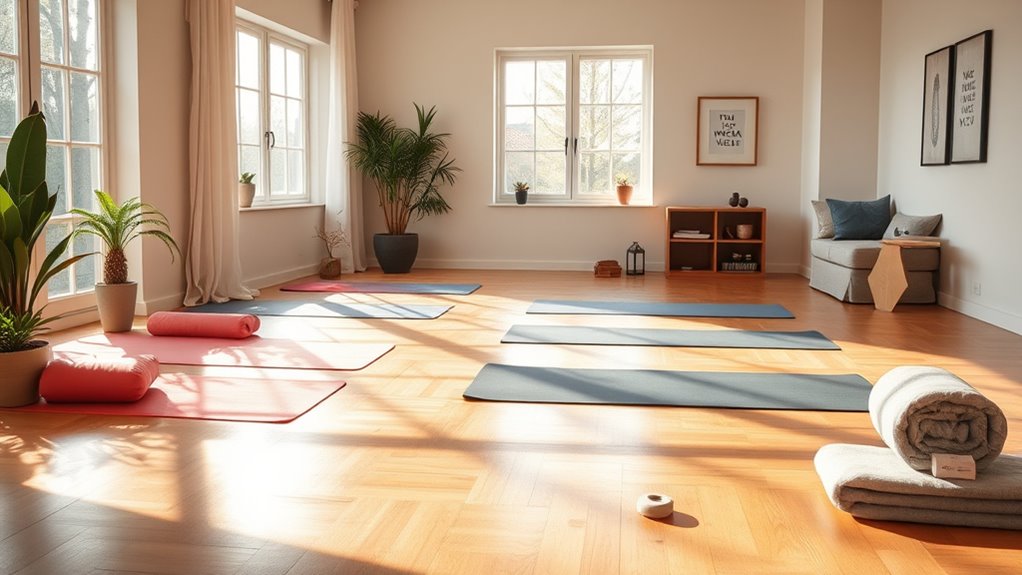
Creating a dedicated yoga space at home can transform your practice and make it more consistent. When you carve out a specific area, you signal to yourself that practicing yoga is a priority, helping establish a routine. Start by choosing a spot large enough to comfortably fit a yoga mat and allow free movement. It should be peaceful, free from noise and distractions, so you can focus fully on your practice. Ideally, select a well-ventilated, naturally lit location; sunlight enhances your mood and energy, making your sessions more uplifting. If possible, position your space near a window, but use blinds or curtains to control glare.
Next, consider the flooring. Wood, cork, or durable laminate are best choices—they’re easy to clean and supportive for your joints. Avoid carpet, which can be difficult to maintain and may hinder grip. If your floor feels hard, add a thick yoga mat or extra padding to guarantee comfort. Think about the size of your group or if you plan to practice with others, and leave enough space for everyone to stretch out without feeling cramped.
Equip your space with essential props to support your practice. A good yoga mat is fundamental for stability, cushioning, and grip. Basic props like yoga blocks, a strap, and a bolster or firm cushion will help you access poses more comfortably. Don’t worry if you don’t have official props initially—household items work well; books can substitute for blocks, scarves or belts for straps, and folded blankets or pillows for bolsters. When you’re ready, investing in authentic props can enhance your experience, but it’s best to focus on consistency in practice first. Keep everything organized in baskets, magazine holders, or small cupboards so props are easy to find and your space remains clutter-free.
Maintaining a tidy environment is vital. Clear away any equipment after each session to keep the space inviting and promote mental clarity. Incorporate simple routines to tidy up daily, and choose storage options that blend with your decor. A cluttered space can distract you and reduce motivation, so organization becomes a key part of your practice. When it comes to ambiance, decorate minimally with calming elements like plants, soft lighting such as fairy lights or candles, and natural accents. Adding aromatherapy through diffusers with lavender or eucalyptus can deepen relaxation, while soft music or nature sounds enhances the sensory experience. Personal touches like tapestries or crystals can make the area more meaningful without overwhelming the space.
Lighting and ventilation also matter. Maximize natural light when you can, but ensure you have control over it to prevent glare. Proper ventilation keeps fresh air flowing, making your environment healthier and more energizing. Additionally, natural light can boost your mood and energy levels, creating a more inviting and motivating practice space. Paying attention to these details will help you create a serene, functional, and inspiring yoga studio at home that encourages regular practice and helps deepen your connection with your routine.
yoga mat with grip and cushioning
As an affiliate, we earn on qualifying purchases.
As an affiliate, we earn on qualifying purchases.
Frequently Asked Questions
How Do I Choose the Best Location in My Home for a Yoga Studio?
You should pick a quiet, private spot in your home that minimizes distractions and noise. Look for a space with good natural light, but avoid direct sunlight that can cause glare. Make certain the area has a stable, slip-resistant floor and enough room for your practice and props. Choose a location away from busy or noisy areas, and consider ease of access for regular use and cleaning.
What Are the Essential Safety Precautions for a Home Yoga Space?
Think of your home yoga space as a sanctuary where safety is the guardian angel. You should keep the area slip-resistant, well-lit, and clutter-free to prevent accidents. Regularly check equipment stability, provide ventilation, and maintain cleanliness. Always clear obstacles, use props wisely, and stay alert to your body’s signals. Establish emergency plans and keep a first aid kit nearby, turning your space into a safe haven for practice.
How Can I Soundproof My Home Yoga Studio Effectively?
To soundproof your space effectively, start by installing acoustic panels like EchoFelt+ on walls to absorb sound. Add soundproof drywall and resilient channels to decouple walls and ceilings, reducing noise transfer. Use high-density rubber mats and impact-absorbing flooring to minimize impact noise. Seal gaps around doors with solid-core options and soundproofing seals. Heavy curtains on windows and door sweeps also block external noise, creating a peaceful yoga environment.
What Is the Ideal Lighting Setup for a Calming Atmosphere?
Imagine your space as a tranquil pond, where gentle ripples of soft light create serenity. You should use warm, adjustable LED lighting between 2000K-3000K to mimic sunrise’s glow, fostering calmness. Incorporate dimmable fixtures and colored hues like blue or green for relaxation. Maximize natural light with large windows, but balance it with soft artificial lighting. This harmonious blend will nurture a peaceful, calming atmosphere for your yoga practice.
How Do I Maintain Cleanliness and Hygiene in My Home Yoga Area?
To keep your home yoga area clean and hygienic, vacuum daily to remove dust and debris. Disinfect surfaces and yoga mats regularly, and empty trash to prevent odors. Deep clean floors weekly with a steam cleaner, and clean mirrors and windows for clarity. Maintain good ventilation, disinfect props, and inspect for repairs monthly. Encouraging everyone to participate helps sustain a fresh, welcoming space conducive to your practice.
As an affiliate, we earn on qualifying purchases.
Conclusion
As you create your home yoga sanctuary, remember that even the greatest sages began their journeys on humble mats. Like the lotus blooming from muddy waters, your space will flourish with patience and dedication. Embrace this new chapter as a personal sanctuary where you can find balance and peace. Trust in your practice, and soon you’ll discover that your home becomes a sacred space, much like a temple, guiding you toward inner harmony and strength.
home yoga studio decor candles plants
As an affiliate, we earn on qualifying purchases.
As an affiliate, we earn on qualifying purchases.
As an affiliate, we earn on qualifying purchases.
Cold & flu season Picks
humidifiers
As an affiliate, we earn on qualifying purchases.