When planning your home gym, focus on maximizing space with practical storage solutions like wall racks, shelves, and bins, keeping everything organized and accessible. Use layered lighting, combining natural light with adjustable LEDs, to create a bright, inviting atmosphere that boosts motivation. Incorporate vertical space with hooks and pegboards for larger items. Thoughtful layout and lighting make your workout area safe, engaging, and efficient—exploring these ideas further can help you design the perfect setup.
Key Takeaways
- Assess available space and define workout zones for cardio, strength, and stretching areas.
- Incorporate versatile storage solutions like wall racks, shelving, and bins for organized equipment.
- Prioritize proper lighting with natural light and layered fixtures for safety and motivation.
- Maximize vertical space with wall hooks and pegboards for easy access to smaller items.
- Plan layout to ensure clear pathways, accessibility, and a motivating environment for consistent workouts.
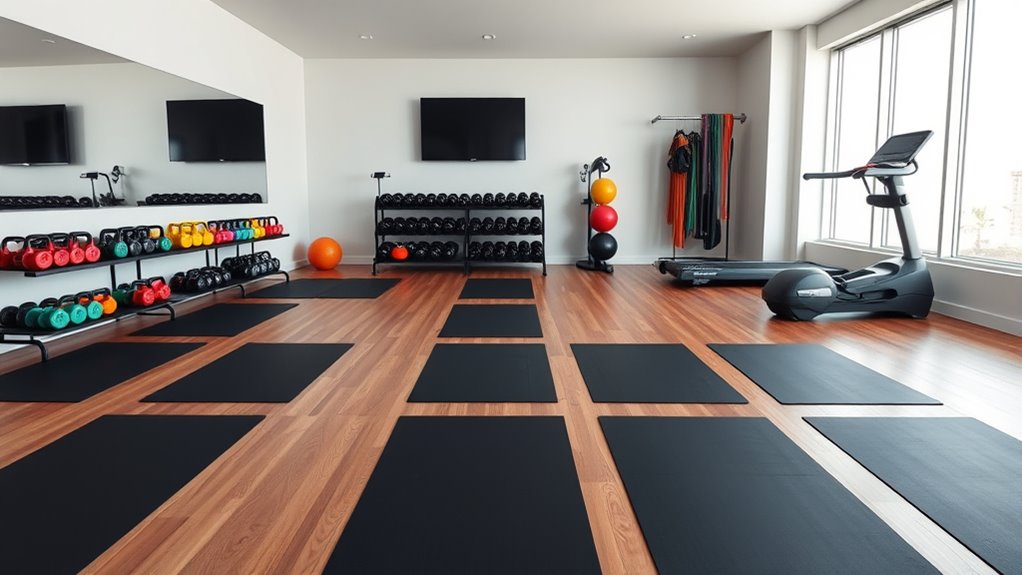
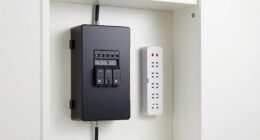
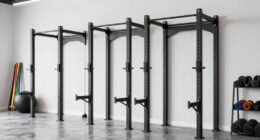
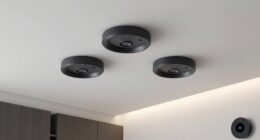
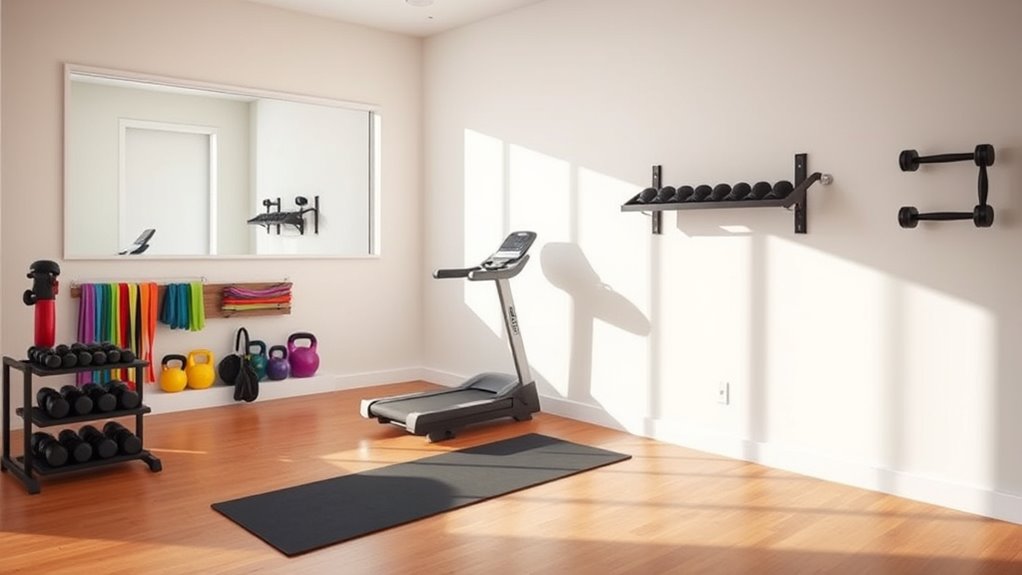
Creating a home gym allows you to exercise on your schedule without the hassle of commuting to a commercial gym. To make this space functional and inviting, you need to plan carefully, especially when it comes to storage solutions and lighting design. Storage is essential to keep your gym organized and clutter-free. Think about incorporating versatile storage options like wall-mounted racks, shelving units, or storage bins that can hold small equipment such as resistance bands, dumbbells, and yoga mats. Using vertical space is a smart move; wall hooks or pegboards can store larger items and free up floor space. When selecting storage solutions, prioritize accessibility so you can quickly grab what you need during your workout without digging through clutter. Good storage isn’t just about practicality; it also helps create a clean, motivating environment that encourages consistency. Additionally, incorporating automation technology such as smart lighting controls can enhance the functionality and ambiance of your gym. Lighting design is another *vital* element that influences your home gym’s atmosphere and safety. Proper lighting illuminates your workout area evenly, reducing eye strain and creating an energetic vibe. Natural light is ideal, so if possible, position your gym near windows or install large, unobtrusive windows that let in daylight. Complement this with layered lighting, combining ceiling-mounted fixtures with task lighting focused on specific workout zones. LED lights are a popular choice because they are energy-efficient, bright, and long-lasting. Consider adjustable lighting options so you can modify the brightness depending on your workout—brighter for cardio or strength training, softer for stretching or yoga. Avoid harsh, direct overhead lighting that can cause glare or shadows, making exercises uncomfortable or unsafe. A well-thought-out lighting design enhances your motivation, keeps you alert, and helps set the right mood for your workouts. As you plan your home gym, remember that storage solutions and lighting design are the backbone of a functional space. Efficient storage keeps everything tidy and accessible, while good lighting creates an inviting atmosphere that energizes you. Both elements should work together harmoniously, supporting your workout routine and making the space enjoyable to spend time in. Don’t overlook these details—they have a significant impact on how often you’ll want to use your home gym and how effective your workouts will be. With thoughtful planning, your home gym can become a seamless extension of your lifestyle, providing convenience, comfort, and motivation every time you step inside.
Frequently Asked Questions
How Do I Soundproof My Home Gym?
You can soundproof your home gym by using effective noise reduction methods like adding rubber mats, foam panels, or acoustic tiles to absorb sound. Seal gaps around doors and windows with weatherstripping or door sweeps to prevent noise leakage. Consider installing mass-loaded vinyl or heavy curtains for extra soundproofing. These soundproofing techniques will help minimize noise, keeping your workouts quiet and neighbor-friendly.
What Are Budget-Friendly Equipment Options?
Imagine turning your space into a powerhouse without breaking the bank. You can find budget-friendly equipment like resistance bands, dumbbells, and jump ropes that offer big results without big costs. Affordable gear such as kettlebells or a used treadmill can also fit your budget. By shopping smart and prioritizing versatile, compact items, you create a functional gym that’s both effective and budget-conscious, making fitness accessible and enjoyable.
How to Maximize Small Space for Multiple Workouts?
You can maximize your small workout space by choosing multi-functional equipment like foldable benches or resistance bands. Use smart storage solutions such as wall-mounted racks or under-gear organizers to keep things tidy. Improve lighting options with bright, energy-efficient LED fixtures or mirrors that reflect light, making the area feel more open. Combining these strategies helps you create a versatile, inviting gym environment that supports multiple workouts without feeling cramped.
What Safety Precautions Are Essential?
Did you know that poor ventilation can increase fire risks in home gyms? To stay safe, make certain your space has proper ventilation to prevent overheating and keep air fresh. Always prioritize fire hazard prevention by keeping flammable materials away from equipment and electrical outlets. Regularly check cords and equipment for damage. Staying vigilant with these safety precautions helps you enjoy your workouts without unnecessary risks.
How to Incorporate Smart Technology Into My Gym?
To incorporate smart technology into your gym, start by adding wearable devices that track your heart rate, activity, and calories burned. Use AI coaching apps that provide personalized workout plans and real-time feedback. Connect these devices to your smart speakers or display screens for seamless monitoring. This setup helps you stay motivated, improve your form, and optimize your workouts with innovative, user-friendly technology.
Conclusion
Creating your home gym is like planting a seed—you start small, but with care and planning, it grows into a thriving space. I once transformed a tiny corner into my workout haven, and now it’s my sanctuary. Remember, a well-designed gym isn’t just about equipment; it’s about cultivating a space that motivates you every day. With patience and purpose, your home gym will flourish, turning your fitness goals into a lasting reality.