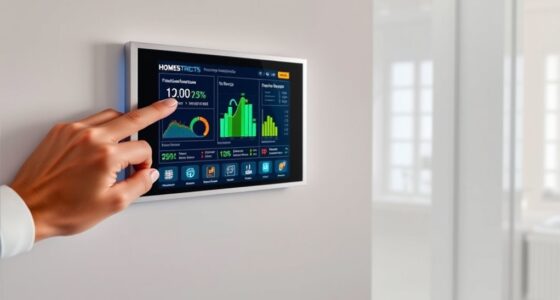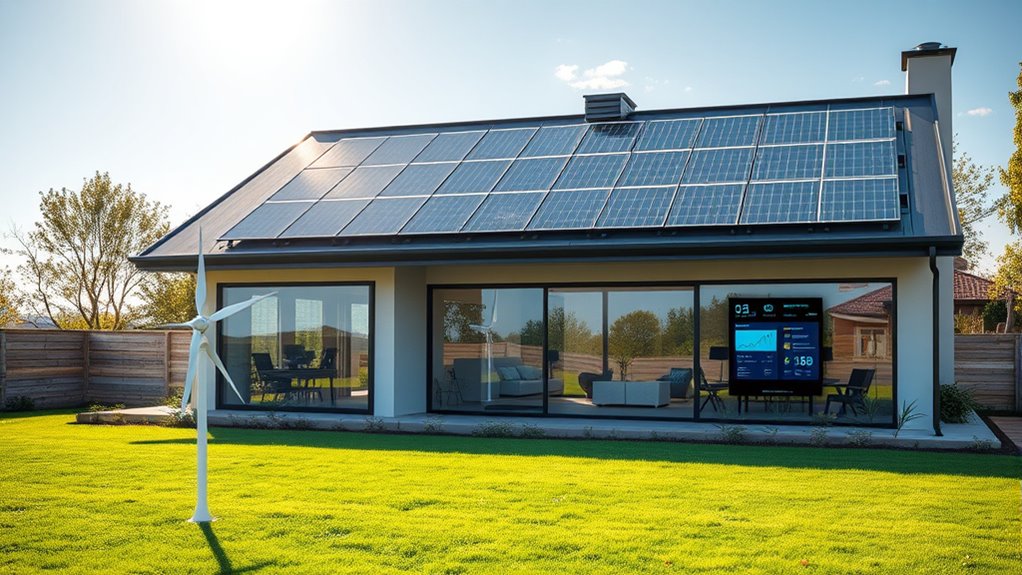

By integrating renewable energy sources like solar panels and wind turbines with your home automation system, you can optimize energy production, storage, and usage seamlessly. The system automatically manages excess energy, storing it in batteries or sending it back to the grid, while adjusting appliance operation based on demand. This creates a sustainable, cost-effective energy environment tailored to your preferences. Keep exploring how these technologies work together for a smarter home energy experience.
Key Takeaways
- Smart grids coordinate renewable energy generation, storage, and household consumption for optimized energy use.
- Automated systems monitor renewable output and adjust appliance operation to maximize renewable energy utilization.
- Energy storage devices capture excess renewable power, providing backup during low production periods.
- Home automation enables seamless integration of solar panels, wind turbines, and storage to reduce reliance on the traditional grid.
- Intelligent management systems facilitate real-time energy exchange, enhancing sustainability, cost savings, and energy independence.

Have you ever wondered how renewable energy can seamlessly work with your home automation system? It’s possible, and the key lies in understanding how a smart grid and energy storage work together to create an efficient, integrated setup. A smart grid isn’t just about electricity distribution; it’s a sophisticated network that communicates with your home, adjusting power flow based on demand, supply, and your preferences. When you pair this with home automation, you gain a system that intelligently manages your renewable energy sources, like solar panels or wind turbines, ensuring you maximize their benefits without manual intervention. Empowering homeowners with this technology allows for more sustainable and cost-effective energy use. Energy storage plays a fundamental role here. Think of batteries as your home’s energy reservoir, capturing excess energy generated during sunny or windy days. With smart home technology, your system can automatically decide when to store this energy and when to use it. For instance, during peak sunlight hours, your solar panels produce more power than your household consumes. Instead of wasting that surplus, your system stores it in batteries. When the sun sets or wind dies down, your home can draw from this stored energy, reducing reliance on the grid and lowering your energy bills. This seamless exchange between generation, storage, and consumption is what makes integration so powerful. Your home automation system acts as the conductor, orchestrating everything behind the scenes. It constantly monitors energy production, storage levels, and household energy needs, adjusting appliances and devices accordingly. For example, it might run your dishwasher or charge your electric vehicle during periods of high solar output, leveraging stored or directly generated renewable energy. When demand is low or storage is full, it can even send excess energy back to the grid, earning you credits or reducing your overall energy costs.
Frequently Asked Questions
How Do Renewable Energy Sources Impact Overall Home Energy Costs?
Renewable energy sources lower your overall home energy costs by reducing reliance on traditional power, leading to significant energy cost savings. Your investment in renewables pays off over time through lower utility bills and potential incentives. The renewable investment benefits include environmental impact and long-term financial savings, making your home more efficient. By integrating renewables with home automation, you optimize energy use, maximizing savings and sustainability.
What Are the Best Renewable Energy Options for Urban Homes?
Imagine turning your home into a self-sustaining oasis. For urban homes, solar panels are your best bet—compact, efficient, and perfect for rooftops or balconies. Wind turbines can also work if your area has consistent breezes. Combining these renewable options with home automation lets you optimize energy use, reduce costs, and lessen your carbon footprint. Embrace these solutions to make your city residence smarter and greener.
How Does Home Automation Improve Renewable Energy Efficiency?
Home automation boosts renewable energy efficiency by optimizing your energy use through smart grid integration and energy storage. You can schedule appliances to run during peak renewable generation, reducing waste and costs. Automated systems monitor energy production and consumption, adjusting settings in real-time. Energy storage solutions guarantee you store excess energy for later use, keeping your home powered efficiently. This seamless coordination maximizes renewable benefits and minimizes reliance on non-renewable sources.
What Safety Measures Are Needed When Integrating Renewable Sources?
Your home’s safety depends on strict measures when integrating renewable sources; otherwise, you risk a fire hazard that could destroy everything. You should install proper circuit breakers, use high-quality wiring, and guarantee electrical safety standards are met. Regular inspections and professional installation are vital to prevent fire hazards and electrical issues. Never compromise on safety—protect your home and loved ones from potential disasters caused by poor integration.
Can Existing Home Automation Systems Be Upgraded for Renewable Energy Integration?
Yes, you can upgrade your existing home automation system for renewable energy integration. Modern systems often support smart grid technology, allowing you to optimize energy flow from solar panels or wind turbines. Adding battery storage becomes seamless, giving you control over when to store or use energy. By upgrading, you enhance efficiency, reduce costs, and guarantee your home adapts to renewable sources without sacrificing automation features.
Conclusion
By now, you see how integrating renewable energy with home automation creates a smarter, greener future. As you harness solar panels or wind turbines alongside your smart devices, you’re effectively shaping a more sustainable world—think of it as your modern-day alchemy. This synergy not only reduces your carbon footprint but also offers convenience and savings. Embrace this cutting-edge fusion, and remember, in the grand scheme, it’s your proactive choices that truly make history.