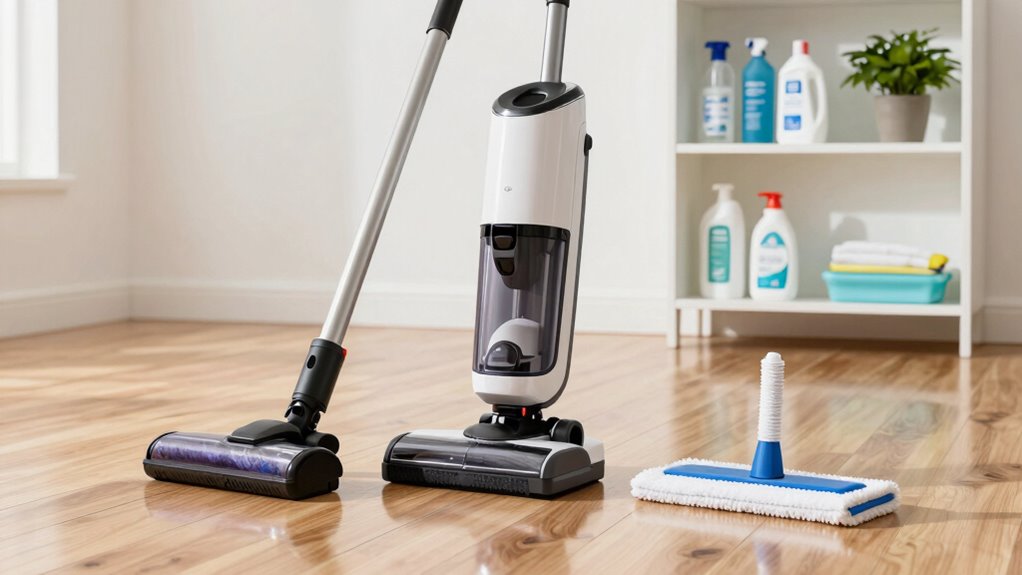

To keep dust at bay, choose hard flooring like hardwood, tile, or laminate, which are easier to clean and don’t trap allergens. Regularly vacuum with a HEPA-filtered vacuum, paying close attention to corners and under furniture, and replace filters and bags frequently. Mop hard surfaces often with a damp cloth to remove residual dust. Consistency is key, and maintaining a proper routine helps create a healthier indoor environment. Keep exploring for more helpful tips on optimizing your allergy-friendly floor setup.

Get home appliances delivered free — and shop member deals
- Fast, free delivery on millions of items
- Access to Prime Big Deal Days deals on October 6–7
- Prime Video, Amazon Music and more included
Key Takeaways
- Use vacuum cleaners with HEPA filters and regularly maintain or replace filters for optimal allergen removal.
- Choose hard flooring like hardwood, laminate, or tile to reduce dust trapping and ease cleaning.
- Implement a consistent cleaning routine, focusing on high-traffic areas and under furniture.
- Regularly wash or replace vacuum bags and filters to ensure maximum suction and filtration efficiency.
- Incorporate dust-resistant surfaces and damp cleaning methods to minimize airborne allergens.
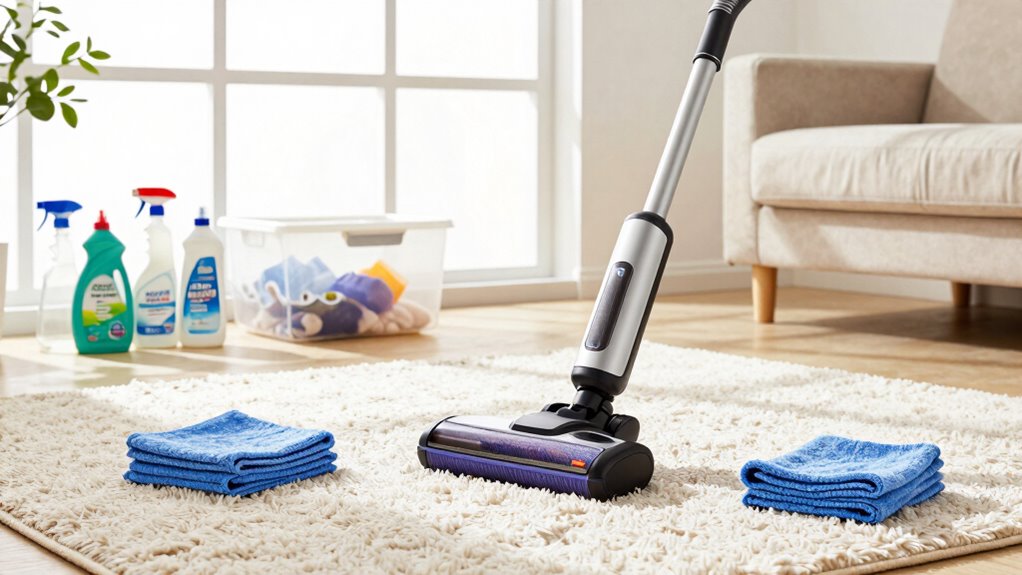
Creating an effective floor-care setup is fundamental for making your home allergy-friendly. When you focus on proper vacuum maintenance, you guarantee that dust, pet dander, and other allergens are removed efficiently, preventing them from circulating back into the air. Regularly checking and replacing vacuum filters, especially HEPA filters, is essential. These filters trap tiny particles that standard vacuums might miss, so you should clean or change them according to the manufacturer’s instructions. Additionally, empty the vacuum bag or canister frequently to prevent buildup and maintain peak suction power. A well-maintained vacuum becomes a powerful tool in your fight against airborne allergens, helping you breathe easier and keep your home cleaner. Proper vacuum filter maintenance ensures optimal filtration and prolongs the lifespan of your equipment. Choosing allergy-friendly materials is another critical aspect of your floor-care setup. Opt for flooring options that do not trap dust or allergens as easily as carpets do. Hard surfaces like hardwood, laminate, or tile are excellent choices because they are easier to clean and don’t harbor allergens in fibers. If you prefer carpets, look for low-pile or tightly woven options, and make sure they are cleaned regularly with a vacuum that’s in top shape. When installing new flooring, consider materials that are resistant to mold and dust mites, which thrive in damp or plush environments. Using allergy-friendly materials not only reduces the allergen load but also simplifies your cleaning routine, making it easier to maintain a healthier home. Your cleaning routine should prioritize frequent, thorough vacuuming combined with the use of the right tools. Use a vacuum with strong suction and a HEPA filter, and make sure to vacuum all areas, especially corners, under furniture, and along baseboards. Pay special attention to high-traffic zones, where dust accumulates faster. Regularly washing or replacing your vacuum’s filters and bags keeps the machine operating at peak efficiency. Additionally, mop or wipe down hard surfaces with damp cloths to pick up residual dust and prevent it from becoming airborne again. This routine, paired with high-quality allergy-friendly materials and diligent vacuum maintenance, creates a barrier that keeps dust at bay and promotes a healthier living environment. Incorporating these practices into your floor-care setup ensures allergens don’t linger and that your home remains a safe haven. Consistency is key—by maintaining your vacuum properly and choosing surfaces that resist dust accumulation, you’ll stay ahead of dust and allergens, making your home a truly allergy-friendly space. Regular vacuuming routines also help prevent the buildup of allergens and improve overall indoor air quality. Additionally, incorporating dust-resistant materials can further enhance your efforts in minimizing allergen accumulation. Using proper cleaning techniques can further optimize your allergen control efforts, especially when combined with appropriate cleaning tools.
Frequently Asked Questions
What Are the Best Cleaning Products for Allergy-Friendly Floors?
For allergy-friendly floors, use gentle, dust-mite resistant cleaners designed for your flooring type. Incorporate air purifiers to filter airborne allergens and reduce dust buildup. Regularly sweep or vacuum with a HEPA-filtered vacuum to trap allergens effectively. Applying allergen barriers, like sealing carpets or using washable rugs, helps prevent dust from settling. These products work together to keep your floors cleaner and minimize allergy symptoms.
How Often Should Carpets Be Professionally Cleaned?
You should have your carpets professionally cleaned at least once a year for superior carpet maintenance. If you or family members have allergies, consider scheduling professional cleaning more frequently, such as every six months. Regular professional cleaning removes deep-seated dust, allergens, and dirt, helping your home stay allergy-friendly. This routine ensures your carpets remain clean, fresh, and safe, supporting a healthier living environment for everyone.
Can Certain Flooring Materials Worsen Allergy Symptoms?
Certain flooring materials can worsen allergy symptoms. For example, carpets trap dust, pollen, and pet dander, making allergies worse if not cleaned regularly. Hardwood and tile floors are better options because they don’t hold allergens as easily. If you have allergies, choosing low-pile carpets or sealed flooring can reduce triggers. Regular cleaning and proper ventilation also help keep your home allergy-friendly, regardless of your flooring choice.
Are There Specific Vacuum Filters Recommended for Allergy Homes?
Yes, using a vacuum with HEPA filters is highly recommended for allergy homes. These filters trap tiny dust particles, pollen, and allergens effectively, preventing them from recirculating into the air. Look for allergy-proof vacuums that specifically feature HEPA filtration, as they provide superior cleaning and help reduce allergy symptoms. Regularly vacuuming with these tools keeps dust levels low and creates a healthier environment for allergy sufferers.
How Does Humidity Affect Dust Accumulation on Floors?
Higher humidity levels can increase dust accumulation on floors because it creates a perfect environment for dust mites and mold, which worsen allergies. To control dust mite populations, focus on humidity regulation, keeping levels around 40-50%. Proper humidity helps reduce dust mite control issues and minimizes dust buildup. Regular vacuuming with a HEPA filter and maintaining a clean, dry environment are key steps to keep dust levels manageable.
Conclusion
Now that you’ve got the right floor-care setup, you’re almost there. But here’s the thing—dust and allergens are sneaky, always trying to make a comeback. Just when you think you’ve got it all under control, a surprise might appear. Stay vigilant, keep your routines consistent, and you’ll stay ahead of the game. Because in the fight against allergens, a little extra effort now could mean the cleanest, healthiest home you’ve ever had—just wait and see.
Fall yard work Picks
leaf blowers
As an affiliate, we earn on qualifying purchases.