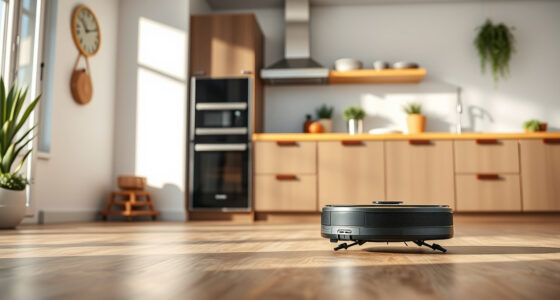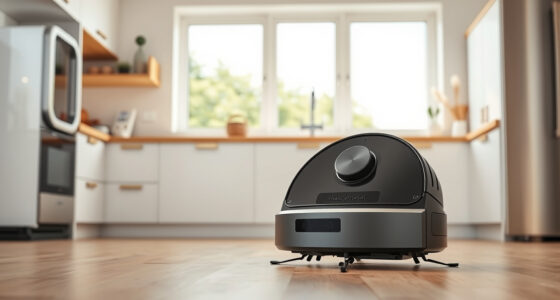

Cleaning mixed flooring requires a smarter approach because each surface needs specific care to avoid damage and keep it looking its best. You can’t use the same products or methods on hardwood, tile, carpet, vinyl, and laminate without risking harm. Using tailored cleaning strategies, like gentle mops for hardwood or grout scrubbing for tile, helps protect every material. Keep going to discover how to develop an effective, customized cleaning routine for your floors.
Key Takeaways
- Different flooring types require specific cleaning tools and solutions to prevent damage and ensure effective cleaning.
- Using a uniform cleaning method can harm delicate surfaces like hardwood or laminate.
- Tailored routines help maintain the appearance and longevity of each flooring material.
- Cross-contamination between cleaning products can cause staining or deterioration of floors.
- A smarter strategy optimizes time, reduces rework, and prolongs floor durability across mixed surfaces.
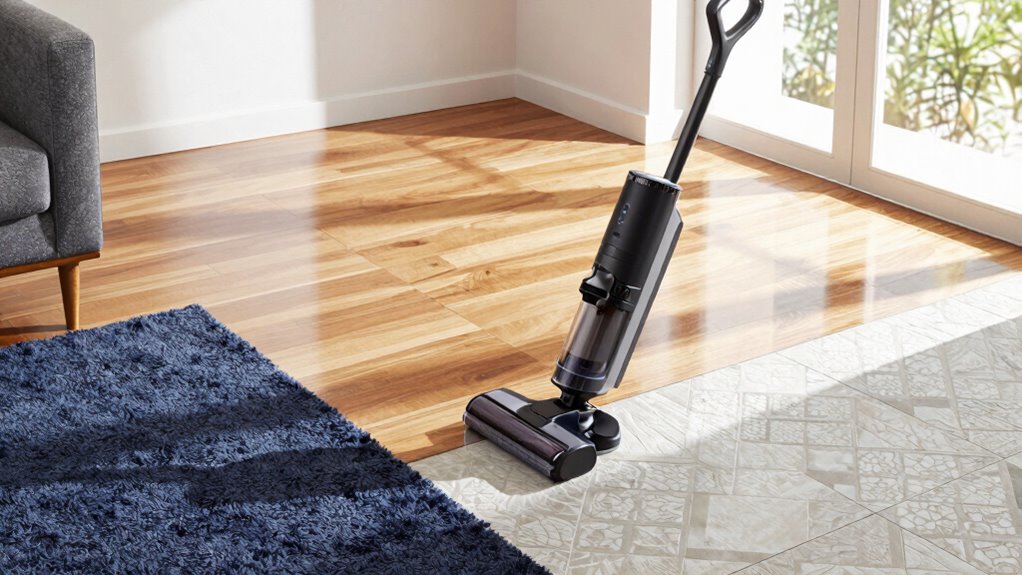
Have you ever struggled to find an effective way to clean a space with mixed flooring types? If so, you’re not alone. Different flooring materials require specific cleaning methods and tools to keep them looking their best without damage. Trying to use one-size-fits-all cleaning routines often leads to ineffective results or, worse, harm to your floors. That’s why a smarter cleaning strategy is essential when dealing with mixed flooring. Recognizing the unique needs of each flooring material allows you to choose the right cleaning tools and techniques, saving time and preserving your floors’ longevity.
Tailor your cleaning approach to each flooring type for better results and longer-lasting floors.
First, you need to understand the specific flooring materials in your space. Hardwood, tile, carpet, vinyl, and laminate each have distinct cleaning requirements. Hardwood floors, for example, demand gentle sweeping and damp mopping with products that won’t cause warping or staining. Tile surfaces benefit from regular sweeping and a thorough scrub with a brush and a suitable cleaner to remove grout grime. Carpets, on the other hand, need vacuuming and occasional deep cleaning to eliminate embedded dirt and allergens. Vinyl and laminate flooring are more durable but still require careful cleaning to prevent scratches and water damage. Knowing these differences helps you choose the appropriate cleaning tools—such as soft microfiber mops for hardwood, stiff-bristled brushes for grout, and vacuum attachments designed for carpets. Additionally, understanding flooring types can help you select the most effective cleaning methods, especially since different materials may also influence indoor air quality by trapping or releasing pollutants.
A smart cleaning strategy involves tailoring your approach to each flooring type. For hardwood, avoid excessive water and harsh chemicals; instead, use a damp microfiber mop and a cleaner formulated for wood. For tile, a scrub brush or grout cleaner can effectively lift dirt from textured surfaces. Carpet cleaning might involve a vacuum with strong suction and, periodically, a steam cleaner or carpet shampooer. Vinyl and laminate floors call for gentle cleaning solutions and soft cloths or mops to prevent scratches. Using the right cleaning tools minimizes damage and ensures each surface is cleaned thoroughly. It’s also helpful to consider flooring maintenance tips that extend the lifespan of each material. Incorporating preventative measures such as mats and furniture pads can further protect your floors from unnecessary wear and tear.
Another key aspect is organizing your cleaning routine to address each flooring material separately. Start with sweeping or vacuuming to remove loose debris from all surfaces. Then, use appropriate cleaning tools and solutions for each material. This targeted approach saves you from redoing work or risking cross-contamination of cleaning products that might harm certain floors. Regular maintenance with the correct tools prolongs your floors’ lifespan and keeps your space looking fresh.
In essence, when dealing with mixed flooring, your cleaning strategy should be as diverse as your floors. Recognize the unique flooring material needs, invest in the right cleaning tools, and adapt your routine accordingly. This smarter approach ensures your floors stay beautiful, durable, and well-maintained for years to come.
microfiber mop for hardwood floors
As an affiliate, we earn on qualifying purchases.
As an affiliate, we earn on qualifying purchases.
Frequently Asked Questions
How Often Should I Change My Cleaning Products for Different Floors?
You should change your cleaning products based on your floors’ cleaning schedules and product longevity. Typically, switch cleaning solutions every few months or when you notice decreased effectiveness. For mixed flooring, use specific products for each surface and rotate them regularly to prevent buildup or damage. Keep an eye on product labels and your floors’ condition to decide when it’s time for a change, ensuring peak cleanliness and longevity.
Can I Use the Same Vacuum on All Types of Flooring?
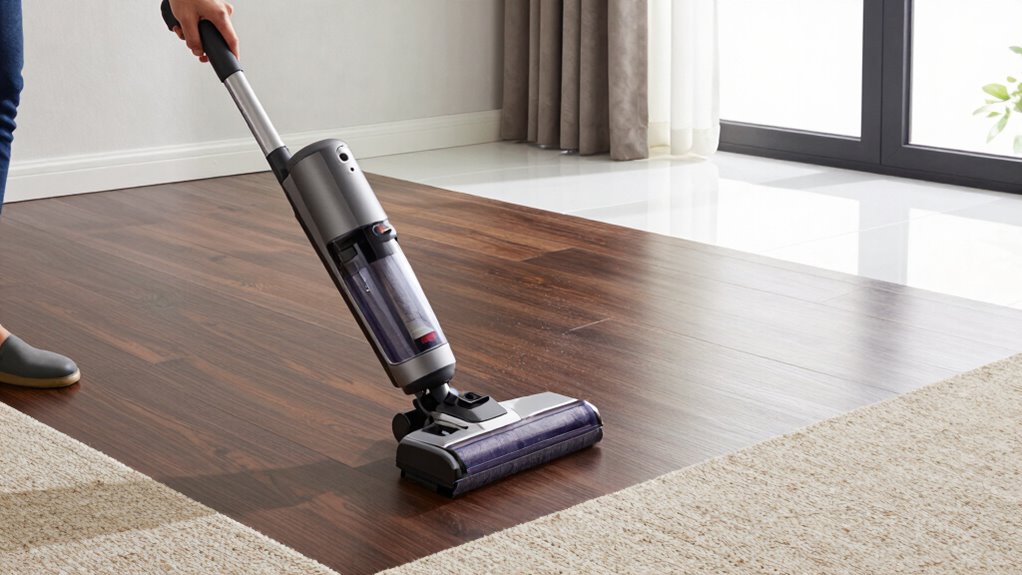
Using the same vacuum on all floors is like fitting a square peg into a round hole—it’s not always effective. Always check your vacuum’s flooring compatibility to prevent damage. Regular vacuum maintenance keeps it running smoothly and guarantees it’s suitable for different surfaces like hardwood, tile, or carpet. Switching attachments and adjusting settings with care will help you clean efficiently without harming your floors.
Are There Specific Tools Recommended for Mixed Flooring Surfaces?
Yes, specific tools are recommended for mixed flooring surfaces to guarantee effective flooring maintenance and cleaning versatility. Use a vacuum with adjustable settings or different attachments, like a soft brush for delicate surfaces and a beater bar for carpets. Additionally, consider a microfiber mop for hardwood and tile. These tools help you adapt your cleaning approach, protect your floors, and maintain their appearance, making your cleaning routine smarter and more efficient.
How Do I Prevent Damage When Switching Cleaning Methods?
To prevent damage when switching cleaning methods, you should check surface compatibility first. Use gentle, appropriate cleaners for each flooring type, avoiding harsh chemicals. Adjust your cleaning schedule to match the needs of each surface, ensuring you don’t over-clean or use incompatible tools. By being mindful of each surface’s specific requirements, you protect your floors and maintain their appearance over time.
Is Professional Cleaning Necessary for Mixed Flooring Setups?
Yes, professional cleaning is necessary for mixed flooring setups. It guarantees surface compatibility, preventing damage from improper cleaning methods, especially on delicate surfaces like hardwood or tile. Regular professional cleaning also maintains the appearance and longevity of each surface. Adjust your cleaning frequency based on the flooring type and foot traffic, but don’t skip professional help to keep all surfaces in top shape and avoid costly repairs.
As an affiliate, we earn on qualifying purchases.
Conclusion
When you adopt a smarter cleaning strategy for mixed flooring, you’re not just maintaining beauty—you’re extending your floors’ lifespan. Did you know that improper cleaning can reduce a floor’s lifespan by up to 50%? By tailoring your approach to each surface, you prevent damage and save money in the long run. So, stay vigilant, use the right tools, and enjoy a spotless, durable home that looks stunning year after year.
As an affiliate, we earn on qualifying purchases.
laminate floor cleaning solution
As an affiliate, we earn on qualifying purchases.
As an affiliate, we earn on qualifying purchases.