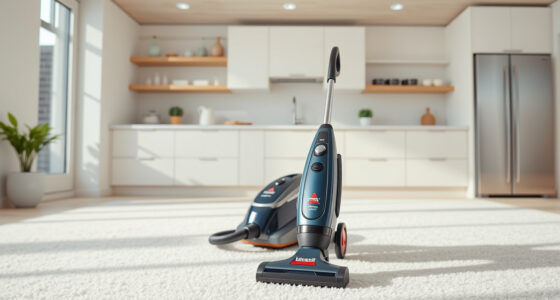
You need two different floor-care strategies because your home has various surfaces like hardwood and tile, each with unique needs. Hardwood floors require gentle, pet-safe cleaning to prevent scratches, while tile and vinyl need specific solutions to handle moisture and grime. Using the right methods protects your floors and extends their lifespan. If you keep exploring, you’ll discover how tailored care can make your home safer, cleaner, and more durable.
Key Takeaways
- Different flooring materials require tailored cleaning methods to prevent damage and preserve their unique properties.
- Homes with multiple surface types need distinct strategies for effective maintenance and longevity.
- Eco-friendly and pet-safe products must be selected based on each surface’s specific needs.
- Proper care routines vary between delicate hardwood and resilient tile or vinyl floors.
- Using appropriate cleaning techniques enhances durability and maintains the aesthetic appeal of diverse flooring.

Keeping your floors in top condition requires more than just routine cleaning; it involves strategic care tailored to each type of flooring. Different surfaces have unique properties, durability levels, and maintenance needs, which means one-size-fits-all solutions rarely work. For example, hardwood floors need gentle cleaning to prevent scratches, while tile or vinyl might require more robust methods. Recognizing these differences helps you develop effective floor-care strategies that protect your investment and keep your home looking its best.
Effective floor care varies by surface, protecting your investment and maintaining your home’s beauty.
When you have a mix of flooring types—say, hardwood in the living room and tile in the kitchen—you’ll find that adopting two different floor-care strategies becomes essential. Hardwood floors, for instance, benefit from pet friendly cleaning that uses non-toxic, gentle products, especially if you share your home with furry friends. Pets can track in dirt and shed fur, so a cleaning routine that minimizes harsh chemicals ensures their safety and maintains indoor air quality. Eco conscious maintenance is also indispensable here; choosing environmentally friendly products reduces your carbon footprint and avoids harmful residues, prolonging the life of your floors. Regular sweeping or vacuuming prevents dirt and grit from scratching the surface, and occasional damp mopping with a mild, pet-safe cleaner keeps the wood looking fresh. Additionally, understanding the catalytic role of cleaning products can help you select the most effective and environmentally conscious options. Using dust-proofing solutions further protects your floors from abrasive debris and extends their lifespan.
In contrast, tile and vinyl floors are more resistant but still require specific care. These surfaces often handle more moisture and dirt, so a different cleaning approach is necessary. Mopping with eco conscious cleaning solutions that are effective yet gentle on the environment keeps these floors clean without risking damage. Since tiles can trap grime in grout lines, deep cleaning with a brush periodically can help maintain their appearance. For homes with pets, it’s essential to ensure the cleaning products used are pet friendly, preventing any adverse reactions if your pets have access to these areas. Also, maintaining the grout lines with suitable cleaners prevents mold and mildew buildup, especially in high-moisture zones. Incorporating eco-friendly cleaning practices can further enhance your home’s sustainability and ensure the safety of your pets. To further enhance cleaning efficiency, understanding the benefits of eco-friendly products can guide you in selecting the most sustainable options. Incorporating appropriate cleaning techniques tailored for each surface ensures optimal results and longevity.
Having distinct strategies for different flooring types not only protects your surfaces but also aligns with your values of eco conscious maintenance and pet friendly cleaning. It’s about choosing the right products and techniques that respect the material’s needs while guaranteeing the safety of your pets and the environment. By tailoring your approach, you extend the longevity of your floors and uphold a healthier, more sustainable home. This dual strategy might seem like extra effort, but it results in cleaner, safer, and more durable floors that enhance your living space for years to come.
As an affiliate, we earn on qualifying purchases.
Frequently Asked Questions
How Do I Identify Which Areas Require Different Floor-Care Methods?
To identify which areas need different floor-care methods, start with flooring material identification. Look closely at each surface—tile, hardwood, carpet, or laminate—and note their specific cleaning needs. Use area specific cleaning techniques suited to each material to prevent damage and maintain appearance. Regularly inspect high-traffic zones for wear, and adjust your approach accordingly. This way, you guarantee each area receives proper care based on its unique flooring type.
Are There Specific Cleaning Products Suitable for Mixed Flooring Types?
Did you know that using the wrong cleaning products can damage your floors and reduce their lifespan? For mixed flooring types, opt for eco-friendly solutions designed for specific surfaces, like gentle wood cleaners or tile-safe formulas. Professional cleaning services can recommend and apply the right products, ensuring your floors stay pristine without harm. Always check labels to match products with your flooring, protecting your home and the environment simultaneously.
How Often Should I Switch Between Floor-Care Strategies?
You should switch between floor-care strategies based on your flooring’s durability and cleaning frequency needs. For high-traffic areas with durable flooring, a weekly deep clean might suffice, but delicate surfaces require more gentle, frequent care—perhaps every few days. Regularly assess the condition of your floors, adjusting your approach to prevent damage and maintain their appearance. This guarantees each surface gets the right amount of care without risking wear or harm.
Can One Floor-Care Approach Damage Certain Flooring Materials?
Yes, one floor-care approach can damage certain flooring materials. Using harsh chemicals on delicate surfaces may compromise flooring durability, while incompatible cleaning methods can cause discoloration or warping. You need to take into account cleaning chemical compatibility and the specific needs of each material. Properly matching your cleaning strategy to the flooring type helps maintain its integrity, ensuring your floors stay beautiful and durable over time.
What Tools Are Best for Maintaining Multiple Flooring Surfaces?
You should use different tools for maintaining multiple flooring surfaces. A vacuum with adjustable settings and various attachments works best for carpets, while a canister or steam mop suits hard floors. For delicate surfaces, gentle mop techniques prevent damage, whereas more thorough cleaning is suitable for durable floors. Always select the right vacuum type and adapt your mop techniques to protect each surface’s finish and longevity.
As an affiliate, we earn on qualifying purchases.
Conclusion
In the end, it’s clear that no single floor-care strategy fits every home. Your unique flooring types and lifestyle demand tailored approaches—sometimes even two. Remarkably, some experts believe that switching strategies based on seasons or daily use can extend your floors’ lifespan considerably. So, don’t settle for one-size-fits-all solutions. Experiment, observe, and adapt. Your floors will thank you, and you might just uncover a secret to keeping them pristine longer than you thought possible.
multi-surface floor cleaning kit
As an affiliate, we earn on qualifying purchases.
As an affiliate, we earn on qualifying purchases.
As an affiliate, we earn on qualifying purchases.