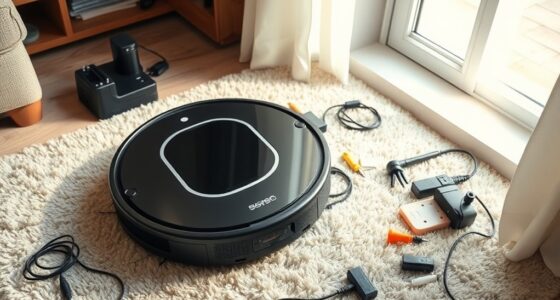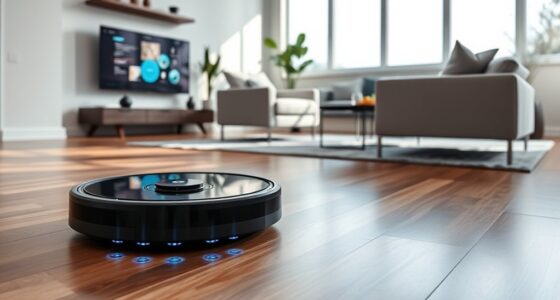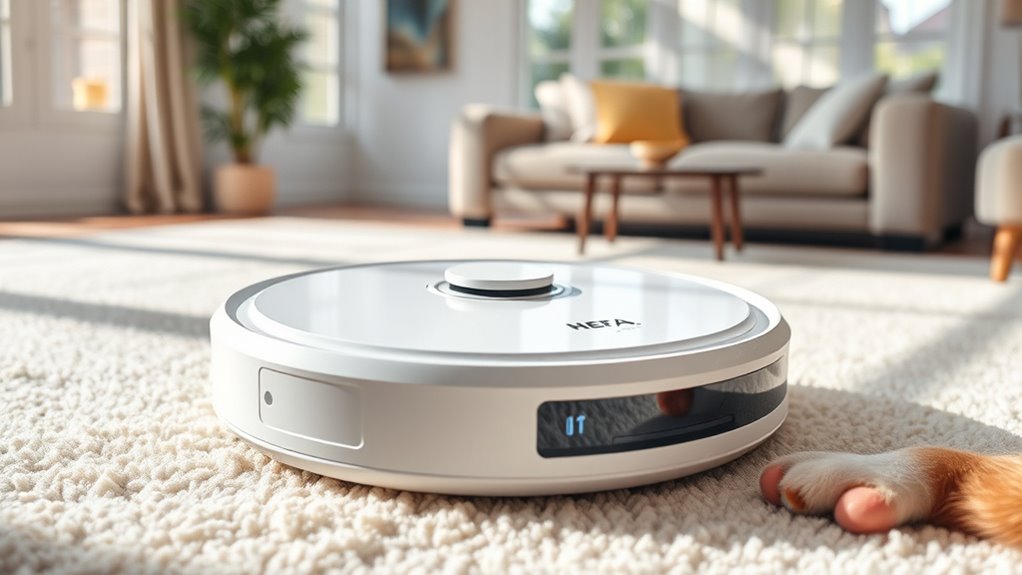

Allergy-friendly robot vacuums are designed with HEPA filters that trap 99.97% of particles as small as 0.3 microns, like pollen, dust mites, and pet dander. They create sealed systems to prevent allergens from escaping and improve indoor air quality. Many models use smart navigation to ensure thorough cleaning and targeted allergen removal. Plus, adjustable suction and easy filter maintenance make them convenient for allergy sufferers. Keep exploring to discover even more ways these vacuums can assist you in breathing easier.

Get home appliances delivered free — and shop member deals
- Fast, free delivery on millions of items
- Access to Prime Big Deal Days deals on October 6–7
- Prime Video, Amazon Music and more included
Key Takeaways
- HEPA filters in robot vacuums trap 99.97% of tiny particles, reducing allergens like pollen and pet dander.
- Sealed filtration systems prevent dust and allergens from escaping during cleaning.
- Smart navigation ensures thorough cleaning, targeting allergen-rich areas for maximum efficiency.
- Adjustable suction and easy filter replacement support effective allergen removal and maintenance.
- Allergy-friendly designs minimize dust stirring, lowering allergy symptoms and improving indoor air quality.
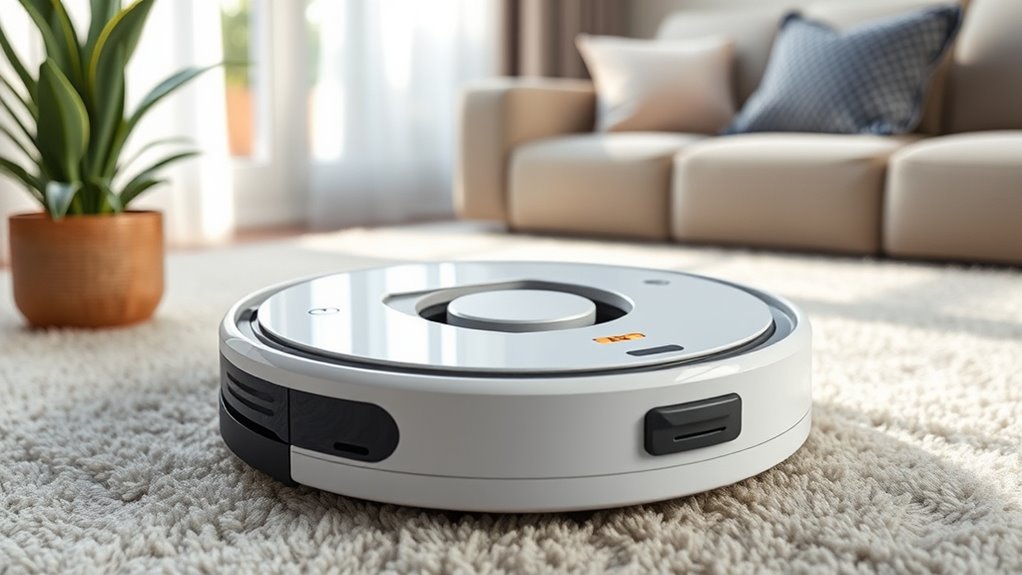
If you suffer from allergies, finding a vacuum that minimizes irritants is vital. Many traditional vacuum cleaners can stir up dust, pet dander, and other allergens, making allergy symptoms worse. That’s where allergy-friendly robot vacuums come into play. These devices are designed with features like HEPA filters to considerably improve allergen control, helping you breathe easier and reduce allergy flare-ups. HEPA filters are vital because they trap tiny particles, including pollen, dust mites, and pet dander, preventing them from being released back into the air. When you choose a robot vacuum equipped with a HEPA filter, you’re investing in a device that actively improves your indoor air quality.
The key to allergen control lies in the vacuum’s filtration system. HEPA filters are especially effective because they capture 99.97% of particles as small as 0.3 microns. This means that allergens, which are often tiny and easily airborne, get trapped within the filter instead of circulating through your home. As a result, you notice less sneezing, coughing, and itchy eyes after vacuuming. Many allergy-friendly robot vacuums also feature sealed systems that prevent dust and allergens from escaping during operation, further enhancing allergen control. This combination ensures that your cleaning routine actually reduces the presence of irritants rather than redistributing them. Incorporating HEPA filtration into your cleaning routine can dramatically improve indoor air quality and alleviate allergy symptoms.
Besides filtration, these vacuums often include smart navigation that allows complete cleaning without missing spots. Some models have sensors to detect dustier areas and focus their efforts there, maximizing allergen removal. Their compact size means you can schedule frequent cleanings without much effort, maintaining a cleaner environment consistently. Many also come with adjustable suction power, giving you the flexibility to handle delicate surfaces or stubborn debris while still prioritizing allergen removal. This adaptability ensures that you’re not just cleaning but actively improving your home’s air quality.
Another notable benefit is the convenience these vacuums offer. You don’t need to manually switch out filters or worry about filter maintenance if you choose models with easy-to-replace HEPA filters. Regularly replacing or cleaning these filters keeps the vacuum performing at peak allergen control. Plus, with features like voice control or app connectivity, you can manage cleanings remotely, making allergy management even more straightforward.
HEPA filter robot vacuum for allergies
As an affiliate, we earn on qualifying purchases.
As an affiliate, we earn on qualifying purchases.
Frequently Asked Questions
How Often Should HEPA Filters Be Replaced?
You should replace your HEPA filter every 6 to 12 months, depending on the filter’s lifespan and your usage. Regularly check the filter for signs of dirt or reduced performance, as this indicates it’s time for a replacement. Maintaining proper replacement frequency guarantees your vacuum continues to trap allergens effectively, improving air quality in your home. Don’t wait too long, as a clogged filter diminishes cleaning efficiency.
Are Allergy-Friendly Vacuums Suitable for Pets?
Yes, allergy-friendly vacuums are great for homes with pets. They efficiently pick up pet hair and help control odors, creating a fresher environment. With HEPA filtration, these vacuums trap allergens and pet dander, reducing allergy symptoms. You’ll find them effective for maintaining cleanliness and improving indoor air quality. Regular use keeps pet hair and odors at bay, making your home more comfortable for everyone, especially allergy sufferers.
Can These Vacuums Handle Large Debris?
Yes, allergy-friendly robot vacuums can handle large debris, but their effectiveness depends on vacuum durability and design. You should look for models with strong motors and robust brushes to guarantee they don’t clog or get damaged when picking up bigger particles. Regular maintenance and choosing a vacuum with a powerful suction system help improve durability, so it can efficiently manage large debris without compromising performance.
Are They Safe for Allergy Sufferers With Asthma?
Yes, allergy sufferers with asthma can safely use these vacuums. Their HEPA filters trap allergy triggers like pollen, dust mites, and pet dander, improving your air quality. Some might worry about safety, but these vacuums are designed to prevent allergen escape. Regular use helps reduce airborne allergens, making your home healthier and easier to breathe. Rest assured, they’re a safe choice for managing asthma and allergies effectively.
Do They Require Special Maintenance or Cleaning?
You’ll need to perform regular filter maintenance to keep your allergy-friendly robot vacuum working effectively. Check and replace HEPA filters as recommended, usually every few months, to prevent dust and allergens from accumulating. Cleaning the vacuum’s brushes and emptying the bin frequently also supports allergy prevention. Staying on top of these maintenance tasks guarantees your vacuum continues to trap allergens efficiently, creating a healthier environment for allergy sufferers with asthma.
allergy-friendly robot vacuum with smart navigation
As an affiliate, we earn on qualifying purchases.
As an affiliate, we earn on qualifying purchases.
Conclusion
Imagine your home as a fortress against allergens, with a robot vacuum as your vigilant sentinel. Just like a trusted guard, a HEPA filtration system captures 99.97% of airborne particles, keeping your air clean. I once knew someone who struggled with allergies until they switched to an allergy-friendly robot vacuum—now, their home feels fresher and breathing easier. Investing in one isn’t just about cleaning; it’s about reclaiming comfort and peace of mind every day.
sealed system robot vacuum for dust mites
As an affiliate, we earn on qualifying purchases.
As an affiliate, we earn on qualifying purchases.
adjustable suction HEPA robot vacuum
As an affiliate, we earn on qualifying purchases.
As an affiliate, we earn on qualifying purchases.
Fall Picks
fall essentials
As an affiliate, we earn on qualifying purchases.