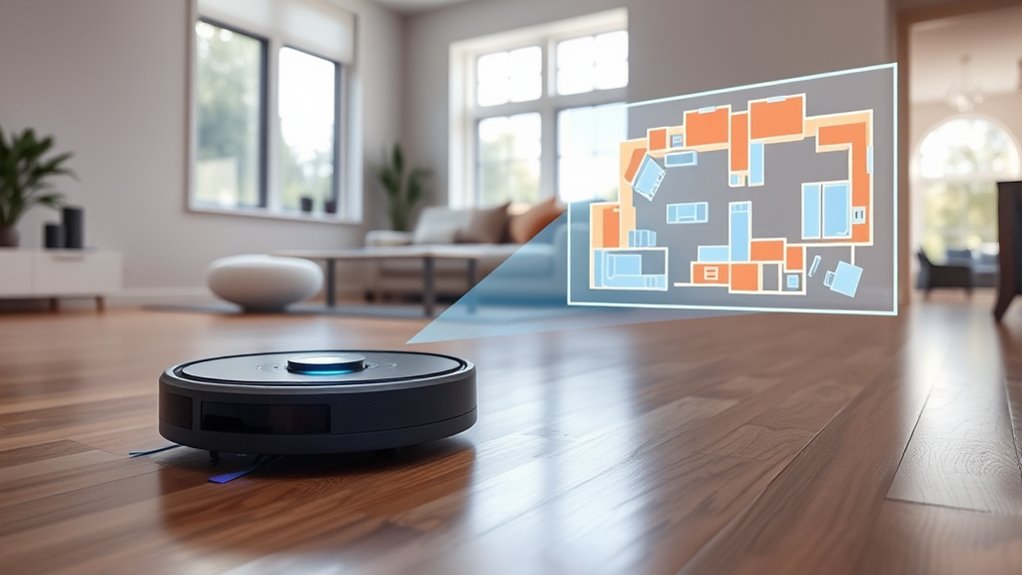
Smart vacuums learn your home layout using advanced mapping technology that combines sensors like infrared, laser, ultrasonic, and cameras to gather real-time data. These sensors help the device detect furniture, walls, and obstacles while creating a detailed map of your space. The vacuum constantly updates this map as it cleans, improving navigation and efficiency over time. If you keep exploring, you’ll discover how this technology makes cleaning smarter and more effective.
Key Takeaways
- Smart vacuums use sensors like infrared, laser, ultrasonic, and cameras to gather real-time environmental data.
- They create detailed maps by processing sensor inputs, updating layouts dynamically as they clean.
- Advanced algorithms enable the devices to learn and remember specific rooms and areas over time.
- Mapping technology helps optimize cleaning routes, avoid obstacles, and prevent missed spots.
- Continuous learning allows vacuums to adapt to home changes, improving efficiency and navigation accuracy.
Mapping Technology
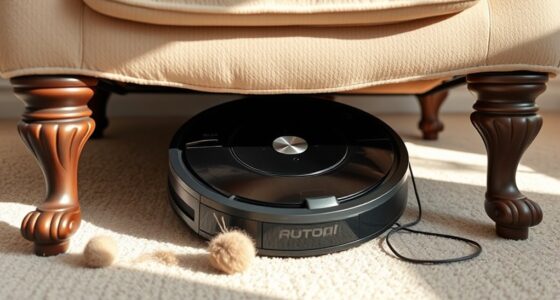
Have you ever wondered how modern maps are created with such accuracy? When it comes to smart vacuums, it’s all about their ability to understand and steer your home seamlessly. This process begins with advanced robot navigation systems that allow these devices to move intelligently around furniture, walls, and obstacles. Robot navigation combines real-time data processing with precise control of movement, ensuring your vacuum doesn’t bump into things or miss spots. It’s like having a tiny robot tour guide that maps out every corner of your home while cleaning efficiently.
Smart vacuums use advanced navigation to move intelligently and map your home accurately.
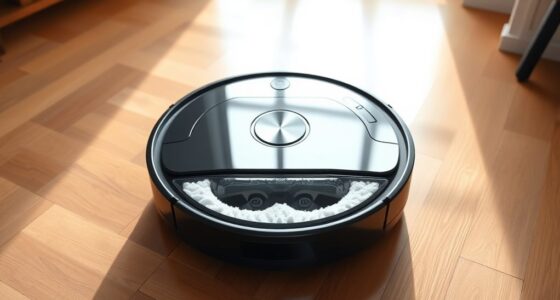
Sensor integration plays a vital role in this technology. Your smart vacuum is equipped with multiple sensors—like infrared, laser, ultrasonic, and cameras—that constantly gather data about its surroundings. These sensors help the vacuum detect objects, measure distances, and identify changes in the environment. As the device moves, it continuously collects information that feeds into its internal map, allowing it to understand where it has cleaned and where it still needs to go. This sensor integration is essential because it provides the real-world feedback necessary for precise navigation and obstacle avoidance.
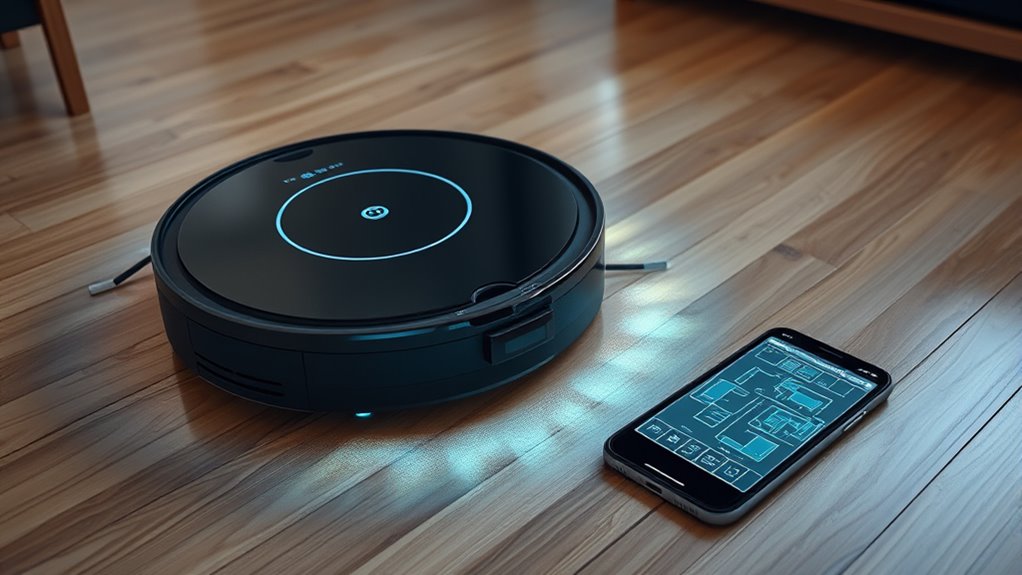
Once the sensors gather enough data, the robot’s software processes this information to create a detailed map of your home. This isn’t just a simple floor plan; it’s a dynamic, real-time layout that updates as the vacuum moves around. With this map, your smart vacuum can plan the most efficient cleaning routes, avoid areas it has already covered, and adapt to obstacles like pets or moved furniture. The combination of robot navigation and sensor integration ensures that the device doesn’t rely on random movement but instead follows a logical, systematic approach to cleaning.
In addition, advancements in mapping technology enable these devices to improve their navigation over time, making them more reliable and efficient. As your vacuum learns the layout, it also remembers specific rooms and zones, allowing you to control cleaning schedules or target particular areas. This intelligence is possible because of the sophisticated algorithms that interpret sensor data and update the map on the fly. Over time, your smart vacuum gets better at navigating, making fewer mistakes and covering more ground in less time.
In essence, the magic behind these intelligent cleaning devices lies in the seamless integration of robot navigation and sensors. They work together to create a detailed, up-to-date map of your home, making sure no spot is missed and that your vacuum operates smoothly. So, next time you see your smart vacuum gliding around, remember that it’s not just cleaning; it’s continuously learning and adapting to your home’s unique layout with precision and efficiency.
Frequently Asked Questions
How Do Smart Vacuums Improve With Multiple Home Layouts?
When you have multiple home layouts, smart vacuums improve by adapting to each space through advanced mapping technology. They recognize and remember different layouts, reducing mapping errors and ensuring thorough cleaning. You can customize layouts for each area, guiding your vacuum to focus on high-traffic zones or delicate spots. As a result, your device becomes more efficient, providing personalized cleaning plans that fit your home’s unique needs, regardless of layout changes.
Can Mapping Technology Detect Temporary Obstacles?
Like a detective piecing clues together, mapping technology helps your smart vacuum detect temporary obstacles. It uses obstacle avoidance algorithms to identify objects like a dropped sock or a chair moved. These systems adapt quickly, allowing your vacuum to navigate around new hurdles without getting stuck. While they’re not perfect, they’re pretty good at recognizing and avoiding temporary obstacles, keeping your home clean without constant supervision.
How Secure Is My Home Layout Data?
Your home privacy is important, and smart vacuum manufacturers generally use data encryption to safeguard your home layout data. While this helps guard against hacking, no system is entirely foolproof. Be sure to review your device’s privacy policies and settings. You can also limit data sharing or disable mapping features if you’re concerned about sensitive information. Staying informed helps ensure your home layout data remains secure.
Do Different Brands Use Compatible Mapping Technologies?
You might wonder if different brands use compatible mapping technology. While some brands design their smart vacuums with proprietary mapping systems, others aim for compatibility across models. However, brand compatibility often varies, meaning your device may only work seamlessly within its own brand’s ecosystem. To guarantee smooth operation, check if the mapping technology your preferred brand uses is compatible with other brands or if it’s exclusive.
How Often Should I Update My Vacuum’S Mapping Software?
Imagine your smart vacuum as a diligent explorer, constantly refining its map of your home. To keep its mapping accuracy sharp, you should update its software every few months or when it prompts you. Regular software updates improve navigation, handle changes like furniture shifts, and fix bugs. Staying on top of updates guarantees your vacuum navigates smoothly, providing efficient cleaning without missing spots or bumping into obstacles.
Conclusion
Now that you understand how smart vacuums map your home, it’s easy to see the contrast. While they smoothly navigate your space, they secretly learn every corner and obstacle. It’s almost like having a tiny, invisible assistant that remembers your layout better than you do. So, next time your vacuum whizzes around, remember: behind its simple motion lies a high-tech brain, turning your messy home into a perfectly mapped haven—without you lifting a finger.