When using robot vacuum mopping attachments, make certain they fit securely and are properly attached to avoid leaks or poor cleaning. Regularly check and rinse the mopping pad, clean brushes and wheels, and empty the water tank after each use to prevent mold and debris buildup. Keep filters clean and inspect water connections for damage. Proper maintenance extends your device’s life and cleaning efficiency. Keep exploring to learn more tips for peak performance and longevity.
Key Takeaways
- Ensure attachment compatibility and proper fit before attaching to the robot vacuum.
- Regularly clean or replace mopping pads and check water tank seals for leaks.
- Use filtered water and avoid harsh cleaners to maintain streak-free mopping results.
- Inspect and clean moving parts and filters regularly to prevent malfunctions.
- Follow manufacturer’s maintenance guidelines to optimize performance and extend attachment lifespan.
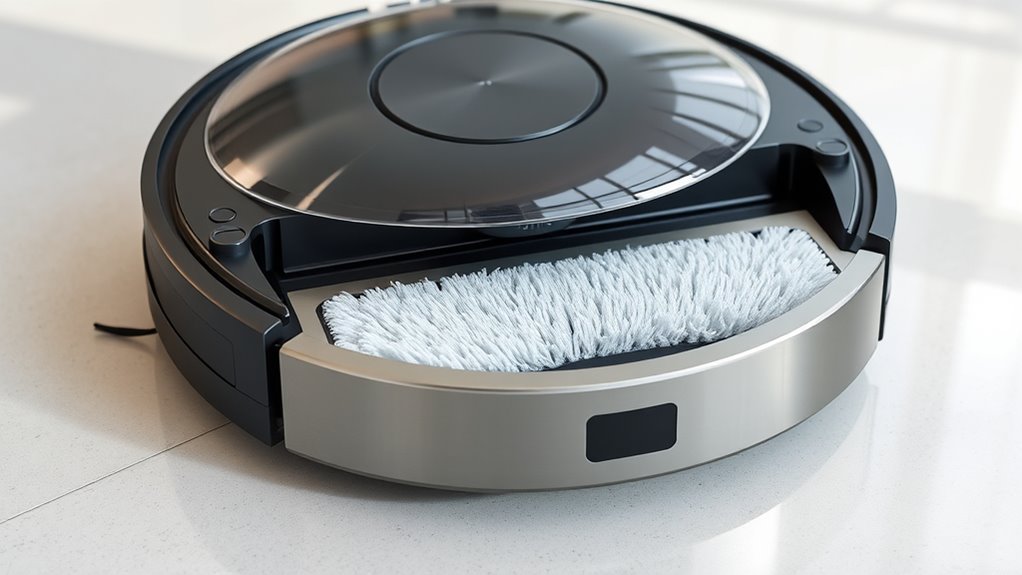
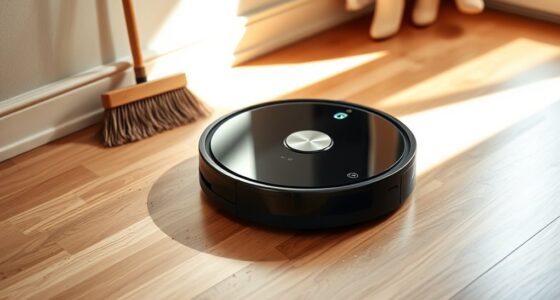
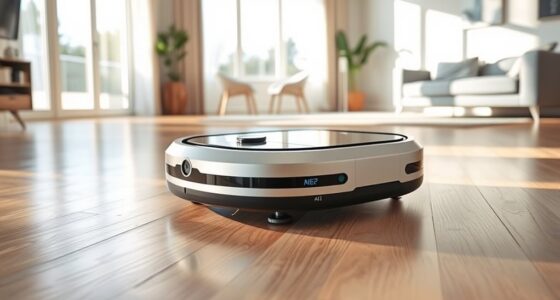
Have you ever wondered if your robot vacuum could do more than just sweep your floors? Many models now come equipped with or are compatible with robot vacuum mopping attachments, expanding their cleaning capabilities to handle both dry and wet messes. These attachments typically include a water tank and a mopping pad, allowing your robot to glide across hard floors and leave them streak-free. However, it’s essential to understand how to make the most of these features, especially when it comes to maintenance tips that keep your device functioning smoothly.
When using robot vacuum mopping attachments, one of the first things to think about is proper setup. Make sure that the attachment fits securely onto your robot and that the water tank is filled with clean, preferably filtered water. Using harsh cleaners or too much liquid can damage the device and leave streaks or spots on your floors. Once you’ve set everything up, it’s important to stay proactive with maintenance tips to prolong the lifespan of your robot and keep its mopping function effective.
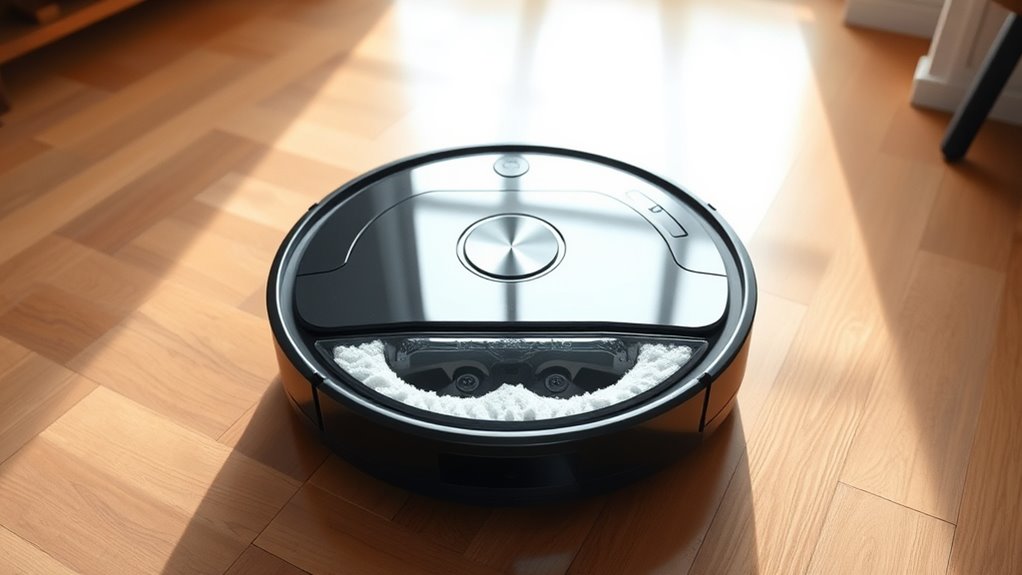
Regularly check the mopping pad for dirt, hair, or soap residue. A dirty pad can spread grime instead of cleaning it up, so replace or rinse the pad frequently. Keep the water tank clean by emptying any remaining water after each use, then wipe it down with a damp cloth to prevent mold or mineral buildup. Some robot vacuum mopping attachments also have filters that need regular cleaning or replacement; neglecting these can reduce suction power or cause water leaks. Neglecting routine maintenance can lead to malfunctions or decreased cleaning performance, so always refer to your manufacturer’s instructions for specific tips.
Check and rinse the mopping pad regularly to prevent grime spread and maintain cleaning efficiency.
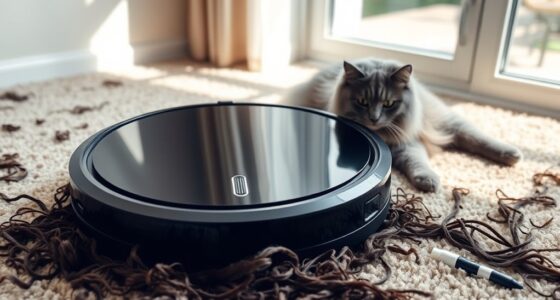
Another key maintenance tip is to inspect the brushes and wheels regularly. Debris can get tangled in these components, which can hinder movement or cause uneven cleaning. Before switching from mopping to dry sweeping, empty out the dustbin and clean the brushes thoroughly. Doing so prevents cross-contamination and ensures your robot is ready for the next cleaning session. Additionally, keep an eye on the water tank’s seal and connections—leaks or cracks can cause water to spill, damaging your floors or the robot itself.
Finally, it’s wise to establish a cleaning schedule that matches your household’s needs. For high-traffic areas, more frequent maintenance and cleaning of the attachments are necessary. Regularly updating your robot’s firmware can also optimize performance and address any bugs or issues related to the mopping feature. By following these maintenance tips and properly caring for your robot vacuum mopping attachments, you’ll ensure your device keeps your floors spotless without frequent repairs or replacement. With a little effort, you can enjoy the convenience of a multi-functional cleaning robot that handles everything from dust to damp mopping effortlessly.
Frequently Asked Questions
Are Mopping Attachments Compatible With All Robot Vacuum Brands?
Not all mopping attachments are compatible with every robot vacuum brand. You need to verify brand compatibility before purchasing, as some attachments are designed for specific models or brands. Keep in mind that attachment variety varies, and using incompatible attachments can damage your vacuum or reduce cleaning efficiency. Always verify compatibility to ensure your chosen mopping attachment works seamlessly with your robot vacuum and provides the best cleaning results.
How Often Should I Replace the Mopping Pads?
You should replace your mopping pads every 1-3 months, depending on usage and pad longevity. Regular replacement guarantees your robot vacuum maintains effective cleaning and prevents dirt buildup. Keep an eye on the pads for signs of wear or staining, which indicate it’s time for a new one. By maintaining a consistent replacement schedule, you’ll keep your device working at its best and extend its lifespan.
Can Attachments Handle Uneven or Textured Flooring?
Attachments can handle uneven flooring and textured surfaces, but their effectiveness depends on the design. Look for mopping attachments with flexible or adjustable heads that contour to different surfaces. If your textured surfaces are particularly rough or uneven, choose attachments with stronger suction and more durable pads. Regular maintenance and choosing the right attachment will help your robot vacuum clean effectively on textured and uneven floors.
Do Attachments Affect the Robot Vacuum’s Suction Power?
Imagine you’re using a new mopping attachment on your robot vacuum; it might seem to diminish suction efficiency at first. In reality, the attachment design can influence suction power, but most modern models are optimized to maintain strong suction even with attachments. So, yes, attachments can affect suction power slightly, but high-quality designs ensure your vacuum cleans effectively without sacrificing performance.
Are There Specific Cleaning Solutions Recommended for Attachments?
You should use cleaning solution options recommended by your robot vacuum’s manufacturer to guarantee compatibility with cleaning agents. Avoid harsh chemicals that could damage the attachments or your device. Look for gentle, eco-friendly solutions, or those specifically designed for robotic mops. Always check the compatibility with your attachments before applying any cleaning solution, and use the recommended amount to prevent residue buildup or damage.
Conclusion
Think of robot vacuum mopping attachments as the magic wand turning your cleaning chore into a effortless dance. With the right attachment, you’re not just cleaning—you’re creating a sparkling, fresh space without breaking a sweat. So, choose wisely and let your robot do the heavy lifting, gliding smoothly across your floors like a skilled dancer. Embrace these attachments, and watch your home transform into a pristine stage, ready for any performance.