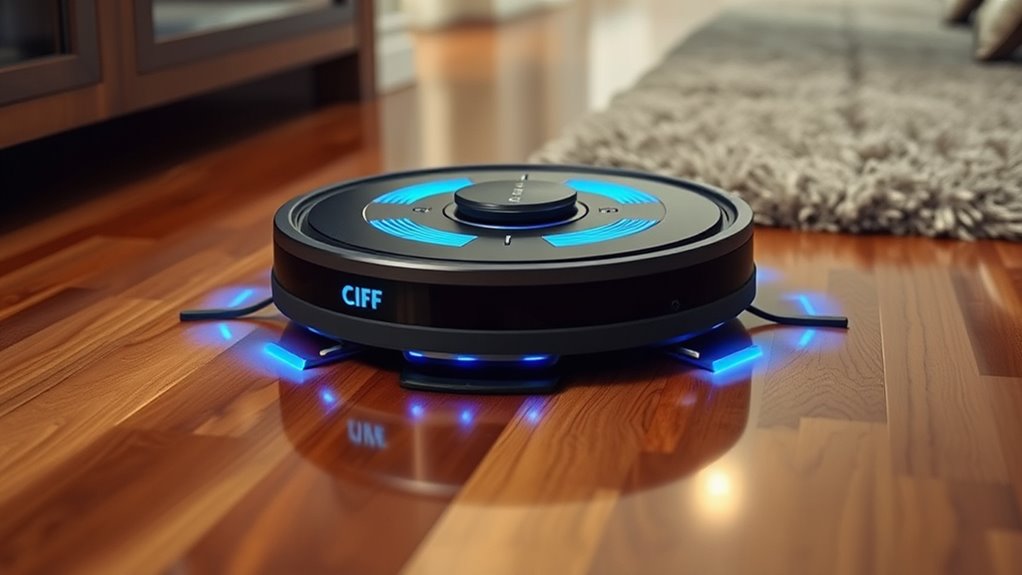

Robot vacuums come with cliff and obstacle sensors that actively safeguard your home during cleaning. These sensors detect stair edges, ledges, and furniture to prevent falls and collisions. They work together to guarantee the vacuum navigates smoothly without damage or accidents. Additionally, advanced sensors help avoid hazards like cords and shoes. To discover how these safety features keep your space secure while making cleaning effortless, keep exploring the options available.
Key Takeaways
- Cliff sensors detect ledges and stairs, preventing the vacuum from falling and ensuring safe navigation.
- Obstacle sensors recognize furniture and objects, avoiding collisions and protecting belongings.
- Combined sensors provide comprehensive safety, enabling smooth operation without risks of falls or bumps.
- Advanced sensors improve obstacle detection accuracy, enhancing overall safety during cleaning.
- Battery safety features monitor and manage power, preventing overheating, overcharging, and potential hazards.
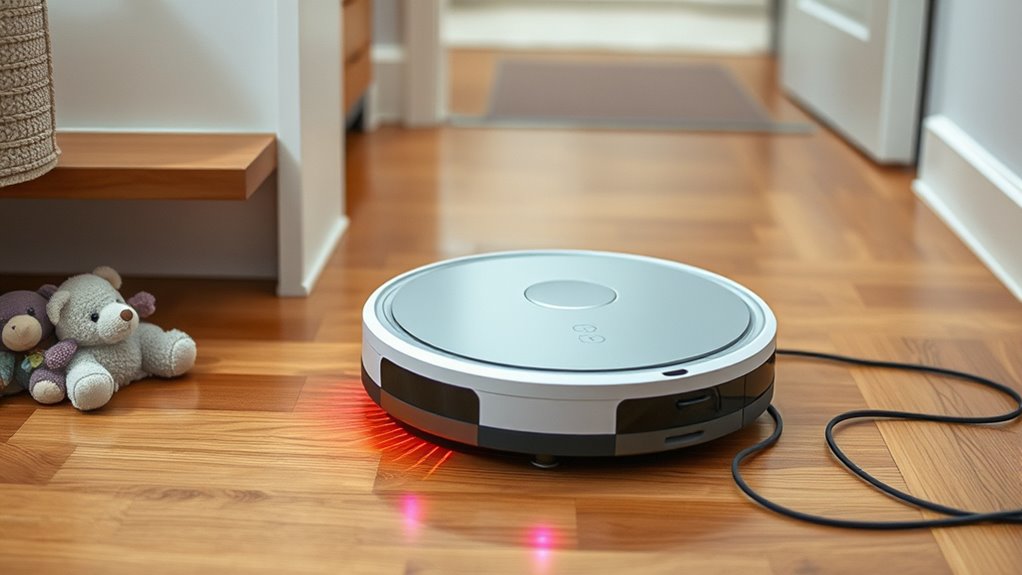
Robot vacuums have become a popular choice for effortless home cleaning, but safety remains a top priority. You want a device that cleans effectively without risking damage to your furniture, floors, or itself. That’s where safety features like cliff sensors and obstacle detection come into play. These sensors work together to guarantee your robot navigates smoothly, avoiding falls and collisions while protecting both your home and the vacuum.
Edge detection is a vital component of these safety features. When your robot encounters a ledge or stair edge, edge detection sensors activate instantly, prompting it to change direction. This prevents the vacuum from tumbling down stairs or falling off elevated surfaces. You’ll notice that many models use infrared or ultrasonic sensors to scan the environment continuously. As your robot approaches the edge, these sensors detect the drop-off and signal the vacuum to back away. This proactive approach saves you from potential accidents and keeps your floors safe from damage caused by falls.
Edge detection sensors prevent falls by activating instantly when a ledge or stair is detected.
Obstacle sensors complement edge detection by helping your robot recognize and avoid objects in its path. Whether it’s furniture, shoes, or cords, obstacle detection ensures your vacuum doesn’t bump into or get stuck on things. When an obstacle is detected, the robot pauses, recalculates its route, and navigates around it. This not only protects your belongings but also prevents the vacuum from becoming trapped or causing unintended damage. The combination of edge detection and obstacle sensors creates a thorough safety net, making the cleaning process more efficient and worry-free.
Battery safety is another vital aspect of your robot vacuum’s safety features. Modern models are equipped with safeguards to prevent overheating or overcharging, which could lead to battery degradation or even fire hazards. These vacuums monitor their battery status constantly, automatically stopping or returning to the charging dock when needed. Some models even have notifications alerting you if the battery is malfunctioning or needs replacement. Proper battery management guarantees your vacuum operates safely over time, giving you peace of mind that your device won’t pose any fire risks or sudden malfunctions.
Additionally, the integration of advanced sensor technology in many models enhances overall safety by providing more accurate environment mapping and obstacle detection. In essence, the combination of edge detection, obstacle sensing, and battery safety features makes robot vacuums much safer for everyday use. They work quietly in the background, protecting your home and ensuring your device runs reliably. By choosing a model with these safety features, you’re making a smart investment in a device that cleans effectively while prioritizing safety at every turn.
Frequently Asked Questions
How Do Cliff Sensors Differentiate Between Stairs and Rugs?
Cliff sensors differentiate between stairs and rugs through sensor accuracy and placement. You’ll find sensors positioned near the edges of your robot vacuum, which detect sudden drops like stairs. Rugs usually don’t trigger these sensors because their thickness and texture don’t create the same drop-off effect. The sensors analyze the distance to the surface beneath, ensuring your vacuum avoids falling down stairs while safely cleaning over rugs.
Can Obstacle Sensors Detect Small Objects Like Wires or Jewelry?
You might worry that obstacle sensors can’t detect small objects like wires or jewelry, but modern models often do a decent job of small object detection. However, sensor limitations mean they might not catch everything, especially tiny or flat items. To prevent mishaps, keep small objects out of reach, and don’t rely solely on sensors. Regularly checking your vacuum’s sensors and surroundings helps ensure safe, effective cleaning.
What Happens if Sensors Malfunction During Cleaning?
If sensors malfunction during cleaning, you might experience sensor failure, leading to potential safety risks or cleaning interruptions. The vacuum could collide with objects, fall down stairs, or stop unexpectedly. To prevent this, regularly check and clean sensors, and consider updating firmware. If issues persist, contacting customer support guarantees proper repairs, minimizing cleaning interruption and maintaining safe operation of your robot vacuum.
Are Sensors Affected by Lighting Conditions or Reflective Surfaces?
Sensors can be affected by lighting conditions and reflective surfaces, but modern robot vacuums are designed to minimize these issues. Sensor lighting helps the device adapt to varying environments, while reflective interference from shiny floors or glass can sometimes cause false readings. You might notice occasional misjudgments, especially in bright or highly reflective spaces. However, manufacturers continually improve sensor technology to reduce such problems, ensuring your vacuum cleans efficiently regardless of lighting or surface reflectivity.
How Often Should Sensor Calibration Be Performed?
You should perform sensor calibration regularly, ideally every few months, to guarantee ideal sensor maintenance. Calibration frequency depends on how often you use your robot vacuum and its environment. If you notice the sensors aren’t detecting cliffs or obstacles accurately, it’s time to recalibrate. Regular calibration helps prevent mishaps, keeps your vacuum running smoothly, and extends its lifespan. Always follow the manufacturer’s instructions for calibration to maintain safety features effectively.
Conclusion
With cliff and obstacle sensors, your robot vacuum becomes a vigilant guardian, gracefully dodging stairs and furniture like a skilled dancer avoiding obstacles. These safety features act as your home’s silent protectors, ensuring your cleaning journey is smooth and worry-free. As you watch your robot glide effortlessly around, you’ll feel confident knowing it’s equipped to navigate your space safely—turning everyday chores into a choreographed ballet of efficiency and care.