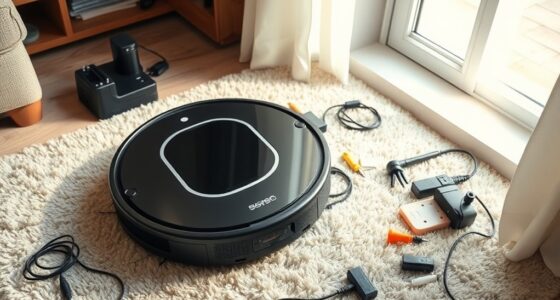

To set virtual boundaries and no-go zones, you generally use your device’s app or control panel to define specific areas where the device should not enter or perform certain actions. Make sure to calibrate these zones carefully, especially around sensitive spots, and keep software updated for better accuracy. It’s important to take into account privacy and security concerns while configuring boundaries. If you want to learn more about optimizing these settings and troubleshooting, there’s more to explore.
Key Takeaways
- Clearly define and calibrate virtual boundaries around sensitive or restricted areas using device settings or dedicated apps.
- Regularly update device firmware to maintain boundary accuracy and incorporate new security features.
- Use precise GPS or geofencing technologies supported by compatible devices for reliable no-go zones.
- Recalibrate boundaries after environmental changes or device relocation to prevent overlaps or gaps.
- Prioritize privacy by controlling data sharing, permissions, and access to location information during boundary setup.
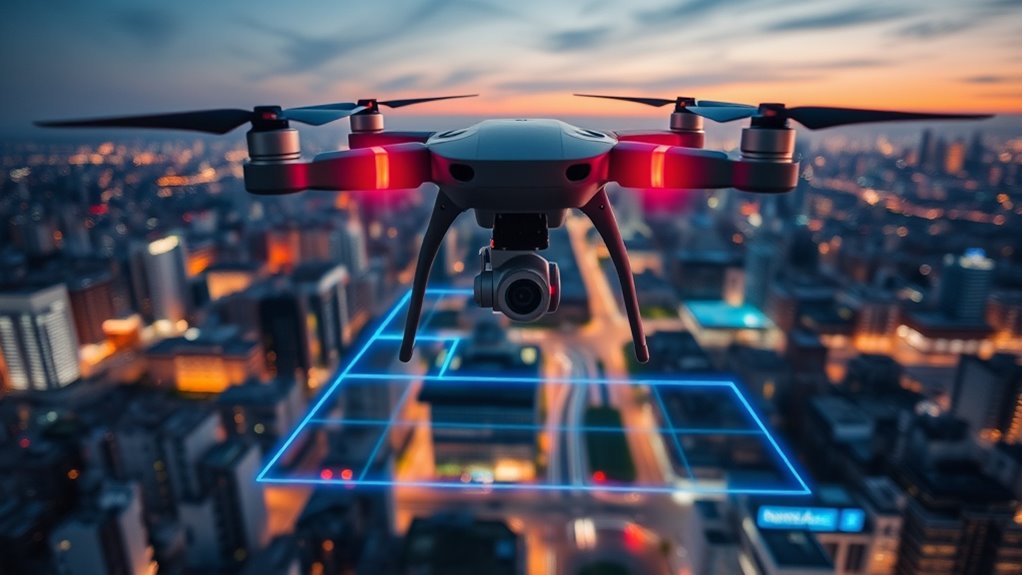
Setting virtual boundaries and no-go zones is essential for maintaining control and safety in your smart home or connected environment. When you establish these digital limits, you protect your privacy and ensure that your devices behave predictably. However, creating effective boundaries isn’t always straightforward. Privacy concerns often surface because some virtual boundaries require constant data collection or location tracking, which can make you feel uneasy about how your information is used or shared. For instance, defining no-go zones for your robot vacuum or security cameras might involve tracking movement patterns, raising questions about who has access to that data and how securely it’s stored. To address these concerns, you need to be cautious about the permissions you grant and the data you share, confirming that your privacy remains a priority.
Technological challenges also play a significant role when setting virtual boundaries. Different devices and platforms have varying capabilities, which can make creating seamless and reliable no-go zones tricky. For example, some smart home systems might not support precise geofencing or might struggle to adapt to changes in your environment, such as new furniture or layout modifications. You may find yourself troubleshooting connectivity issues or recalibrating boundaries to maintain their effectiveness. Additionally, compatibility problems between devices can cause boundaries to malfunction, leading to unintended device behavior. Overcoming these challenges requires a clear understanding of your technology’s limitations and sometimes investing in more advanced or compatible systems.
Another aspect to consider is how these boundaries function in real-world scenarios. You might set a virtual boundary around sensitive areas like a nursery or home office, but if the system isn’t calibrated correctly, it could either be too restrictive or too lenient. This can cause frustration, whether it’s a security camera invading privacy by recording outside its intended zone or a robot vacuum ignoring your restrictions and entering restricted areas. Regularly updating your devices’ firmware and reviewing your boundary settings helps maintain their effectiveness and protects your privacy. You also need to stay informed about new features or security updates that can improve boundary accuracy and security.
Frequently Asked Questions
How Do Virtual Boundaries Affect Pet Training?
Virtual boundaries help improve pet obedience by clearly defining safe areas with a virtual fence, preventing your pet from wandering into unsafe zones. They give you a tool to reinforce commands and boundaries without physical barriers, making training more effective. When your pet approaches the virtual fence, you can correct or redirect them, fostering better behavior. Overall, virtual boundaries create a consistent environment that enhances your pet’s understanding of acceptable behavior.
Can No-Go Zones Be Customized for Different Times of Day?
Imagine your home as a living map, shifting with your day. Yes, you can customize no-go zones for different times of day, creating time-based boundaries that adapt to your schedule. This flexibility allows you to set specific areas off-limits during certain hours, making your pet’s training more effective and tailored to your routine. With customizable no-go zones, you control your space, ensuring safety and harmony all day long.
Are Virtual Boundaries Effective for Multi-Pet Households?
Virtual boundaries can be quite effective for multi-pet households if you prioritize pet safety and boundary customization. You can tailor boundaries to suit each pet’s behavior and needs, preventing conflicts and accidents. By setting specific no-go zones, you keep your pets safe and reduce supervision. Regularly adjusting these boundaries guarantees they remain effective as your pets grow or their routines change, making virtual boundaries a flexible, reliable tool for multi-pet households.
What Are Common Mistakes When Setting Virtual Boundaries?
You often make virtual boundary errors by not clearly defining the limits or using inconsistent signals, which confuses your pets. No go zone misconfigurations happen when you set zones that are too large or overlapping, leading to frustration. To avoid these mistakes, double-check your boundary settings, use consistent signals, and regularly update zones based on your pets’ behavior. This helps make certain your virtual boundaries work effectively and keep everyone safe.
How Do Virtual Boundaries Impact Outdoor Security Systems?
Virtual boundaries markedly enhance outdoor security systems by leveraging boundary enforcement through augmented reality. You can easily define precise zones, preventing intruders from crossing into restricted areas. Augmented reality visualizations help you monitor boundaries in real-time, making it easier to respond swiftly. Implementing virtual boundaries guarantees your outdoor space remains protected, reducing false alarms and increasing overall security effectiveness. This technology provides a proactive approach to safeguarding your property efficiently.
Conclusion
Think of virtual boundaries like invisible fences for your digital world. Just like a fence keeps a dog safe and within bounds, setting no-go zones prevents your devices from wandering into risky territory. Imagine a family whose smart home alerts them when someone enters a restricted area—it’s like having a digital guard dog watching over your space. By establishing these boundaries, you protect your data and peace of mind, ensuring your virtual home stays secure and in control.