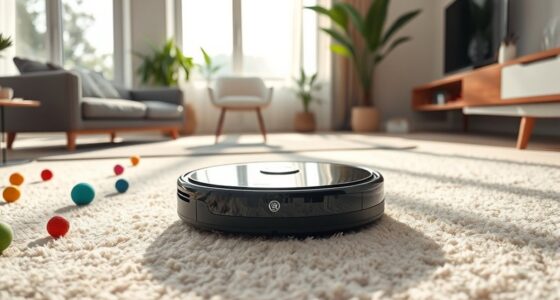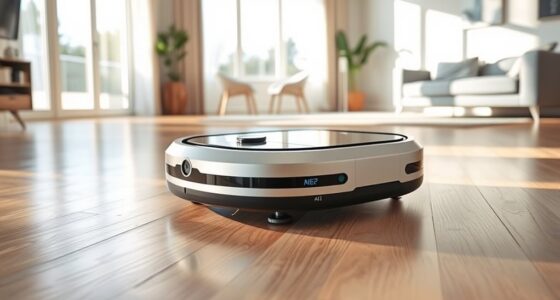
Automated robot vacuums use much less energy than manual vacuuming because they run efficiently with sensors, optimized routes, and scheduled cleanings during off-peak times. They avoid redundant passes and adjust power based on needs, saving energy overall. In contrast, manual vacuuming not only takes more physical effort but often consumes more electricity and time. If you want to understand how automation can cut down your energy use, there’s more to explore ahead.
Key Takeaways
- Robot vacuums typically consume less energy due to optimized navigation and energy-saving modes.
- Manual vacuuming’s energy use varies with model size, cleaning duration, and human effort involved.
- Automated vacuums operate during off-peak hours, further reducing overall energy impact.
- Manual cleaning requires physical effort, adding an indirect energy cost beyond electrical power.
- Advances in robot technology focus on balancing cleaning efficiency with lower energy consumption.

When it comes to keeping your floors clean, you have two main options: manual vacuuming or automating the process with a robot vacuum. Each method has different implications for energy consumption, which can influence your decision based on efficiency and convenience. Robot vacuums are designed to maximize robotic efficiency, often using less energy over time because they operate autonomously and can be scheduled to run during off-peak hours. They adapt their cleaning patterns to cover space efficiently, reducing unnecessary movements that waste power. This automation means you don’t need to spend extra energy manually pushing a heavy vacuum around, saving your physical effort and time. In contrast, manual vacuuming involves physically operating a traditional vacuum cleaner, which can vary greatly in energy use depending on the model and your cleaning habits. Larger, more powerful vacuums tend to consume more electricity, especially if you spend extended periods cleaning. While manual vacuuming may seem straightforward, it often requires more energy per session because you’re actively controlling the device and working harder to move it across surfaces. Additionally, advances in energy-efficient motor technology have helped some models reduce power consumption without sacrificing cleaning performance. Robot vacuums are generally designed to optimize power consumption by using sensors and intelligent navigation. They avoid redundant passes and focus on covering as much ground as possible with minimal energy. Many models also feature energy-saving modes that slow down or reduce suction power when appropriate, further decreasing power use. Because they can automatically return to their charging stations when battery levels are low, they avoid wasting energy on ineffective cleaning runs. On the other hand, manual vacuuming demands continuous human effort, which is not only physically tiring but can also lead to inconsistent cleaning results. The energy you expend isn’t just electrical—it’s your own. This can be considered a form of energy use that’s harder to quantify but nonetheless significant, especially if you’re doing frequent or extensive cleaning.
Frequently Asked Questions
How Does Battery Life Compare Between Automated and Manual Vacuuming Devices?
You’ll find that automated vacuuming devices typically have better battery longevity due to optimized power efficiency, lasting longer between charges. Manual vacuums often have shorter battery life because they rely on less advanced battery technology and less efficient power use. Automated models are designed for longer cleaning sessions, so their batteries tend to be more durable over time. If you prioritize longer battery life, automated devices generally offer superior power efficiency.
What Maintenance Requirements Are Unique to Automated Vacuuming Systems?
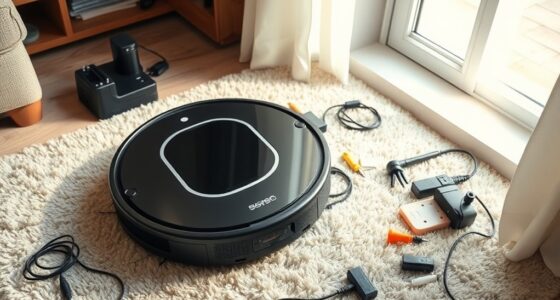
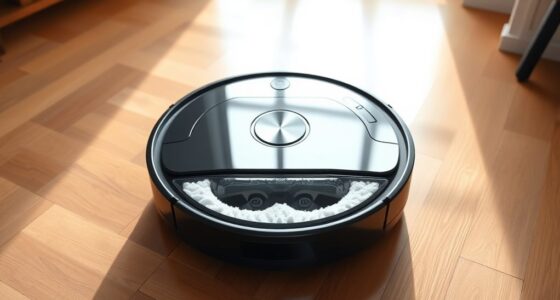
You need to regularly replace filters and perform brush maintenance on automated vacuuming systems. Unlike manual vacuums, these systems require you to check filters for clogs and replace them periodically to guarantee peak airflow. You should also clean and inspect brushes to prevent tangling and wear, which helps maintain cleaning efficiency. Staying on top of these tasks keeps your automated vacuum running smoothly and prolongs its lifespan.
Are Automated Vacuums More Cost-Effective Over Their Lifespan?
Yes, automated vacuums are more cost-effective over their lifespan. You’ll notice significant cost savings through reduced labor expenses and efficient energy use. Their energy efficiency means lower electricity bills, and many models are designed to optimize cleaning cycles, saving power. While the initial investment might be higher, the long-term savings on maintenance, replacements, and energy make automated vacuums a smart, economical choice for consistent cleaning.
How Do Automated Vacuums Handle Different Types of Flooring?
Did you know automated vacuums adapt to over 90% of floor types? You’ll find they handle carpet and hardwood with ease, thanks to advanced sensors and adjustable suction levels. For carpet, they lift dirt deep within fibers, while on hardwood, they avoid scratching and focus on surface debris. This flexibility guarantees your floors stay clean, no matter the material, making automated vacuums a versatile cleaning partner.
What Safety Features Are Included in Automated Vacuuming Devices?
You benefit from safety features like advanced sensor technology and obstacle detection in automated vacuums. These devices use sensors to identify objects and prevent collisions, reducing the risk of damage or injury. Obstacle detection helps the vacuum navigate around furniture and stairs safely, ensuring your home remains protected. These features work together seamlessly, giving you peace of mind while your vacuum efficiently cleans without causing accidents or harm.
Conclusion
So, which option truly saves more energy—automation or manual? The answer isn’t as clear-cut as you might think. As technology advances, the lines blur, and unexpected factors come into play. Will automation become the ultimate energy saver, or does manual work still hold its ground? One thing’s certain: your choice could surprise you. Stay tuned and keep questioning—your next vacuuming decision might just change everything. Who knew cleaning could be so intriguing?