Finding the best cell culture plates depends heavily on your specific research needs and budget. The top pick, Nest Scientific 701001 Polystyrene 96 Well Plate, offers excellent tissue culture treatment and consistent quality for most labs. For those seeking affordability, Weysat 96 Well Plates deliver reliable performance at a lower cost. Meanwhile, the iplusmile 24-Well Plate with raised rims caters well to labs requiring stability during handling. The main tradeoff in this category often comes down to balancing price, surface treatment, and well size or format. Continue reading for detailed insights and comparisons to help you make the best choice for your lab.
Key Takeaways
- Surface treatment (treated vs. non-treated) significantly impacts cell adhesion and growth, making it a top consideration.
- Well format (6, 12, 24, 96 wells) should align with your experimental scale and throughput needs.
- Sterility and packaging quality vary, affecting contamination risk and convenience in handling.
- Price often correlates with volume, surface treatment, and brand reputation, requiring careful evaluation of your budget versus needs.
- Special features like raised rims or individually wrapped plates can improve usability but may come with higher costs.
| 12-Well Tissue Culture Plate – Pack of 10 with Lid, Flat Bottom Wells |  | Best Overall for Versatility | Material: Polystyrene | Number of Wells: 12 per plate | Number of Plates: 10 | VIEW LATEST PRICE | See Our Full Breakdown |
| 48-Well Tissue Culture Plate with Lids, Polystyrene, Flat Bottom, Individually Wrapped |  | Best Value for High-Volume Use | Size: 4.92 x 3.35 x 0.78 inches | Well Diameter: 0.4 inches (1.1 mm) | Well Depth: 0.65 inches (16.9 mm) | VIEW LATEST PRICE | See Our Full Breakdown |
| SOLUSTRE 2 Pack 24 Well Cell Culture Plates with Lid, Clear Polystyrene Tissue Culture Trays |  | Best for Precise Laboratory Research | Number of Wells: 24 per plate | Material: Polystyrene | Dimensions: 4.92 x 3.34 inches | VIEW LATEST PRICE | See Our Full Breakdown |
| 48 Well Non-Treated Sterile Flat Tissue Culture Plate with Lid (50/Case) |  | Best for Suspension Cell Culture | Number of Wells: 48 | Material: Polystyrene | Sterilization: Gamma radiation | VIEW LATEST PRICE | See Our Full Breakdown |
| Nest Scientific 702001 Polystyrene 24 Well Cell Culture Plate, Flat Bottom, Tissue Culture Treated, Sterile, Clear, Pack of 50 |  | Best for Tissue Culture with Reliable Sterility | Material: Virgin polystyrene | Number of Wells: 24 | Bottom Type: Flat | VIEW LATEST PRICE | See Our Full Breakdown |
| Weysat 20 Pcs 96 Well Tissue Culture Plates with Lid, Flat Bottom, Transparent Polystyrene | 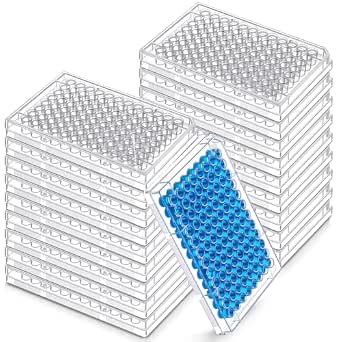 | Best Value for Educational and Basic Research Use | Material: Polystyrene | Color: Transparent | Size: 12.5 x 8.5 x 1.6 cm | VIEW LATEST PRICE | See Our Full Breakdown |
| 48 Well Treated Sterile Flat Tissue Culture Plate (50/Case) | | Best for High-Throughput Cell Adhesion and Automated Systems | Number of Wells: 48 | Material: Virgin polystyrene | Sterilization: Gamma radiation | VIEW LATEST PRICE | See Our Full Breakdown |
| 6 Well Culture Plate with Lid – Pack of 10 |  | Best for Cell Growth and Medium Volume Control | Material: High-quality PS | Number of Wells: 6 per plate | Capacity: 15.9 ml per well | VIEW LATEST PRICE | See Our Full Breakdown |
| Nest Scientific 96 Well Cell Culture Plate, Flat, Non-Treated, Sterile, 1/pk, 100/cs |  | Best for High Clarity and Batch Traceability in Non-Adherent Assays | Material: Virgin polystyrene | Number of Wells: 96 | Sterilization: E-beam | VIEW LATEST PRICE | See Our Full Breakdown |
| Nest Scientific 701001 Polystyrene 96 Well Cell Culture Plate, Flat Bottom, Tissue Culture Treated, Sterile, Clear |  | Best for Reliable Cell Attachment and Observation in Standard Applications | Material: Virgin polystyrene | Number of Wells: 96 | Bottom Type: Flat | VIEW LATEST PRICE | See Our Full Breakdown |
| 6 Well Non-Treated Sterile Flat Tissue Culture Plate with Lid (50/Case) |  | Best for Suspension Cell Growth in Bulk | Number of Wells: 6 | Material: Polystyrene | Sterilization Method: Gamma radiation | VIEW LATEST PRICE | See Our Full Breakdown |
| 50 Pcs 24-Well Cell Culture Plates with Lids, Tissue Culture-Treated, Individually Wrapped |  | Best for Adherent Cell Monitoring and Observation | Quantity: 50 pieces | Number of Wells: 24 wells per plate | Material: Virgin polystyrene | VIEW LATEST PRICE | See Our Full Breakdown |
| Celltreat 229111 12-Well Polystyrene Tissue Culture Plate with Lid, Sterile, 3.85 cm² Cell Growth Area (Pack of 50) |  | Best for Precise Sample Identification and Low-Scale Experiments | Number of Wells: 12 | Cell Growth Area: 3.85 cm² | Material: Virgin polystyrene | VIEW LATEST PRICE | See Our Full Breakdown |
| iplusmile 24-Well Cell Culture Plate with Raised Rim and Stable Lid, Clear Plastic, Laboratory Use |  | Best for Secure Well Environments and Sample Monitoring | Number of Wells: 24 | Dimensions: 4.92 x 3.34 x 0.78 inches | Material: Medical-grade plastic | VIEW LATEST PRICE | See Our Full Breakdown |
More Details on Our Top Picks
12-Well Tissue Culture Plate – Pack of 10 with Lid, Flat Bottom Wells
This 12-well plate stands out for its reliability and compatibility across various lab setups, making it a solid choice for general cell culture applications. Its high transparency and well-marked wells facilitate quick identification and easy observation, similar to the Nest Scientific 702001 but with added convenience of individual lids to prevent contamination. Compared with larger multi-well formats, its 12-well size offers a balance between sample volume and ease of handling, though it may not suit high-throughput needs. The inclusion of vent holes and condensation rings helps maintain experiment integrity, but the absence of detailed sterilization info leaves some uncertainty about its sterility assurance. Overall, this plate is ideal for labs seeking a dependable all-rounder with straightforward usability.
Pros:- High transparency for clear observation of cells
- Well-marked wells for efficient sample management
- Includes lids to prevent contamination and evaporation
- Compatible with most laboratory equipment
Cons:- No specified sterilization method, raising some sterility concerns
- Limited to 12-well format, which may limit experimental scale
Best for: Researchers needing a reliable, multi-purpose plate for routine cell culture and observation.
Not ideal for: High-throughput screening labs requiring plates with integrated sealing features or specific sterilization validation.
- Material:Polystyrene
- Number of Wells:12 per plate
- Number of Plates:10
- Design Features:Condensation ring, vent hole, marked wells
- Bottom Type:Flat
Bottom line: This plate offers versatile performance suitable for most general cell culture needs, especially where observation and contamination control are priorities.
48-Well Tissue Culture Plate with Lids, Polystyrene, Flat Bottom, Individually Wrapped
This 48-well plate offers a cost-effective solution for laboratories needing to process multiple samples simultaneously. Its high transparency ensures clear cell visualization, similar to the Nest Scientific 702001, but at a larger well count, making it suitable for experiments requiring more data points. The individual packaging and included lids enhance convenience and reduce contamination risk, yet it remains a strictly laboratory-use product with no indication of reusability. While it provides reliable evaporation control, its price and availability might be a concern for budget-conscious or infrequent users. This pick makes the most sense for busy labs prioritizing throughput and cost efficiency.
Pros:- High transparency for observation
- Individually wrapped for contamination control
- Lids help reduce evaporation
- Suitable for multiple simultaneous experiments
Cons:- Limited to laboratory applications, no mention of reusability
- Price and availability vary, which could affect planning
Best for: High-volume labs conducting multiple cell culture experiments with budget considerations.
Not ideal for: Labs requiring reusable plates or specialized sterilization validation for clinical or long-term research.
- Size:4.92 x 3.35 x 0.78 inches
- Well Diameter:0.4 inches (1.1 mm)
- Well Depth:0.65 inches (16.9 mm)
- Material:Polystyrene
- Package:Pack of 1
- Item Weight:2.71 ounces
Bottom line: This plate is well-suited for high-throughput needs in research settings where cost and convenience are key priorities.
SOLUSTRE 2 Pack 24 Well Cell Culture Plates with Lid, Clear Polystyrene Tissue Culture Trays
This 24-well plate from SOLUSTRE emphasizes precision and durability, catering to detailed tissue culture and cell assays. Its high optical clarity allows for easy observation, similar to the Nest Scientific 702001, but with a focus on chemical resistance and robust construction. The compact size maximizes workspace efficiency, which makes it ideal for labs with space constraints or specific assay types. However, the relatively deep wells require careful handling, and its use is limited to laboratory settings, ruling out clinical or home applications. Compared to the 12-well options, this plate offers a higher well count but sacrifices some handling simplicity for increased capacity.
Pros:- High optical clarity for observation
- Chemical resistant and durable material
- Compact design saves space
- Includes two plates for workflow efficiency
Cons:- Limited to laboratory use, not suitable for clinical or home settings
- Deep wells may require careful handling to avoid spills
Best for: Laboratories conducting detailed cell assays that require chemical resistance and high optical clarity.
Not ideal for: Users needing large-scale or high-throughput plates, or those working outside of controlled lab environments.
- Number of Wells:24 per plate
- Material:Polystyrene
- Dimensions:4.92 x 3.34 inches
- Includes:Lid
- Package:2 plates
Bottom line: This plate is ideal for detailed, chemical-resistant cell assays demanding high observation quality in confined lab spaces.
48 Well Non-Treated Sterile Flat Tissue Culture Plate with Lid (50/Case)
This sterile, non-treated 48-well plate is designed specifically for suspension cells, with gamma-irradiation providing reliable sterility. Its flat-bottom wells support growth in suspension, similar to the Weysat 96 Well Plates, but with fewer wells and a focus on cell growth without adherence requirements. The gamma-irradiation process ensures immediate usability, reducing preparation time. The non-treated surface, however, makes it less suitable for adherent cell cultures, which need surface modification for attachment. This plate makes the most sense for labs working predominantly with suspension cells and requiring sterile, ready-to-use plates in bulk.
Pros:- Sterile and gamma irradiated for immediate use
- Suitable for suspension cell growth
- Bulk pack of 50 for high-volume use
- Flat bottom supports uniform suspension culture
Cons:- Non-treated surface not ideal for adherent cells
- Limited to suspension cell applications
Best for: Research labs focused on suspension cell cultures needing sterile, ready-to-use plates.
Not ideal for: Experiments involving adherent cell cultures or applications requiring surface treatment for cell attachment.
- Number of Wells:48
- Material:Polystyrene
- Sterilization:Gamma radiation
- Well Shape:Flat bottom
- Volume per Well:1.55 ml
- Quantity:50 per case
Bottom line: This plate is best suited for laboratories working with suspension cells that need sterile, ready-to-go plates in large quantities.
Nest Scientific 702001 Polystyrene 24 Well Cell Culture Plate, Flat Bottom, Tissue Culture Treated, Sterile, Clear, Pack of 50
This tissue culture-treated 24-well plate from Nest Scientific emphasizes reliability for adherent cell growth, with high clarity and sterile packaging. Its tissue culture treatment ensures optimal cell attachment, similar to the Celltreat 229111, but with an added focus on contamination prevention through individual wrapping. The gamma irradiation sterilization process guarantees consistent sterility, making it suitable for sensitive experiments. While the 24-well format limits high-throughput applications, it provides a dependable choice for standard lab studies requiring clear observation and consistent growth conditions. Its non-pyrogenic and DNase/RNase free features add to its suitability for precise biological research.
Pros:- Sterile and tissue culture treated for reliable cell attachment
- Individually wrapped for contamination control
- High clarity for observation
- Suitable for sensitive biological assays
Cons:- Limited to 24-well plates, not ideal for larger experiments
- No mention of reusability or long-term durability
Best for: Labs requiring sterile, tissue culture-treated plates for adherent cell experiments with high clarity observation.
Not ideal for: Large-scale or high-throughput screening, or non-adherent cell applications needing different well formats.
- Material:Virgin polystyrene
- Number of Wells:24
- Bottom Type:Flat
- Sterilization Method:Gamma irradiation
- Tissue Culture Treated:Yes
- Pack Size:50 plates
Bottom line: This plate provides dependable, sterile conditions ideal for adherent cell culture and detailed observation in research settings.
Weysat 20 Pcs 96 Well Tissue Culture Plates with Lid, Flat Bottom, Transparent Polystyrene
This set of 20 transparent tissue culture plates stands out for its affordability and simplicity, making it an ideal choice for educational labs and basic research. Compared with premium options like the Nest Scientific 701001, the Weysat plates lack individual well markings and advanced sterilization features but offer high clarity and a lightweight design that saves space. The included lids with ventilation and condensation rings help reduce evaporation, which is essential for consistent results in small-scale experiments. However, manual measurement variations and limited application scope mean this product isn’t suited for high-precision or clinical research. This pick makes sense for labs prioritizing cost-efficiency over specialized features.
Pros:- High clarity and smooth surface for easy observation
- Lids with condensation rings and ventilation holes reduce evaporation and contamination
- Lightweight and space-efficient design
Cons:- Manual measurement may cause slight size inconsistencies
- Limited to basic lab and educational use
Best for: Researchers and educators needing multiple plates for routine experiments or teaching demonstrations
Not ideal for: High-throughput laboratories requiring precise well marking and advanced sterilization for sensitive applications
- Material:Polystyrene
- Color:Transparent
- Size:12.5 x 8.5 x 1.6 cm
- Weight:0.06 kg per plate
- Package Quantity:20 plates
Bottom line: Best suited for budget-conscious labs and educational settings where high precision isn’t critical.
48 Well Treated Sterile Flat Tissue Culture Plate (50/Case)
This 48-well plate excels in applications requiring reliable cell adhesion, thanks to its tissue culture treatment and gamma sterilization, making it a solid choice for research that demands consistency. Compared with the Nest Scientific 96 Well Cell Culture Plate, which offers more wells per plate but less surface treatment, this 48-well format provides a better balance for experiments needing larger well sizes and straightforward handling. The gamma sterilization ensures contamination-free use, but it also means the product is strictly limited to lab environments and not suitable for clinical settings. Its bulk packaging favors high-volume labs but might be overkill for small-scale projects. Overall, this plate is ideal for labs needing robust, sterile, and well-treated surfaces for cell growth.
Pros:- Sterilized and ready to use right out of the box
- Designed for optimal cell adhesion and growth
- Compatible with automated high-throughput systems
Cons:- May be more costly than non-treated options
- Limited to laboratory research, not clinical use
Best for: Laboratories performing high-throughput cell adhesion studies or automated cell culture workflows
Not ideal for: Small labs or clinical applications needing clinical-grade sterility or fewer wells
- Number of Wells:48
- Material:Virgin polystyrene
- Sterilization:Gamma radiation
- Design:Flat bottom with retention ring
- Surface Treatment:Tissue culture treated
- Packaging:50 plates per case
Bottom line: A strong choice for labs prioritizing reliable adhesion and contamination control in high-volume testing.
6 Well Culture Plate with Lid – Pack of 10
This 6-well plate is designed for experiments requiring larger volume wells, making it suitable for tissue culture and cell proliferation studies. Its high-quality, transparent polystyrene allows for clear visualization, while the surface treatment promotes tissue adhesion. The included lids help prevent evaporation during extended incubation, a feature that enhances consistency across experiments. Compared with the Nest Scientific 701001, which has a flat bottom and small footprint, this 6-well format offers increased well capacity and flexibility for medium volumes. However, some users may find the size less suitable for small-scale or high-density assays. The moderate reusability and size make it practical for medium-scale cultures but less so for micro-scale testing.
Pros:- High-quality transparent material for observation
- Surface treatment enhances tissue adhesion
- Lids prevent evaporation and contamination
Cons:- Limited to medium-scale experiments, not ideal for microcultures
- Size may be bulky for small lab spaces
Best for: Cell biologists needing larger wells for medium-volume culture or transfection experiments
Not ideal for: Small-scale or high-throughput screening labs where space is limited and smaller plates are preferred
- Material:High-quality PS
- Number of Wells:6 per plate
- Capacity:15.9 ml per well
- Dimensions:12.5cm x 8.5cm x 23cm
- Hole Diameter:35mm
- Reusability:Moderately high
Bottom line: A practical option for labs requiring larger wells with reliable sealing and tissue adhesion support.
Nest Scientific 96 Well Cell Culture Plate, Flat, Non-Treated, Sterile, 1/pk, 100/cs
This 96-well plate offers excellent clarity and batch traceability, making it suitable for assays where observation and documentation are key. The non-treated surface limits cell attachment, which is ideal for non-adherent cell types or specialized assays requiring coating. Compared with the Nest Scientific 701001, which is tissue culture treated, this plate provides a different approach suited to specific research needs. Its E-beam sterilization guarantees safety, but the non-treatment can restrict its use for adherent cell cultures without additional coating steps. The large case size makes it cost-effective for bulk purchases but unnecessary for small experiments. It’s best for labs that prioritize observation and traceability over cell attachment.
Pros:- High clarity for easy observation
- Sterilized and non-pyrogenic for safety
- Batch traceability with lot numbers
Cons:- Non-treated surface limits cell attachment without coating
- Large quantity may be unnecessary for small projects
Best for: Researchers conducting non-adherent cell assays or requiring high-clarity imaging in large batches
Not ideal for: Studies involving adherent cells or experiments needing surface modification without coating
- Material:Virgin polystyrene
- Number of Wells:96
- Sterilization:E-beam
- Treatment:Non-treated
- Quantity:100 per case
Bottom line: Ideal for labs focused on imaging, non-adherent cell culture, and batch traceability needs.
Nest Scientific 701001 Polystyrene 96 Well Cell Culture Plate, Flat Bottom, Tissue Culture Treated, Sterile, Clear
This tissue culture treated 96-well plate combines high clarity with effective surface modification, making it suitable for adherent cell cultures requiring consistent attachment. Its individual wrapping prevents contamination, ensuring reliable results. Compared with the Weysat 20 Pcs 96 Well Plates, which are more economical but lack surface treatment, this plate offers greater assurance of cell growth consistency. The well coordinate markings aid in sample identification, while the flat bottom ensures even cell distribution. However, its bulk packaging may be unnecessary for small-scale work, and the product’s cost is higher than non-treated alternatives. This plate delivers dependable performance in routine tissue culture tasks, especially where cell attachment is critical.
Pros:- Sterilized and individually wrapped for contamination control
- High clarity for microscopy and observation
- Well coordinate markings for easy identification
Cons:- Higher cost compared to non-treated plates
- Bulk packaging may be excessive for small-scale use
Best for: Standard cell culture labs needing reliable attachment and imaging capabilities
Not ideal for: Non-adherent cell experiments or labs with tight budgets for small tests
- Material:Virgin polystyrene
- Number of Wells:96
- Bottom Type:Flat
- Sterility:Sterile, gamma irradiated
- Treatment:Tissue culture treated
- Dimensions:20.98 x 13.74 x 9.02 inches
- Weight:2.72 ounces
Bottom line: Suitable for routine cell culture where attachment and observation are priorities.
6 Well Non-Treated Sterile Flat Tissue Culture Plate with Lid (50/Case)
This plate stands out for its non-treated surface, making it ideal for suspension cell cultures where adherence is unnecessary. Compared with the tissue culture-treated alternatives like the 50 Pcs 24-Well Plates, it lacks surface adhesion properties but offers a larger well volume, which benefits experiments requiring more media per well. Its gamma sterilization and sterile packaging ensure contamination-free use right out of the box. The inclusion of a retention ring simplifies handling and maximizes growth space, especially for high-throughput applications. However, its non-treated surface limits its utility for adherent cell lines, and the bulk packaging is less suited for small labs with limited space. This pick makes the most sense for laboratories focused on suspension cultures needing larger-volume wells and high throughput.Pros:- Sterile and ready for immediate use, saving prep time
- Suitable for suspension cell growth due to non-treated surface
- Includes retention ring for maximum growth and ease of handling
- High throughput design with serrated gripping panels
Cons:- Non-treated surface not compatible with adherent cell lines
- Bulk packaging less practical for small-scale or individual experiments
Best for: Labs working with suspension cells that require large well volumes and bulk processing.
Not ideal for: Researchers focusing on adherent cell cultures that depend on treated surfaces for cell attachment.
- Number of Wells:6
- Material:Polystyrene
- Sterilization Method:Gamma radiation
- Well Volume:17 ml
- Package Quantity:50 plates per case
- Dimensions:22.6 x 11.2 x 8 inches
- Item Weight:8.78 pounds
Bottom line: This plate is best suited for suspension cell cultures in high-volume, high-throughput contexts where surface treatment isn’t needed.
50 Pcs 24-Well Cell Culture Plates with Lids, Tissue Culture-Treated, Individually Wrapped
This set excels for adherent cell cultures thanks to its tissue culture-treated surface, which promotes reliable cell attachment and growth. Compared with the non-treated 6-well plates, the TC-treated surface ensures better cell viability and experimental consistency. The individual wrapping maintains sterility and prevents contamination, a notable advantage over bulk-packaged options like the 48-Well sterile plates, which might be less convenient for small labs. The raised rim design minimizes evaporation, essential for long-term or sensitive experiments. However, the limited well count per plate and the bulk packaging may not suit labs needing quick access to fewer plates or small-scale testing. This product is ideal for labs prioritizing cell attachment and microscopic observation in multi-well formats.Pros:- Durable, clear polystyrene for excellent microscopic observation
- Tissue culture-treated surface promotes strong cell adhesion
- Individually wrapped for maintained sterility
- Raised rim design reduces evaporation during incubation
Cons:- Limited to 24 wells per plate, less flexible for large-scale experiments
- Bulk packaging may be inefficient for very small or individual labs
- No information on reuse or reusability
Best for: Researchers conducting adherent cell experiments requiring high observation clarity and sterile conditions.
Not ideal for: Labs primarily working with suspension cells or those needing larger well volumes for media-intensive procedures.
- Quantity:50 pieces
- Number of Wells:24 wells per plate
- Material:Virgin polystyrene
- Treatment:Tissue Culture (TC) treated
- Sterility:Gamma radiation sterile
- Dimensions:23.62 x 9.84 x 6.89 inches
Bottom line: This plate is ideal for adherent cell studies where cell attachment and observation are critical, especially in medium-throughput settings.
Celltreat 229111 12-Well Polystyrene Tissue Culture Plate with Lid, Sterile, 3.85 cm² Cell Growth Area (Pack of 50)
This 12-well plate offers marked wells and nesting lids, making it especially suitable for experiments requiring careful sample identification and minimal cross-contamination. Compared to larger-well formats like the 24-well plates, it provides more precise well management for smaller-scale tests or pilot studies. The nesting lid design reduces evaporation risks and simplifies stacking in crowded incubators. While its smaller size is advantageous for tightly controlled experiments, it limits throughput and may be less cost-effective for high-volume needs. Its sturdy stacking and labeling features make it a reliable choice for detailed, low-scale laboratory work.Pros:- Labeled wells facilitate easy sample management
- Nestable lids reduce evaporation and contamination
- Made from medical-grade virgin polystyrene for reliability
- Sturdy stacking design for organized storage
Cons:- Limited to 12 wells per plate, restricting throughput
- Single-use only, potentially costly over time
- Higher price point compared to non-sterile or unlabelled options
Best for: Scientists performing small-scale, detailed experiments where sample identification and contamination control are priorities.
Not ideal for: Large-scale or high-throughput studies that require more wells per plate or larger well volumes.
- Number of Wells:12
- Cell Growth Area:3.85 cm²
- Material:Virgin polystyrene
- Sterility:Sterile (gamma irradiated)
- Pack Size:50
Bottom line: This plate suits detailed, small-scale experiments demanding clear sample identification and contamination prevention.
iplusmile 24-Well Cell Culture Plate with Raised Rim and Stable Lid, Clear Plastic, Laboratory Use
This 24-well plate offers a secure environment thanks to its raised rims and sturdy, integrated lid, making it suitable for cell growth, reactions, and sample storage. Compared with the individually wrapped 50 Pcs 24-Well Plates, this design emphasizes stability and ease of use in active laboratory workflows. The transparent plastic allows for continuous visual monitoring, a key advantage over opaque or less sturdy alternatives. Its design is optimized for experiments where evaporation control and sample integrity are paramount, but its size limits large-scale applications, and it is strictly for lab environments, not clinical or home use. This product is ideal for scientists emphasizing sample security and observation during experiments.Pros:- Secure, raised rims reduce evaporation and cross-contamination
- Integrated stable lid enhances sample security
- Clear plastic allows easy visual monitoring
- Made from sterile, medical-grade plastic for reliable results
Cons:- Limited to 24 wells, less suitable for large experiments
- Designed specifically for laboratory use, not for clinical or home settings
- Size may be small for extensive or high-volume studies
Best for: Laboratory researchers needing a stable, secure environment for multiple small-scale samples and reactions.
Not ideal for: Large-scale, high-volume testing or clinical settings requiring larger or more specialized plates.
- Number of Wells:24
- Dimensions:4.92 x 3.34 x 0.78 inches
- Material:Medical-grade plastic
- Design Features:Raised rims, integrated stable lid
- Color:Clear
Bottom line: This plate is best for experiments where sample security, stability, and visual monitoring are fundamental in a controlled lab setting.
How We Picked
The products were evaluated based on key criteria that matter most to lab users: performance consistency, surface treatment quality, versatility of well formats, packaging and sterility, and overall value. We prioritized plates that offer reliable cell adhesion, minimal contamination risk, and ease of use. The ranking reflects a balance between price and features, ensuring options suitable for different lab sizes and budgets. Products with proven durability and trusted brands earned higher spots, while considerations like special features and user reviews helped refine the list.Factors to Consider When Choosing Best Cell Culture Plates
Choosing the right cell culture plate involves considering several important factors that go beyond just the price. Understanding these elements can help you avoid common pitfalls and select plates that will meet your lab’s specific demands, whether for research, diagnostics, or high-throughput screening.Well Format and Size
Cell culture plates come in various formats, from 6-well to 96-well plates. The format you choose should match your experimental design and throughput needs. Larger wells are better for cell growth and visualization, while higher well counts maximize data points in high-throughput assays. Mistakes often occur when labs select a format that doesn’t support their planned procedures, leading to inefficient workflows or the need for additional plates.
Surface Treatment and Material
The surface treatment of the plates—such as tissue culture-treated surfaces—directly influences cell adhesion, proliferation, and differentiation. Untreated plates are suitable for suspension cultures or specific cell types, but tend to have poorer attachment for adherent cells. Additionally, the material (usually polystyrene) impacts optical clarity and chemical compatibility. Choosing a plate with appropriate surface treatment reduces variability in experimental results and saves time on surface modification.
Sterility and Packaging
Proper sterilization and packaging are crucial to prevent contamination. Individually wrapped plates are more convenient and reduce handling risks but may cost more. Sterile packaging ensures your plates are ready to use straight out of the box, avoiding additional sterilization steps. Beware of lower-priced options that may lack reliable sterilization, as contamination can compromise entire experiments and lead to wasted resources.
Material and Optical Clarity
High-quality polystyrene offers superior optical clarity, which is essential for microscopic observation and imaging. Cheaper plastics may cloud over time or distort images, impacting data quality. Consider your imaging needs and whether the plates are compatible with your microscopes or imaging systems. This is especially important for detailed cellular analysis or high-resolution microscopy.
Cost and Volume Discounts
Cost per plate often decreases with larger volume purchases, but it’s vital to balance upfront costs with your actual usage. Bulk packs are economical but may lead to unused plates if your needs change. Be cautious of overly inexpensive options that might cut corners on quality or sterility. Investing in reputable brands can prevent costly contamination or inconsistent results, especially for critical or long-term studies.
Special Features
Additional features like raised rims, specialized lids, or individually wrapped plates can improve handling and reduce cross-contamination. However, these features typically add to the overall cost. Evaluate whether the added convenience aligns with your workflow and whether it justifies the expense, especially if you process large sample volumes regularly.
Frequently Asked Questions
How do I choose between treated and non-treated plates?
If your cells require strong adhesion and proliferation, treated plates are preferable because their surfaces are designed to promote cell attachment. Non-treated plates are suitable for suspension cultures or experiments where cell attachment is not desired. Selecting the wrong type can lead to poor cell growth or unexpected results, so consider your cell type and experiment goals carefully.
Are individually wrapped plates worth the extra cost?
Individually wrapped plates minimize contamination risk and make handling more hygienic, especially in sterile environments. They are especially valuable for clinical or sensitive research applications. However, for routine lab work where sterilization protocols are strictly followed, bulk-packaged plates might suffice and save costs. Weigh the importance of contamination control against your budget constraints.
What is the significance of well size and format for my experiments?
The well size influences cell growth and imaging quality, with larger wells providing more space for cell colonies and easier observation. The format determines throughput; for example, 96-well plates allow high-volume screening but may not be necessary for small-scale studies. Choosing an inappropriate format can lead to inefficient use of resources or limited experimental scope.
How important is optical clarity in cell culture plates?
Optical clarity is crucial if your research involves microscopy or imaging, as clouded or distorted plates can compromise data accuracy. High-quality polystyrene plates tend to maintain clarity over time, while cheaper plastics may degrade or become cloudy. Investing in clear, sturdy plates ensures reliable visualization and imaging, especially for detailed cellular analysis.
Can I use generic plates for all types of cell culture?
While generic or less expensive plates might work for some applications, they may lack the specific surface treatment or material quality required for certain cell types or experiments. Using subpar plates can lead to inconsistent results, contamination, or poor cell adhesion. It’s often worthwhile to select plates tailored to your specific cell culture needs, especially for critical or long-term projects.
Conclusion
For most labs seeking a reliable all-rounder, the Nest Scientific 701001 Polystyrene 96 Well Plate makes an excellent choice, balancing quality and cost. Budget-conscious researchers will appreciate the Weysat 96 Well Plates for their affordability, while high-throughput facilities or imaging-heavy projects should consider plates with superior optical clarity and advanced surface treatments. Beginners or smaller labs might prefer pre-sterilized and easy-to-handle options, whereas specialized applications benefit from features like raised rims or individually wrapped packages. Matching your specific needs with these options ensures the best results and efficient workflows.