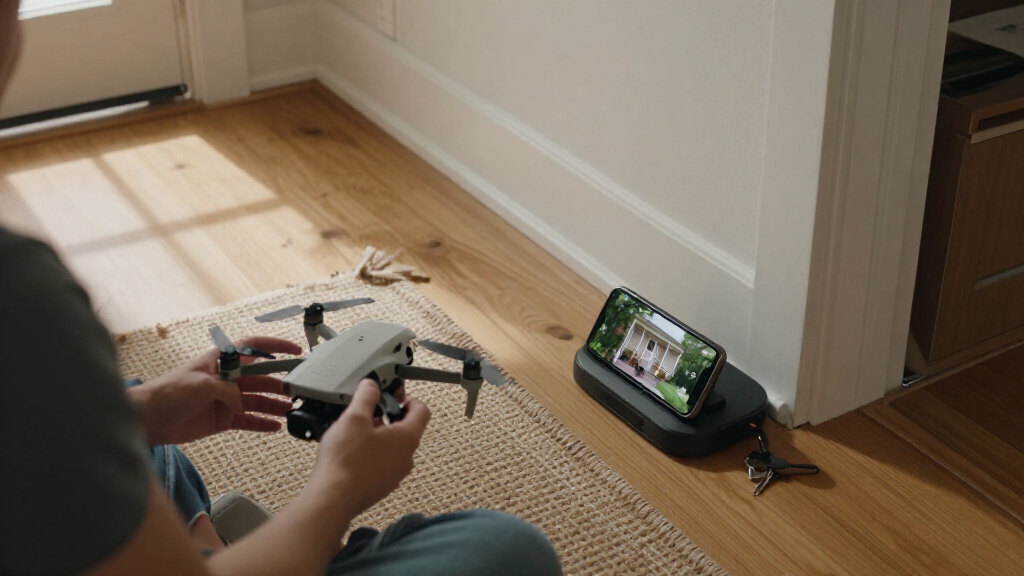
I would treat a home security drone as a mobile camera for occasional property checks, not as a replacement for fixed cameras, alarms, or emergency response. Among these four options, the PROONOS X38 is my strongest all-around fit for a buyer who wants a gimbal-stabilized camera and beginner-oriented controls; the DJI Neo is the easiest to launch for quick visual checks; and the NAFYRE N11 PRO is the better match for longer sessions thanks to its three included batteries.

Get home appliances delivered free with Prime
- Fast, free delivery on millions of items
- Prime Video, Amazon Music and more included
- Member-only deals all year
The tradeoff is that these drones serve different kinds of monitoring. The Holy Stone HS360E advertises a long transmission range and flexible GPS flight modes, while its intermediate-skill positioning makes it less approachable than the X38 or Neo. None of the listed models is described as a dedicated autonomous security system with continuous patrol scheduling, a monitored alarm connection, or guaranteed night surveillance. I rank them by how well their stated features support practical, controlled property checks, while weighing setup demands, camera stability, endurance, and the limits buyers should plan around.
Complete the kit



Key Takeaways
- The PROONOS X38 is my best overall pick because its 3-axis gimbal, GPS and optical-flow positioning, beginner mode, and two batteries make controlled property checks more approachable.
- The DJI Neo is the easiest choice for quick launches and subject tracking, but activation requires the DJI Fly app and the standard combo includes one battery.
- The Holy Stone HS360E stands out for foldable portability, GPS flight modes, and its stated transmission range, though its intermediate-skill positioning may rule it out for new pilots.
- The NAFYRE N11 PRO offers the most included battery capacity in this lineup, with three batteries and up to 90 minutes of stated total flight time, but its video resolution is 2048 × 1080 rather than 4K.
- None of these product descriptions establishes continuous autonomous guarding or night monitoring; I would pair any drone with fixed cameras, lighting, and an alarm system.
| PROONOS X38 GPS Drone with 4K Camera and 3-Axis Gimbal, Yellow |  | Best Overall for Stabilized Property Checks | Camera: 4K UHD; 8.29 MP effective still resolution | Lens and stabilization: 110° wide-angle lens; 3-axis gimbal | Positioning: GPS and optical flow | VIEW LATEST PRICE | See Our Full Breakdown |
| DJI Neo Mini Drone with 4K UHD Camera, Subject Tracking, Palm Takeoff, and Propeller Guards |  | Best for Beginners and Quick Checks | Weight: 135 g | Camera: Stabilized 4K UHD video; 12 MP stills | Control options: App, voice, compatible remote, or controller-free operation | VIEW LATEST PRICE | See Our Full Breakdown |
| Holy Stone HS360E GPS Drone with 4K EIS Camera |  | Best for GPS Flight Modes and Range-Focused Checks | Camera: 4K video; 12 MP still images | Stabilization: Electronic Image Stabilization | Weight and design: Under 249 g; foldable | VIEW LATEST PRICE | See Our Full Breakdown |
| NAFYRE N11 PRO 4K UHD GPS Drone with Camera, 3 Batteries, Brushless Motors, 5 GHz FPV, Follow Me and Auto Return |  | Best for Longer Sessions with Included Batteries | Camera: 4K UHD branding; photos 4096 × 3072; video 2048 × 1080 | Lens and angle: 100° field of view; camera angle adjusts up to 90° | Positioning: GPS and optical flow | VIEW LATEST PRICE | See Our Full Breakdown |
| home security drone | Camera | Positioning | Weight | Flight features |
|---|---|---|---|---|
| PROONOS X38 GPS Drone with 4K | 4K UHD; 8.29 MP effective still resolution | GPS and optical flow | — | — |
| DJI Neo Mini Drone with 4K UHD | Stabilized 4K UHD video; 12 MP stills | — | 135 g | Subject tracking, eight QuickShots, palm takeoff and landing |
| Holy Stone HS360E GPS Drone wi | 4K video; 12 MP still images | — | — | — |
| NAFYRE N11 PRO 4K UHD GPS Dron | 4K UHD branding; photos 4096 × 3072; video 2048 × 1080 | GPS and optical flow | 180 g | Auto return, Follow Me, Tap Fly, Point of Interest |
More Details on Our Top Picks
PROONOS X38 GPS Drone with 4K Camera and 3-Axis Gimbal, Yellow
I rank the PROONOS X38 first because its combination of a 3-axis gimbal, GPS and optical-flow positioning, and beginner-oriented controls maps well to the basic job many homeowners have in mind: lifting a camera for a controlled look around the property. The gimbal is its clearest advantage over the Holy Stone HS360E, which specifies electronic image stabilization instead. Mechanical gimbal stabilization can help keep the camera’s view composed as the aircraft moves, though it does not guarantee readable detail at every distance or in difficult light.
For a less experienced pilot, the X38 also offers beginner mode, one-key takeoff and landing, and auto return. Those controls give it a gentler learning path than the HS360E, which is listed as an intermediate-skill product. Follow Me mode adds a tracking option, but I would not confuse it with autonomous perimeter patrol: the provided details do not describe scheduled routes, security alerts, or a monitoring service. The 110° lens gives a broad view, useful for a general sweep, but a wide view can make distant details smaller in the frame.
The package includes two batteries and a protective case, giving it an edge over the one-battery DJI Neo standard combo for repeated checks between charging periods. Its stated maximum flight distance is 1,640 feet, while video transmission is listed at 985 feet. That gap matters: a stated flight distance does not mean the live camera view stays available across the full distance. Compared with the NAFYRE N11 PRO, the X38 has a specified 4K camera and gimbal, but fewer included batteries. The camera-angle controls should also be handled gently, and the supplied information does not establish weatherproofing or night surveillance.
I see this as the most balanced option for an owner who wants an adjustable camera view and a manageable set of flight aids, rather than the longest advertised range or the most batteries. I would still plan to keep the drone within a clear, controlled operating area and use fixed cameras for everyday coverage. Its camera stabilization and beginner controls put it ahead of the other picks for general inspection work; its range discrepancy and delicate camera-angle mechanism are real limits.
Pros:- A 3-axis gimbal and 4K camera support steadier, adjustable views during property checks.
- GPS and optical-flow positioning help the drone hold its position.
- Beginner mode, one-key takeoff and landing, and auto return offer accessible flight aids.
- Two batteries and a protective case are included.
Cons:- Video transmission is specified to 985 feet, shorter than the 1,640-foot maximum flight distance.
- The camera-angle controls require gentle handling to reduce the risk of damage.
- The listed features do not establish continuous patrol scheduling or night-vision security.
Best for: Homeowners who want a gimbal-stabilized camera, beginner-friendly controls, and two included batteries for occasional outdoor property checks.
Not ideal for: Buyers who need continuous autonomous patrols, verified night monitoring, a long live-video link matching the full flight distance, or a maintenance-free security camera.
- Camera:4K UHD; 8.29 MP effective still resolution
- Lens and stabilization:110° wide-angle lens; 3-axis gimbal
- Positioning:GPS and optical flow
- Flight aids:Beginner mode, Follow Me, auto return, one-key takeoff and landing
- Maximum flight distance:1,640 feet
- Video transmission distance:985 feet
- Included:Two batteries, protective case, remote control, user manual
Our verdict“I recommend the PROONOS X38 as the most balanced choice here for homeowners who value stable footage and accessible flight controls over maximum advertised range or battery count.”
DJI Neo Mini Drone with 4K UHD Camera, Subject Tracking, Palm Takeoff, and Propeller Guards
The DJI Neo is my pick for someone who wants to get a drone into the air with less controller fuss. At 135 g, it is the lightest clearly specified option in this group, and palm takeoff and landing, controller-free operation, app control, and voice control give it several ways to begin a short flight. That ease of launch makes it more approachable for quick visual checks than the intermediate-skill Holy Stone HS360E, although a simple launch does not remove the need to learn safe flight and local operating rules.
Its stabilized 4K video and 12 MP stills give the camera a credible role in documenting a driveway, yard, or other nearby area. Subject tracking can help keep a moving person in view, and eight QuickShots add automated camera moves. Those features are more about convenient capture than security-specific surveillance: the product details do not describe an automatic boundary patrol, alarm trigger, or continuous recording service. The provided maximum range is 10 km, but I would not plan property surveillance around a maximum figure alone; usable control and video conditions vary, and a long-range specification is not the same as dependable coverage across a neighborhood.
Compared with the PROONOS X38, the Neo is more compact and offers palm-based operation, but the X38 lists a 3-axis gimbal, two batteries, and more explicit beginner mode and return-home features. The Neo’s supplied combo includes one battery and propeller guards, so repeated checks may require charging or a separate battery arrangement. There is also a setup step that buyers should know before ordering: activation requires the DJI Fly app, downloaded from DJI’s official website. I would be comfortable recommending it to a buyer who can complete that setup and wants an easy-to-carry camera drone, but not to someone who expects a ready-to-run, dedicated security appliance.
Its low weight, multiple control methods, and subject tracking make the Neo the clearest beginner-friendly choice in this lineup. It falls behind the X38 for gimbal-based camera control and included battery supply, and its listed features still require the pilot to operate the aircraft rather than leaving it to guard the home independently.
Pros:- Lightweight 135 g design with propeller guards.
- Stabilized 4K video and 12 MP still images.
- Subject tracking and eight QuickShots modes offer flexible capture.
- Palm takeoff and landing plus app, voice, and compatible remote control.
Cons:- Activation requires the DJI Fly app, downloaded from DJI’s official website.
- The listed standard combo includes one battery.
- Its supplied features do not describe scheduled security patrols or alarm integration.
Best for: First-time drone owners who want a lightweight camera for short, manually supervised checks and prefer palm or app control over a traditional controller.
Not ideal for: Buyers who want multiple batteries in the standard package, a 3-axis gimbal, or a security system that automatically patrols without a pilot.
- Weight:135 g
- Camera:Stabilized 4K UHD video; 12 MP stills
- Control options:App, voice, compatible remote, or controller-free operation
- Flight features:Subject tracking, eight QuickShots, palm takeoff and landing
- Connectivity:Wi-Fi and Bluetooth
- Maximum range:10 km listed
- Standard combo:One battery and propeller guards
- Activation:DJI Fly app required; download from DJI’s official website
Our verdict“I would choose the DJI Neo for the simplest lightweight launch experience, provided app activation and a single included battery suit the way you plan to use it.”
Holy Stone HS360E GPS Drone with 4K EIS Camera
The Holy Stone HS360E is the pick I would examine first if GPS flight modes and a foldable design matter more than the easiest learning curve. Its listed set includes GPS return-to-home, Follow Me, waypoint flight, and Circle Fly, giving a pilot more ways to direct a property inspection than a basic manually steered flight. The advertised transmission range reaches up to 20,000 feet, the longest stated figure in this roundup, but that number is conditional on operating circumstances and should not be read as a promise of a reliable live view at that distance.
The camera records 4K video and 12 MP stills, with electronic image stabilization rather than the PROONOS X38’s 3-axis gimbal. That makes the X38 the stronger match for buyers who prioritize a stabilized, adjustable camera platform. The HS360E’s foldable design and weight under 249 g make it easier to store and carry, while its brushless motors are described as supporting quieter, more stable flight. Those qualities suit a homeowner who wants to take the drone out for planned inspections, but the product is listed for intermediate skill, so I would not put it ahead of the X38 or DJI Neo for a first-time flyer.
Its waypoint and Circle Fly modes can help structure a flight around a particular area, but they are not proof of unattended security patrols. The supplied details do not specify patrol scheduling, intrusion alerts, or integration with a home alarm. A drone also cannot provide uninterrupted coverage while charging or when weather prevents flying. I would use these modes for a pilot-supervised inspection, then rely on fixed cameras and sensors for routine monitoring.
Compared with the NAFYRE N11 PRO, the HS360E offers a more substantial listed transmission figure and waypoint flight, while the NAFYRE includes three batteries and states up to 90 minutes of combined flight time. Compared with the PROONOS, the Holy Stone is less beginner-oriented and lacks a specified mechanical gimbal. Its appeal is therefore narrower but clear: foldable portability and GPS flight flexibility for a pilot already comfortable controlling a drone.
Pros:- 4K video and 12 MP stills with electronic image stabilization.
- GPS return-to-home, Follow Me, waypoint flight, and Circle Fly modes.
- Foldable design weighing under 249 g.
- Brushless motors are described as supporting quieter, steadier flight.
Cons:- Listed as an intermediate-skill product, making it less suitable for beginners.
- The 20,000-foot transmission figure depends on operating conditions.
- Electronic stabilization is not the same as the PROONOS X38’s 3-axis gimbal.
Best for: Pilots with some drone experience who want a foldable GPS model with waypoint and Circle Fly modes for supervised, planned property inspections.
Not ideal for: New pilots, buyers who prioritize a 3-axis gimbal, or anyone treating the listed 20,000-foot transmission range as guaranteed everyday coverage.
- Camera:4K video; 12 MP still images
- Stabilization:Electronic Image Stabilization
- Weight and design:Under 249 g; foldable
- Flight modes:GPS return-to-home, Follow Me, waypoint flight, Circle Fly
- Transmission range:Up to 20,000 feet listed; conditions apply
- Motors:1503 brushless
- Media and formats:SD card; MP4 video; JPEG and RAW images
Our verdict“I recommend the HS360E for experienced beginners and intermediate pilots who value foldable portability and GPS flight modes, not for buyers seeking the simplest first drone.”
NAFYRE N11 PRO 4K UHD GPS Drone with Camera, 3 Batteries, Brushless Motors, 5 GHz FPV, Follow Me and Auto Return
The NAFYRE N11 PRO is the battery-minded choice in this lineup. It comes with three batteries and lists up to 90 minutes of total flight time, which can support several short checks without returning to the charging point after every flight. That makes it a better fit for a large property or a series of outbuildings than the DJI Neo’s standard one-battery combo. The total figure is a stated maximum, not a guarantee of uninterrupted flight: actual time can vary with conditions and how the drone is flown.
It has GPS and optical-flow positioning, brushless motors, auto return, Follow Me, Tap Fly, and Point of Interest modes. That is a useful set of aids for a supervised inspection, and its 180 g weight keeps it relatively compact. A 100° lens and camera-angle adjustment up to 90° give the pilot flexibility when checking a roof edge or viewing an area from a different angle. The listing also describes indoor and outdoor positioning support, but a buyer should not treat that as proof that every indoor space is suitable for flight; obstacles, lighting, and available room still matter.
The headline camera label needs a closer read. Although it is marketed as a 4K UHD camera and takes photos at 4096 × 3072, its specified video resolution is 2048 × 1080. I would not choose it over the PROONOS X38 or DJI Neo if detailed 4K moving footage is the main goal. The NAFYRE’s three batteries are its clear advantage, but that endurance does not compensate for the lower stated video resolution if a buyer needs crisp moving images for documenting small details.
There is also a practical package caveat: a charger is not included. Before relying on the three-battery setup, I would confirm the charging arrangement and plan how to recharge the batteries between inspection sessions. Compared with the Holy Stone HS360E, the NAFYRE lists a much shorter control range of 3,328 feet but more included batteries and optical-flow positioning. Compared with the X38, it offers more battery capacity but lacks a stated 3-axis gimbal and has lower video resolution. I rank it fourth because it is useful for longer sessions, yet its camera specification and charger omission matter for a security-check role where usable footage and readiness both count.
Pros:- Three included batteries are listed for up to 90 minutes of total flight time.
- GPS and optical-flow positioning support hovering and flight control.
- Auto return, Follow Me, Tap Fly, and Point of Interest provide several flight aids.
- Compact 180 g design with brushless motors.
Cons:- A charger is not included.
- The listed video resolution is 2048 × 1080, despite the 4K camera branding.
- The specified control range is 3,328 feet, shorter than the HS360E’s advertised transmission figure.
Best for: Homeowners who expect several short supervised flights in one outing and value three included batteries more than high-resolution moving video.
Not ideal for: Buyers who need 4K video capture, a charger in the box, a 3-axis gimbal, or dependable continuous autonomous coverage.
- Camera:4K UHD branding; photos 4096 × 3072; video 2048 × 1080
- Lens and angle:100° field of view; camera angle adjusts up to 90°
- Positioning:GPS and optical flow
- Flight features:Auto return, Follow Me, Tap Fly, Point of Interest
- Battery provision:Three batteries; up to 90 minutes stated total flight time
- Control range:3,328 feet
- Weight:180 g
- Charger:Not included
Our verdict“I would pick the NAFYRE N11 PRO when battery quantity is the priority, but I would choose the X38 or DJI Neo for higher specified video resolution and the X38 for a gimbal.”
How We Picked
I ranked these drones for useful, controlled home and property checks, rather than for racing, travel filmmaking, or cinematic features alone. I looked at the camera and stabilization details because a sharp, steady view is more useful when checking a gate, roofline, driveway, or outbuilding than a headline resolution without context. That is why the PROONOS X38’s 3-axis gimbal counts in its favor, while the NAFYRE N11 PRO’s lower stated video resolution limits its fit for buyers who want detailed moving footage.
I also compared flight aids and the practical burden of getting airborne. GPS return functions, optical-flow positioning, follow modes, palm takeoff, and beginner controls can make a short inspection easier to manage, but they do not make a drone a self-operating security system. I gave extra weight to clear control options and positioning aids, and treated claims such as maximum distance or total flight time as specifications that depend on conditions rather than as a promise of dependable coverage at every home.
Battery provision, portability, and setup requirements shaped the order as well. The NAFYRE includes three batteries, the PROONOS includes two, and the listed DJI Neo standard combo includes one; those differences affect how many checks can be made before charging. I also noted that the DJI requires app activation and that the NAFYRE does not include a charger. Finally, I considered skill level and operational limits: none of the supplied descriptions confirms continuous patrol scheduling, security-system integration, or night-vision capability. My rankings reflect the products’ stated features and tradeoffs, not hands-on testing or a claim that any drone can replace conventional home security.
| home security drone | Flight features |
|---|---|
| PROONOS X38 GPS Drone with 4K | — |
| DJI Neo Mini Drone with 4K UHD | Subject tracking, eight QuickShots, palm takeoff and landing |
| Holy Stone HS360E GPS Drone wi | — |
| NAFYRE N11 PRO 4K UHD GPS Dron | Auto return, Follow Me, Tap Fly, Point of Interest |
Factors to Consider When Choosing Best Home Security Drones
For home monitoring, I would first decide whether I need a pilot-operated camera for occasional checks or a fixed, always-on security system. These four products are camera drones with flight aids; their descriptions do not establish autonomous security coverage. The right choice depends on where I need to look, how much flight control I can manage, and whether camera steadiness, portability, or battery supply matters most.
Treat a drone as a mobile inspection camera
A drone can help me inspect a roofline, driveway, fence, or detached structure without walking the full perimeter, but it is not a substitute for fixed cameras and alarms. Flights require a pilot, batteries run down, and operating conditions can limit when a drone can fly. None of these product descriptions confirms scheduled unattended patrols, continuous recording, security alert delivery, or monitored alarm integration. I would use a drone for occasional visual checks and keep fixed equipment responsible for routine coverage.
Compare camera resolution with stabilization
Camera labels do not tell the whole story. The PROONOS X38 lists 4K video and a 3-axis gimbal, while the Holy Stone HS360E lists 4K video with electronic image stabilization. The NAFYRE N11 PRO is described as a 4K camera, but its specified video resolution is 2048 × 1080, so I would separate its photo resolution from its moving-video capability. A wide lens covers more of a scene but may leave distant details small; stabilization helps keep footage viewable, but it cannot create detail the camera did not capture.
Pick flight aids that match your skill
GPS return-to-home, optical-flow positioning, beginner mode, and one-key controls can help a pilot manage basic flights. They do not remove the need to keep the drone under control or understand the surrounding environment. The X38 is the friendlier fit for a beginner because its listed controls include beginner mode and one-key takeoff and landing. DJI’s palm takeoff and several control methods make the Neo easy to launch, though app activation is required. Holy Stone lists the HS360E for intermediate skill, so I would choose it only if I already feel comfortable piloting a drone.
Read range figures as limits, not coverage guarantees
The HS360E’s stated transmission range of up to 20,000 feet is the largest listed figure here, while the X38 specifies a 1,640-foot flight distance and 985-foot video transmission distance. NAFYRE lists a 3,328-foot control range, and DJI lists a 10 km maximum range. These figures are not directly interchangeable: a flight-distance claim and a video-transmission claim refer to different capabilities, and real operating conditions affect the connection. I would choose based on the range needed for a safe, nearby inspection, not on the most impressive maximum number.
Check the battery package and charging plan
Battery count changes how many checks I can complete before pausing. The NAFYRE includes three batteries and states up to 90 minutes of combined flight time; the PROONOS includes two; the DJI Neo standard combo lists one. The Holy Stone details supplied here do not specify the number of included batteries. The NAFYRE’s charger omission makes its package less ready to use, so I would confirm a compatible charging solution. Flight time is affected by conditions and operation, so I would not plan a full property inspection around a maximum-duration figure alone.
Plan for weather, privacy, and local rules
A drone is an outdoor aircraft as well as a camera. Wind, rain, obstacles, and available landing space can make a planned flight unsuitable, and the supplied descriptions do not establish weatherproofing for these models. I would check local flight rules and respect neighbors’ privacy before recording. For a home security setup, a sensible plan is to keep drone flights focused on my own property and use fixed cameras, lighting, and an alarm for routine monitoring. Safe operation and responsible recording matter more than an advertised range or a list of automated modes.
Frequently Asked Questions
Can a home security drone patrol my property automatically?
The product details for these four models list flight aids such as Follow Me, waypoint flight, Circle Fly, and return-to-home, but do not establish unattended patrol scheduling or a security monitoring service. I would treat them as pilot-operated drones for occasional inspections, not as automatic guards. For ongoing coverage, I would pair a drone with fixed cameras, motion sensors, lighting, and an alarm system.
Which of these drones is easiest for a beginner?
I would start by comparing the DJI Neo and PROONOS X38. The Neo offers palm takeoff and landing, controller-free operation, and app or voice control, while the X38 lists beginner mode, one-key takeoff and landing, GPS and optical-flow positioning, and auto return. The Neo requires DJI Fly app activation; the X38 includes two batteries and a remote control. The Holy Stone HS360E is listed as an intermediate-skill model, so it is a less suitable first choice.
Does 4K branding mean every model records 4K video?
No. The supplied NAFYRE N11 PRO details list a 4K UHD camera but specify video resolution of 2048 × 1080, alongside 4096 × 3072 photo resolution. The PROONOS X38 and DJI Neo list 4K video capture, and the Holy Stone HS360E is also described as recording 4K video. I would check the actual video specification rather than assuming a camera’s marketing label applies to both photos and moving footage.
Which model has the strongest battery provision?
The NAFYRE N11 PRO includes three batteries and states up to 90 minutes of total flight time, giving it the largest specified battery provision in this group. The PROONOS X38 includes two batteries, while the listed standard DJI Neo combo includes one. The NAFYRE does not include a charger, and stated flight duration can vary with conditions and operation, so I would plan charging and flight sessions with that limitation in mind.
Can I use one of these drones instead of fixed security cameras?
I would not use any of these drones as a full replacement for fixed cameras. A drone needs a pilot, has limited battery time, and may be unsuitable to fly in some weather or locations. The descriptions do not confirm continuous recording, night vision, or alarm integration. A drone can add a useful moving viewpoint for occasional checks, while fixed cameras and sensors provide more consistent everyday coverage.
Conclusion
For most homeowners who want one drone for occasional property checks, I would choose the PROONOS X38: its 3-axis gimbal, positioning aids, beginner mode, and two batteries make it the most balanced pick in this comparison. If easy launch and compact carry matter most, the DJI Neo is the better fit, provided app activation and one included battery work for your setup. For a pilot who values GPS routes and foldable portability, the Holy Stone HS360E offers the most range-focused feature set, with a more demanding learning curve. I would pick the NAFYRE N11 PRO for its three batteries and longer stated total flight time, not for high-resolution video. Whichever model you choose, use it for supervised inspections and keep fixed cameras, lighting, and alarms in charge of everyday security.