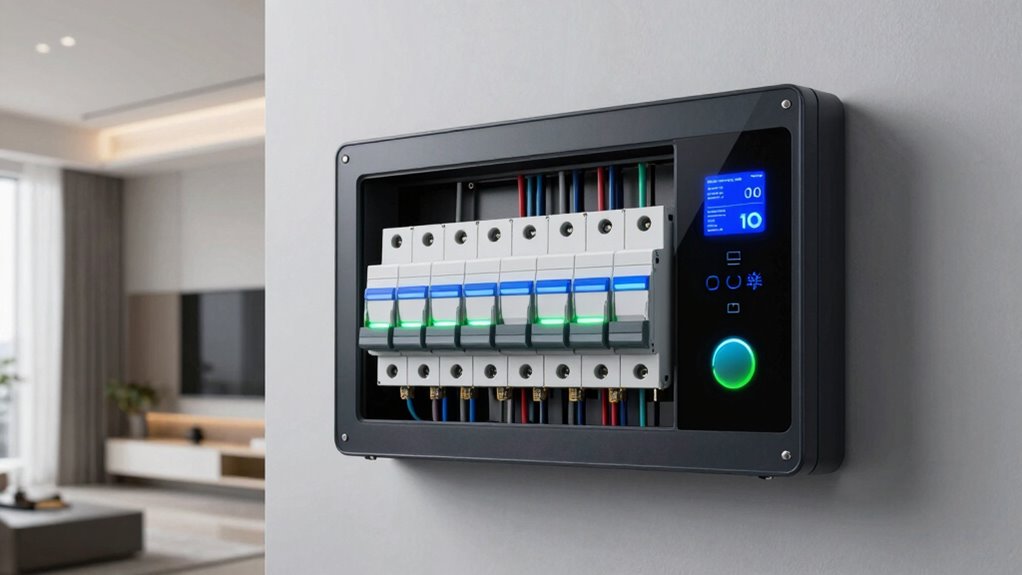

Choosing a smart home energy monitoring circuit breaker system involves balancing features, compatibility, and budget. The SIEMENS Inhab Smart Home Energy Monitor stands out as the best overall due to its reliable sensors and seamless integration. For those seeking affordability, the Refoss Smart Home Energy Monitor offers robust features without a high price tag, while the Emporia Vue 3 models excel at detailed circuit monitoring. These systems help you track energy consumption, detect faults, and optimize costs, but they differ in sensor count, compatibility, and ease of installation. Continue reading for a detailed breakdown of the top options and what tradeoffs each presents.

Get home appliances delivered free with Prime
- Fast, free delivery on millions of items
- Prime Video, Amazon Music and more included
- Member-only deals all year
Complete the kit



Key Takeaways
- Top picks vary significantly in sensor count, with higher counts providing more detailed monitoring but at increased cost.
- Compatibility with home automation platforms like Home Assistant or Zigbee can influence the choice for tech-savvy users.
- Build quality and ease of installation are critical, especially for DIY homeowners or those upgrading existing systems.
- Higher-priced options tend to offer more features such as solar monitoring, detailed app analytics, and auto-reset functions.
- Tradeoffs often involve balancing sensor quantity, integration options, and upfront costs for long-term savings.
| SIEMENS Inhab Smart Home Energy Monitor with Circuit Level Sensors |  | Best Overall for Precise Circuit-Level Monitoring | Circuit Sensors: 16-50 Amp | Main Sensors: 2-200 Amp | Compatibility: USA and Canada | VIEW ON AMAZON | See Our Full Breakdown |
| Emporia Energy Monitor with 16 Sensors and 4 Smart Plugs Bundle |  | Best Value for Integrated Whole-Home Monitoring and Automation | Sensors: 16 | Smart Plugs: 4 | Compatibility: iOS, Android, Alexa | VIEW ON AMAZON | See Our Full Breakdown |
| Zigbee Home Energy Monitor with 2 x 120A CTs and Live Usage Tracking |  | Best for Zigbee Ecosystem Integration and Solar Systems | Current Rating: 120A per CT | CT Type: Split-core | Compatibility: Tuya Smart, Zigbee2MQTT, Home Assistant | VIEW ON AMAZON | See Our Full Breakdown |
| Smart Home Energy Monitor 2×80A, Dual-Channel WiFi Electricity Usage Tracker with App Control |  | Best for Simple, WiFi-Based Household Monitoring | Channels: 2 | Current per channel: 80A | Connectivity: WiFi | VIEW ON AMAZON | See Our Full Breakdown |
| GEYA 2P 63A Smart Circuit Breaker, AC 110V, Over/Under Voltage & Over Current Protection |  | Best for Electrical Panel Protection with Energy Monitoring | Voltage: AC 110V | Current: 63A | Overvoltage Range: 130–150V | VIEW ON AMAZON | See Our Full Breakdown |
| Emporia Vue 3 Home Energy Monitor with 8 Circuit Sensors |  | Best Overall Whole-Home Monitoring System | Part Number: EMV3A-2P-8 | Item Weight: 3.36 pounds | Product Dimensions: 10 x 5 x 5 inches | VIEW ON AMAZON | See Our Full Breakdown |
| Meross Smart Home Energy Monitor, Real-Time Power & Cost Tracking |  | Best for Detailed Power and Cost Insights | Certification: ETL, UL 61010 | System Compatibility: Single-phase 2-wire, single-split phase 3-wire, 3-phase 4-wire Wye | Maximum Current: 200A main, 60A branch | VIEW ON AMAZON | See Our Full Breakdown |
| Emporia Vue 3 Home Energy Monitor – Real-Time Electricity Usage and Solar Monitoring |  | Best for Automated Solar and Cost Management | Certification: UL Listed | Supported Systems: Single phase, Single-split phase, 2-wire, 3-wire, 3-phase, 4-wire Wye | Sensors: Sixteen 50A branch sensors | VIEW ON AMAZON | See Our Full Breakdown |
| Emporia Vue 3 Home Energy Monitor – Smart Home Automation Module and Real-Time Electricity Usage Monitor |  | Best for Appliance-Level Energy Management | Certification: UL Listed | System Support: Single phase, single-split phase, 2-wire, 3-wire, 3-phase, 4-wire Wye | Sensor Compatibility: Supports up to sixteen branch sensors (sold separately) | VIEW ON AMAZON | See Our Full Breakdown |
| Smart Home Energy Monitor with 16 50A Circuit Sensors, Real-Time Power & Cost Tracking, Compatible with Home Assistant |  | Best for Multi-Circuit and Privacy-Focused Monitoring | Sensors: 16 50A sensors | Supported Voltages: Single-phase up to 240VAC, split-phase 120/240VAC, three-phase up to 415Y/240VAC | Connectivity: WiFi 2.4GHz, MQTT, LAN | VIEW ON AMAZON | See Our Full Breakdown |
| Aeotec Home Energy Meter 8 – Smart Electricity Monitor with Z-Wave Long Range |  | Best Overall for Versatile Z-Wave Integration | Model: Home Energy Meter 8 | Connectivity: Z-Wave Long Range | Sensor Capacity: 2x200A Clamp-On | VIEW ON AMAZON | See Our Full Breakdown |
| Refoss Smart Home Energy Monitor with Open API, Home Assistant, No Cloud |  | Best for Privacy-Conscious Solar Homes | Model: EM16P | Control: Web UI, Open API, MQTT | Compatibility: Home Assistant, OpenClaw AI | VIEW ON AMAZON | See Our Full Breakdown |
| WiFi Home Energy Monitor with 3 80A CT Clamps |  | Best for Simple Multi-Circuit Monitoring | Supported Voltage: AC 100–240V | Number of CT Clamps: 3 | Clamp Current: 80A | VIEW ON AMAZON | See Our Full Breakdown |
More Details on Our Top Picks
SIEMENS Inhab Smart Home Energy Monitor with Circuit Level Sensors
This model stands out for delivering granular energy data directly at your panel, making it ideal for detailed energy management. Compared with the Emporia Vue bundle, it focuses solely on real-time circuit measurement without additional smart plugs or automation features, which can be a benefit for those wanting a straightforward setup. Its compatibility with mobile apps in the US and Canada enhances remote control, but it remains limited geographically. The requirement for professional installation might deter DIY enthusiasts, yet the accuracy and advanced features like peak demand support make it worth considering for serious energy monitoring. This pick makes the most sense for homeowners who prioritize precision and real-time alerts over automation complexity.
Pros:- Provides highly accurate, real-time energy data at the circuit level
- Supports personalized alerts for abnormal or peak usage
- Compatible with mobile apps for remote management
- Includes advanced features like peak demand and net metering
Cons:- Limited to US and Canada markets, restricting international use
- Installation may require professional electrical help
Best for: Homeowners in the US or Canada seeking detailed, panel-level energy insights and real-time alerts, who are comfortable with professional installation.
Not ideal for: Renters or DIYers without electrical experience, as installation can be complex and might require professional help.
- Circuit Sensors:16-50 Amp
- Main Sensors:2-200 Amp
- Compatibility:USA and Canada
- Features:Real-time monitoring, personalized alerts, energy management
Our verdict“This system is best suited for those seeking precision at the circuit level who can handle or afford professional installation.”
Emporia Energy Monitor with 16 Sensors and 4 Smart Plugs Bundle
This bundle makes a compelling case for users wanting comprehensive energy tracking combined with device automation. Unlike the SIEMENS Inhab, which focuses solely on monitoring at the panel, the Emporia system offers both detailed circuit-level data and smart plugs, enabling control over individual appliances. Its support for solar net metering and user-friendly app streamline energy cost savings. However, the setup process can be complex, especially for newcomers, and the price may be prohibitive if only basic monitoring is needed. The inclusion of smart plugs broadens its utility, but those seeking a simple, plug-and-play solution might find it overkill. Overall, this is ideal for homeowners wanting detailed insights and automation combined in one system.
Pros:- Offers detailed real-time energy tracking for entire home and circuits
- Includes smart plugs for remote control and automation
- Supports solar net metering and provides actionable insights
- User-friendly app for monitoring and trend analysis
Cons:- Setup and configuration can be complex for beginners
- Higher price point compared to single-purpose monitors
Best for: Energy-conscious homeowners interested in detailed home energy data, automation, and solar integration, comfortable with setup complexity.
Not ideal for: Users seeking a simple, no-fuss monitoring device or those on a tight budget, as it may be over-featured and costly.
- Sensors:16
- Smart Plugs:4
- Compatibility:iOS, Android, Alexa
- Supports Solar Net Metering:Yes
Our verdict“This bundle suits homeowners who want detailed energy data with automation and solar support, despite a more involved setup.”
Zigbee Home Energy Monitor with 2 x 120A CTs and Live Usage Tracking
This Zigbee-compatible monitor excels at integrating with existing smart home platforms like Tuya Smart and Zigbee2MQTT, making it ideal for users already invested in Zigbee ecosystems. Its high-accuracy split-core CTs and live voltage, current, and power data make it suitable for both home and solar setups. Compared with the SIEMENS or Emporia options, it offers more flexible platform integration but requires a Zigbee hub, adding another device and potential setup complexity. Its compatibility with bi-directional power measurement makes it ideal for solar users, though it might be overwhelming for those unfamiliar with Zigbee or without a hub. This monitor is best for tech-savvy homeowners who want seamless smart home integration and solar compatibility.
Pros:- Highly accurate energy data with configurable reporting
- Easy installation with split-core CTs and pluggable terminals
- Supports bi-directional measurement for solar and batteries
- Integrates with popular smart home platforms
Cons:- Requires a Zigbee hub like Tuya Zigbee Hub for operation
- Limited to Zigbee ecosystem, reducing flexibility outside compatible hubs
- Potential complexity for users unfamiliar with Zigbee setups
Best for: Homeowners with Zigbee hubs or smart home enthusiasts seeking precise energy data and platform flexibility, especially for solar systems.
Not ideal for: Users without Zigbee hubs or those unfamiliar with smart home protocols, as additional setup and compatibility issues may arise.
- Current Rating:120A per CT
- CT Type:Split-core
- Compatibility:Tuya Smart, Zigbee2MQTT, Home Assistant
- Installation:Plug-in terminals, split-core CTs
Our verdict“Ideal for smart home users seeking integrated, precise energy monitoring within a Zigbee environment, especially for solar applications.”
Smart Home Energy Monitor 2×80A, Dual-Channel WiFi Electricity Usage Tracker with App Control
This dual-channel WiFi monitor offers straightforward, real-time energy tracking for major circuits, making it accessible for homeowners who prefer wireless solutions. Unlike the Zigbee or panel-based options, this device connects directly via WiFi, supporting apps like Tuya or Smart Life for remote management. Its clamp-style sensors simplify installation, especially for larger circuits or retrofit projects. However, dependence on 2.4GHz WiFi may limit reliability in congested networks, and it supports only specific electrical setups. Compared to the SIEMENS or Emporia systems, it lacks detailed circuit-level data but provides sufficient insights for typical household use. This choice is ideal for users wanting quick setup and remote control without complex installation.
Pros:- Real-time monitoring of household energy consumption
- Supports bi-directional tracking for solar and backup power
- Easy clamp-style installation without wiring modifications
- Compatible with popular apps like Tuya and Smart Life
Cons:- Relies on stable 2.4GHz WiFi network, which can be unreliable
- Limited to basic household monitoring without detailed circuit data
Best for: Homeowners seeking easy-to-install, WiFi-based energy monitoring for main circuits without needing detailed panel sensors.
Not ideal for: Those requiring detailed circuit-level data or advanced automation, as this model focuses on broader household tracking.
- Channels:2
- Current per channel:80A
- Connectivity:WiFi
- App Compatibility:Tuya/Smart Life
- Installation:Clamp-style sensors
Our verdict“A practical choice for users wanting simple, WiFi-based household energy tracking with minimal installation fuss.”
GEYA 2P 63A Smart Circuit Breaker, AC 110V, Over/Under Voltage & Over Current Protection
This smart circuit breaker combines electrical safety features with basic energy monitoring, making it suitable for those who want safety and data in one device. Compared with the SIEMENS Inhab, which emphasizes detailed energy data, the GEYA breaker focuses on protection with adjustable overvoltage and undervoltage settings, plus automatic reset. Its DIN rail mounting simplifies installation in control cabinets, but it’s limited to 110V AC systems, restricting its use in higher-voltage environments. The energy monitoring feature is somewhat basic compared to dedicated panel monitors, yet it offers a practical solution for safety-conscious users who also want energy insights. This device suits those seeking a dual-purpose breaker that combines protection with basic monitoring.
Pros:- Adjustable overvoltage, undervoltage, and overcurrent settings for tailored protection
- Automatic reset reduces manual intervention after faults
- Easy DIN rail installation for control panels
- Supports basic energy monitoring
Cons:- Limited to AC 110V applications, restricting flexibility
- Requires electrical knowledge for proper setup and configuration
Best for: Home or small business owners needing a reliable, adjustable, safety-focused breaker with added energy monitoring, especially in 110V AC environments.
Not ideal for: Users with higher voltage systems or those seeking detailed, panel-level energy analytics, as its features are more basic and voltage-limited.
- Voltage:AC 110V
- Current:63A
- Overvoltage Range:130–150V
- Undervoltage Range:80–100V
- Mounting:DIN Rail
- Protection Features:Overvoltage, Undervoltage, Overcurrent
Our verdict“This breaker suits users who need a safety device with basic energy monitoring capabilities in low-voltage systems.”
Emporia Vue 3 Home Energy Monitor with 8 Circuit Sensors
The Emporia Vue 3 stands out for its comprehensive whole-home energy management, supporting solar and net metering while offering real-time data via a user-friendly app. Compared with the Emporia Vue 3 (Real-Time Electricity Usage and Solar Monitoring), this model’s support for multiple circuits and automation makes it more versatile for larger homes. However, it requires a stable 2.4 GHz Wi-Fi connection and additional sensors for three-phase systems, which can complicate setup. Its UL certification adds a layer of safety assurance, crucial for long-term reliability. The system’s main tradeoff is that data retention is limited when the app is not active, which might hinder continuous monitoring for some users. This pick makes the most sense for homeowners seeking a reliable, expandable, whole-house energy solution.
Pros:- UL-listed for safety and reliability
- Supports solar and net metering monitoring
- Real-time energy data with app integration
- Easy installation in most circuit panels
Cons:- Requires 2.4 GHz Wi-Fi connection
- Additional sensor needed for 3-phase systems
Best for: Homeowners wanting an all-in-one, UL-certified whole-home energy solution with solar support.
Not ideal for: Small apartments or renters who need simple, plug-in solutions without extensive wiring or sensors.
- Part Number:EMV3A-2P-8
- Item Weight:3.36 pounds
- Product Dimensions:10 x 5 x 5 inches
- Certification:CE, UL
- Style:whole home monitor with 8 circuit sensors
- Material:Gen 3
Our verdict“This system suits larger homes seeking reliable, comprehensive energy monitoring with solar integration.”
Meross Smart Home Energy Monitor, Real-Time Power & Cost Tracking
The Meross Smart Home Energy Monitor excels at providing detailed, real-time insights into power, voltage, and energy costs, making it ideal for users who want to identify inefficient appliances. Unlike the Emporia Vue 3, which offers broader whole-home data, Meross’s focus on circuit-level monitoring offers more granular control for individual appliances or specific circuits. Its support for solar integration and local data storage ensures user privacy, while easy clamp-on installation simplifies setup. The main tradeoff is that it requires compatible home wiring for optimal operation and advanced features may demand some technical setup. Additionally, the lack of cloud-based monitoring means less remote accessibility without additional hardware. This pick makes sense for energy-conscious users who want detailed, local, and customizable monitoring.
Pros:- Accurate real-time monitoring with detailed charts
- Supports solar energy integration and automation
- Local data storage for privacy and quick access
- Easy clamp-on installation
Cons:- Requires compatible wiring for full features
- Limited to local control with no cloud subscription
Best for: DIY enthusiasts or tech-savvy homeowners interested in circuit-level energy analysis and automation.
Not ideal for: Users seeking plug-and-play solutions or those uncomfortable with wiring or setup complexity.
- Certification:ETL, UL 61010
- System Compatibility:Single-phase 2-wire, single-split phase 3-wire, 3-phase 4-wire Wye
- Maximum Current:200A main, 60A branch
- Data Storage:Up to 5 years
- Connectivity:Home Assistant, Open API, Web Control
- Warranty:2 years
Our verdict“Ideal for users who want detailed, flexible energy data with local control and solar support.”
Emporia Vue 3 Home Energy Monitor – Real-Time Electricity Usage and Solar Monitoring
This Emporia Vue 3 model emphasizes solar and net metering support along with automated energy management, making it especially suitable for environmentally conscious homeowners. Compared with the Meross monitor, which focuses on circuit-level detail, this version’s strength lies in its ability to integrate solar data and automate energy savings via the app. Its UL certification reassures safety and reliability, while easy installation in typical circuit panels broadens its appeal. The main drawback is that it may require additional sensors for some 3-phase systems, and Wi-Fi dependency could pose challenges if connectivity is unstable. Data retention is limited to 7 days for minute data, which might restrict long-term analysis. This choice is best for users looking to optimize solar use and automate energy savings at the whole-home level.
Pros:- UL-certified for safety
- Supports real-time solar monitoring and automation
- Easy installation in most circuit panels
- Automated energy management via app
Cons:- Requires additional sensors for some 3-phase setups
- WiFi stability needed for real-time data
Best for: Homeowners with solar installations seeking automation and real-time solar monitoring.
Not ideal for: Those without solar or seeking basic plug-in energy monitors, as it offers more advanced features that may go unused.
- Certification:UL Listed
- Supported Systems:Single phase, Single-split phase, 2-wire, 3-wire, 3-phase, 4-wire Wye
- Sensors:Sixteen 50A branch sensors
- Connectivity:2.4 GHz WiFi
- Data Retention:7 days for 1-minute data, indefinite for hourly data
- Warranty:1 year
Our verdict“Perfect for solar owners wanting automated management and real-time solar data integration.”
Emporia Vue 3 Home Energy Monitor – Smart Home Automation Module and Real-Time Electricity Usage Monitor
The Emporia Vue 3 with automation module excels at appliance-level monitoring, making it ideal for users who want detailed insights into individual devices. Compared with the Meross model, which offers circuit-level detail, this version’s strength is in its support for appliance-specific data, enabling precise energy savings. It supports a wide range of systems, including three-phase setups, and allows detailed control via the app. The main tradeoff is that additional sensors are necessary for full appliance-level monitoring, and data accuracy within ±2% might not satisfy users requiring pinpoint precision. Its dependence on 2.4 GHz WiFi can be limiting if network conditions are poor. This system is best for users who want granular appliance control and detailed energy insights.
Pros:- Supports appliance-level energy tracking
- Compatible with multiple systems, including three-phase
- Supports automation features via app
- UL certified for safety and reliability
Cons:- Requires additional sensors for full appliance monitoring
- Data accuracy within ±2% may be insufficient for precise measurements
Best for: Tech-savvy homeowners interested in detailed appliance monitoring and automation.
Not ideal for: Users seeking simple out-of-the-box solutions or those without stable WiFi, as setup can be complex.
- Certification:UL Listed
- System Support:Single phase, single-split phase, 2-wire, 3-wire, 3-phase, 4-wire Wye
- Sensor Compatibility:Supports up to sixteen branch sensors (sold separately)
- Connectivity:Requires 2.4 GHz WiFi
- Data Retention:7 days for minute data, indefinite for hourly data
- Warranty:1 year
Our verdict“Ideal for those who want detailed appliance-level energy data and automation capabilities.”
Smart Home Energy Monitor with 16 50A Circuit Sensors, Real-Time Power & Cost Tracking, Compatible with Home Assistant
This Smart Home Energy Monitor offers extensive circuit coverage with 16 sensors, making it well-suited for complex or shared living environments like rentals or multi-tenant homes. Its support for various voltages and WiFi, MQTT, LAN connectivity, and compatibility with Home Assistant appeals to users who want flexible, local control without relying on cloud services. Compared with the Emporia Vue 3, it provides more circuits but may require electrical expertise for installation. Its LAN-only mode emphasizes privacy but limits remote access unless users set up MQTT or Home Assistant. The main tradeoff is that it’s limited to 50A sensors, not suitable for high-capacity circuits. This system is best for users prioritizing extensive circuit coverage with privacy and local control.
Pros:- Supports 16 circuits for detailed monitoring
- Flexible electrical compatibility
- Privacy-focused LAN-only operation
- Supports MQTT and Home Assistant integration
Cons:- Limited to 50A sensors, not suitable for high-capacity circuits
- Advanced setup required for MQTT/Home Assistant integration
Best for: Energy-conscious households or rental properties needing detailed multi-circuit tracking with privacy focus.
Not ideal for: Homeowners with high-capacity circuits over 50A or those preferring cloud-based remote access without setup complexity.
- Sensors:16 50A sensors
- Supported Voltages:Single-phase up to 240VAC, split-phase 120/240VAC, three-phase up to 415Y/240VAC
- Connectivity:WiFi 2.4GHz, MQTT, LAN
- Warranty:1 year
- App Compatibility:Android, Apple
- Privacy Mode:LAN only, no cloud
Our verdict“Perfect for users requiring extensive circuit coverage and privacy-centric control in complex electrical setups.”
Aeotec Home Energy Meter 8 – Smart Electricity Monitor with Z-Wave Long Range
The Aeotec Home Energy Meter 8 stands out for its ability to monitor two phases and support surplus solar power, making it ideal for homes with renewable energy sources. Compared to the WiFi Home Energy Monitor, it offers longer wireless range and higher security, but this comes with a tradeoff—setup can be complex and requires a compatible Z-Wave hub. Its support for multiple smart platforms like SmartThings and HomeAssistant makes it flexible, but users without a Z-Wave system may find it less accessible. The extended range and robust security features make it suitable for larger properties or integrated smart homes, though the initial installation might challenge less tech-savvy users.
Pros:- Supports two-phase power and solar surplus monitoring
- Extended Z-Wave Long Range for broad connectivity
- High security with S2 and AES-128 encryption
- Compatible with major smart home platforms
Cons:- Requires a compatible Z-Wave hub for operation
- Setup process can be challenging for non-technical users
Best for: Homeowners with existing Z-Wave hubs seeking comprehensive multi-phase energy monitoring and solar integration.
Not ideal for: Users new to smart home tech or without Z-Wave hubs, as setup complexity and compatibility limitations may hinder usability.
- Model:Home Energy Meter 8
- Connectivity:Z-Wave Long Range
- Sensor Capacity:2x200A Clamp-On
- Power Support:Supports 2-Phase Power
- Security:S2 and AES-128 encryption
- Range:Up to 1 mile / 1.7 km
Our verdict“This pick is best suited for tech-savvy homeowners with Z-Wave systems looking for reliable, extensive energy monitoring.”
Refoss Smart Home Energy Monitor with Open API, Home Assistant, No Cloud
The Refoss EM16P excels at providing circuit-level energy insights with local control, making it a strong choice for those who prioritize data privacy and custom automation. Unlike the WiFi Home Energy Monitor, it doesn’t rely on cloud services, which appeals to users needing secure, offline control. Its ±1% accuracy and compatibility with Home Assistant and OpenClaw AI enable detailed automation and peak management, but it requires technical skills for installation and setup—less suitable for beginners. The device’s ability to store data for up to five years offers long-term insights, yet it’s limited to circuit sensors within its specified capacity, not whole-home monitoring.
Pros:- Local control with no reliance on cloud services
- Seamless integration with Home Assistant and AI automation
- High accuracy with circuit-level insights
- Supports solar energy optimization
Cons:- Installation requires technical expertise
- Limited to specific circuit capacities, no whole-home coverage
- No built-in Wi-Fi or cellular connectivity
Best for: DIY enthusiasts and solar homeowners who want detailed, secure energy data with local control and automation.
Not ideal for: Homeowners seeking plug-and-play solutions or without technical experience, as installation can be complex.
- Model:EM16P
- Control:Web UI, Open API, MQTT
- Compatibility:Home Assistant, OpenClaw AI
- Accuracy:±1%
- Current Range:200A (main), 1-60A (branch)
- Data Storage:Up to 5 years
- Certifications:ETL, UL 61010
- Warranty:2 years
Our verdict“This system is ideal for tech-savvy users wanting secure, detailed energy insights with local control, especially in solar setups.”
WiFi Home Energy Monitor with 3 80A CT Clamps
The WiFi Home Energy Monitor offers straightforward monitoring of up to three circuits, making it suitable for users who want a quick, easy way to track specific appliances or areas. Compared with the Aeotec Meter, it’s less suited for whole-home or multi-phase setups but shines in simplicity and remote access via smartphone apps like Smart Life or Tuya. Its fixed temperature alert at 50°C adds safety but limits customization, and installation might require professional wiring help. This device makes sense for small-scale energy management, like monitoring a few key circuits, rather than comprehensive home energy oversight.
Pros:- Monitors up to three circuits simultaneously
- Real-time data accessible via smartphone apps
- Includes temperature alerts and remote control
- Easy to install with professional help
Cons:- Limited to selected circuits, not whole-house coverage
- Installation can be complex, requiring electrical wiring expertise
- Fixed temperature alert limit at 50°C
Best for: Homeowners or small businesses wanting to monitor specific circuits with minimal setup complexity.
Not ideal for: Those seeking detailed, whole-home energy analysis or integration with complex automation platforms.
- Supported Voltage:AC 100–240V
- Number of CT Clamps:3
- Clamp Current:80A
- App Compatibility:Smart Life, Tuya
- Relay Current:15A
- Temperature Alert Threshold:50°C
Our verdict“This monitor provides a simple, effective solution for targeted circuit monitoring in small-scale setups.”

How We Picked
These products were evaluated based on their performance, ease of installation, build quality, and compatibility with popular home automation platforms. We prioritized systems that offer reliable real-time data, robust sensor configurations, and good user interfaces. Cost-effectiveness was also considered, ensuring options provide value at different budget levels. Products were ranked according to how well they balance these factors, with a focus on practical usability for home owners seeking to monitor and manage energy consumption effectively.Factors to Consider When Choosing Smart Home Energy Monitoring Circuit Breaker System
When selecting a smart home energy monitoring circuit breaker system, it’s important to consider several key factors that influence performance, usability, and long-term value. Not all systems are created equal, and understanding your specific needs will help you avoid costly mistakes and choose a solution that truly fits your home and budget.Sensor Count and Circuit Compatibility
The number of sensors and supported circuits directly impacts how granular your energy data will be. Higher sensor counts enable detailed monitoring of individual circuits, which is essential for pinpointing energy hogs or faults. However, more sensors usually mean a higher price and more complex installation. Consider your home’s size and your monitoring goals—if you only want a broad overview, fewer sensors may suffice, but for detailed analysis, opt for systems with at least 8-16 sensors.
Integration with Home Automation Platforms
Compatibility with platforms like Home Assistant, Zigbee, Z-Wave, or proprietary apps can streamline your smart home ecosystem. Systems with open APIs or support for common protocols tend to offer more flexibility and customization. However, compatibility often comes with increased complexity and setup time. If you prioritize seamless integration and automation, verify platform support before purchasing, and consider whether you’re comfortable with more technical setup procedures.
Ease of Installation and Maintenance
Installation complexity varies widely. Some systems are designed for DIY setup with plug-and-play sensors, while others require professional wiring or circuit breaker modifications. Look for models with clear instructions, modular components, and minimal wiring. Maintenance considerations include sensor calibration, firmware updates, and potential troubleshooting, which can add to long-term costs and effort. Balance your technical skills and willingness to maintain the system when making your choice.
Data Analytics, App Features, and Alerts
Effective energy monitoring depends on insightful data presentation. Look for systems offering real-time analytics, historical comparisons, and customizable alerts for anomalies or overloads. Some systems include solar monitoring or cost tracking, adding further value. Beware of overly simplistic apps that lack detail, as they may limit your ability to analyze usage patterns or optimize energy savings.
Cost, Future Scalability, and Support
Budget constraints are always a factor, but consider long-term value. Cheaper models may lack features or durability, while premium options often include better support and firmware updates. Think about whether your system should be scalable—can you add sensors or integrate new devices over time? Also, check warranty coverage and customer support reputation, especially if you plan a complex installation or rely heavily on the system for safety and efficiency.
Frequently Asked Questions
Can I install a smart energy monitoring circuit breaker system myself?
Many systems are designed for DIY installation, especially those with plug-and-play sensors or modular components. However, working with your home’s electrical system can be complex and potentially dangerous if you lack experience. If you’re comfortable with basic wiring and follow the manufacturer’s instructions carefully, installation can be straightforward. For more advanced systems involving circuit breaker modifications, hiring a licensed electrician is strongly recommended to ensure safety and code compliance.
Will a smart energy monitoring system work with my existing smart home setup?
Compatibility depends on the specific model and your existing ecosystem. Many systems support popular protocols like Zigbee, Z-Wave, or Wi-Fi, making integration with platforms like SmartThings, Home Assistant, or Alexa possible. Always verify the product’s supported platforms before purchasing. If your current setup relies on a proprietary hub or ecosystem, choosing a compatible monitor will streamline integration and avoid connectivity issues.
How accurate are these energy monitoring systems at detecting faults or overloads?
Most quality systems provide reliable real-time data, capable of alerting you to overloads or abnormal consumption patterns. Sensor accuracy varies, but well-designed models with high-quality CT clamps and calibration features tend to be quite precise. Keep in mind that no monitoring system replaces a professional inspection for safety-critical faults, but they are excellent tools for ongoing awareness and early detection of potential issues.
Are there privacy concerns with cloud-connected energy monitors?
Some systems transmit data to cloud servers for analysis and remote access, which raises privacy considerations. If data privacy is a priority, look for models with local data storage or open APIs that allow you to keep information within your network. Open-source or open API systems often provide more control, but may require additional setup. Always review the manufacturer’s privacy policy and security features before purchase.
What is the typical lifespan of a smart energy monitoring circuit breaker system?
The lifespan depends on build quality, usage, and environmental factors. Generally, sensors and components are designed to last 5-10 years, with some models offering extended warranties. Regular firmware updates, proper installation, and avoiding harsh conditions can prolong system life. Investing in reputable brands with good support and warranty coverage helps ensure your system remains functional and accurate over time.
Conclusion
For most homeowners seeking reliable, comprehensive monitoring, the SIEMENS Inhab Smart Home Energy Monitor offers the best overall experience with robust features and ease of use. Budget-conscious buyers will find the Refoss Smart Home Energy Monitor provides essential functions at a lower cost. Tech-savvy users aiming for deep integration should consider models like the Emporia Vue 3 series, which excel in detailed circuit analysis. Beginners or those upgrading existing systems should prioritize models with straightforward installation and strong support. Ultimately, your choice depends on your specific needs, budget, and comfort with technical setup—use this guide to find the best fit for your home.