Deciding between a heat pump and a traditional HVAC system depends on your climate, budget, and energy goals. Heat pumps are energy-efficient and environmentally friendly, making them great for milder climates, but they can have higher upfront costs. Traditional systems may be more reliable in extreme cold but might cost more to operate. To choose the right option, consider your long-term plans, climate conditions, and what best fits your lifestyle—more details can guide your decision.
Key Takeaways
- Heat pumps offer higher energy efficiency and lower operating costs, especially in milder climates.
- Traditional HVAC systems typically have lower upfront installation costs but higher long-term energy expenses.
- Climate impacts system choice: heat pumps are ideal in moderate weather, while furnaces perform better in extreme cold.
- Long-term homeowners may benefit from heat pumps’ energy savings, whereas short-term residents might prefer traditional systems.
- Consider environmental goals and lifestyle factors to determine which system aligns best with your energy and budget priorities.
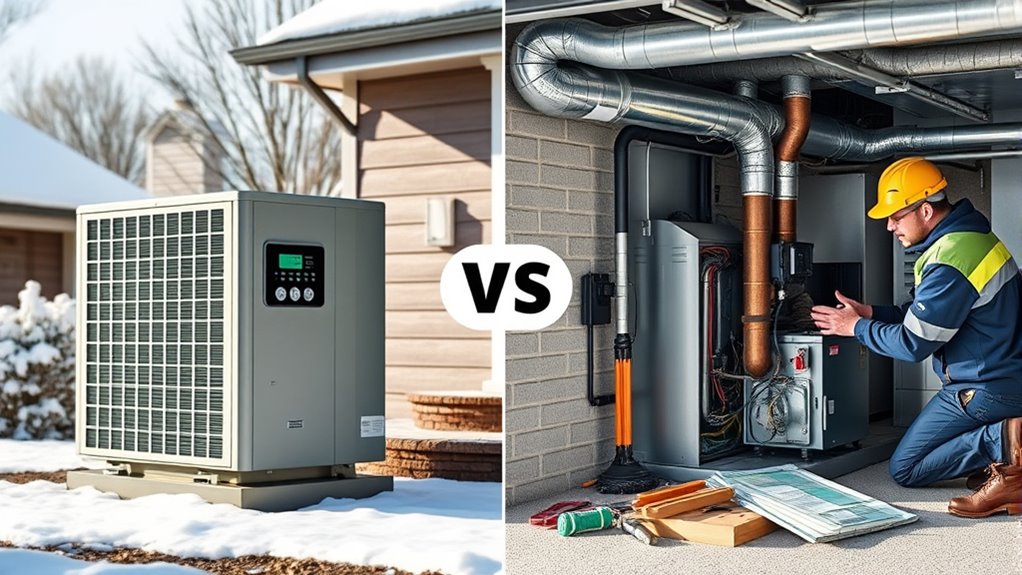
Choosing the right heating and cooling system can considerably impact your comfort and energy bills, but deciding between a heat pump and a traditional HVAC system isn’t always straightforward. One of the most important factors to contemplate is energy efficiency. Heat pumps are known for their high efficiency because they transfer heat rather than generate it, making them a cost-effective option for many homeowners. During milder weather, they can provide both heating and cooling with less energy consumption compared to traditional systems. In contrast, traditional HVAC units, which often rely on electric resistance or gas furnaces, tend to have higher operating costs because they generate heat directly, consuming more energy. If reducing your energy bills is a priority, a heat pump might be the better choice, especially in moderate climates where its efficiency shines.
Heat pumps are highly efficient, transferring heat rather than generating it, making them a cost-effective choice for many homes.
However, the initial installation costs also play a significant role in your decision. Heat pumps usually have higher upfront costs due to their more complex technology and the need for specific ductwork or ground loops in some models. This initial investment can be a concern if you’re on a tight budget, but keep in mind that the long-term savings on energy bills can offset this expense. Traditional HVAC systems tend to have lower installation costs because they are simpler to install and maintain, especially if your home already has the necessary ductwork. That said, the lower initial price doesn’t always translate into savings over time, as higher energy consumption can quickly add up.
Another aspect to consider is the climate in your area. If you live in a region with extreme cold temperatures, a traditional furnace might be more reliable, as heat pumps can struggle to extract heat from the cold air. Conversely, if your climate is milder, a heat pump can handle both heating and cooling efficiently, making it a versatile and energy-saving choice. Additionally, think about your long-term plans for your home. If you plan to stay put for years, investing in a heat pump could pay off through energy savings. But if you’re only planning to stay temporarily, the lower installation costs of a traditional system might make more sense.
Furthermore, embracing sustainable living can influence your decision, as heat pumps are often more environmentally friendly due to their higher efficiency and lower energy consumption. Ultimately, your decision should factor in your budget, climate, and energy-saving goals. Both systems have their merits, but understanding the differences in energy efficiency and installation costs can help you choose the right fit for your home and lifestyle.
Frequently Asked Questions
How Long Do Heat Pumps Typically Last Compared to Traditional Systems?
Heat pumps typically last around 10 to 15 years, while traditional HVAC systems often last 15 to 20 years. In the longevity comparison, heat pumps may have a slightly shorter lifespan due to their complex components and frequent use for both heating and cooling. However, proper maintenance can prolong their system lifespan. You should consider these factors when choosing between the two to ensure your system lasts as long as possible.
Are Heat Pumps Effective in Extremely Cold Climates?
Think of a heat pump in a cold climate like a skier tackling steep slopes—challenging but doable with the right gear. While modern units can operate effectively in cold weather, efficiency concerns arise as temperatures drop below freezing. Some models use supplemental heating to stay warm, making them a viable option. However, if you face extremely cold temperatures regularly, a traditional system might provide more consistent, reliable heating.
What Is the Average Installation Cost Difference?
On average, heat pump installation costs are lower than traditional HVAC systems, with a cost comparison revealing savings of about $3,000 to $5,000. You’ll find installation expenses for heat pumps typically range from $4,000 to $8,000, depending on system size and complexity. Traditional systems often cost between $6,000 and $12,000. Choosing a heat pump can reduce upfront expenses and offer energy savings over time.
Do Heat Pumps Require More Maintenance Than Traditional HVAC Units?
You’ll find that heat pumps generally require less maintenance frequency than traditional HVAC units, especially since they have fewer moving parts. However, when repairs are needed, repair costs might be slightly higher due to specialized components. Regularly checking and servicing your heat pump can help prevent costly repairs, ensuring it runs efficiently. Overall, their lower maintenance needs can save you time and money over the long term.
Can a Heat Pump Replace Both Heating and Cooling Functions?
Yes, a heat pump can replace both heating and cooling functions effectively. It provides energy savings by efficiently transferring heat, reducing your utility bills. Plus, its lower environmental impact stems from less energy consumption compared to traditional systems. You’ll enjoy year-round comfort with a single, versatile unit that’s environmentally friendly and cost-effective, making it a smart choice for your home’s heating and cooling needs.
Conclusion
Ultimately, choosing between a heat pump and a traditional HVAC system depends on your climate and energy goals. Remarkably, some studies suggest heat pumps can be more efficient even in colder weather, challenging the idea they only work in mild conditions. If you’re looking to save on energy bills and reduce your carbon footprint, a heat pump might be the smarter choice. Weigh your needs carefully—you might find innovation is the key to comfort and savings.