
Heat recovery ventilators (HRVs) work by exchanging stale indoor air with fresh outdoor air while transferring heat between the two streams. As warm indoor air passes through the system, it shares heat with cooler incoming air via a heat exchange core made of conductive material. This process warms the fresh air in winter and can help cool it in summer, all while improving air quality and reducing energy costs. If you want to understand how this smart system maximizes comfort and efficiency, keep exploring further.

Get home appliances delivered free — and shop member deals
- Fast, free delivery on millions of items
- Access to Prime Big Deal Days deals on October 6–7
- Prime Video, Amazon Music and more included
Key Takeaways
- HRVs use a heat exchange core, typically aluminum, to transfer heat between outgoing indoor air and incoming outdoor air.
- Warm, stale indoor air passes through one side of the core, transferring heat to the cooler incoming air on the opposite side.
- This process preconditions incoming air, reducing energy needed for heating in winter and cooling in summer.
- Continuous air exchange dilutes indoor pollutants, improving air quality and creating a healthier indoor environment.
- Advanced HRVs incorporate AI technology to optimize performance, maximizing heat recovery efficiency and energy savings.
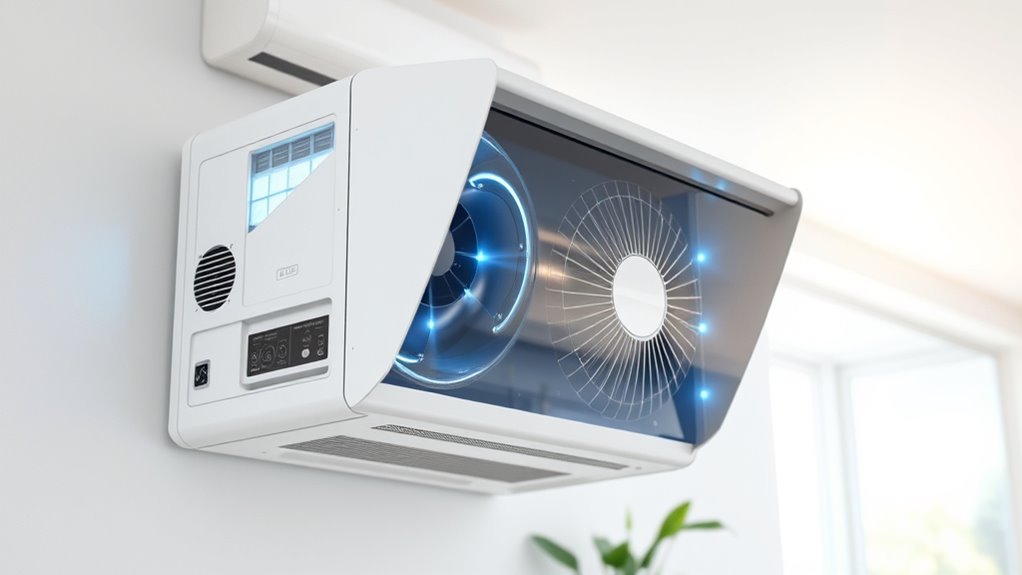
Heat recovery ventilators (HRVs) are essential devices that improve indoor air quality while saving energy. When you install an HRV, you’re taking a smart step toward creating a healthier, more comfortable living environment. These systems work by exchanging stale indoor air with fresh outdoor air, but the real magic lies in how they manage to do this efficiently without wasting energy. By doing so, HRVs markedly enhance energy efficiency, helping you reduce heating and cooling costs while maintaining ideal indoor air quality.
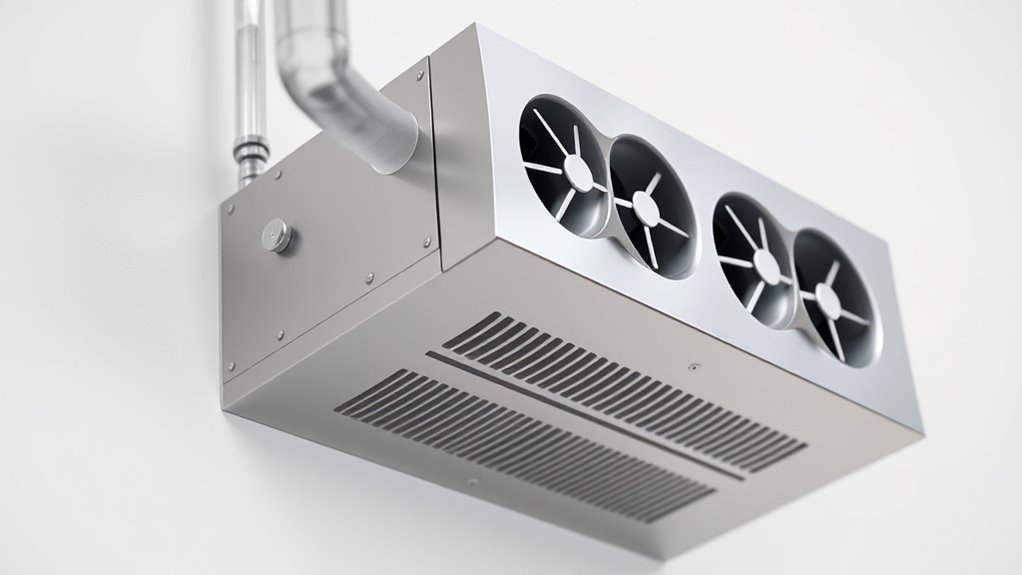
At the core of an HRV’s operation is a heat exchange core, typically made of a thermally conductive material like aluminum. When the device is running, warm, stale air from inside your home passes through one side of this core, while cooler, fresh outdoor air flows through the other. The heat from the outgoing air is transferred to the incoming air, warming it before it enters your living space. This process minimizes the amount of energy needed to heat or cool the incoming air, making the ventilation process highly energy efficient. You get fresh air without the costly energy expenditure that usually accompanies traditional ventilation systems.
This heat exchange process is especially valuable during the winter months when heating demands are high. Instead of losing heat every time you ventilate, the HRV captures that warmth and uses it to precondition the incoming air. Conversely, in the summer, some HRVs are designed to help with cooling, removing excess heat from incoming air and reducing your air conditioning load. This continuous, passive transfer of heat ensures you’re not just improving indoor air quality, but doing so with minimal impact on your energy bills. Additionally, advances in AI-driven solutions are beginning to optimize these systems further for maximum efficiency and performance.
In addition to energy savings, HRVs contribute to better indoor air quality by regularly exchanging stale indoor air with fresh outdoor air, diluting indoor pollutants, allergens, and moisture. This constant ventilation helps prevent stuffiness, mold growth, and the buildup of indoor pollutants, which are common issues in tightly sealed homes. As a homeowner, you’ll notice a fresher, more comfortable environment, especially if you or your family members suffer from allergies or respiratory issues.
Heat Recovery Ventilator HRV system
As an affiliate, we earn on qualifying purchases.
As an affiliate, we earn on qualifying purchases.
Frequently Asked Questions
How Long Do HRV Units Typically Last?
Your heat recovery ventilator (HRV) unit typically lasts about 10 to 15 years. Its lifespan depends on factors like usage, maintenance, and the quality of components. Regular filter changes and inspections can extend its life, while neglect or harsh conditions may shorten it. When your HRV starts showing signs of inefficiency or frequent repairs, it’s time to evaluate replacement to guarantee ideal ventilation and energy efficiency.
Are HRVS Suitable for All Climate Zones?
Yes, HRVs are suitable for most climate zones because they offer climate adaptability and zone-specific efficiency. In cold climates, they recover heat to reduce energy loss, while in warmer areas, they help manage humidity and fresh air intake. You’ll find HRVs especially beneficial in regions with extreme temperatures, as they optimize ventilation without sacrificing energy efficiency, making them a versatile choice for diverse climate conditions.
What Maintenance Is Required for Optimal Performance?
Think of your HRV as a trusty steed—regular maintenance keeps it running smoothly. You should routinely replace filters, ensuring peak airflow and efficiency. Additionally, schedule system inspections to check for dust buildup, leaks, or worn parts. This upkeep prevents costly repairs and prolongs your HRV’s lifespan, much like oiling a vintage machine. With consistent care, your ventilation system will perform at its best, keeping your home fresh year-round.
How Do HRVS Compare to ERVS in Efficiency?
You’ll find HRVs generally more efficient than ERVs because they excel at energy transfer, especially in colder climates. HRVs focus on ventilation efficiency by exchanging stale indoor air with fresh outdoor air while conserving heat, reducing energy loss. ERVs also transfer moisture, but HRVs prioritize heat recovery, making them a better choice for maintaining indoor temperature without increasing energy costs. Your choice depends on your climate and ventilation needs.
Can HRVS Improve Indoor Air Quality Significantly?
Yes, HRVs can substantially improve your indoor air quality through advanced ventilation technology. They effectively exchange stale air for fresh air while recovering heat, reducing pollutants and humidity. This process guarantees better air quality benefits by removing allergens, odors, and excess moisture. By consistently ventilating your space, HRVs create a healthier environment, making your home more comfortable and reducing the risk of respiratory issues caused by poor indoor air quality.
energy efficient ventilation system
As an affiliate, we earn on qualifying purchases.
As an affiliate, we earn on qualifying purchases.
Conclusion
You now understand how heat recovery ventilators work to improve indoor air quality and save energy. Did you know HRVs can recover up to 80% of the heat from outgoing air? That means less energy spent on heating and cooling, keeping your home comfortable and efficient. By choosing an HRV, you’re not just investing in better air, but also saving money and reducing your carbon footprint. It’s a smart, sustainable choice for any home.
As an affiliate, we earn on qualifying purchases.
As an affiliate, we earn on qualifying purchases.
NFL season / tailgating Picks
team gear
As an affiliate, we earn on qualifying purchases.