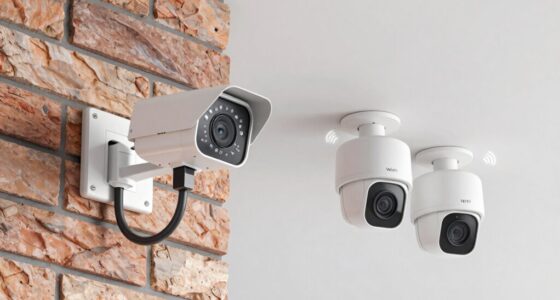
To future-proof your smart home without replacing everything, focus on choosing devices that support open standards and multiple ecosystems like Alexa, Google Assistant, or Siri. Prioritize those that receive regular updates and offer local processing for better privacy. Use strong, unique Wi-Fi passwords and establish dedicated networks for security. Stay informed about new technologies, and guarantee your setup can adapt to future devices easily. Keep exploring for more tips on maintaining a secure, flexible smart home.
Key Takeaways
- Invest in devices supporting open standards for seamless future integration.
- Prioritize compatibility with multiple ecosystems (Alexa, Google, Siri) for flexibility.
- Keep all devices updated with the latest firmware and security patches regularly.
- Use scalable, cloud-based services to extend device lifespan and data security.
- Conduct regular security audits and stay informed on industry trends to adapt proactively.

Have you ever wondered how to guarantee your smart home remains efficient and secure as technology evolves? The key is to adopt strategies that allow flexibility and adaptability without constantly replacing devices. One of the simplest yet most effective ways is to invest in platforms and devices that support open standards and are compatible with multiple ecosystems. This way, you can integrate new gadgets seamlessly over time instead of feeling forced to overhaul your entire setup. When it comes to voice control, choosing devices that work with popular, widely supported assistants like Alexa, Google Assistant, or Apple’s Siri ensures your system stays versatile and future-ready. Voice commands can enhance convenience, but you also need to safeguard your data privacy. Opt for devices that prioritize security and give you control over your data, such as local processing options or transparent privacy policies. This approach helps prevent sensitive information from being exposed or misused as your smart home expands.
Choose open standards and trusted voice assistants to keep your smart home flexible, secure, and future-proof.
Another vital aspect is regular software updates. Many smart devices receive firmware upgrades that improve functionality, patch security vulnerabilities, and add new features. Keep all your devices current, and check if they support automatic updates. This proactive approach minimizes the risk of hacking and keeps your system running smoothly with the latest innovations. Think about your network security as well. Strong, unique passwords for your Wi-Fi and device accounts, coupled with a dedicated network or guest access for smart gadgets, can considerably reduce vulnerabilities. As new devices emerge, ensure your router and network settings support the latest security standards, like WPA3 encryption. Additionally, researching device compatibility before purchasing new gadgets can save you time and frustration later on, ensuring a cohesive smart home ecosystem. Staying informed about security practices and emerging threats can further help you identify potential vulnerabilities early and take appropriate measures. Furthermore, implementing regular security audits can help you stay aware of the overall safety of your connected home. Keeping up with industry updates can also alert you to new risks and innovations, enabling a more comprehensive security strategy.
Thinking ahead also means planning for compatibility and scalability. When purchasing new devices, prioritize those with flexible integration options and clear compatibility with your existing setup. This prevents your smart home from becoming a tangled web of incompatible gadgets. Additionally, consider cloud-based services that offer regular updates and improvements without needing physical replacements. These services can extend the lifespan of your investments and keep your smart home functioning efficiently for years to come. A further consideration is leveraging cloud server solutions that provide scalable and secure data storage options for your smart home data, ensuring both flexibility and protection.
Finally, staying informed about emerging technologies and security practices helps you adapt proactively. Follow trusted sources for updates on voice control advancements, privacy concerns, and smart home innovations. By understanding the evolving landscape, you can make smarter choices that extend your system’s longevity and security. Future-proofing doesn’t mean constantly replacing devices; it’s about strategic planning, choosing flexible solutions, and maintaining vigilant security to guarantee your smart home remains efficient, secure, and adaptable as technology advances.
smart home devices supporting open standards
As an affiliate, we earn on qualifying purchases.
As an affiliate, we earn on qualifying purchases.
Frequently Asked Questions
How Often Should I Update My Smart Home Devices?
You should update your smart home devices whenever updates are available, typically every few months. Regular software updates guarantee device compatibility with new standards and improve security. Check manufacturers’ notifications or app alerts for updates, and install them promptly. Staying current with updates helps keep your devices functioning smoothly, protected from vulnerabilities, and compatible with new tech, extending your smart home’s lifespan without needing replacements.
Can I Retrofit Older Homes for Smart Technology Easily?
You can retrofit older homes for smart technology, but you’ll face some retrofit challenges and compatibility issues. For example, a homeowner successfully installed smart lighting by upgrading wiring and choosing compatible devices. To minimize issues, assess your existing wiring, choose open-platform products, and consult professionals if needed. This approach guarantees your smart home upgrades smoothly without extensive rewiring or replacing existing infrastructure.
What Security Measures Are Recommended for Smart Homes?
You should implement strong cybersecurity protocols like changing default passwords and enabling two-factor authentication. Use data encryption for your smart devices and network traffic to protect sensitive information. Regularly update firmware and software to patch vulnerabilities. Consider setting up a separate Wi-Fi network for your smart home devices, minimizing potential breaches. These measures help safeguard your smart home from cyber threats and guarantee your data remains secure.
How Do I Choose Compatible Devices Across Brands?
To choose compatible devices across brands, focus on interoperability standards like Zigbee, Z-Wave, or Thread, which guarantee seamless communication. Check each device’s compatibility with your existing hub or controller, and read product specifications carefully. Opt for devices that support common standards, so they work together smoothly. This way, you future-proof your smart home by making sure new additions integrate easily without needing replacements or extensive reconfigurations.
Is Professional Installation Necessary for Future-Proofing?
Professional installation isn’t always necessary, but it can make your DIY integration smoother and more reliable. If you’re tech-savvy, you might handle setup yourself, saving on costs. However, overlooking complex systems or compatibility issues could cause future headaches. Weigh the cost considerations against potential troubleshooting. Sometimes, investing in expert help upfront guarantees your smart home remains future-proof, seamlessly evolving as new tech emerges. Don’t leave your smart home’s future to chance—know when to call in the pros.
compatible voice assistant smart speakers
As an affiliate, we earn on qualifying purchases.
As an affiliate, we earn on qualifying purchases.
Conclusion
By future-proofing your smart home today, you’re not just preparing for tomorrow—you’re setting the stage for a tech utopia so advanced, even sci-fi writers would envy it. Imagine a home that adapts seamlessly to every new gadget, encrypts your privacy like Fort Knox, and anticipates your needs before you even voice them. With these steps, you’re not just keeping up with technology; you’re leaping into a future so sophisticated, it feels like living in a glimpse of tomorrow’s paradise.
Wi-Fi mesh system with WPA3 encryption
As an affiliate, we earn on qualifying purchases.
As an affiliate, we earn on qualifying purchases.
local processing smart home security cameras
As an affiliate, we earn on qualifying purchases.
As an affiliate, we earn on qualifying purchases.