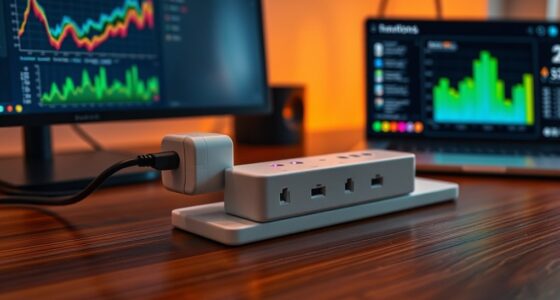
Smart power management helps you balance energy loads by using advanced sensors and algorithms to analyze your consumption patterns. It integrates renewable sources like solar and wind, adjusting in real time to weather or time-of-day changes. By turning off unused devices and storing excess energy efficiently, you reduce waste and lower utility bills. Incorporating AI and cybersecurity, these systems make certain your energy use is safe and reliable. Continuing will reveal how these features work together for a greener, more efficient future.
Key Takeaways
- Advanced algorithms analyze consumption patterns to optimize energy distribution and prevent overloads.
- Real-time sensors monitor renewable energy output, adjusting supply dynamically for grid stability.
- Load management strategies reduce unnecessary device usage, conserving energy and lowering costs.
- AI-based cybersecurity safeguards protect the system from cyber threats, ensuring reliable operation.
- User-friendly interfaces enable monitoring and control, promoting eco-friendly energy habits.
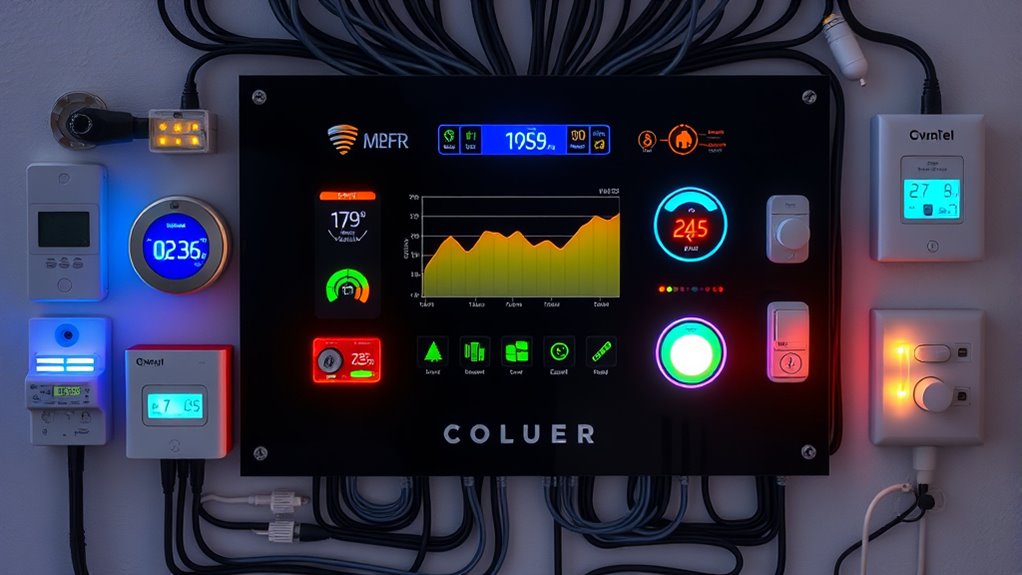
Have you ever wondered how your devices manage to conserve energy while still performing at their best? It’s all thanks to smart power management systems that intelligently control energy flow, guaranteeing efficiency and reliability. One of the key ways these systems operate is through renewable integration, which involves seamlessly incorporating renewable energy sources like solar and wind into the grid. This process isn’t just about adding greener options; it’s also about maintaining grid stability. When renewable energy fluctuates due to weather or time of day, smart systems monitor these changes in real-time and adjust power distribution accordingly. This prevents power surges or shortages, keeping the grid steady and your devices running smoothly.
Smart power management leverages advanced algorithms and sensors to analyze energy consumption patterns within your home or business. By understanding when and where energy is used most, these systems can optimize loads, turning off or reducing power to devices when they’re not needed. This not only conserves energy but also reduces utility bills and carbon footprints. For instance, if a smart system detects that you’re not using certain appliances during the daytime, it can lower their power draw, ensuring minimal waste. Additionally, these systems coordinate with renewable sources, storing excess energy in batteries or feeding it back into the grid, further enhancing efficiency and sustainability. AI Security technologies are also being integrated into smart power management to detect anomalies and prevent potential cyber threats that could disrupt energy systems.
Smart systems optimize energy use, reduce waste, and support renewable sources for a greener, more efficient grid.
Another essential benefit of smart power management is its role in supporting renewable integration without compromising grid stability. As more renewable energy enters the system, it introduces variability that traditional grids struggle to handle. Smart systems act as a buffer, balancing supply and demand dynamically. They can predict energy production based on weather forecasts and adjust loads accordingly, preventing overloads or outages. This synchronization means renewable energy can be utilized more effectively, making the entire grid more resilient and sustainable.
Furthermore, smart power management offers you greater control over your energy usage. Through user-friendly interfaces, you can monitor consumption in real-time, set preferences, and receive alerts about potential issues. This transparency encourages more mindful energy habits, fostering savings and environmental responsibility. By intelligently managing loads, integrating renewable sources, and maintaining grid stability, these systems help create a smarter, cleaner energy future. They guarantee your devices perform at their best while supporting the broader transition to renewable energy, demonstrating that efficiency and sustainability go hand in hand.
Frequently Asked Questions
How Does Smart Power Management Impact Device Lifespan?
Smart power management can extend your device’s lifespan by optimizing battery efficiency and reducing heat dissipation. When your device manages power well, it prevents overuse and overheating, which can wear out components faster. By balancing loads and conserving energy, you minimize stress on the battery and internal parts, helping your device stay healthier longer. Ultimately, smarter power use keeps your device running smoothly and prolongs its overall durability.
What Are the Costs Associated With Implementing Smart Power Solutions?
Implementing smart power solutions involves initial installation costs for equipment and setup, which can be significant depending on system complexity. You’ll also face ongoing maintenance expenses to keep everything running smoothly and update software. While these costs might seem high upfront, they often lead to long-term savings through energy efficiency and reduced utility bills, making the investment worthwhile over time.
Can Smart Power Systems Adapt to Changing Energy Demands Automatically?
Imagine you’re living in a sci-fi movie, and yes, smart power systems do adapt automatically. They use dynamic load balancing and real-time demand response to adjust energy usage on the fly, ensuring efficiency and stability. This means your system detects changing demands instantly, shifting loads seamlessly without your intervention. So, you benefit from optimized energy consumption, saving money and reducing waste, all while maintaining a steady power supply, just like in the future you’ve always imagined.
How Secure Are Smart Power Management Systems Against Cyber Threats?
Smart power management systems face cyber vulnerabilities that can be exploited if not properly secured. You should guarantee they use robust data encryption to protect sensitive information from hackers. Regular updates and strong passwords also help prevent cyber threats. While these systems incorporate security measures, staying vigilant and proactive is essential to keep your energy management safe from evolving cyber risks.
What Industries Benefit Most From Advanced Power Management Technologies?
Like a conductor leading an orchestra, you’ll find that renewable energy sectors and utility companies benefit most from advanced power management technologies. These systems enhance grid resilience and facilitate renewable integration, ensuring reliable energy flow even during fluctuations. Industries relying heavily on consistent power, such as manufacturing and data centers, gain improved efficiency and stability. By adopting these technologies, you can optimize energy use, reduce costs, and support a sustainable, resilient energy future.
Conclusion
By mastering smart power management, you’re steering your energy use like a skilled captain directing through calm and stormy seas. Balancing loads and saving energy isn’t just a task—it’s your gateway to a more efficient, sustainable future. When you harness these strategies, you’re not only reducing costs but also playing an essential role in protecting the planet. So, take control today and let your smart choices shine brighter than ever before.