
When planning an outdoor water feature, consider the space, your maintenance preferences, and desired wildlife support. Ponds attract birds, frogs, and beneficial insects, especially when designed with shallow edges and native plants. Fountains are low-maintenance and add lively movement, while waterfalls create a soothing focal point. Incorporate solar lighting for ambiance and safety, and use weather-resistant materials for durability. Keep in mind how your choices will blend with your landscape for a beautiful, eco-friendly backyard oasis. Learn more to create a stunning, wildlife-friendly space.
Key Takeaways
- Choose the right water feature type (pond, fountain, waterfall) based on space, maintenance, and desired visual or wildlife benefits.
- Incorporate solar lighting to enhance nighttime ambiance and highlight features safely and eco-friendly.
- Design with wildlife in mind by adding shallow edges, native plants, and safe resting spots for animals.
- Ensure proper water circulation and regular maintenance to keep the feature clean, safe, and mosquito-free.
- Plan for durable, weather-resistant materials and secure installations to maximize safety and longevity.

Outdoor water features can transform your yard into a peaceful retreat, adding both visual appeal and soothing sounds. When planning your pond, fountain, or waterfall, consider how lighting will enhance the space. Solar lighting is an excellent choice because it’s eco-friendly, easy to install, and requires no wiring. You can position solar lights around your water feature to illuminate it at night, creating a magical ambiance without increasing your energy bill. Soft, warm lights reflecting off the water’s surface can turn your backyard into a calming oasis after sunset. Additionally, solar lighting can highlight key features, such as a bubbling fountain or a cascading waterfall, making your outdoor space inviting even after dark.
Enhance your water feature with solar lights for a magical, eco-friendly nighttime glow.
As you plan your water feature, think about how it can support local wildlife. A well-designed pond can become a thriving wildlife habitat, attracting birds, butterflies, frogs, and beneficial insects. Incorporate features like shallow edges or submerged plants that provide shelter and breeding grounds for these creatures. Including native plants around the pond not only enhances its natural appearance but also supplies food and cover for wildlife. You might also consider adding a small island or overhanging rocks to give animals a safe resting spot. This way, your water feature isn’t just a beautiful addition; it becomes a essential part of your local ecosystem.
Moreover, understanding the importance of cognitive benefits associated with music and nature can inspire you to create an environment that promotes mental wellness and relaxation.
When selecting the type of water feature, consider the space you have and the maintenance involved. Ponds require regular cleaning and aeration, but they can be stocked with fish for added beauty and natural pest control. Fountains are generally easier to maintain and add a lively, bubbling element to your yard. Waterfalls create a dynamic focal point, offering the soothing sound of rushing water that masks noise from nearby streets or neighbors. Whichever you choose, ensure it complements your landscape design and meets your needs for relaxation, aesthetics, and wildlife support.
Finally, think about safety and durability. Use weather-resistant materials and secure your water features properly to prevent accidents. Adding some solar-powered pumps ensures continuous water circulation, which keeps the water fresh and discourages mosquito breeding. With thoughtful planning, your outdoor water feature can become a stunning centerpiece that provides serenity, attracts wildlife, and showcases beautiful lighting at night—all while being environmentally friendly and easy to maintain.
As an affiliate, we earn on qualifying purchases.
Frequently Asked Questions
What Permits Are Required for Installing Outdoor Water Features?
You need to check your local regulations and safety codes before installing outdoor water features. Permits are often required, especially for larger ponds or waterfalls, to guarantee safety and environmental compliance. Contact your city or county building department to find out specific requirements. Securing the proper permits helps you avoid fines and ensures your water feature is safe for everyone. Always follow local regulations and safety codes throughout your project.
How Do I Choose the Right Size for My Water Feature?
Did you know that 65% of outdoor water features fail because they don’t match the space’s scale? To choose the right size, consider your yard’s dimensions and aim for aesthetic harmony. Think about how the feature will complement existing landscape elements, ensuring it doesn’t overwhelm or look out of place. Measure carefully, and select a size that enhances your outdoor space without overpowering it.
What Are the Best Materials for Low-Maintenance Water Features?
You should choose natural stones like granite or limestone for a low-maintenance water feature because they’re durable and weather-resistant. Synthetic composites are also great, as they resist cracking and require little upkeep. Both materials are easy to clean and stand up well to outdoor conditions, so you’ll spend less time maintaining your water feature and more time enjoying its beauty.
How Do I Ensure Proper Water Circulation and Filtration?
Think of your water feature as a well-choreographed dance, where water flow and filtration system keep everything moving smoothly. To guarantee proper circulation, install a pump that provides adequate flow rate and position it correctly. Pair this with a reliable filtration system to keep water clean and clear. Regularly clean and maintain these components, and you’ll enjoy a vibrant, healthy water feature that flows effortlessly like a graceful ballet.
What Safety Measures Should I Consider for Children and Pets?
To keep children and pets safe around your water feature, you should implement child-proofing tips like secure covers on ponds and fountains. Use pet-safe features such as fencing or barriers to prevent accidental falls. Always supervise outdoor playtime, install alarms or sensors near the water, and make sure the area is easily accessible for quick rescue if needed. Regularly check for hazards to maintain a safe environment for everyone.
As an affiliate, we earn on qualifying purchases.
Conclusion
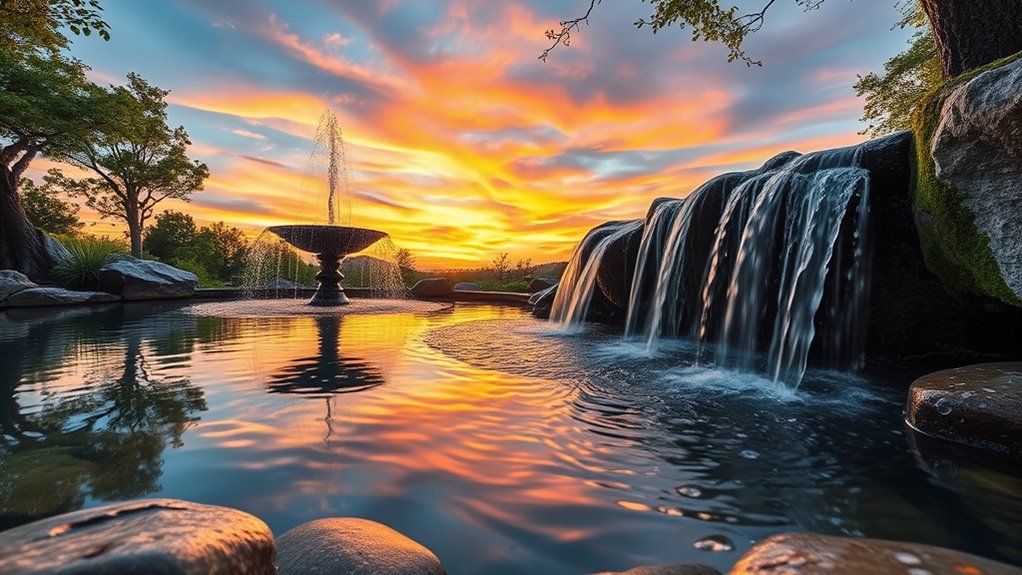
As you step outside, you notice how the gentle splash of your fountain blends seamlessly with the rustling leaves and distant song of birds. The shimmering pond reflects the golden sunset, creating a peaceful oasis just as you envisioned. With careful planning, your outdoor water feature becomes more than a design—it transforms your yard into a tranquil retreat. Every ripple and splash reminds you that nature and your creativity have beautifully come together right in your backyard.
weather-resistant water feature materials
As an affiliate, we earn on qualifying purchases.
As an affiliate, we earn on qualifying purchases.
As an affiliate, we earn on qualifying purchases.