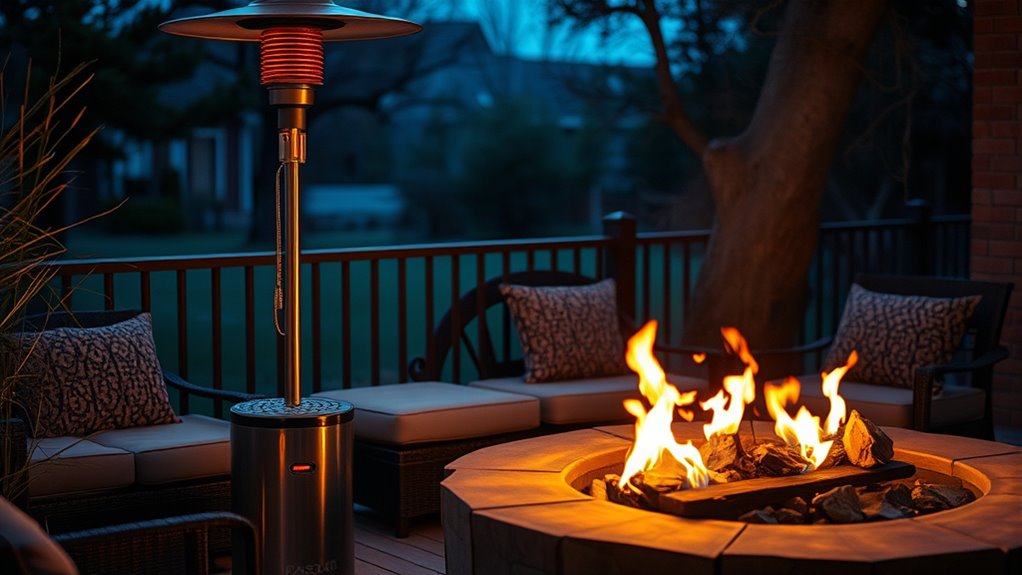

Patio heaters usually keep you warmer because they distribute heat more evenly across larger outdoor areas and often produce between 30,000 to 50,000 BTUs, perfect for sustained warmth. Fire pits emit cozy, flickering flames that create a lovely ambiance but tend to offer localized heat, which can be less effective in chilly weather. If you want to maximize warmth and comfort, exploring the details can help you choose the best option for your outdoor space.
Key Takeaways
- Fire pits generally produce higher BTUs (30,000–150,000) than patio heaters, offering potentially greater warmth in larger areas.
- Patio heaters provide consistent, adjustable heat over a broad area, often with 30,000–50,000 BTUs, ensuring reliable warmth.
- Wood fire pits generate intense localized heat but are less practical for continuous warmth compared to the steady output of patio heaters.
- Gas or electric patio heaters are designed for quick, instant warmth and easy control, often outperforming fire pits in convenience.
- Overall, for sustained, controlled warmth, patio heaters tend to keep you warmer than traditional fire pits.
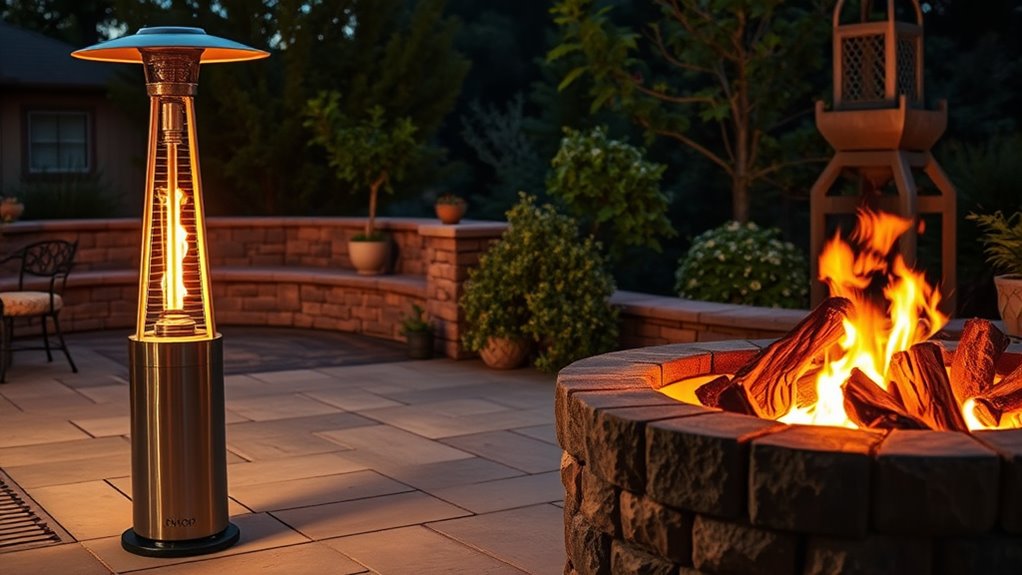
When choosing between patio heaters and fire pits for your outdoor space, understanding their differences can help you make an informed decision. Temperature output varies markedly between the two, affecting how warm you’ll feel. Fire pits can generate anywhere from 30,000 to 150,000 BTUs, depending on the fuel type and design. Wood-burning models often produce more heat, reaching up to 85,000 BTUs, creating a cozy, rustic atmosphere. Gas or propane fire pits can reach even higher BTU levels, offering powerful warmth that can comfortably heat larger groups. In contrast, patio heaters generally produce between 5,000 and 50,000 BTUs, with most commercial-grade units falling around 30,000 to 50,000 BTUs. This range makes them suitable for more controlled, consistent heating over a broader area, especially in open spaces. Different BTU levels can significantly impact the effectiveness of each heater in colder climates. Coverage area is another key difference. Fire pits tend to provide warmth over a wider radius, making them ideal for social gatherings around a central flame. They create a focal point that encourages interaction and can cover a larger area, although wind and environmental factors can influence their effectiveness. Wood-burning fire pits deliver more localized heat, meaning those sitting closer to the fire will feel warmer, but the warmth diminishes with distance. Patio heaters distribute heat more evenly across a larger space, which is advantageous if you need to keep a patio or deck comfortably warm over a wide area. They excel at providing consistent, adjustable heat, making them suitable for various outdoor settings. Coverage area is an important consideration when choosing your outdoor heater. Fuel type options also set these heating methods apart. Fire pits can be fueled by wood, propane, natural gas, coal, or gel, giving you a range of ambiance and warmth options. Wood creates a traditional, rustic vibe but demands more maintenance, like ash removal and smoke management. Propane and natural gas fire pits offer cleaner, more convenient operation with less mess. Patio heaters primarily run on propane, natural gas, or electricity. Electric models are especially eco-friendly, smoke-free, and require minimal maintenance, while propane units are portable, allowing you to move them around as needed and adjust their heat output easily. In terms of ambiance, fire pits shine with their open flames, providing a cozy, inviting glow that enhances your outdoor aesthetic. They come in various styles, from rustic to modern, acting as a visual centerpiece. They also create a warm, inviting atmosphere that can enhance outdoor gatherings. Patio heaters prioritize function over form, with sleek, discreet designs that blend into the background. They offer consistent, adjustable heat but lack the visual appeal of flickering flames. When it comes to ease of use and maintenance, patio heaters generally require less effort—they start instantly and need little upkeep. Fire pits, especially wood-burning ones, need regular cleaning and are more involved to operate. Overall, if warmth and ambiance are your priorities, fire pits may be more appealing, but if convenience and efficiency matter most, patio heaters are a practical choice.
Frequently Asked Questions
Are Patio Heaters or Fire Pits More Energy-Efficient?
When considering energy efficiency, you find that electric infrared patio heaters are the most efficient, converting nearly all electricity into heat with minimal waste. Propane heaters burn fuel more quickly and lose some energy to the environment, while fire pits vary in efficiency based on fuel type and burning conditions. For consistent, targeted warmth, electric heaters save energy, but for higher heat output, fire pits may use more fuel and energy overall.
Which Option Is Safer for Children and Pets?
Think of safety like a shield protecting your loved ones. Patio heaters are a safer choice for children and pets because they have built-in safety features like automatic shut-off and tip-over protection. Their enclosed design reduces risks of burns and accidents. Fire pits, with open flames and sparks, pose higher safety hazards, especially for little ones. So, for peace of mind, opt for patio heaters when safety around kids and pets matters most.
Can Patio Heaters Be Used Indoors?
You wonder if patio heaters can be used indoors. The answer is no, because they’re designed for outdoor use only. Using them indoors risks carbon monoxide poisoning, fire hazards, and poor ventilation. They feature open flames and aren’t approved for indoor environments. Instead, opt for electric or infrared heaters made for indoor use, and always make sure proper ventilation and safety measures to keep everyone safe.
How Much Maintenance Do Fire Pits Require?
Fire pits demand diligent, detailed care to stay dependable and durable. You’ll need to regularly remove ashes, sweep soot, and scrub surfaces to prevent buildup, rust, and damage. For gas models, inspect ignitions, clean burners, and check connections. Protect metal surfaces with paint or polish, and store your fire pit in dry, safe spaces. Consistent cleaning and cautious care keep your fire pit functioning flawlessly and looking fantastic season after season.
Which Provides More Consistent Heat Distribution?
You want to know which provides more consistent heat distribution. Fire pits excel because their radiant heat spreads evenly in all directions, creating a broad warmth zone around you. They maintain steady heat over a larger area, especially with fuel adjustments. Patio heaters focus warmth in a specific direction, so your heat can be less uniform and more concentrated. Overall, fire pits offer more reliable, evenly distributed warmth.
Conclusion
So, whether you choose a patio heater or a fire pit, remember that warmth isn’t just about heat—it’s about creating moments. Like candles in the dark, each option offers its own glow, inviting comfort and connection. Think of your choice as a reflection of your style and needs, turning chilly nights into cozy memories. In the end, it’s not just about staying warm, but about igniting joy—because warmth is truly the heart of any gathering.