To create a home gym layout that truly works, start by measuring your space and clarifying your fitness goals. Choose versatile, space-efficient equipment and organize it into dedicated zones for cardio, strength, and flexibility. Guarantee good lighting, ventilation, and a motivating atmosphere with inspiring decor. Regularly adjust your setup as your needs evolve, and think about layout and storage solutions that keep your workout area safe and clutter-free. Keep exploring further to optimize your space for your best workout experience.
Key Takeaways
- Assess your available space and define fitness goals to create a tailored, clutter-free workout layout.
- Select versatile, space-efficient equipment and organize zones for cardio, strength, and flexibility activities.
- Design dedicated exercise zones with clear pathways to streamline transitions and prevent clutter.
- Incorporate proper lighting, ventilation, and motivational decor to enhance ambiance and sustain motivation.
- Regularly reevaluate and adjust the layout to match evolving fitness routines and optimize space utilization.
As an affiliate, we earn on qualifying purchases.
Assess Your Space and Define Your Fitness Goals
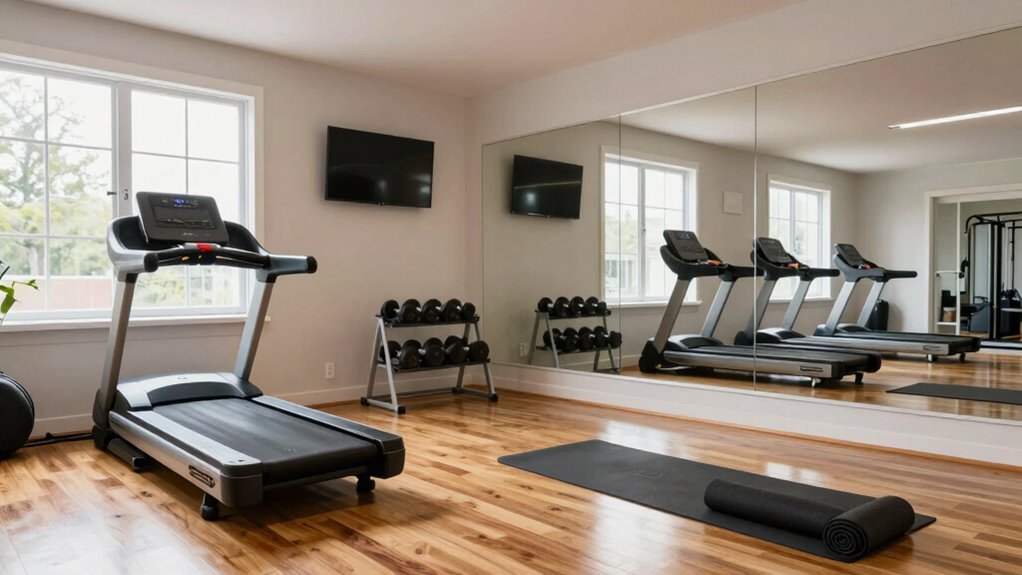
Before setting up your home gym, it’s essential to evaluate your available space and clarify your fitness goals. Start with a space assessment—measure the area and note any obstacles or limitations. This helps you understand what equipment and layout options are feasible. Simultaneously, focus on fitness goal clarification; determine whether you want strength training, cardio, flexibility, or a combination. Knowing your goals guides your space assessment, ensuring you allocate enough room for the activities that matter most. Being precise now prevents clutter and wasted space later. Additionally, considering family photoshoot fails can remind you to plan for unexpected interruptions or disruptions that might occur during workouts at home. Incorporating ideas like sound healing science can also inspire calming environments that support mental focus during exercise. To optimize your setup, researching home gym layout tips can provide valuable insights for maximizing space efficiency. Conducting a workout space evaluation can further refine your plan by identifying the most suitable areas for various activities. Implementing ergonomic principles ensures your workout environment is both comfortable and safe, reducing the risk of injury. By thoroughly analyzing your space and defining your objectives, you set a solid foundation for an efficient, motivating home gym that fits your lifestyle and helps you stay on track.
As an affiliate, we earn on qualifying purchases.
Choose the Right Equipment for Your Home Gym
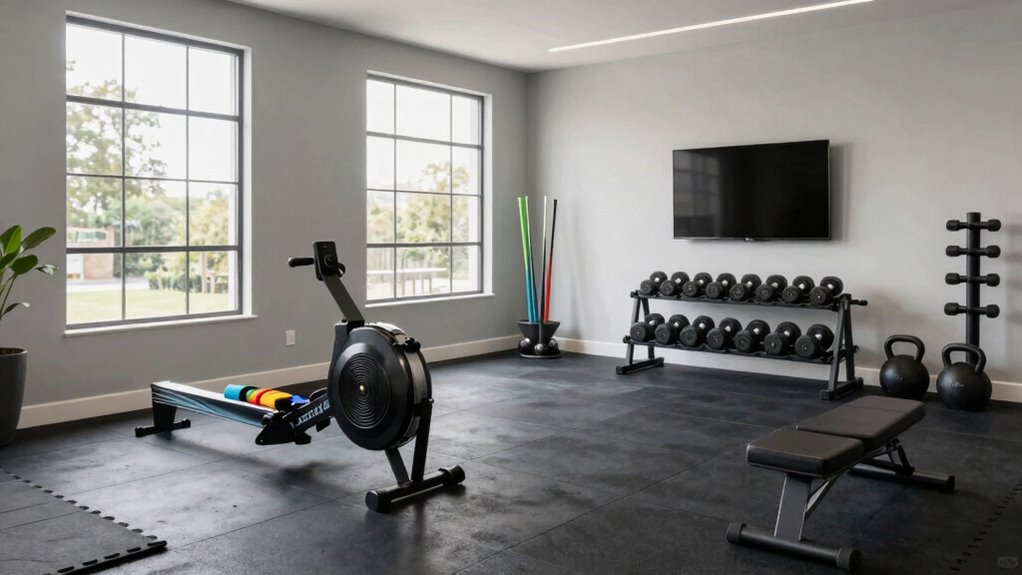
Choosing the right equipment is essential to creating a home gym that meets your needs and keeps you motivated. Start by identifying the exercises you enjoy and your fitness goals. If you love tracking progress, consider adding fitness trackers to monitor your performance closely. They help keep you motivated and accountable. Select versatile equipment like adjustable dumbbells, resistance bands, or a sturdy yoga mat for flexibility. Don’t forget to set the mood with your favorite workout playlists—music boosts energy and focus. Prioritize quality over quantity, ensuring your equipment is durable and suitable for your space. Remember, the goal is to create a setup that’s functional, inspiring, and tailored to your routine, making it easier to stay committed and reach your fitness targets. Incorporating modern fitness technology and research into your planning can help you stay informed about innovative equipment and training techniques. Additionally, choosing equipment that is space-efficient can maximize your workout area and make your home gym more practical. To further enhance your setup, consider exploring ergonomic design principles to ensure comfort and reduce injury risk during your workouts. Incorporating ergonomic features into your equipment can also improve overall safety and comfort during exercise.
As an affiliate, we earn on qualifying purchases.
Design a Functional and Efficient Workout Layout
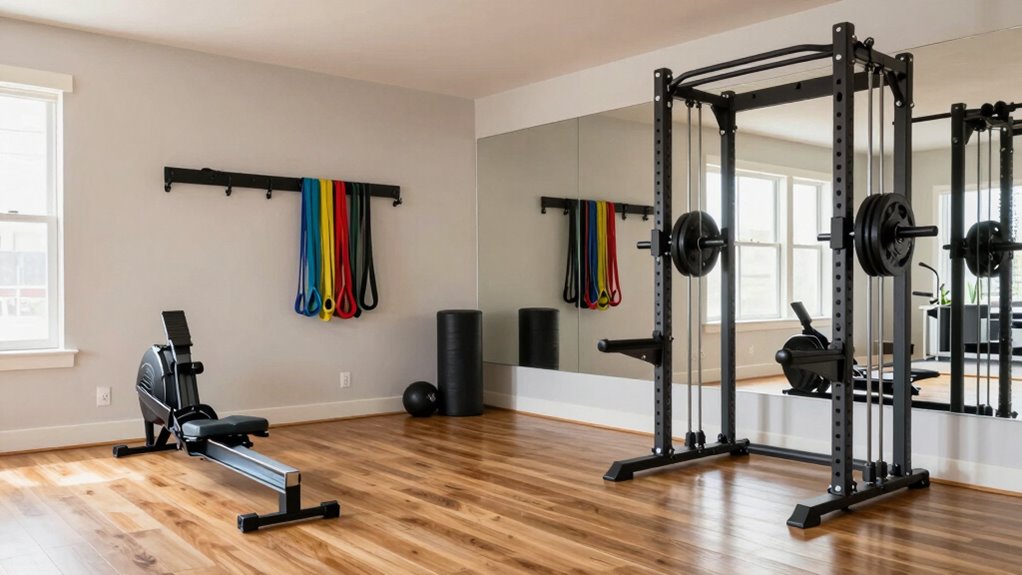
Designing a functional and efficient workout layout begins with understanding how to maximize your space for both safety and convenience. Start by arranging your equipment to create clear pathways, reducing clutter and preventing accidents. Incorporate decorative accents and thoughtful color schemes to make the area inviting and motivating. Use bright, energetic colors on walls or flooring to energize your workouts, while subtle tones can promote focus. Keep essential equipment within easy reach, and designate specific zones for cardio, strength, and stretching. Proper spacing ensures safety and flow, making workouts more enjoyable. Additionally, considering equipment placement can significantly improve the overall functionality of your gym. Remember, a well-planned layout isn’t just about aesthetics; it’s about creating a space that encourages consistency and progress. Incorporating elements of artistic design into your gym can boost motivation and create a more inspiring environment. Balancing Gold IRA rollovers with your fitness space can also inspire financial security alongside physical health. An organized layout that considers space optimization can help maximize your workout efficiency and prevent overcrowding. Strategic technological integration can further enhance your workout experience and streamline your routines. Balance functionality with style to craft a home gym you’ll want to use daily.
home gym lighting and ventilation
As an affiliate, we earn on qualifying purchases.
As an affiliate, we earn on qualifying purchases.
Maximize Small Spaces With Multipurpose Gear and Storage
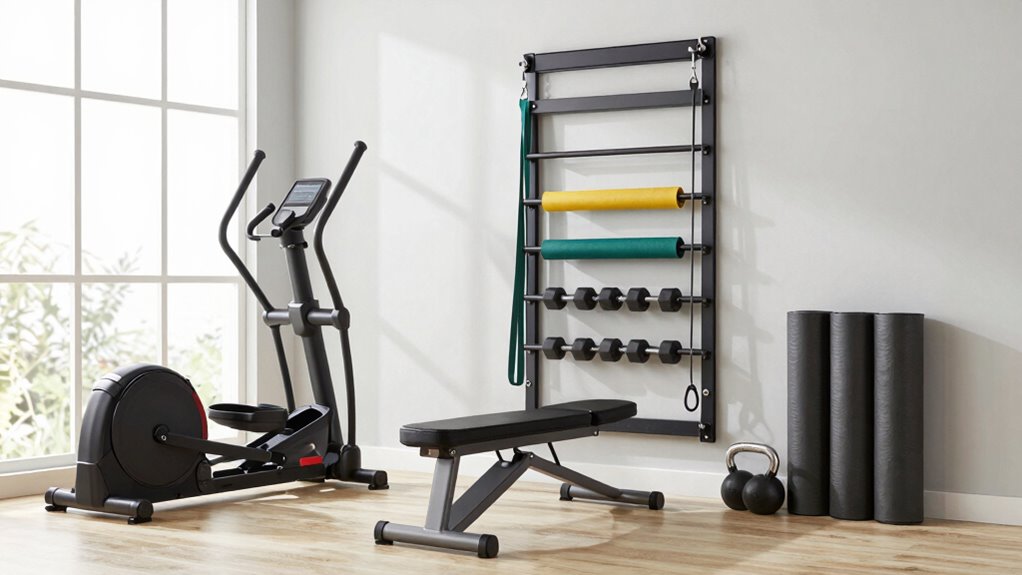
Maximizing small spaces in your home gym requires smart choices in gear and storage solutions. Multipurpose gear is essential, allowing you to perform various exercises without cluttering your space. For example, adjustable dumbbells, foldable benches, and resistance bands can be stored easily and used for multiple workouts. Incorporate smart storage options like wall-mounted racks, under-bed containers, or vertical shelving to keep equipment organized and accessible. Use these solutions to free up floor space, making your gym feel more open and functional. Opt for compact, versatile gear that can serve different purposes, reducing the need for numerous individual items. Additionally, considering Natural Lighting can enhance the overall ambiance and motivation in your workout area. Utilizing space-saving design principles can further optimize your layout and ensure that every corner is used efficiently. For instance, integrating vertical storage solutions helps maximize limited wall space and keeps the floor area clear. Incorporating cybersecurity principles such as secure storage for personal data or fitness tracking devices can also help protect your privacy while working out. Implementing ergonomic design in your layout can improve comfort and prevent injuries during exercise. With thoughtful storage and multipurpose equipment, you’ll create an efficient workout area that maximizes every inch of your small space.
Create Exercise Zones for Different Activities and Intensity Levels
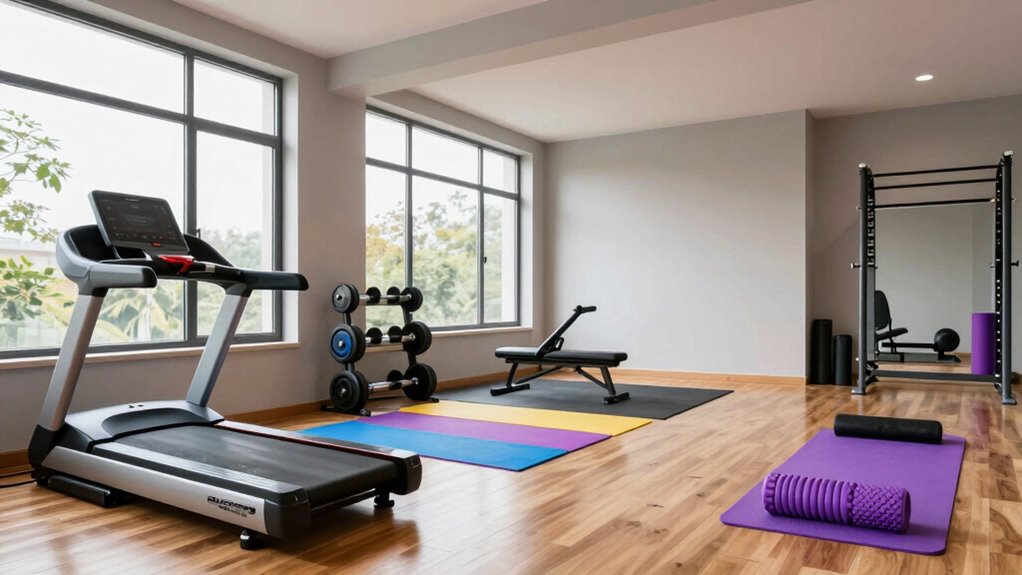
To get the most out of your home gym, set up dedicated zones for different activities and intensity levels. Create a cardio area for steady-state or high-intensity workouts, a strength training space with proper equipment, and a flexibility zone for stretching and recovery. This organization helps you stay focused and makes switching between exercises seamless. Incorporating training zones tailored to your goals can enhance your workout efficiency and consistency. Additionally, considering the space planning of your layout ensures optimal use of available room and improves overall workout flow. For those with larger areas, implementing multi-zone setups similar to multi-mower systems can maximize functionality and convenience throughout your gym.
Designated Cardio Zones
Creating dedicated cardio zones in your home gym helps you tailor your workouts to different activity types and intensity levels. By establishing specific areas, you can switch seamlessly between activities. For example:
- Set up a cycling area with a stationary bike, ideal for steady-state cardio or interval training.
- Designate a dance zone with enough space for energetic moves and music, perfect for high-pace sessions.
- Create a low-impact zone with mats for aerobics or step workouts.
- Include a compact space for jump rope or agility drills, adding variety and intensity.
These zones help you stay organized and motivated. Clearly defined areas ensure you’re ready for everything from a quick cardio burst to a longer, more intense session without clutter or distraction.
Strength Training Areas
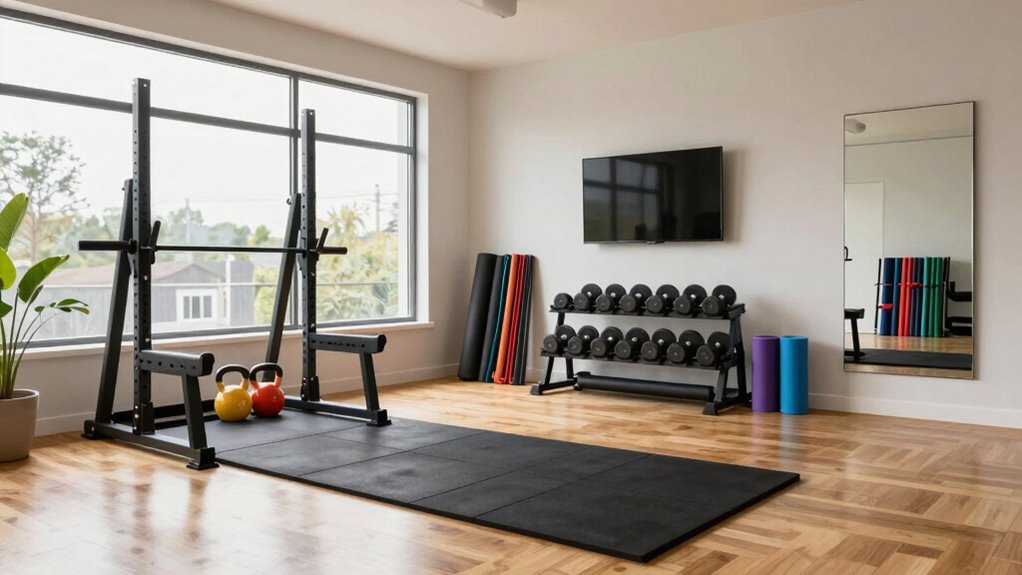
Organizing your home gym with designated strength training zones helps you target different muscle groups and training styles effectively. Set up a dedicated area with a sturdy weight rack to keep your barbells, plates, and kettlebells organized and easily accessible. Incorporate dumbbell storage nearby for quick progression between exercises. This zone should have enough space for free weights, allowing you to perform squats, presses, and lifts safely. Consider adding a mirror to monitor your form and guarantee proper technique. Clear separation from cardio and flexibility areas prevents clutter and distractions. By creating specific strength zones, you streamline your workouts, stay motivated, and maximize your training efficiency. Proper organization makes strength training more focused, safe, and enjoyable.
Flexibility and Recovery Spaces
Designating specific zones for flexibility and recovery allows you to tailor your workouts to different activity levels and needs. Recovery zones create a calm space where you can perform flexibility exercises, stretch, or rest between intense sessions. To set up these areas:
- Place a yoga mat or foam flooring for comfort during flexibility exercises.
- Include foam rollers or massage tools for muscle recovery.
- Add a comfortable chair or bench for seated stretches.
- Incorporate calming elements like dim lighting or soothing music to enhance relaxation.
These recovery zones help prevent injury, improve mobility, and promote overall wellness. By clearly separating these spaces, you ensure your home gym supports both active training and essential recovery, making your fitness routine more effective and sustainable.
Set Up Good Lighting, Ventilation, and Sound
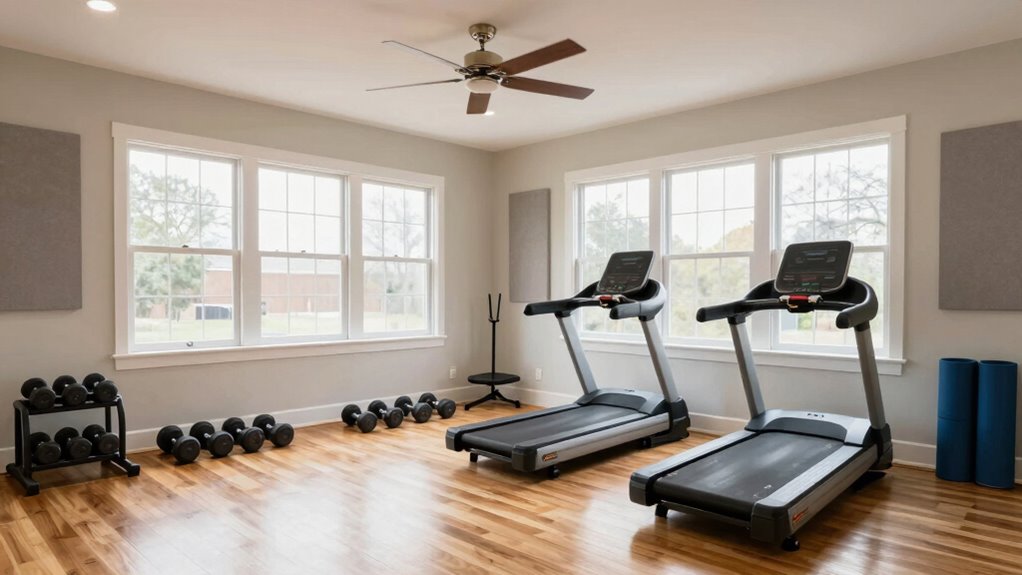
Good lighting keeps you energized and focused during workouts, so consider installing bright, adjustable fixtures. Proper airflow and ventilation prevent stuffiness and help you stay comfortable, especially during intense sessions. Additionally, managing sound levels guarantees your gym remains motivating without disturbing the rest of your home.
Optimal Lighting Strategies
Proper lighting is essential for creating a safe and motivating home gym environment. To optimize your space, focus on maximizing natural illumination and choosing the right lighting fixtures. Consider these strategies:
- Use large windows or skylights to bring in ample natural light during the day.
- Install adjustable lighting fixtures that allow you to modify brightness based on your workout needs.
- Incorporate task lighting in specific workout zones, like around mirrors or weight racks.
- Add soft ambient lighting for a calming atmosphere during stretching or cool-downs.
These elements work together to reduce eye strain, boost energy, and enhance focus. Proper lighting not only improves visibility but also makes your gym a more inviting space to stay consistent with your workouts.
Airflow and Ventilation Tips
Effective airflow and ventilation are key to maintaining a comfortable and safe home gym environment. Proper airflow optimization prevents stuffiness and reduces odors, making your workouts more enjoyable. To enhance ventilation, consider installing ventilation systems like exhaust fans or air purifiers. Natural airflow can also be improved with strategically placed windows and vents. Use the table below to explore different options:
| Ventilation Method | Benefits |
|---|---|
| Exhaust Fans | Remove stale air quickly |
| Air Purifiers | Improve air quality |
| Windows/Vents | Promote natural airflow |
| Ceiling Fans | Circulate fresh air efficiently |
Choose the right combination to keep fresh air circulating, ensuring your home gym stays safe, comfortable, and energizing.
Stay Motivated With Inspirational Elements
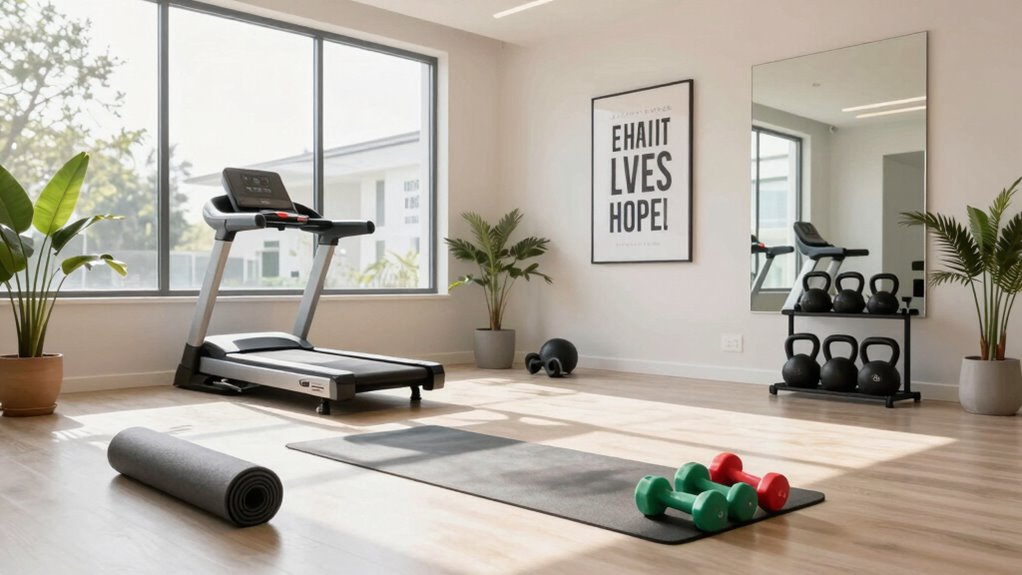
Adding inspirational elements to your home gym can considerably boost your motivation and keep you committed to your fitness goals. Motivational decor and inspirational quotes serve as constant reminders of your determination. To create an inspiring environment, consider:
- Framing bold quotes on the walls that resonate with your goals
- Using vibrant colors in your decor to energize your space
- Displaying success photos or progress charts to celebrate achievements
- Incorporating motivational posters or artwork that inspire perseverance
These elements help you stay focused and driven during workouts. When you surround yourself with positive visuals and messages, your mindset shifts to one of empowerment. With the right motivational decor, your home gym becomes more than just a workout space—it transforms into a sanctuary of perseverance and success.
Adjust Your Home Gym Layout as Your Goals Change
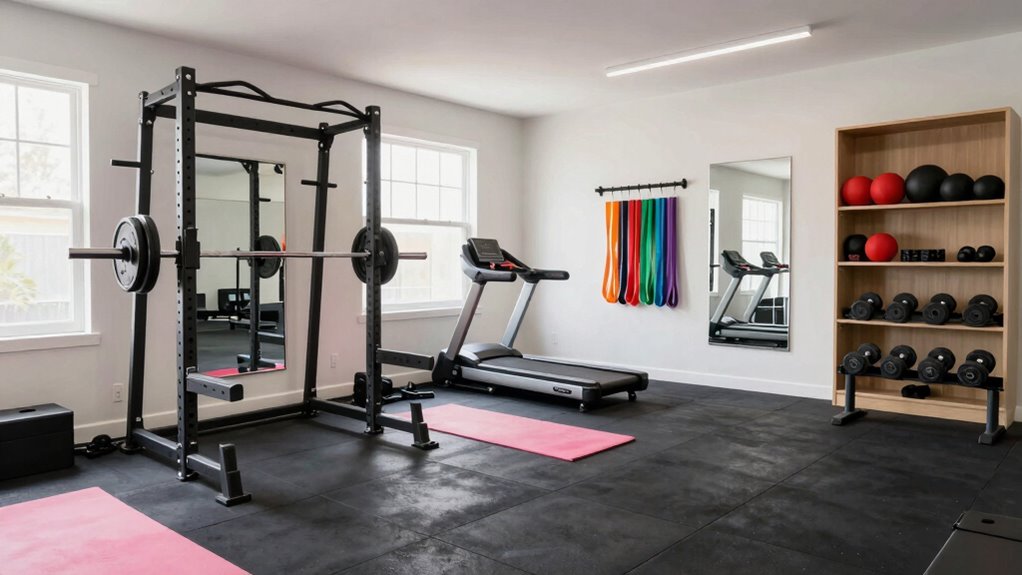
As your fitness goals develop, so should the layout of your home gym. You might shift focus from strength training to flexibility routines or add new equipment. Regularly reevaluate your space to guarantee it supports your current goals. For example, if you’re emphasizing yoga, allocate more room and proper flooring. If you’re incorporating new weights or machines, plan for equipment maintenance to keep everything safe and functional. Adjusting your layout keeps workouts efficient and enjoyable. Consider this layout flexibility to optimize space and motivation:
| Goal Focus | Layout Adjustment |
|---|---|
| Flexibility routines | More open space, mats, mirrors |
| Strength training | Dedicated zones, sturdy storage |
| Cardio workouts | Clear pathways, ventilation |
| Equipment maintenance | Easy access for upkeep, cleaning |
| New equipment | Reconfigure zones as needed |
Troubleshoot Common Home Gym Layout Challenges
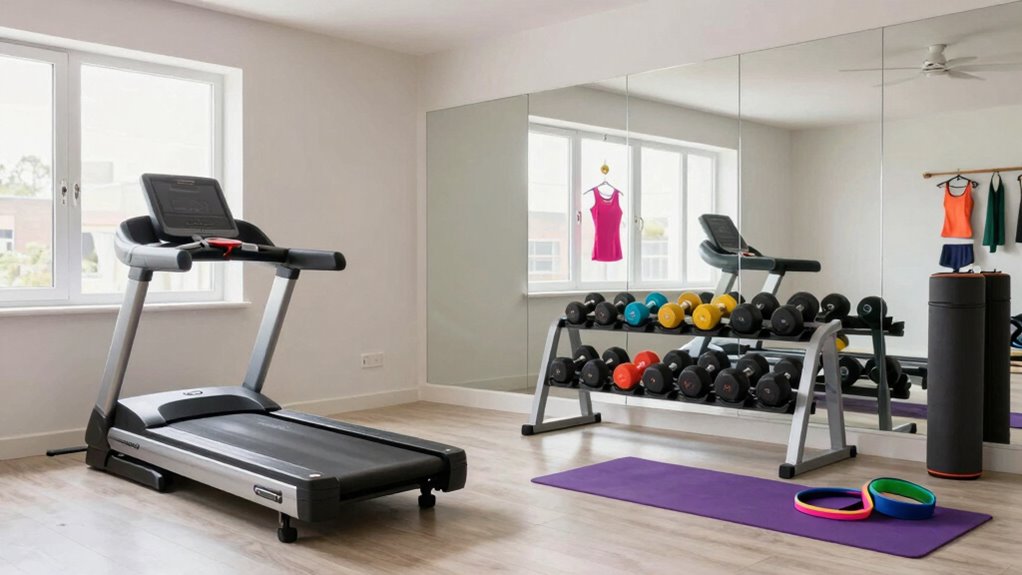
Even with careful planning, home gym layout challenges can still arise, disrupting your workout flow. To troubleshoot, start by checking equipment placement: verify machines are spaced for safe movement and easy access. Next, confirm that power outlets and cords are safely tucked away to prevent tripping hazards. Third, regularly inspect equipment for maintenance needs to avoid breakdowns mid-workout. Finally, prioritize safety precautions by keeping emergency exits clear and ensuring proper ventilation. If space feels cramped, consider rearranging larger items or removing seldom-used gear. Addressing these issues keeps your gym functional and safe, helping you stay consistent with your fitness goals. Remember, a well-maintained space minimizes risks and enhances your workout experience.
Frequently Asked Questions
How Can I Incorporate a Mirror Into My Gym Layout Effectively?
You can incorporate a mirror into your gym layout effectively by choosing the right wall mounting options. Place the mirror where you’ll get the best view of your form during exercises, like above your workout area or near mirrors on other walls. Wall mounting options include secure brackets or adhesive mounts, ensuring stability. Proper placement enhances motivation and technique, making your workouts more efficient and enjoyable.
What Are the Best Flooring Options for Different Workout Types?
You should choose rubber flooring for high-impact workouts like weightlifting or cardio, as it cushions your joints and absorbs noise. For activities like yoga or stretching, hardwood options such as bamboo or cork work well, providing a stable and smooth surface. Combining these materials in your gym layout guarantees each workout type has the right support, making your space functional and comfortable for all exercises.
How Do I Prevent Noise Issues With Home Gym Equipment?
Oh, the joys of noisy workouts! To avoid disturbing others, you’ll want soundproofing solutions like heavy mats or foam panels. Proper equipment placement also helps—keep noisy machines away from shared walls or bedrooms. Consider adding rubber flooring under your equipment to absorb sound. These little steps turn your home gym into a peaceful zone, preventing noise issues and letting you work out without guilt or neighborly complaints.
Can I Include a Small Water Station or Hydration Area?
Yes, you can definitely include a hydration station or water corner in your home gym. It’s a great idea to stay refreshed during workouts. Place a small water station with a mini-fridge or a water dispenser in a convenient spot, ensuring easy access. This hydration area helps you stay energized and minimizes disruptions, making your space more functional and encouraging consistent workouts without needing to leave or search for drinks.
How Do I Ensure Safety in a Multi-Use Home Gym Space?
Imagine your gym as a safe harbor amid a storm. To guarantee safety, you must carefully plan equipment placement, keeping walkways clear and avoiding clutter. Make emergency accessibility a priority by keeping exits and first aid supplies unobstructed. Regularly check equipment for wear and tear, and educate everyone on proper use. This proactive approach creates a secure environment where your fitness journey remains steady and confident.
Conclusion
Think of your home gym as a personalized oasis, where every piece of equipment is a brushstroke on your fitness canvas. By tailoring your space to your goals and needs, you create a sanctuary that inspires movement and progress. When your layout flows like a well-tuned symphony, workouts become effortless melodies. Keep adjusting and refining—your perfect fitness haven will flourish, turning every session into a vibrant, unstoppable sunrise of achievement.