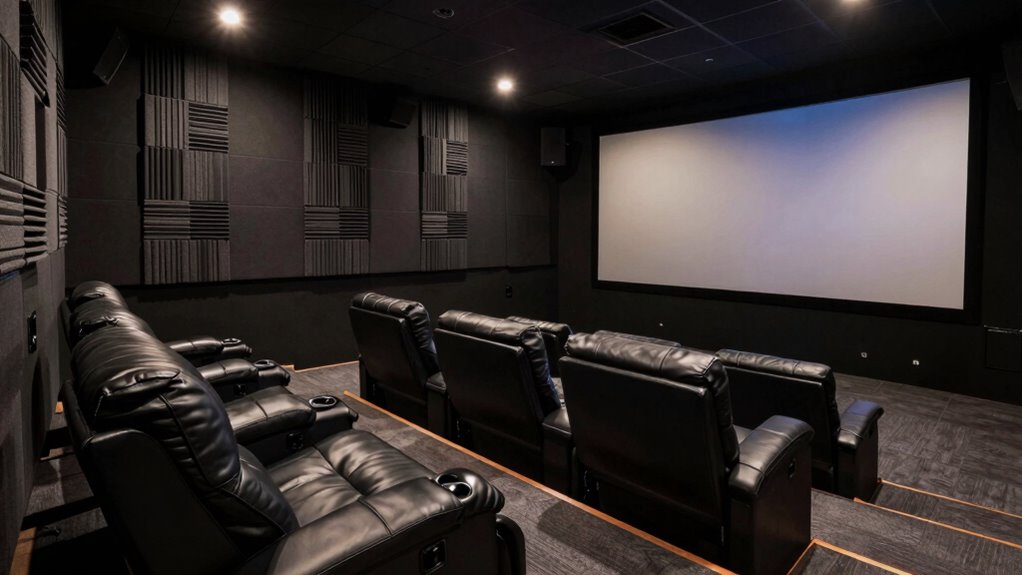

To reduce echoes in your movie room, start by adding household items that absorb sound, like blankets, cushions, or fabric wall art. Hang heavy curtains from ceiling to floor over windows or large openings, and place soft furnishings near reflective surfaces to soak up sound waves. Focus on corners with bass traps made from household materials to control low-frequency buildup. If you want more tips, there’s a simple trick that can make a big difference.
Key Takeaways
- Use soundproof curtains to absorb reflections and reduce echo in your movie room.
- Place bass traps in corners to control low-frequency buildup and improve sound clarity.
- Install acoustic panels or household items like blankets and wall art to absorb and diffuse sound waves.
- Position speakers away from walls and corners to minimize reflections and enhance dialogue clarity.
- Add soft furnishings such as rugs and cushions to further absorb sound and prevent echo.

Grichril Home Theater Curtains Room Separator, Room Divider Curtains for Ceiling Track System or Rod with Hooks 52 100 120 180 inch Wide, Privacy Floor to Ceiling Curtain, 1 Panel
Home Theater Curtains:The package contains one home theater curtain panel equipped with hooks. Extra wide curtain dimensions: 180…
As an affiliate, we earn on qualifying purchases.
As an affiliate, we earn on qualifying purchases.
Why Echoes Ruin Your Movie Room Experience: and How to Fix It
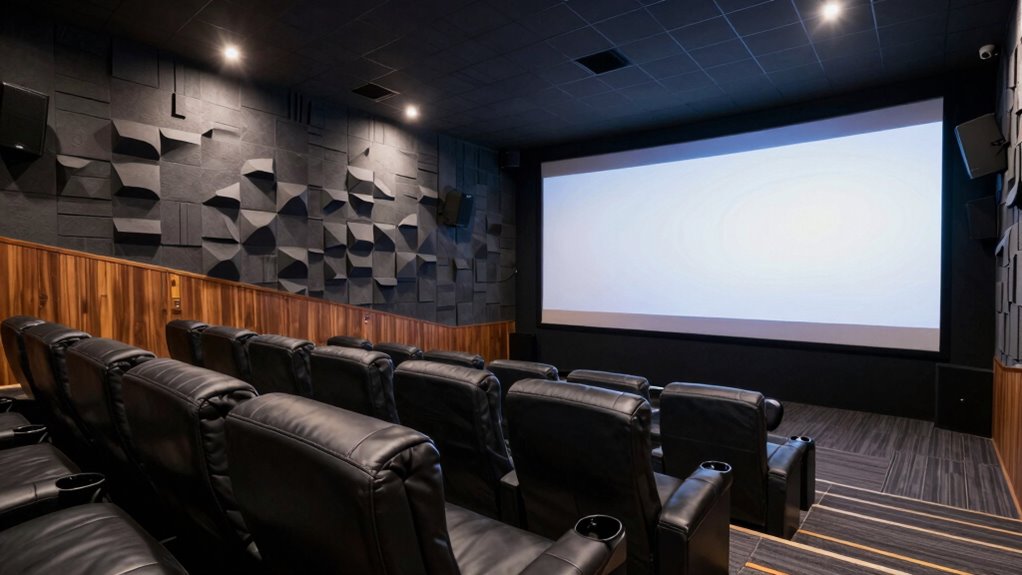
Have you ever noticed how echoes can make your movie room feel dull or distracting? Echoes happen when sound waves bounce off walls, creating a muddled listening experience. This can ruin your immersion and make dialogue hard to understand. To fix this, consider adding soundproof curtains, which absorb sound and reduce reflections. Bass traps are also essential, especially in corners, where low-frequency sounds tend to accumulate. These traps absorb excess bass and prevent it from bouncing around, which sharpens the overall sound clarity. Both soundproof curtains and bass traps are effective, easy-to-install solutions that improve sound quality. Additionally, using acoustic panels strategically can further help control sound reflections and enhance your space. Properly placing acoustic treatments can make a significant difference in sound quality. For optimal results, experimenting with different sound absorption techniques can help tailor the acoustics to your specific room. Incorporating room acoustic analysis can also identify problem areas and suggest targeted improvements. By controlling sound reflections, you’ll enjoy clearer dialogue, richer sound, and a more immersive movie experience in your home theater. Acoustic treatment techniques can further optimize your space for the best auditory experience.

8 Pack – Bass Traps Acoustic Foam Corner, 8''x8''x12'' Black Bass Traps Corner Studio Foam, High Density and Fire-Proof Acoustic Panels Recording Studio Acoustical Treatments
Acoustic Principle- Bass Trap is a kind of sound absorbing structure specially used to absorb specific low-frequency standing…
As an affiliate, we earn on qualifying purchases.
As an affiliate, we earn on qualifying purchases.
How Sound Reflection and Absorption Work in Your Home Theater

Understanding how sound reflection and absorption work is key to optimizing your home theater’s acoustics. When a sound wave hits a surface, part of it reflects, creating echoes and unwanted reverberations. Absorption occurs when materials, like acoustic diffusers, soak up sound energy, reducing reflections. Acoustic diffusers scatter sound waves in different directions, preventing them from bouncing directly back to your ears. This process helps create a balanced sound environment, minimizing echo and enhancing clarity. Proper placement of diffusers and absorbent surfaces is vital—they break up sound waves and control reflections. By managing how sound waves interact with your room, you’ll experience clearer dialogue, richer sound, and a more immersive movie-watching experience. Understanding these principles allows you to tailor your acoustic treatments effectively.

Focusound 52 Pack Acoustic Foam Panels 1" x 12" x 12" Sound Proof Foam Panles Soundproofing Noise Cancelling Wedge Panels for Home Office Recoding Studio with 300PCS Double-Side Adhesive
Soundproofing – Acoustic foam panels triangular grooves structure for better noise absorption, helps to reduce and absorb unwanted…
As an affiliate, we earn on qualifying purchases.
As an affiliate, we earn on qualifying purchases.
Best Household Items to Absorb Sound and Reduce Echo
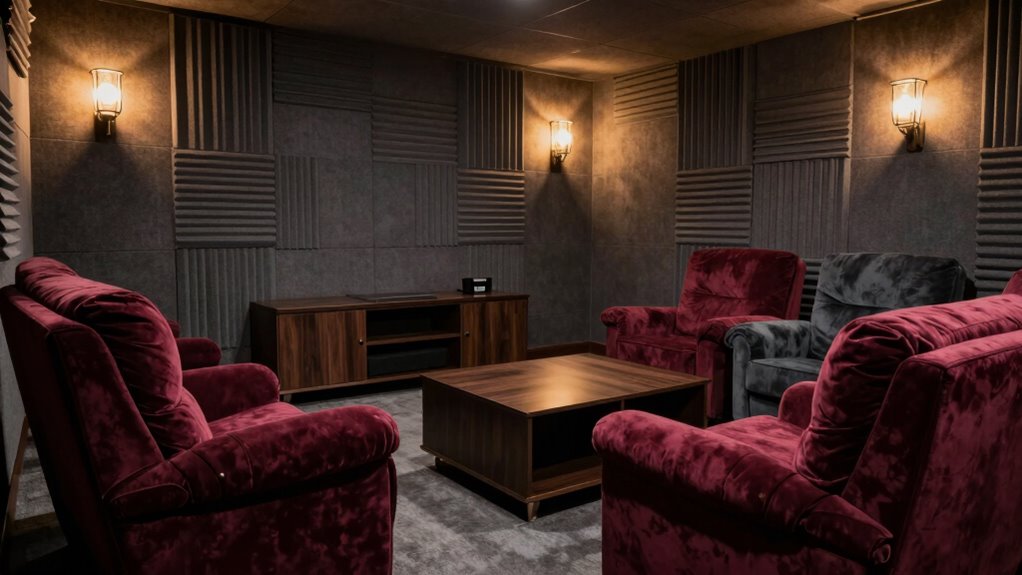
You can use soft fabric items like cushions, blankets, or upholstery to absorb sound effectively. Heavy curtains placed strategically can also reduce echo and improve room acoustics. Additionally, creating DIY acoustic panels from household materials offers an affordable way to enhance your space’s sound quality. Incorporating sound absorption techniques can further optimize your room’s acoustics for a more pleasant listening experience. For more comprehensive solutions, consider exploring cabling solutions that help optimize your audio setup and minimize sound interference. Using soundproofing materials can also help contain noise and prevent sound from leaking out, further improving your room’s acoustic environment. Implementing room layout adjustments can maximize the effectiveness of these sound absorption methods and create a more balanced soundscape. Employing performance-enhancing upgrades like proper speaker placement can also significantly improve your movie room’s audio clarity and overall experience.
Soft Fabric Items
Soft fabric items are some of the easiest and most effective household solutions for absorbing sound and reducing echo. Their fabric softness helps trap sound waves, preventing them from bouncing around the room. Incorporate decorative textiles like plush cushions, fabric-covered furniture, or soft throws to add both style and function. These items are versatile and can be placed strategically around your space, especially near reflective surfaces like walls or windows. The more textured and plush the fabric, the better it absorbs sound. Plus, decorative textiles can enhance your room’s aesthetic while improving acoustics. Additionally, sound wave absorption can be significantly improved with the use of various textiles, making your space more acoustically friendly. Using different types of fabrics in combination can create a multi-layered sound barrier, further reducing echo. Introducing items with varying fabric densities can optimize sound dampening and maximize the echo reduction. When selecting textiles, opting for thicker and denser fabrics can notably improve their sound absorption capabilities. Incorporating a variety of soft fabrics can also help create a more effective acoustic environment, tailored to your specific space. Simply adding a few soft fabric items can make a noticeable difference in echo reduction without major renovations or expense. It’s an easy way to improve your movie room’s sound quality.
Heavy Curtains Placement
Heavy curtains are one of the most effective household items for absorbing sound and reducing echo, especially when placed strategically around a room. Using decorative drapes can enhance both aesthetics and acoustics, making your space feel cozy and functional. To maximize their effectiveness, consider curtain layering—hanging multiple curtains or combining heavy drapes with lighter ones. Position the curtains over windows or along walls where sound reflections are strongest. Make certain they extend from ceiling to floor and are wide enough to cover entire openings. This setup helps trap sound waves and prevents them from bouncing around the room. Proper placement of heavy curtains creates a barrier that diminishes echo, making your movie room more immersive and enjoyable. Additionally, choosing curtains made from dense, sound-absorbing materials can further enhance their soundproofing capabilities. Incorporating room acoustic treatments such as wall panels or bass traps can complement the curtains for even better sound absorption. Using sound-absorbing materials like foam or fabric behind the curtains can further improve their effectiveness, especially if you add additional acoustic treatments to target specific problem areas. Incorporating household items for sound absorption can also help optimize your space for better acoustics.
DIY Acoustic Panels
Creating DIY acoustic panels with everyday household items is a simple and cost-effective way to improve your room’s sound quality. These panels serve as soundproofing essentials, reducing echo and absorbing unwanted noise. You can repurpose common items into effective acoustic panels that blend seamlessly into your space. To get started, gather materials like blankets, foam, or thick fabrics. Attach them to frames or mount directly on walls for instant sound absorption. Understanding the importance of sound absorption can help you choose the most effective household items for your acoustic treatment. When selecting materials, consider their soundproofing qualities to maximize your space’s acoustic comfort. Recognizing the acoustic properties of different household items can guide you in creating a more effective sound environment. Here’s a quick overview:
| Household Item | Best Use |
|---|---|
| Moving blankets | Large, effective sound absorbers |
| Egg cartons | Diffuse sound waves lightly |
| Upholstery foam | Target mid to high frequencies |

BXI Sound Absorber – 16 X 12 X 3/8 Inches 6 Pack High Density Acoustic Absorption Panel, Sound Absorbing Panels Reduce Echo Reverb, Tackable Acoustic Panels for Wall and Ceiling Acoustic Treatment
【SPECIFICATION】: High Density – 200kg/m3; Dimensions – 16 X 12 X 3/8 inches(cutting tolerance: 2%), pack of 6,…
As an affiliate, we earn on qualifying purchases.
As an affiliate, we earn on qualifying purchases.
How to Choose the Right Items for Better Room Acoustics
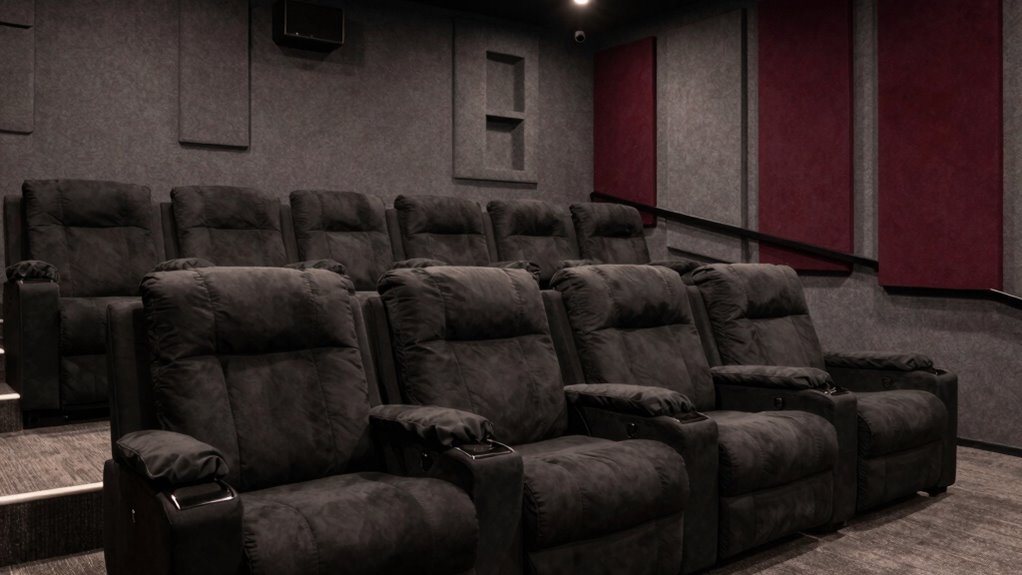
Choosing the right items for better room acoustics depends on selecting effective materials and placing them strategically. You should consider how different surfaces absorb or reflect sound and position your treatments to target problem areas. By focusing on these key points, you can considerably improve your room’s sound quality.
Material Selection Tips
Selecting the right materials for acoustic treatment is essential to achieving the desired sound quality in your room. Focus on material durability to guarantee your treatments last over time, resisting wear and environmental factors like humidity or temperature changes. Equally important is aesthetic appeal; choose items that complement your room’s style so they blend seamlessly or add visual interest. For example, fabric-covered panels can provide both sound absorption and a polished look, while wooden diffusers add warmth and texture. Avoid cheap or flimsy materials that may deteriorate quickly or fail to dampen sound effectively. By balancing durability with aesthetic appeal, you ensure your acoustic treatments are both functional and visually pleasing, making your space more enjoyable for movies and music alike.
Placement Strategies
To optimize your room’s acoustics, it’s essential to strategically place your treatment items where they’ll have the most impact. Start by focusing on sound diffusion; placing diffusers at the rear and sides of the room helps scatter sound waves evenly, reducing echoes. Proper speaker placement is also critical—position your speakers away from walls and corners to minimize reflections and enhance clarity. Use sound diffusion panels on the back wall to break up sound waves and prevent flutter echoes. Consider placing bass traps in corners to control low-frequency buildup. Always test your setup by playing familiar audio and adjusting placements accordingly. Remember, thoughtful positioning of diffusers and speakers greatly improves your room’s acoustic balance, making your movie experience more immersive and echo-free.
Easy Steps to Arrange Household Items for Clearer Sound
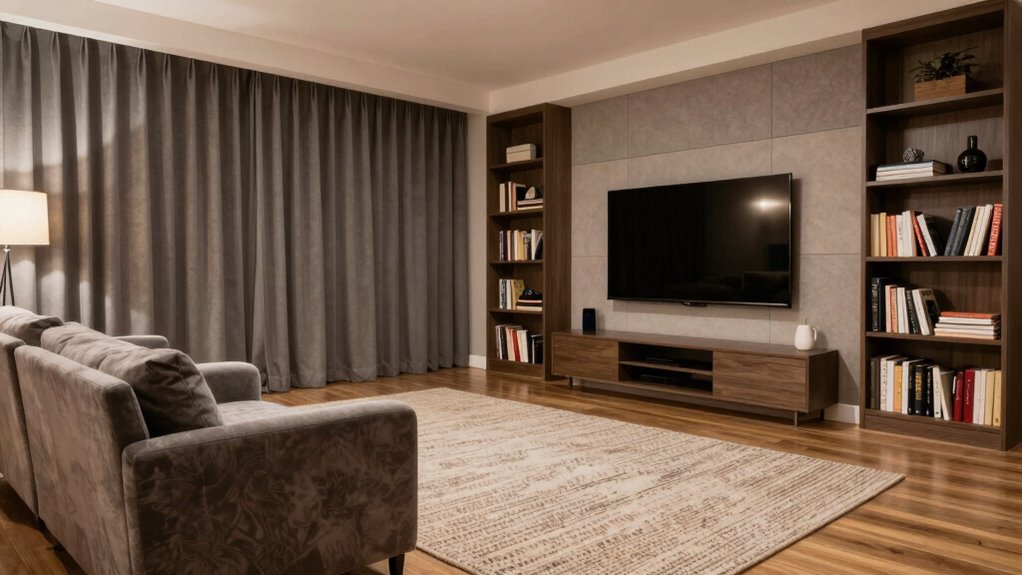
Arranging household items strategically can considerably improve your room’s sound quality. Start by repositioning furniture to avoid large, flat surfaces that reflect sound waves. Opt for a furniture arrangement that creates a balanced, cozy space, minimizing open areas that cause echo. Incorporate wall art, such as framed pictures or fabric tapestries, which can absorb sound and reduce reflections. Place larger pieces like sofas and bookshelves against walls to break up sound paths and prevent harsh echoes. Keep pathways clear to allow sound to disperse naturally. Small adjustments, like angling furniture or adding soft furnishings, can make a big difference. With a thoughtful layout, you’ll notice clearer sound and a more immersive audio experience without any drastic changes.
Common Mistakes That Worsen Room Echo and How to Avoid Them
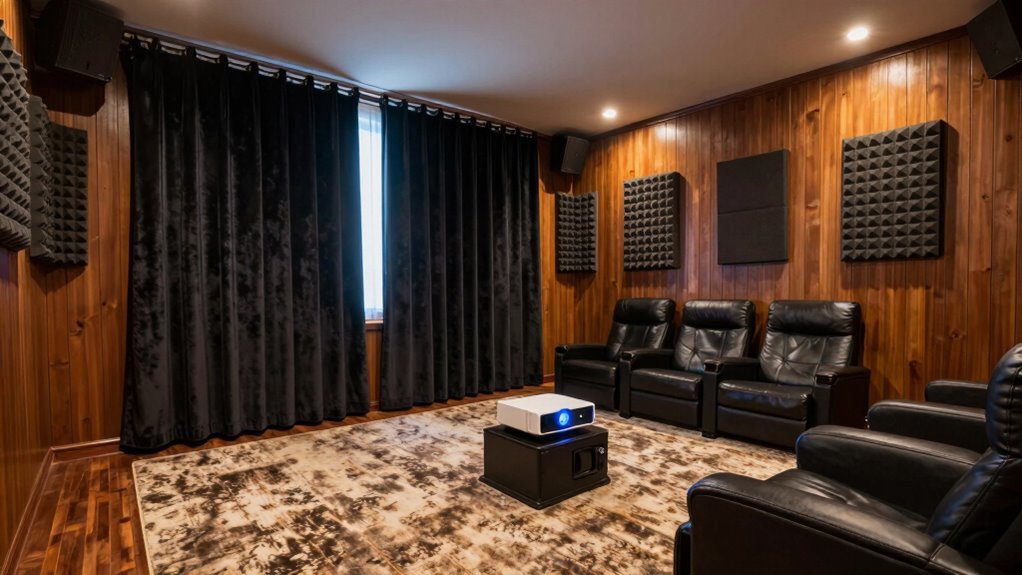
One of the biggest mistakes that can make room echoes worse is leaving large, open spaces unchecked. Poor room dimensions, especially with high ceilings or long, narrow layouts, amplify echo. Additionally, incorrect speaker placement—like placing speakers too close to walls or corners—can intensify reflections. To avoid this, consider how your room’s size influences sound behavior. Use this table to spot common issues:
| Mistake | Solution |
|---|---|
| Ignoring room dimensions | Use acoustic panels or furniture to break up large spaces |
| Improper speaker placement | Keep speakers away from walls and at ear level |
| Leaving open floor plans | Add rugs or fabric-covered furniture to absorb sound |
| Neglecting corners | Install bass traps to prevent sound buildup |
Addressing these points prevents sound reflections from worsening, creating a clearer, more immersive movie experience.
Extra Tips to Maximize Your Movie Room’s Sound Quality
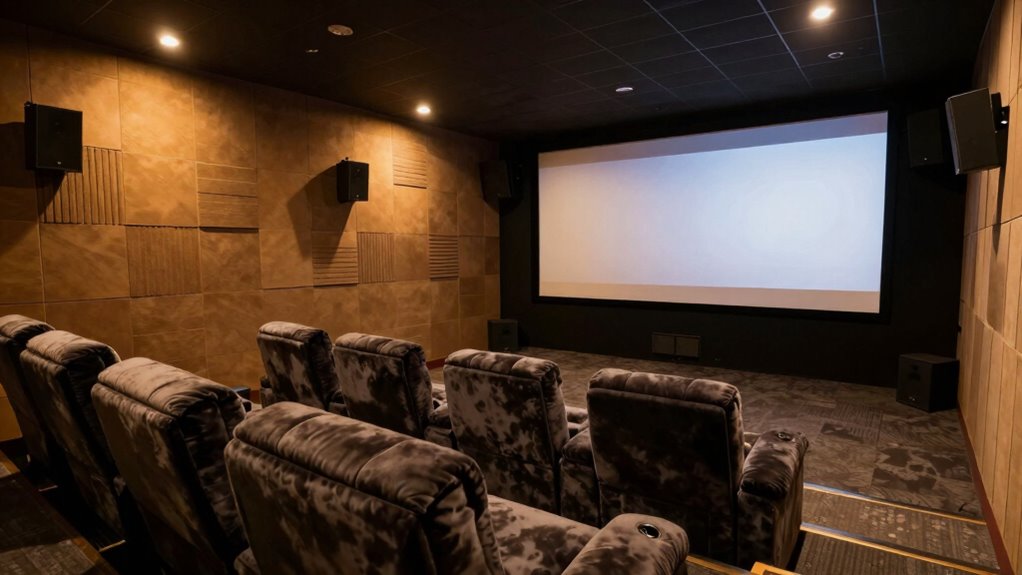
Maximizing your movie room’s sound quality involves more than just adding acoustic panels; it requires strategic adjustments to your setup. Start by installing soundproof curtains, which can absorb sound reflections and prevent noise from escaping. These curtains are especially useful for blocking external sounds and reducing echo. Additionally, placing bass traps in corners helps control low-frequency resonances that cause muddiness. Proper placement of bass traps ensures even bass distribution and clearer sound. Keep in mind that combining these elements with your existing acoustic treatments enhances overall sound clarity. Regularly repositioning curtains and bass traps can also fine-tune the room’s acoustics, ensuring an immersive movie experience with minimal echo and distortion.
When to Consider Professional Acoustic Treatments
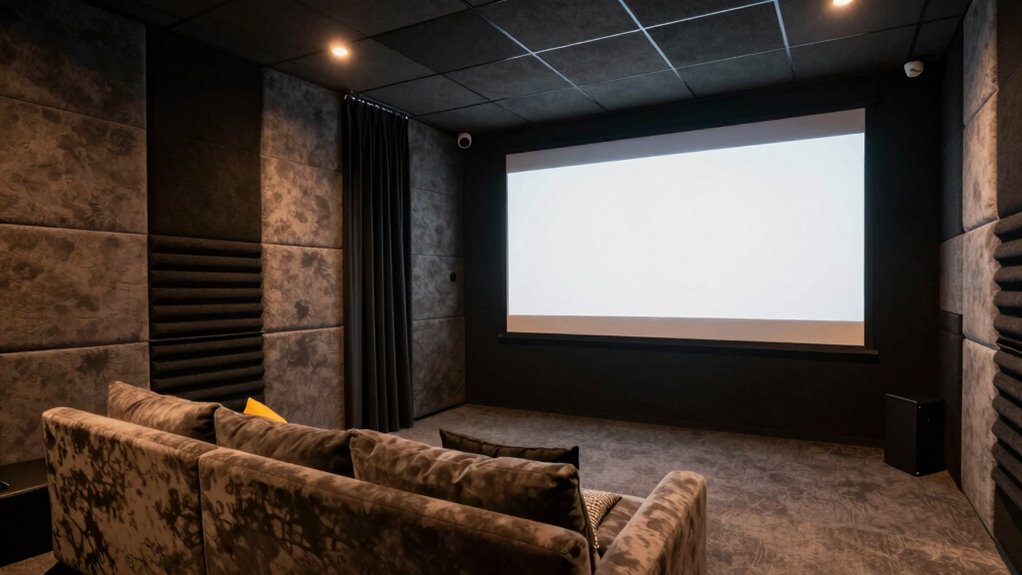
While DIY acoustic treatments can considerably improve your movie room, there are times when professional help becomes necessary. If you face persistent soundproofing challenges that DIY solutions can’t address, it’s a sign to seek professional acoustic solutions. These experts can accurately diagnose issues like unwanted noise leakage or excessive echo and implement targeted treatments. When your soundproofing efforts seem ineffective, or if you need to block out external noise completely, professional intervention becomes essential. Additionally, if you’re installing complex structures or integrating soundproofing into existing walls, professional advice ensures ideal results. Recognizing these signs helps you avoid wasting time and money on ineffective fixes, ensuring your movie room achieves the desired sound quality and isolation.
Frequently Asked Questions
Can Mirror Placement Reduce Echo in My Home Theater?
Yes, mirror placement can reduce echo in your home theater by controlling sound reflection. By strategically positioning mirrors on walls where sound bounces, you can absorb or redirect sound waves, minimizing unwanted echo. Keep in mind, placing mirrors directly opposite speakers or seating areas can enhance sound quality, but avoid overdoing it. Experiment with mirror placement to find the most suitable spot that improves acoustics without causing new reflection issues.
How Often Should I Replace Household Sound-Absorbing Items?
You should replace household sound-absorbing items every 3-5 years, or sooner if they start to look shabby or smell funny. Material durability plays a role here—sooner or later, foam panels or curtains lose their magic, and aesthetic considerations matter too. Don’t wait until your home sounds like a cave; refresh those items regularly to keep both sound quality and style intact.
Do Curtains Really Improve Room Acoustics Effectively?
Yes, curtains can substantially improve room acoustics, especially if you choose ones with thicker fabric density. Thicker curtains made from dense fabric absorb more sound, reducing echo and improving clarity during movies. Curtain thickness directly impacts their effectiveness, so opt for heavy, tightly woven fabrics. Installing these over windows or open spaces helps create a more balanced sound environment, making your movie experience much more immersive and enjoyable.
What’s the Ideal Placement for Cushions to Absorb Sound?
For ideal cushion placement, spread them across key reflective surfaces like walls, back of chairs, and corners to absorb sound effectively. Focus on creating a cushion arrangement that covers the areas where sound bounces most, especially near your seating. Place cushions at different heights and angles to maximize absorption. This strategic placement reduces echo, enhances clarity, and creates a more balanced acoustic environment for your movie room.
Can Painting Walls Help With Echo Control?
Painting walls alone won’t considerably reduce echo, but it can complement other treatments. Adding wall insulation helps absorb sound, while acoustic panels directly target echo issues. You should consider installing acoustic panels strategically around the room, especially on reflective surfaces, to dampen sound waves. Combining painted walls with insulation and acoustic panels creates a more effective soundproof environment, making your movie room acoustically balanced and echo-free.
Conclusion
By understanding sound reflection and absorption, choosing the right household items, and arranging them thoughtfully, you can transform your movie room from echoey to immersive. You’ll enjoy clearer dialogue, richer sound, and a more authentic experience. Don’t let echoes ruin your movies—take simple steps, avoid common mistakes, and maximize your space. With patience and the right approach, you’ll create a cozy, acoustically balanced environment that invites you to sit back, relax, and enjoy every scene.