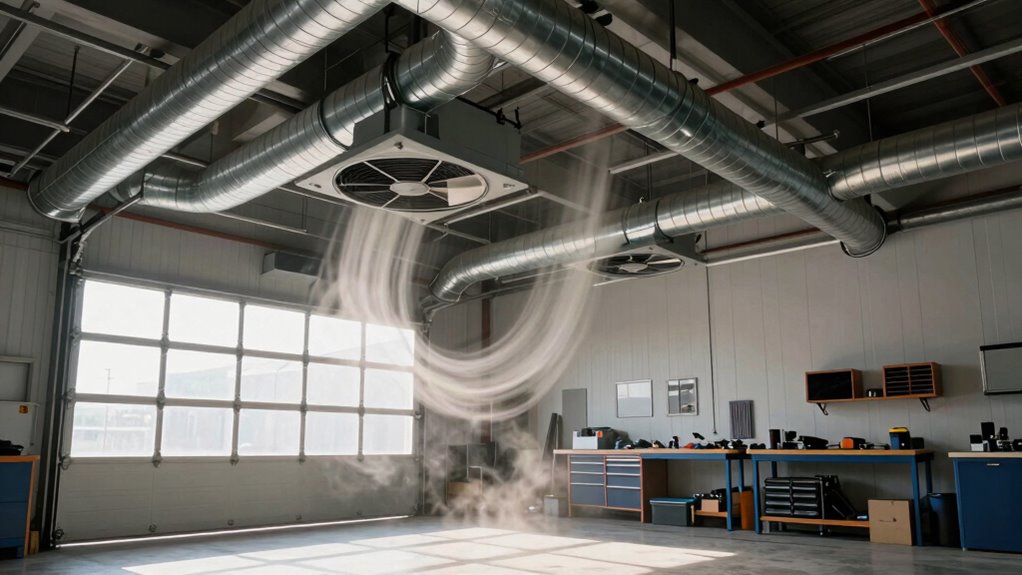

To think about garage and workshop air movement, focus on creating a steady flow of fresh air while preventing stagnant zones. Position vents, exhaust fans, and intake openings strategically to promote continuous airflow that moves fumes and heat away efficiently. Use local exhaust systems for hazardous sources and balance the airflow to guarantee safety and comfort. Incorporating natural ventilation can boost effectiveness, but regular adjustments and maintenance are key—exploring these tips more will help you optimize your setup.
Key Takeaways
- Prioritize continuous airflow by strategically positioning vents, exhaust fans, and intake openings to prevent stagnation and hazardous fumes.
- Use local exhaust systems like fume hoods or portable extractors for specific sources of hazardous fumes or dust.
- Ensure exhaust fans are sufficiently powerful and balanced to promote uniform air movement throughout the workspace.
- Incorporate a mix of natural and mechanical ventilation to enhance overall air exchange efficiency.
- Regularly inspect, clean, and adjust ventilation components to maintain optimal airflow and safety.
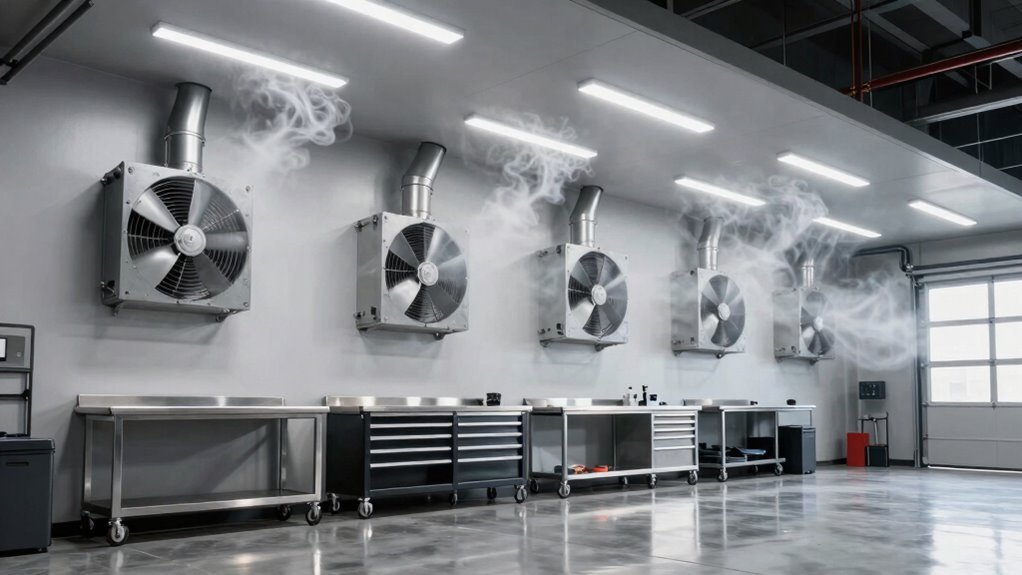
Proper air movement in your garage or workshop is essential for safety and comfort. When you think about maintaining a healthy environment, focus on ventilation efficiency and airflow enhancement. These two elements are key to ensuring that fresh air circulates properly and harmful fumes or excess heat don’t build up. Without good airflow, your workspace can become stuffy, hazardous, or uncomfortable, especially when working with chemicals, paints, or power tools that produce fumes or dust.
Proper air movement ensures safety and comfort by preventing fumes, heat buildup, and stale air in your workspace.
Start by understanding that ventilation efficiency isn’t just about installing a fan or vent; it’s about designing a system that moves air effectively throughout the space. You want to avoid dead zones—areas where air stagnates—by creating a continuous flow that replaces stale air with fresh air. This means positioning vents, exhaust fans, and intake openings strategically. Proper placement helps establish a steady airflow pattern, which improves ventilation efficiency and ensures that contaminants are carried away from your breathing zone. Additionally, considering airflow patterns can prevent localized buildup of hazardous fumes. Recognizing how air circulation impacts your workspace can lead to more effective ventilation solutions. Incorporating airflow management strategies can further optimize your setup and improve overall safety.
Airflow improvement involves balancing the movement of air so it flows smoothly across your workspace. If you use a single exhaust fan, ensure it’s powerful enough to pull air from all corners, not just a limited area. You might need to add intake vents to encourage fresh air to enter from different points. When designing your airflow system, consider the size of your workspace, the type of work you do, and the sources of fumes or dust. Larger spaces may require multiple fans or vents to keep air moving uniformly. Properly assessing your ventilation needs can help you select the most effective equipment for your specific environment.
You should also think about the direction of airflow. Ideally, fresh air should enter at lower points and move upward or toward exhaust outlets. This helps carry away fumes and heat more efficiently. Regularly inspecting and cleaning your ventilation equipment keeps airflow enhanced, preventing blockages that could reduce efficiency. When working with hazardous substances, use local exhaust systems—such as fume hoods or portable extractors—to target specific sources of pollution directly.
In addition, consider natural ventilation options, like windows or vents that open to the outside. When combined with mechanical systems, natural airflow can greatly boost ventilation efficiency without consuming extra energy. Understanding the importance of proper airflow design can help you create a safer and more comfortable workspace. The more you understand the dynamics of airflow and ventilation, the better you can tailor your setup for safety and comfort. Remember, effective air movement isn’t a one-time fix; it’s an ongoing process of assessment and adjustment to maintain ideal conditions in your garage or workshop.
garage exhaust fan
As an affiliate, we earn on qualifying purchases.
As an affiliate, we earn on qualifying purchases.
Frequently Asked Questions
How Often Should I Clean My Workshop Ventilation System?
You should clean your workshop ventilation system at least every 3 to 6 months for DIY maintenance and peak airflow. Regular cleaning prevents dust, debris, and grease buildup that can reduce efficiency and compromise air quality. Check your filters and vents frequently, especially if you notice reduced airflow or increased dust. Keeping your system clean guarantees proper ventilation, making your workspace safer and more comfortable while enhancing airflow efficiency.
What Are the Best Air Filters for a Garage?
You should choose high-efficiency particulate air (HEPA) filters or activated carbon filters for your garage. These filters effectively improve air quality and control dust, preventing harmful particles from circulating. While some may worry about costs, investing in quality filters guarantees a healthier workspace and reduces long-term health risks. Regularly replacing or maintaining your filters keeps air clean and safe, making your garage a safer, more comfortable environment.
Can Proper Air Movement Prevent Mold Growth?
Proper air movement can ensure prevent mold growth by promoting effective humidity control. When you guarantee good airflow in your garage or workshop, it helps reduce excess moisture that mold thrives on. Regularly ventilate the space, use exhaust fans, or install air movers to keep humidity levels in check. This proactive approach creates an environment less conducive to mold, protecting your space and your belongings from potential damage.
How Do I Reduce Noise From Exhaust Fans?
To reduce noise from exhaust fans, start with proper noise reduction techniques like installing sound dampening materials or mounting the fan on vibration-absorbing pads. Regular exhaust fan maintenance also helps, as dust and debris can cause louder operation. Check for loose parts or worn-out bearings, and tighten or replace them as needed. These steps guarantee your exhaust fan runs quietly and efficiently, creating a more comfortable workspace.
Are There Energy-Efficient Options for Workshop Ventilation?
Think of energy-efficient fans as the gentle breeze that keeps your workshop comfortable without wasting energy. You can optimize ventilation by choosing high-efficiency fans and integrating ventilation automation systems. These smart systems adjust airflow based on your needs, saving power while maintaining air quality. With these options, your workspace stays fresh and eco-friendly, making your workflow smoother and more sustainable without the noise or energy drain of traditional setups.
portable workshop fume extractor
As an affiliate, we earn on qualifying purchases.
As an affiliate, we earn on qualifying purchases.
Conclusion
Think of your garage or workshop as a busy city, where air is the lifeblood flowing through streets and alleyways. When you optimize air movement, you’re directing a steady river of fresh energy, sweeping away fumes like a diligent gardener pruning overgrown branches. With the right setup, you’ll keep the air lively and clear, turning your space into a well-orchestrated symphony of safety and efficiency. Master the airflow, and your workshop will breathe easier and work better.
ventilation system for garage
As an affiliate, we earn on qualifying purchases.
As an affiliate, we earn on qualifying purchases.
automatic air vent for workshop
As an affiliate, we earn on qualifying purchases.
As an affiliate, we earn on qualifying purchases.