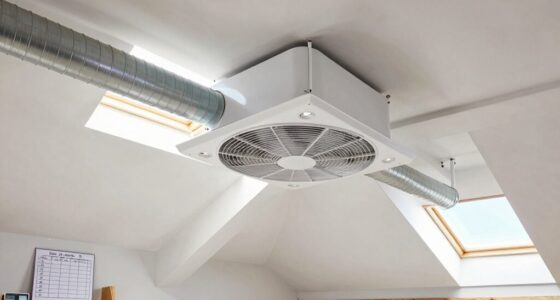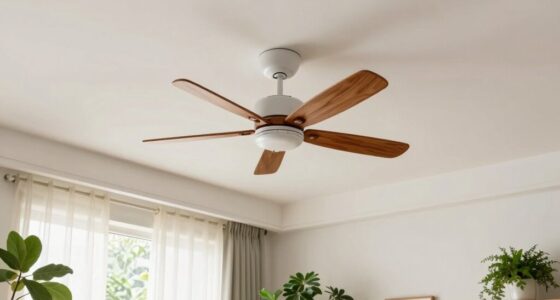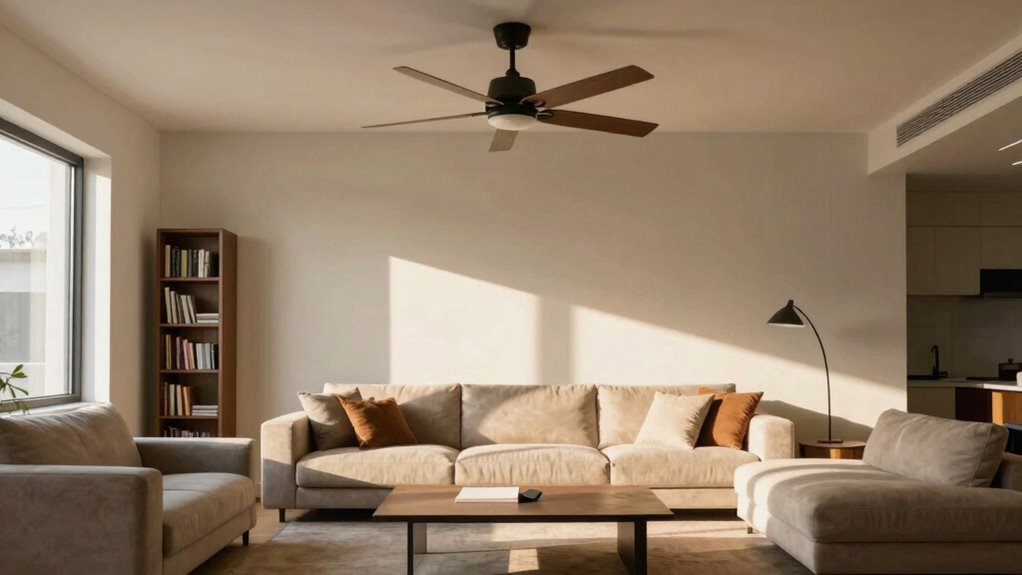

If you place your fan in a corner or near walls, it won’t circulate air effectively, making large rooms feel stagnant and uncomfortable. Fans need open, unobstructed spaces to distribute air evenly across the room. Positioning them in tight spots stops airflow and creates dead zones. To improve comfort, avoid these common mistakes and find better spots for your fan. Continue exploring to discover how strategic placement can transform your space.
Key Takeaways
- Placing fans in corners or near walls restricts airflow, creating dead zones in large rooms.
- Incorrect fan positioning prevents effective air circulation, leaving areas with stagnant, uncirculated air.
- Positioning fans too close to furniture or in tight corners hampers their ability to distribute air evenly.
- Installing fans away from open central areas reduces their capacity to generate a uniform breeze.
- Failing to place fans centrally or in open spaces results in ineffective cooling and a “dead” room feel.

If you’ve ever felt like your large living room is still stuffy or unwelcoming despite turning on the fan, you might be making a common placement mistake. Many people assume that simply turning on a fan will automatically improve airflow, but where you position it can make all the difference. Proper placement ensures better air circulation, enhances energy efficiency, and minimizes noise levels, creating a more comfortable space. When a fan is placed incorrectly—say, in a corner or near furniture—it doesn’t distribute air effectively. Instead, it might just stir up existing air, leaving the room feeling stagnant and dead, even with the fan on.
In large rooms, airflow needs to be strategic. Positioning the fan in an open area, preferably high up near the ceiling, helps promote better circulation. Ceiling fans work best when installed centered in the room, allowing air to flow evenly across the space. If you’re using portable fans, avoid placing them directly against walls or in tight corners. Instead, aim for an unobstructed spot where the breeze can spread freely. Doing so not only improves the overall comfort but also helps you get the most out of your fan’s energy efficiency. Understanding airflow dynamics can help you make more informed placement decisions that maximize comfort and efficiency. Achieving optimal airflow also involves considering air circulation patterns to prevent dead zones in large rooms. Additionally, proper placement can help reduce energy consumption by allowing fans to operate at lower speeds for the same cooling effect.
Another mistake that affects comfort and efficiency is noise levels. Fans placed improperly or that are poorly maintained tend to produce more noise, disrupting conversations or relaxation. Positioning a fan on a stable, flat surface and ensuring it’s not too close to your ears or seating areas can help minimize noise. Ceiling fans with good quality blades and balanced motors operate more quietly, so investing in a well-made model and installing it correctly can make a significant difference. Proper placement also prevents the need for higher fan speeds, which tend to create more noise and consume more energy. Additionally, fan maintenance plays a crucial role in reducing operational noise and prolonging the lifespan of your device. Regularly cleaning and inspecting your fan can significantly improve its performance and quiet operation.
Ultimately, your goal is to find a balance between effective airflow, energy efficiency, and quiet operation. Take the time to analyze your room’s layout and experiment with different placements. When you position your fans correctly, you’ll notice your large room feels more inviting and comfortable, without the unwanted noise or wasted energy. Proper placement isn’t just about aesthetics; it’s about making your space work better for you.
As an affiliate, we earn on qualifying purchases.
Frequently Asked Questions
How Do I Identify Poor Fan Placement in My Room?
You can identify poor fan placement by noticing if the airflow feels uneven or ineffective. If your decorative fan isn’t circulating air well across the room or creates a draft in one spot, it’s misplaced. Proper placement boosts energy efficiency and comfort, so position the fan near the ceiling for best air movement. Check if the fan’s airflow reaches all corners; if not, it’s likely poorly placed and needs repositioning.
Can Ceiling Fan Direction Affect Room Warmth?
Coincidentally, the direction your ceiling fan spins can influence your room’s warmth. When set to clockwise, it pulls cool air upward, pushing warm air down, which boosts energy efficiency during winter. Fan blade design also matters, as it affects airflow. Properly orienting your fan can make a big difference in maintaining a cozy room, reducing heating costs, and ensuring even warmth without overworking your heating system.
What Are Common Mistakes When Installing Multiple Fans?
When installing multiple fans, you often make the mistake of placing them too close together, causing fan noise and uneven airflow. This setup also reduces energy efficiency because fans work against each other instead of complementing. To prevent this, space them adequately and set different speeds. Proper placement ensures quieter operation, better airflow, and lower energy bills, making your big room more comfortable and efficient.
Are There Specific Fan Types Better for Large Rooms?
Think of your large room as a symphony, needing the right instruments to harmonize. For spacious areas, opt for ceiling fans with sturdy fan blade materials like wood or metal to move air effectively. Look for models with remote control features, making it easy to adjust settings on the fly. These fans distribute airflow evenly, preventing dead spots and keeping the entire room comfortably cool and lively.
How Often Should I Clean or Maintain My Ceiling Fan?
You should clean and maintain your ceiling fan at least once every six months to keep it running smoothly. Regular cleaning helps reduce fan noise caused by dust buildup and guarantees peak airflow. Check remote compatibility to make sure controls work properly, especially if you notice any inconsistent operation. Lubricate the motor if needed, and tighten any loose screws. Proper maintenance keeps your fan quiet, efficient, and prolongs its lifespan.
oscillating portable fan for large rooms
As an affiliate, we earn on qualifying purchases.
As an affiliate, we earn on qualifying purchases.
Conclusion
Remember, where you place your fan is like planting seeds in the right soil. If you choose poorly, even the strongest fan can’t breathe life into a big room. Think of your fan as a heartbeat—its placement sets the rhythm for your space’s energy. When positioned correctly, it awakens the room, making it feel alive and welcoming. A simple mistake in placement can silence that heartbeat, leaving your space feeling empty and cold.
As an affiliate, we earn on qualifying purchases.
As an affiliate, we earn on qualifying purchases.