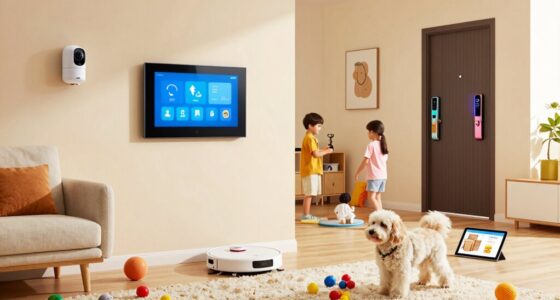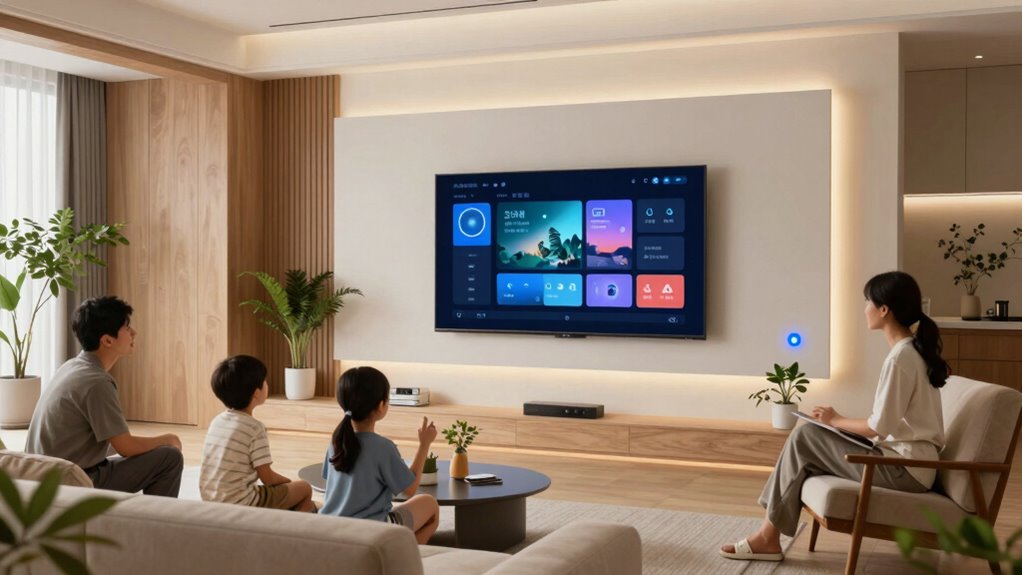

To build a smart home around problems, start by identifying daily challenges that affect your comfort, safety, or efficiency, like temperature control or security. Choose devices that directly solve these issues, such as smart thermostats and security systems, and focus on seamless integration to guarantee they work together. Prioritize eco-friendly, sustainable options and continually assess their effectiveness as your needs change. Keep exploring ways to refine your setup for a truly personalized and efficient home environment.

Get home appliances delivered free with Prime
- Fast, free delivery on millions of items
- Prime Video, Amazon Music and more included
- Member-only deals all year
Key Takeaways
- Identify specific household problems and prioritize solutions that directly address safety, comfort, or efficiency issues.
- Choose integrated, responsive devices that communicate effectively to solve multiple problems seamlessly.
- Focus on problem-solving features like automation, remote control, and sensors rather than trendy gadgets.
- Incorporate eco-friendly and energy-efficient solutions aligned with your household’s unique needs.
- Regularly review and adjust your smart home system to ensure continued relevance and effectiveness.

Building a smart home tailored to your specific problems begins with identifying the daily challenges you face. Instead of starting with the latest gadgets, focus on the issues that disrupt your comfort, safety, or efficiency. For example, if you find yourself constantly adjusting the thermostat or worrying about security when you’re away, these are clear signals to prioritize energy efficiency and security enhancement in your smart home plan. By understanding your problems, you can select solutions that directly address them, rather than buying devices just because they’re trendy.
Once you’ve pinpointed your main issues, think about how technology can help solve them. If energy bills are high and you notice wasted electricity, smart thermostats and automated lighting can optimize energy use without requiring constant manual adjustments. These systems learn your patterns, reducing waste and lowering costs. When it comes to security, consider problems like forgetfulness in locking doors or vulnerability when you’re out. Smart locks, cameras, and motion sensors can provide peace of mind by offering remote control and alerts, ensuring your home stays secure even when you’re not physically present.
Building your smart home around your problems also means integrating devices in a way that simplifies your life. Focus on creating a cohesive system that communicates seamlessly. For instance, your security system could trigger outdoor lighting when motion is detected, deterring intruders and enhancing security enhancement. Meanwhile, smart sensors can inform your thermostat of occupancy, helping it adjust temperature settings for energy efficiency. This integration ensures your home responds intelligently to your needs, rather than functioning as isolated gadgets. Additionally, understanding the importance of biodiversity can inspire environmentally conscious choices in your smart home design, promoting sustainability alongside problem-solving. Incorporating energy-efficient appliances can further reduce your environmental impact and operational costs.
Create a seamless, integrated smart home that responds intelligently to your needs, simplifying life and enhancing security and energy efficiency.
Avoid the trap of buying products just because they’re new or popular. Instead, ask yourself how each device addresses your specific challenges. Will it genuinely improve your daily routine? Does it solve a problem you face regularly? If a device doesn’t align with your goals—whether it’s reducing energy consumption or increasing safety—then it’s likely unnecessary. Building around problems keeps your smart home functional, cost-effective, and tailored to your lifestyle. Incorporating sustainable practices can further enhance the eco-friendliness of your smart home, ensuring that your solutions are durable and environmentally responsible. Recognizing the role of technology adoption in smart home design can help you stay informed about the most effective and eco-friendly innovations.
Finally, remember that a problem-focused approach involves ongoing assessment. Life changes, and so do your needs. Regularly review how your smart home solutions are working and adjust as needed. This way, your home continues to serve you well, providing real solutions rather than just occupying space with gadgets. By centering your smart home design on your problems, you create a personalized environment that genuinely enhances your daily life.
smart thermostat for energy efficiency
As an affiliate, we earn on qualifying purchases.
As an affiliate, we earn on qualifying purchases.
Frequently Asked Questions
How Do I Identify My Specific Home Problems Effectively?
To identify your specific home problems effectively, start with a thorough problem assessment. Walk through your home and note issues like energy waste, security concerns, or inefficiencies. Focus on areas where automation could improve daily life. Ask yourself what annoys or slows you down. This approach helps you prioritize home automation solutions that address real problems, ensuring your smart home is tailored to your needs rather than just adding gadgets.
What Are Common Mistakes When Building a Problem-Focused Smart Home?
A common mistake is focusing too much on trendy features like automated lighting or voice control instead of addressing your actual needs. You might end up with gadgets that don’t solve your problems, wasting money and effort. Always identify your core issues first, then choose solutions that genuinely improve your daily life. This way, your smart home remains practical and tailored, rather than just a collection of popular but unnecessary tech.
How Can I Prioritize Problems to Address First?
Start by identifying the most pressing household concerns—those that impact your daily comfort or safety. Focus on automation planning that directly improves these issues, enhancing user experience. Prioritize problems based on urgency and potential benefits, tackling the most critical ones first. This approach guarantees your smart home evolves naturally around your needs, making daily routines smoother and more efficient, rather than simply adding gadgets for the sake of technology.
What Budget Considerations Should I Keep in Mind?
When planning your smart home, start with budget planning to set clear limits. Consider cost estimation for each device or system you want, including installation and future upgrades. Prioritize essential solutions that solve your main problems first, then allocate funds accordingly. Keep a contingency fund for unexpected expenses. Staying mindful of your budget helps you make smart choices without overspending, ensuring your smart home remains affordable and effective.
How Do I Ensure Future Scalability of My Smart Home?
To guarantee future scalability of your smart home, focus on choosing compatible home automation and security systems that support open standards like Zigbee or Z-Wave. This way, you can easily add new devices without replacing existing ones. Regularly update your firmware, and plan for a robust network infrastructure. By doing so, you’ll create a flexible, future-proof smart home that adapts seamlessly as your needs grow.
smart security system with remote control
As an affiliate, we earn on qualifying purchases.
As an affiliate, we earn on qualifying purchases.
Conclusion
By focusing on solving specific problems, you create a smarter, more efficient home. Imagine a family struggling with high energy bills; installing smart thermostats tailored to their routine can drastically cut costs. Instead of buying every new gadget, you prioritize solutions that address your real needs. When you build your smart home around problems, every device works together seamlessly, making your life easier and more comfortable—proof that the right problem-solving approach truly transforms your space.
automated lighting system for home
As an affiliate, we earn on qualifying purchases.
As an affiliate, we earn on qualifying purchases.
smart home sensors for occupancy detection
As an affiliate, we earn on qualifying purchases.
As an affiliate, we earn on qualifying purchases.
NFL season / tailgating Picks
team gear
As an affiliate, we earn on qualifying purchases.