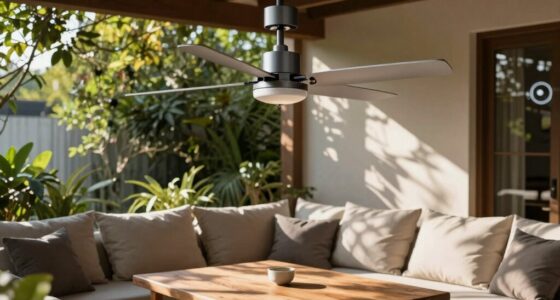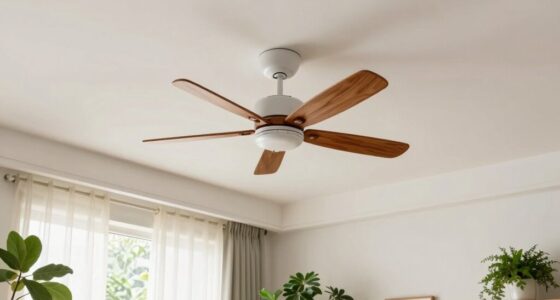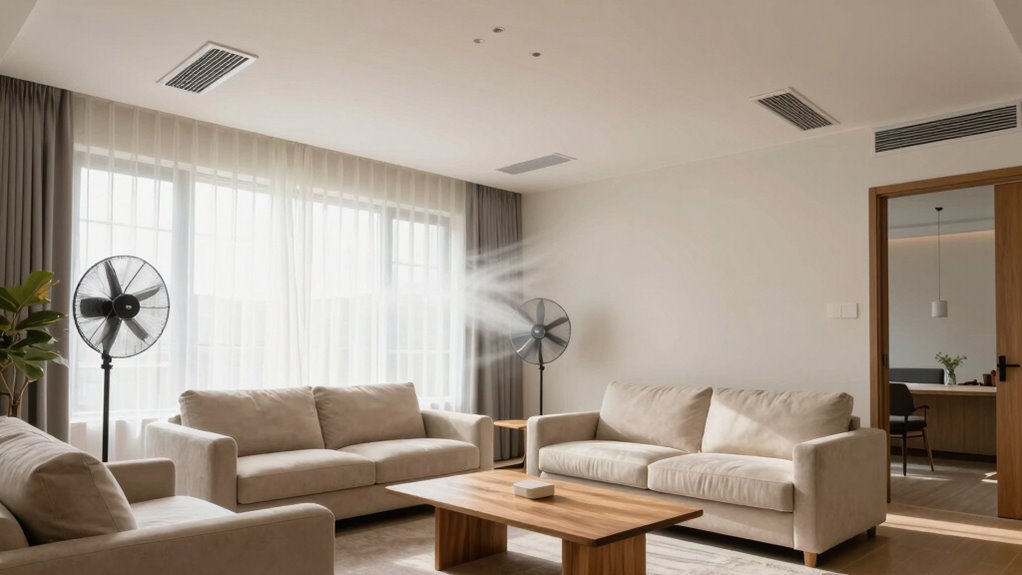

To improve air movement in rooms with poor vent placement, start by repositioning fans to create better circulation, using oscillating fans or ceiling fans to push air across the space. Open windows for cross-ventilation and connect rooms by opening doors to encourage airflow. Adjust vent louvers for better direction and keep vents unobstructed. Using air purifiers or humidifiers can also help distribute air evenly. Keep exploring for more effective strategies to create a healthier, more comfortable environment.
Key Takeaways
- Reposition or add fans to promote circular airflow and target stagnant zones effectively.
- Use adjustable vent louvers to direct airflow where it’s needed most.
- Open windows and doors to create cross-ventilation and enhance natural airflow.
- Install portable air purifiers or oscillating devices to distribute air evenly.
- Regularly maintain HVAC filters and keep vents unobstructed for optimal performance.
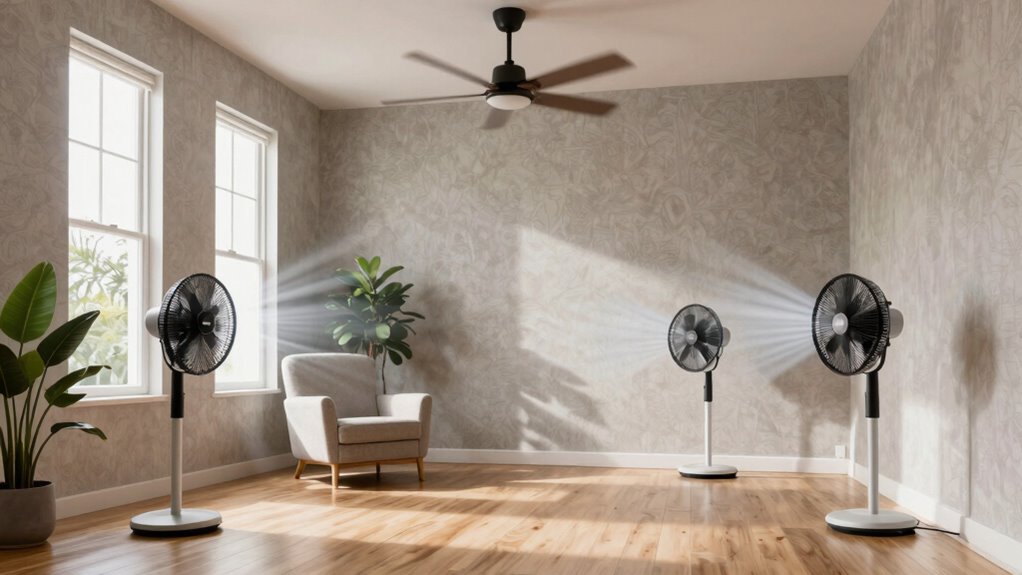
If your room has poorly placed vents, it can lead to stagnant air and uneven temperature distribution. This situation makes the space uncomfortable and can even impact your health over time. To improve airflow, you need to focus on airflow optimization and effective ventilation strategies. These approaches help distribute air more evenly throughout the room, making it feel fresher and more comfortable.
First, assess your current vent placement and identify areas where air tends to stagnate. If vents are near the ceiling or in corners, air circulation may stay limited, leaving some spots stuffy or too warm. To counteract this, consider adding fans or oscillating units to promote better airflow. Positioning a fan near a vent can help push or pull air into different parts of the room, ensuring circulation reaches all corners. Using a combination of ceiling fans and portable fans enhances airflow efficiency, especially in spaces with limited or poorly located vents.
Implementing proper ventilation strategies is essential. For example, if your room has multiple windows, opening them during different times of the day creates cross-ventilation, which encourages fresh air to flow in and stale air to escape. Even if windows are limited, using exhaust fans or venting systems can greatly boost air exchange. Installing or upgrading existing vents with adjustable louvers allows you to control airflow direction more precisely. This way, you can direct fresh air where it’s needed most, reducing stagnant zones. Additionally, understanding how air circulation works can help you design more effective airflow patterns in your space. Knowing how to optimize vent placement can make a significant difference in overall air movement. Incorporating knowledge about airflow dynamics can further enhance your ability to create a well-ventilated environment.
Another effective tactic involves creating a circular airflow pattern. You can do this by strategically placing fans to move air from one side of the room to the other, promoting continuous circulation. Sometimes, slightly opening doors or connecting rooms can facilitate better airflow, especially if vents are poorly positioned. Just be mindful of blocking airflow paths or creating drafts that might be uncomfortable. Ensuring proper airflow management is key to maintaining a comfortable environment. Additionally, employing airflow principles can help you troubleshoot and improve your current setup more effectively.
Lastly, consider investing in portable air purifiers or humidifiers with oscillating features. These devices can improve air quality and help distribute air evenly when combined with proper ventilation strategies. Maintaining your HVAC system, cleaning filters regularly, and ensuring vents are unobstructed also play a key role in optimizing airflow. When all these elements come together, you’ll notice a notable improvement in how air moves throughout your room, making it more comfortable and healthier to be in.
oscillating fan for room circulation
As an affiliate, we earn on qualifying purchases.
As an affiliate, we earn on qualifying purchases.
Frequently Asked Questions
Can Plants Help Improve Air Circulation in Poorly Ventilated Rooms?
Plants can help improve air circulation in poorly ventilated rooms by promoting natural ventilation. Proper plant placement near windows or vents encourages airflow, creating a more dynamic environment. As plants transpire, they release moisture and subtle air currents that boost circulation. Keep in mind, though, that plants alone won’t fully solve ventilation issues; combining them with strategic placement and other ventilation improvements makes the biggest difference.
Are There Specific Fan Types Better for Enhancing Airflow?
You should opt for oscillating fans, ceiling fans, or box fans, as these are effective for enhancing airflow. Oscillating fans move side to side, covering more area, while ceiling fans distribute air evenly throughout a room. For better ventilation upgrades, consider installing exhaust fans or air purifiers with fans to improve air circulation overall. These fan types help create a continuous airflow, reducing stagnant air and improving indoor air quality.
How Does Room Size Affect Air Movement Strategies?
Room size considerably influences your airflow strategies. Larger rooms require more powerful fans or multiple units to move air effectively, while smaller spaces benefit from smaller, focused fans. Consider room dimensions carefully, as ventilation design must match the space’s scale. If you ignore size, stagnant air persists, making your efforts less effective. Adjust your approach to fit the room’s size, ensuring ideal circulation and comfort.
Can Air Purifiers Improve Overall Air Circulation?
Yes, air purifiers can improve overall air circulation by enhancing air quality and complementing your ventilation systems. When you use an air purifier, it filters out pollutants, allergens, and odors, making the air cleaner and fresher. While they don’t replace proper ventilation, they help distribute cleaner air more evenly throughout the room, especially in areas with poor vent placement. This combination supports healthier indoor environments and better air movement.
What Are Temporary Solutions for Immediate Airflow Improvement?
Think of your room as a busy river, needing more flow to keep everything fresh. To boost immediate airflow, try DIY solutions like opening windows or creating cross-ventilation with fans. Place fans near vents or windows to direct air efficiently. Use simple ventilation tips like adjusting fan angles or using box fans to increase circulation quickly. These quick fixes can transform stagnant air into a lively breeze, making your space feel fresher instantly.
As an affiliate, we earn on qualifying purchases.
Conclusion
Improving air movement in rooms with poor vent placement is key to enhancing comfort and air quality. By strategically using fans, opening windows, and rearranging furniture, you can substantially boost airflow. Did you know that proper ventilation can reduce indoor pollutants by up to 60%? With these simple tips, you’ll create a fresher, healthier space. Just remember, consistent airflow isn’t just about comfort—it’s about your well-being, so take action today for a better indoor environment.
portable air purifier for large rooms
As an affiliate, we earn on qualifying purchases.
As an affiliate, we earn on qualifying purchases.
As an affiliate, we earn on qualifying purchases.