
TL;DR
An improved MSX emulator has been created for the ESP32-S3 microcontroller, supporting VGA output and optimized for performance. This demonstrates the ESP32-S3’s potential for retro gaming projects.
An optimized MSX emulator has been developed for the ESP32-S3 microcontroller, supporting VGA output and enhanced performance through targeted hardware and software modifications. This project highlights the ESP32-S3’s capabilities for retro gaming and DIY electronics enthusiasts.
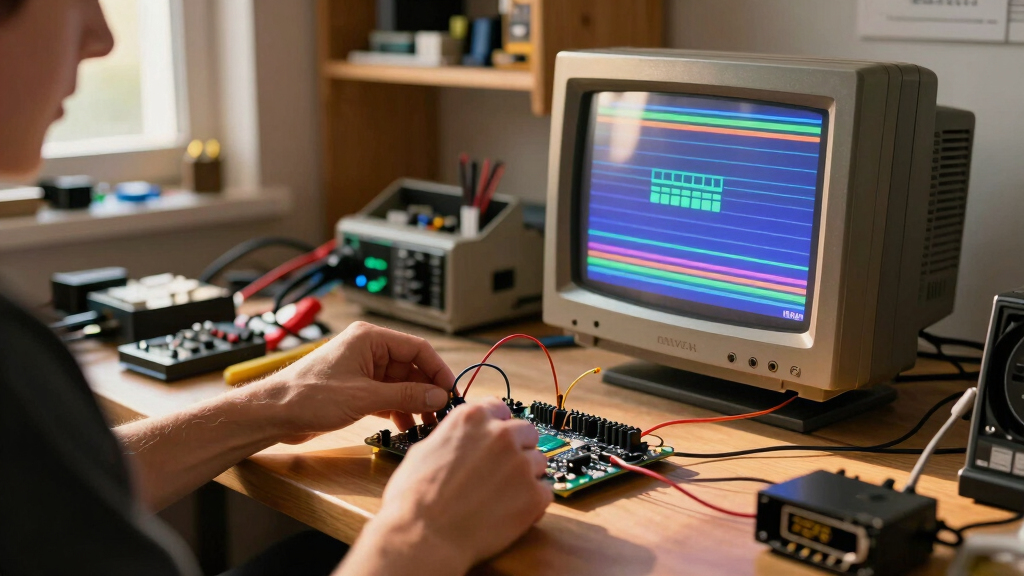
The project involves using an ESP32-S3 with at least 8 MB of PSRAM, supporting MSX1, MSX2, and MSX2+ standards. The emulator leverages modifications to the original fMSX core, including cache tuning and optimized memory access tailored for the Xtensa Lx7 CPU, resulting in smoother emulation. VGA output is achieved via a basic 2-bit R-2R DAC, while audio is output through custom wiring of PDM filters to GPIO pins. Input is handled via USB keyboards, and software is loaded through a web interface or SD card. The project, which is part of the Retro-Go platform, demonstrates the potential for high-quality retrogaming on compact, affordable hardware.
According to an anonymous researcher involved in the project, the core modifications focused on aligning memory accesses for the Xtensa architecture, moving data from Flash to RAM to reduce latency, and preventing pipeline flushes during branching. These changes significantly improve emulation speed and stability, making it feasible to run MSX software smoothly on the ESP32-S3.
Potential Impact of ESP32-S3-Based MSX Emulation
This development showcases the ESP32-S3’s suitability for complex emulation tasks, expanding the possibilities for portable, DIY retro gaming devices. It could inspire further projects that leverage the chip’s capabilities, potentially reducing reliance on larger, more power-hungry systems like Raspberry Pi. For hobbyists, this demonstrates a cost-effective way to build custom MSX hardware with VGA output, making retro gaming more accessible and customizable.
ESP32-S3 microcontroller with 8MB PSRAM
As an affiliate, we earn on qualifying purchases.
As an affiliate, we earn on qualifying purchases.
Background of Retro Emulation on Microcontrollers
The ESP32-S3 has gained popularity for its balance of processing power and affordability, with previous projects using it for emulating simpler consoles or creating multimedia devices. The Retro-Go project, which supports multiple retro systems, has now been extended through targeted software optimizations to run MSX emulation efficiently. Prior efforts on other microcontrollers faced limitations in speed and fidelity, but recent hardware and software advancements have begun to close this gap, with this project representing a significant step forward.
“The core modifications, especially memory alignment and cache tuning, have been critical in achieving smooth MSX emulation on the ESP32-S3.”
— an anonymous researcher
VGA output DAC for microcontroller
As an affiliate, we earn on qualifying purchases.
As an affiliate, we earn on qualifying purchases.
Remaining Technical Challenges and Limitations
It is not yet clear how well the emulator handles more demanding MSX software or whether further hardware enhancements are needed for full compatibility. The stability of VGA output over extended use and the latency of input devices are still being tested. Additionally, the extent of software support and ease of use for non-technical users remains to be evaluated.
USB keyboard for microcontroller projects
As an affiliate, we earn on qualifying purchases.
As an affiliate, we earn on qualifying purchases.
Next Steps for Development and Community Adoption
Developers plan to further optimize the emulator for broader software compatibility and improve VGA output quality. Community feedback and testing will guide refinements, and efforts may include integrating additional input options or enhancing audio fidelity. The project aims to release detailed documentation and open-source code to encourage community-driven improvements and DIY builds.
DIY MSX emulator kit
As an affiliate, we earn on qualifying purchases.
As an affiliate, we earn on qualifying purchases.
Key Questions
What hardware is needed to run this MSX emulator?
An ESP32-S3 microcontroller with at least 8 MB of PSRAM, a VGA display with a 2-bit R-2R DAC, and basic wiring for audio output via GPIO pins are required. USB keyboard support is also necessary for input.
How does the VGA output work on the ESP32-S3?
The VGA output is generated using a simple 2-bit R-2R DAC connected to GPIO pins, producing basic RGB signals suitable for low-resolution displays.
Can this emulator run all MSX software?
While it supports MSX1, MSX2, and MSX2+ standards, performance and compatibility with all software are still being tested. Some demanding titles may require further optimization.
Is the project open-source?
Details about licensing and code availability are expected to be released soon, with the goal of encouraging community participation and further development.
What are the main benefits of this development?
This project demonstrates a cost-effective, portable solution for retro gaming enthusiasts, leveraging the ESP32-S3’s capabilities for high-quality emulation and VGA output in a compact form factor.
Source: Hackaday