TL;DR
Family Handyman tested Ryobi’s $129 One+ Electric Power Cleaner on a screen coated with flour and found it could remove the mess, especially with its turbo nozzle. The 700-psi portable tool was gentler and easier to set up than a full-size pressure washer, but the test does not show that it can handle jobs requiring high pressure.
Family Handyman tested Ryobi’s $129 One+ Electric Power Cleaner on a window screen coated with dampened flour and found that it eventually removed the residue, particularly after the tester switched to the included turbo nozzle. The 700-psi portable washer was easier to assemble and gentler than a full-size pressure washer, but the test also found that it is not a replacement for equipment meant for more demanding cleaning jobs.
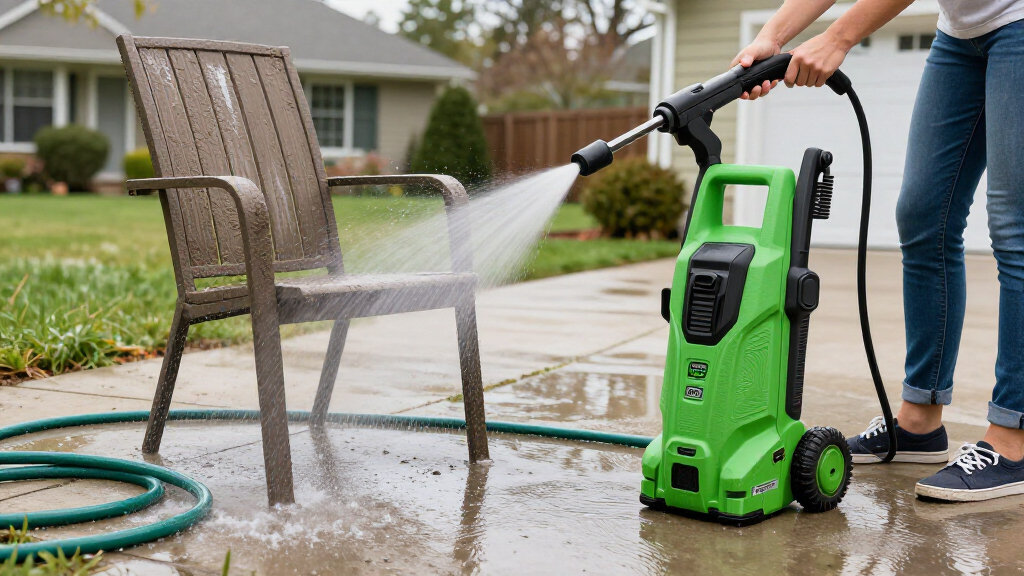
The test focused on a specific household task: cleaning a screen door. The reviewer applied a light coating of flour to the screen, misted it with water to make the powder stick, and then used the Ryobi tool from the recommended distance of 1 to 2 feet. The cleaner was connected to a garden hose before use, and the reviewer said setup took only a few clicks.
Ryobi’s tool comes with three nozzles: two angled flat-spray options and a turbo nozzle that sends water in a rotating spiral. The reviewer initially found the spray less forceful than expected, with little of the kick associated with a full-size pressure washer. The steady stream began loosening the flour, and the turbo nozzle helped remove more of it. The reviewer said the screen was eventually clean, though it took time.
The report describes the tool as feeling well-built during the test and says the battery compartment is enclosed in sealed plastic housing. Those are the reviewer’s observations, not independent durability or water-resistance test results. The article’s hands-on cleaning demonstration was limited to the flour-coated screen; it did not establish how the tool performs across other surfaces, dirt types or longer-term use.
A Smaller Tool for Lighter Cleaning
The test highlights a practical trade-off for homeowners: less pressure in exchange for portability and simpler setup. A full-size pressure washer can be cumbersome to assemble and store, according to the Family Handyman report, while the Ryobi cleaner connects to a garden hose and is easier to handle. For routine tasks such as rinsing dust from screens or washing light mud from a sidewalk, the reviewer judged its steady spray an improvement over a basic garden-hose stream.
The lower force may also be useful when a user wants to clean without the same intensity as a conventional pressure washer. The reviewer noted that high-pressure tools can damage some surfaces, though the test did not compare damage risks directly. Buyers should not treat this single screen-cleaning result as proof that the Ryobi can clean every surface safely or effectively. Its suitability depends on the task, the material and the level of grime.
For people considering the $129 price, the key question is not whether the tool matches a full-size washer: the report says it does not. It is whether a compact, lower-pressure cleaner can handle the lighter jobs they regularly do. The supplied test supports that possibility for a screen but does not establish value across every household use.
As an affiliate, we earn on qualifying purchases.
How the Screen Test Was Run
The reviewer began with a common seasonal-cleaning job rather than a heavily soiled outdoor surface. Flour was spread over the middle of a removed screen door and lightly misted so it would adhere. The cleaner was then attached to a garden hose, fitted with one of its spray nozzles and held at the maker-recommended distance stated in the report.
The sequence matters when interpreting the result. The reviewer first used a flat nozzle, describing the spray as steady but underwhelming compared with a full-size pressure washer. After changing to the turbo nozzle, the reviewer reported that the rotating spray helped dislodge the sticky flour. The screen became clean, but not immediately; the account says the cleaning took a while. This was a practical editorial test, not a controlled comparison against other models or a measurement of cleaning time.
The report positions the Ryobi tool as a smaller, less powerful option rather than a direct substitute for a conventional pressure washer. Its conclusion is tied to light cleaning and portability. The test did not attempt the more force-intensive jobs suggested by the comparison with full-size equipment, such as stripping paint.
“The Ryobi tool isn’t going to fully replace a full-sized pressure washer.”
— Family Handyman reviewer
As an affiliate, we earn on qualifying purchases.
Performance Beyond One Screen
The supplied report does not provide comparative testing against a garden-hose nozzle or other portable washers, nor does it report measured cleaning times, water consumption or battery runtime. Although the article describes the unit as a 700-psi cleaner, the screen test does not independently verify that pressure figure.
It is also unclear from this test how the tool performs on different materials, tougher stains, larger areas or extended jobs. The reviewer suggested that it could handle dust on screens or mud on a sidewalk, but those examples were not the flour-screen demonstration described in detail. The report does not establish how long the unit or battery lasts with repeated use, or how its performance changes with different hose or water conditions. No broader durability or safety assessment is provided.
As an affiliate, we earn on qualifying purchases.
Match the Cleaner to the Job
No follow-up testing or additional product announcement is specified in the supplied source. For readers weighing a purchase, the next step is to compare the tool’s 700-psi rating, included nozzles, hose connection and battery compatibility with the cleaning jobs they actually need to do, and to check current product details and pricing with the seller.
Anyone needing to remove stubborn buildup or clean a large area should not infer from the screen test that this portable model will deliver full-size washer performance. The Family Handyman report’s conclusion is narrower: it may suit routine, lighter cleanup when portability matters more than force. Results on other surfaces remain untested in the report.
garden hose pressure washer attachment
As an affiliate, we earn on qualifying purchases.
As an affiliate, we earn on qualifying purchases.
Key Questions
What did Family Handyman test the Ryobi cleaner on?
The reviewer used it on a screen door coated with dampened flour. The report describes that screen as the hands-on test; it does not provide a detailed test of other surfaces.
Did the Ryobi power cleaner remove the flour?
Yes. The reviewer said the steady spray began loosening the flour and that switching to the turbo nozzle helped remove more of it. The screen became clean, although the process took time.
Can it replace a full-size pressure washer?
The report says it should not be treated as a full replacement. Its 700-psi spray was less forceful than a full-size washer, making it better suited, in the reviewer’s view, to lighter routine cleaning.
What comes with the Ryobi cleaner?
The report says the tool includes three nozzles: two angled flat-spray nozzles and one turbo nozzle that produces a rotating spray. It connects to a garden hose.
Was the $129 price confirmed as current?
The supplied article identifies the product as $129, but it does not give a publication date or confirm whether that price is still current. Check the retailer for up-to-date pricing and availability.
Source: rss