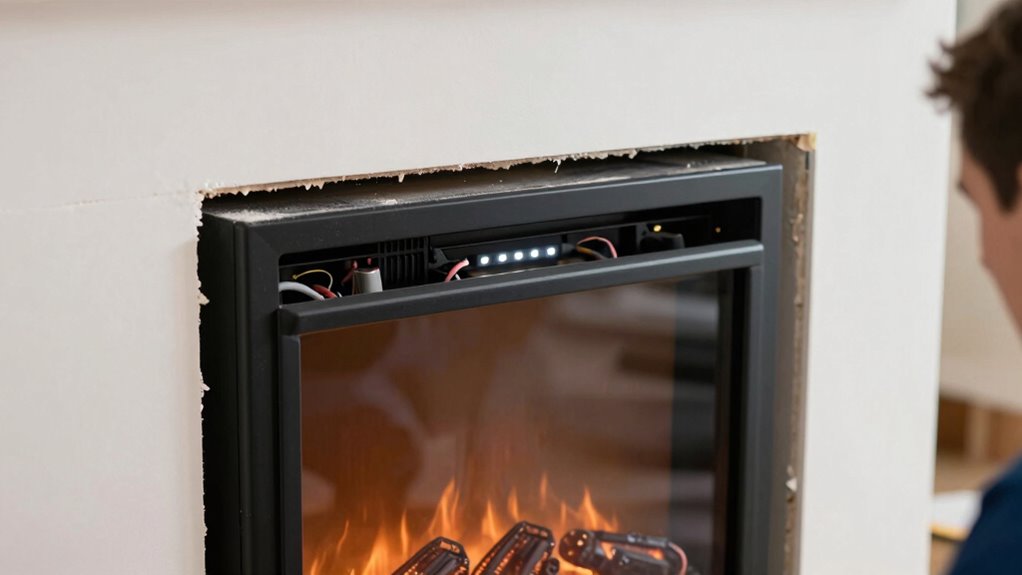

Before cutting into your wall for an electric fireplace insert, guarantee it can support the weight by checking for studs or support beams, and confirm the wall material is heat-resistant and safe. Measure available space, clearances, and ventilation needs outlined by the manufacturer. Inspect inside the wall for obstacles like wiring or pipes, and verify you have suitable electrical outlets nearby. Understanding these factors helps prevent hazards, and if you keep exploring, you’ll find more essential tips for a safe install.
Key Takeaways
- Confirm the wall’s structural support and reinforcement needs to safely hold the fireplace’s weight.
- Measure wall thickness and clearance space to ensure proper fit and heat dissipation.
- Check for hidden obstacles like wiring, pipes, or ductwork that could interfere with installation.
- Verify electrical outlet availability, capacity, and placement for safe and convenient power supply.
- Ensure wall material is fire-rated or fireproof and compliant with safety standards before cutting.

Adjustable 8" Chimney Pipe Wall Support Bracket, Fireplace Pipe Wall Bracket for 6" (8" O.D.) Double Wall Chimney Pipe
Our chimney pipe holder feature a triangular support plate design and are manufactured from premium steel. This structure…
As an affiliate, we earn on qualifying purchases.
As an affiliate, we earn on qualifying purchases.
Do You Know If Your Wall Can Support an Electric Fireplace Insert?
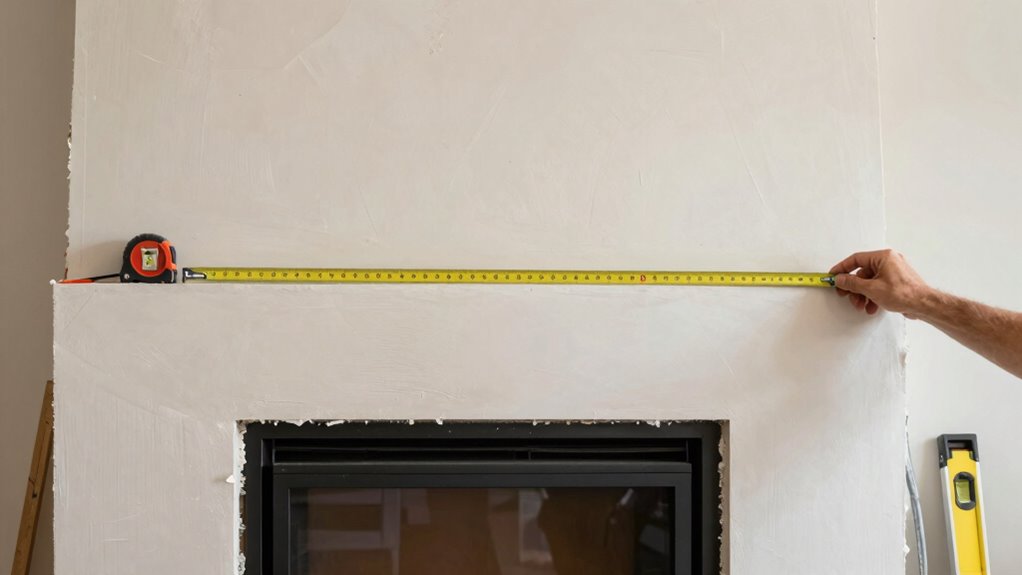
Before installing an electric fireplace insert, it is essential to determine if your wall can support its weight and structure. Start by evaluating the wall’s material—drywall alone likely isn’t enough. You may need wall reinforcement, such as adding studs or using a solid backing to bear the weight safely. Check for existing support beams or studs that can handle the load, especially if you plan to install a heavier unit. Additionally, consider insulation considerations—verify the wall is properly insulated to prevent heat transfer and protect the wall from potential heat damage. Reinforcing the wall not only guarantees safety but also helps maintain the integrity of your installation. If unsure, consult a professional to evaluate your wall’s capacity before proceeding. Free floating can also influence how you support and secure your insert, so be sure to factor in your particular wall setup. Also, consider wall support options that are suitable for your wall type to ensure a secure installation. For added safety, consider building codes and regulations that might impact your installation process. Moreover, assessing the wall’s load-bearing capacity is crucial to determine if additional reinforcement is necessary. Furthermore, understanding the wall’s structural integrity helps prevent future issues with your installation.

E-Z Taping System 99251-12-3 Flame Fighter Drywall Fire Tape
No Mudding needed!
As an affiliate, we earn on qualifying purchases.
As an affiliate, we earn on qualifying purchases.
How Much Space Do You Need for Your Fireplace?
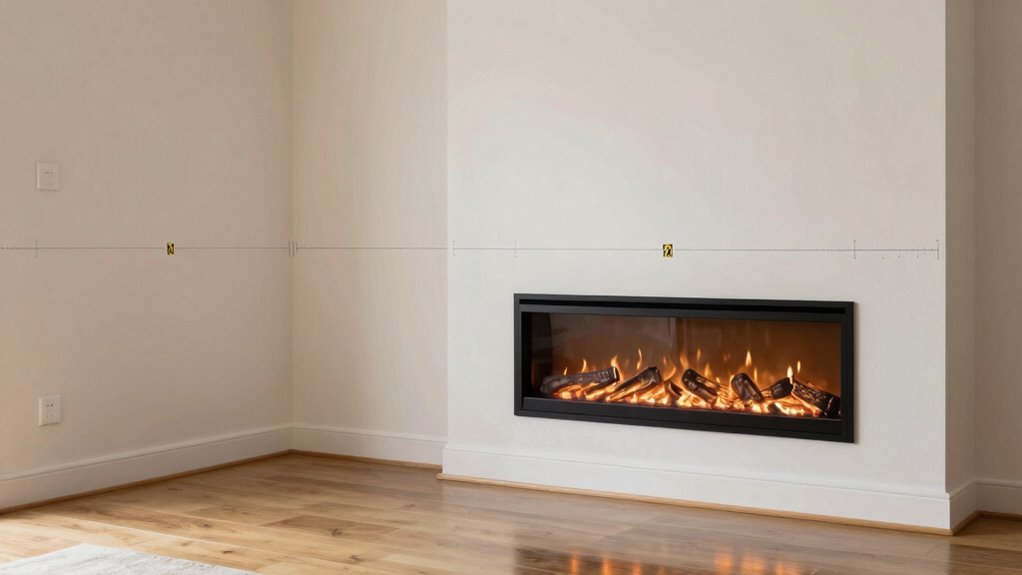
Understanding how much space you need for your electric fireplace insert is key to ensuring a proper fit and safe operation. Measure your wall’s thickness carefully, as this impacts the depth your insert requires. Many inserts are designed to sit flush against the wall, so knowing the wall thickness helps determine if additional framing or adjustments are necessary. Also, consider the interior insulation behind the wall; adequate insulation can affect clearance and heat distribution. If the insulation is dense or thick, you might need more space to prevent overheating or damage. Double-check the manufacturer’s specifications for the insert’s dimensions and clearance requirements. Proper system ventilation is essential to prevent heat buildup and ensure safe operation, especially when dealing with dense or thick insulation behind the wall. Additionally, understanding the impact of insulation can help you plan for proper airflow and avoid potential hazards. Being aware of the fire safety guidelines related to insulation and clearance can further ensure a secure installation. Consulting professional installers can also help you navigate complex wall configurations and ensure compliance with safety standards. This way, you can plan your wall cutout accurately, avoiding surprises during installation and ensuring your fireplace operates safely and efficiently.

EUHOMY 50 Inch Electric Fireplace Wall Recessed and Wall Mounted with Adjustable Flame Color, Fireplace Heater with Remote Control, Linear Fireplace with Timer, Touch Screen, Log & Crystal, 750/1500W
Package Inclusions & 2-Year Technical Support: : The EUHOMY electric fireplace is equipped with 1* carbon log, 1*…
As an affiliate, we earn on qualifying purchases.
As an affiliate, we earn on qualifying purchases.
Is Your Wall Material Suitable for Installation?

Before installing an electric fireplace insert, make sure your wall material is compatible and safe. Some materials may not withstand the heat or meet fire safety regulations, so check the manufacturer’s guidelines. Confirming your wall is suitable helps prevent hazards and ensures a secure installation. Incorporating environmentally friendly materials can also reduce the environmental impact of your project. Additionally, understanding the fire safety regulations related to wall materials can further safeguard your home and ensure compliance with local standards. Being aware of fire-resistant properties in your wall material can provide an extra layer of protection against potential hazards, especially when selecting materials with proven heat resistance. It’s also beneficial to consider material durability to ensure long-term safety and performance of the installation.
Wall Material Compatibility
Your wall material plays a crucial role in ensuring a safe and effective installation of an electric fireplace insert. Not all wall types can support the weight or heat output, so you need to assess if your wall is suitable. Conduct material testing to determine its strength and heat resistance. If your wall isn’t sturdy enough, consider adding wall reinforcement, such as brackets or extra framing, to provide adequate support. Check the composition of your wall—drywall, brick, or concrete—since each demands different installation methods. Ensuring compatibility prevents damage or safety hazards down the line. Understanding wall structure is key to choosing the right installation approach. If unsure, consult a professional to evaluate whether your current wall can handle the insert’s weight and heat output, or if modifications are necessary for a secure fit. Additionally, understanding your wall’s heat resistance is essential to prevent potential hazards caused by heat buildup. Knowing the wall’s material properties can help you select the most appropriate mounting hardware and techniques.
Examining your wall’s load-bearing capacity can further ensure that it can safely support the weight of the fireplace insert over time.
Fire Safety Regulations
Ensuring your wall material meets fire safety regulations is essential before installing an electric fireplace insert. You need to assess whether your wall poses a fire hazard and complies with safety standards. To do this, check that:
- The wall material is fire-resistant or rated for heat exposure.
- There’s adequate clearance around the unit as specified by the manufacturer.
- You have installed proper insulation if needed to prevent heat transfer.
- Any combustible materials near the fireplace are protected with fireproof barriers.
Additionally, verifying that your wall surface is suitable for wall finishes and treatments can help prevent potential safety issues related to heat exposure and material compatibility.
Ignoring these fire safety regulations can increase the risk of fire hazards. Always confirm that your wall’s material and installation plan adhere to local safety standards to ensure a safe, hazard-free setup.
EUHOMY 50 Inch Electric Fireplace Wall Recessed and Wall Mounted with Adjustable Flame Color, Fireplace Heater with Remote Control, Linear Fireplace with Timer, Touch Screen, Log & Crystal, 750/1500W
Package Inclusions & 2-Year Technical Support: : The EUHOMY electric fireplace is equipped with 1* carbon log, 1*…
As an affiliate, we earn on qualifying purchases.
As an affiliate, we earn on qualifying purchases.
What Power Supply Is Needed for Your Fireplace Insert?

To guarantee your electric fireplace insert works properly, you need to understand its power requirements. Most models need a standard electrical outlet, but some may require a dedicated circuit. Check your outlet compatibility to avoid any electrical issues during installation and use. Additionally, consider the power supply specifications to ensure the safety and optimal performance of your fireplace insert. Ensuring the electrical system compatibility aligns with your fireplace’s needs can prevent potential hazards and ensure efficient operation. Being aware of derating factors such as altitude and temperature can also help maintain reliable performance over time. Always review the installation instructions provided by the manufacturer to confirm all electrical connections meet safety standards.
Power Requirements Overview
A fireplace insert typically requires a dedicated power supply to operate safely and efficiently. Understanding its power requirements involves considering your home’s existing electrical setup. First, check the power load your circuit can handle; most inserts need a standard 120V outlet, but some larger models demand higher voltage. Second, verify the circuit capacity to confirm it won’t overload your system. Third, determine if your home’s wiring can support the insert’s amperage needs. Fourth, plan for a dedicated circuit if your current setup is shared with other high-power appliances. Making certain these aspects are addressed helps prevent tripping breakers or electrical hazards. Properly evaluating the power load and circuit capacity guarantees your insert functions smoothly without risking electrical issues or damage.
Electrical Outlet Compatibility
Most fireplace inserts require a standard electrical outlet to operate safely and effectively. Before installation, check your outlet placement to ensure it’s conveniently located near the intended insert spot. Proper outlet capacity is vital; most inserts need a dedicated 120-volt outlet with sufficient amperage, usually 15 or 20 amps. Avoid sharing the outlet with other appliances, as this can cause electrical issues or insufficient power. If your outlet is behind a wall or hard to access, consider relocating it or installing an extension cord rated for the necessary load, but only as a temporary solution. Confirm that the outlet is grounded and meets local electrical codes. Making sure that the outlet is correctly placed and capable helps prevent electrical problems and guarantees your insert functions safely and efficiently.
Are There Obstacles Inside Your Wall That Could Cause Problems?

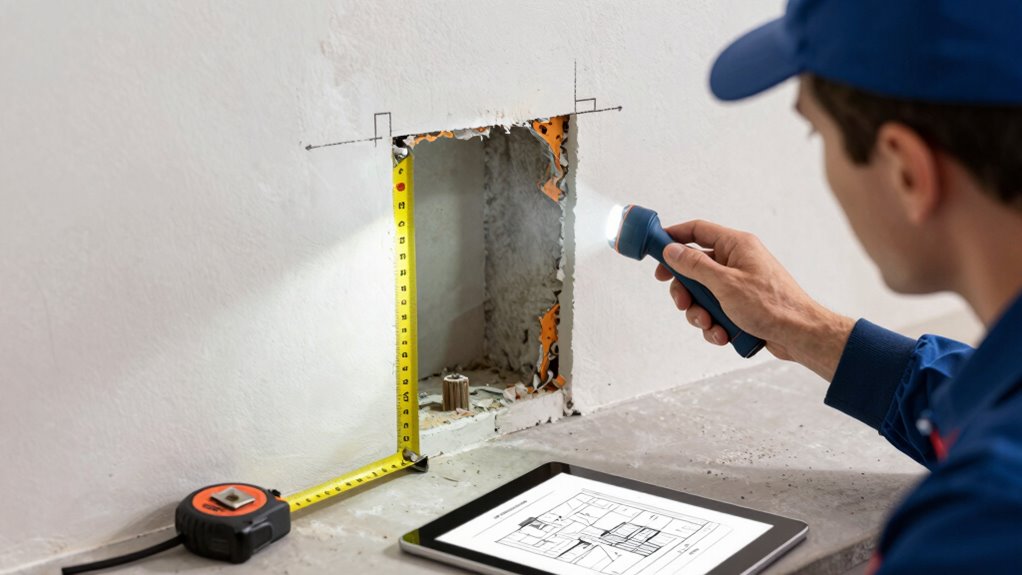
Have you checked for obstacles inside your wall before installing an electric fireplace insert? Hidden pipes, wires, or structural elements can cause serious problems. To avoid surprises, inspect your wall cavity carefully. Consider these four potential obstacles:
- Hidden pipes for plumbing or heating
- Electrical wiring that may interfere
- Structural supports like studs or beams
- Insulation or ductwork that could block installation
These obstacles can complicate or even prevent proper mounting. Ignoring them might lead to damage or costly fixes later. Use a stud finder and a flashlight to locate these items inside the wall cavity. If you find hidden pipes or wiring, plan for adjustments before cutting into the wall. Being thorough now saves headaches and money down the line.
Is Your Electrical Outlet Close Enough and Ready?

Before installing your electric fireplace insert, double-check that the electrical outlet is both close enough and ready for use. Confirm the electrical outlets nearby match the wall compatibility requirements of your insert, especially if it needs a dedicated circuit. Measure the distance from the outlet to the planned installation spot to confirm it’s within reach of the power cord without stretching or using extension cords, which can be unsafe. Verify that the outlet is functioning properly and can handle the insert’s power needs. If your outlet isn’t conveniently located or suitable, consider installing a new outlet that aligns with your wall’s compatibility and the insert’s placement. Proper electrical setup prevents future problems and ensures safe, seamless operation of your electric fireplace.
What Are the Clearance and Ventilation Requirements?
Are you aware of the specific clearance and ventilation requirements for your electric fireplace insert? Following proper clearance guidelines and ventilation standards is vital for safety and efficiency. Here are four key points to consider:
- Maintain at least 12 inches of clearance from combustible materials.
- Ensure unobstructed airflow around the unit for proper heat dispersion.
- Avoid placing furniture or drapes within 36 inches of the fireplace.
- Ventilation openings should remain clear of dust or debris, and vents should be positioned according to manufacturer instructions.
Adhering to these ventilation standards not only prevents overheating but also promotes safe operation. Always double-check your fireplace’s manual for specific clearance guidelines, as requirements can vary by model. Proper clearance and ventilation are essential before proceeding with installation.
How Will the Fireplace Look in Your Room?

Choosing the right electric fireplace insert involves more than just safety; it also means considering how it will complement your room’s style. Think about your room aesthetics and how the fireplace will fit with existing decor. Will it serve as a focal point or blend seamlessly into the background? Consider your furniture placement—an insert that’s too large may dominate the space, while a smaller one might get lost. Visualize how the colors, materials, and design of the fireplace match your furniture and walls. You want a look that enhances your room’s atmosphere without feeling out of place. Taking these factors into account helps guarantee your new fireplace adds both beauty and harmony to your living space.
Do You Need Permits or Professional Help?

Installing an electric fireplace insert often requires verifying local building codes and regulations to guarantee compliance. You might need to check permit requirements before proceeding. In some areas, permits are mandatory for wall modifications or electrical work. Consider these steps:
- Contact your local building department to confirm permit needs.
- Understand if the installation requires any electrical permits.
- Decide if you can handle the installation yourself or if professional installation is recommended.
- Hire a licensed electrician or contractor if required, to ensure safety and code adherence.
Skipping permits or professional help can lead to fines or safety hazards. While electric inserts are simpler than traditional fireplaces, consulting experts guarantees a compliant, safe, and efficient installation.
How Can You Confirm Your Wall Is Ready for Installation?

Before mounting your electric fireplace insert, ensuring that your wall can support the installation is vital. Start by checking if the wall needs reinforcement; a sturdy, solid material like concrete or brick usually doesn’t require extra support, but drywall may need additional wall reinforcement. Measure the wall’s ability to bear the weight and confirm it’s securely anchored. Additionally, verify insulation compatibility—make sure the wall can handle heat buildup without damage or fire risk. Remove any obstructions, and inspect for hidden wiring or pipes that could interfere with installation. Use a stud finder to locate studs for secure mounting points. Confirming these factors helps prevent future issues, making sure your wall is ready for the fireplace insert and that the installation is safe and effective.
Frequently Asked Questions
Can My Existing Wall Handle the Weight of an Electric Fireplace Insert?
Your existing wall might handle the weight of an electric fireplace insert if you check its weight capacity and wall reinforcement. First, determine the insert’s weight and compare it to your wall’s rated capacity. If the wall isn’t reinforced or can’t support the weight, you’ll need to add reinforcement to prevent damage. Always consult a professional to guarantee your wall can safely handle the added weight before installation.
Are There Specific Wall Thickness Requirements for Installation?
Yes, there are specific wall thickness requirements for installing an electric fireplace insert. You need enough drywall clearance to accommodate the unit and any necessary wall reinforcement behind it. Measure the total wall thickness, including studs, insulation, and drywall, to verify the insert fits properly. If the wall isn’t thick enough, you might have to add reinforcement or adjust the space to safely install your fireplace insert.
What Safety Features Should I Look for in an Electric Fireplace Insert?
You should look for safety features like cool-to-touch glass to prevent burns and automatic shut-off systems for fire safety. Make certain the insert has proper electrical safety certifications, such as UL or ETL approval, to avoid electrical hazards. An overheat protection feature is essential, as it automatically turns off the unit if it gets too hot. These features help keep your home safe while enjoying the cozy ambiance of your electric fireplace insert.
How Does Insulation Affect the Installation Process?
Did you know that proper insulation can improve energy efficiency by up to 20%? When installing an electric fireplace insert, thermal insulation is essential because it prevents heat loss and enhances safety. Soundproofing also becomes easier, reducing noise transfer. You should check your wall’s insulation quality beforehand, ensuring it’s sufficient and non-flammable, so your installation goes smoothly and safely, maximizing comfort and efficiency in your space.
Can I Install the Fireplace Myself, or Should I Hire a Professional?
You can attempt a DIY installation if you’re confident in your skills, but hiring a professional helps guarantee safety and proper setup. Electric fireplace inserts require precise measurements, electrical work, and possibly cutting into your wall, which can be tricky. If you’re unsure about any step, it’s best to seek professional help. This way, you avoid potential hazards, ensure code compliance, and enjoy your fireplace worry-free.
Conclusion
Before you cut into that wall, double-check everything—your wall’s support, space, and power needs. It’s funny how often things line up just right when you least expect it. Make sure there are no surprises inside, and consider permissions or professional help. When all the pieces fit, your new fireplace can become a cozy centerpiece. Sometimes, the perfect setup finds you just when you’re about to give up—so stay curious and prepared.