TL;DR

Get home appliances delivered free with Prime
- Fast, free delivery on millions of items
- Prime Video, Amazon Music and more included
- Member-only deals all year
A Hunker report describes using a curtain rod and S-shaped hooks to hang kitchen utensils and other items, clearing some countertop space. Rod capacity, secure installation and safe placement matter; the report gives no test results or independent evidence of how much space the setup saves.
A Hunker home-improvement report describes repurposing a curtain rod and S-shaped hooks to hang kitchen utensils and other items, moving them off countertops and creating more room for food preparation. The approach is a storage suggestion, not a tested product review; the report advises checking the rod’s capacity and avoiding installation above the stove.
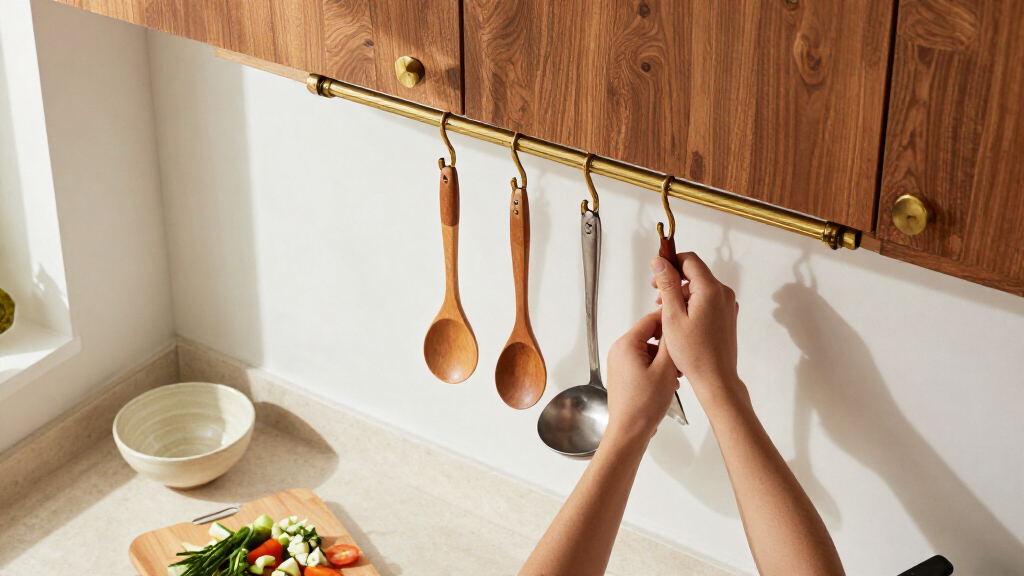
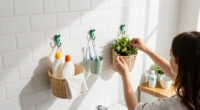
The proposed setup uses a rod mounted in an available stretch of kitchen wall, such as between or beneath cabinets or along a backsplash. S-hooks hang from the rod and can hold utensils; the report also suggests mugs, cutting boards and measuring cups as possible items to move from the counter. A small basket suspended from two hooks could hold smaller objects such as spice jars.
Hunker says curtain rods typically have a maximum capacity of 20 to 50 pounds. That is a general range in the report, not a rating for every rod or installation. The appropriate load depends on the specific rod, its brackets or mounting method, the wall and hardware, and how the weight is distributed. The report does not provide a model-by-model comparison or a test of the setup.
For installation, the report recommends measuring the available space and choosing a rod that fits it. A conventional rod generally uses screws for support, while a tension rod between cabinets is offered as a renter-friendly alternative. S-hooks are placed over the rod and can be repositioned. The article also mentions cabinet knobs as possible anchors, but does not give detailed instructions for evaluating whether a particular surface or fitting can safely bear the load.
More Room for Kitchen Work
For people with limited counter space, shifting frequently used tools to a wall may make meal preparation less crowded. The idea can also make utensils and cups accessible while keeping them visible, rather than stored in a drawer or cabinet. Those are practical potential benefits, but the source offers no measurements of the space saved and no evidence that the system suits every kitchen.
The trade-off is that hanging storage puts items in view and requires a secure, reachable arrangement. A crowded rod can be difficult to use, and a poorly supported fixture may not carry its contents safely. Readers should follow the rod manufacturer’s load rating and use hardware suited to the wall and expected weight rather than treating the report’s broad capacity range as a guarantee.
Products Worth Considering

Sony BRAVIA 5 85-Inch Mini LED 4K HDR Smart TV (K-85XR50)

Dyson Ball Animal 3 Corded Upright Vacuum

Philips Hue Bridge Pro Smart Lighting Hub
As an affiliate, we earn on qualifying purchases.
Choosing a Safe Mounting Spot
The report frames the rod as a way to use vertical wall space when countertops are already occupied. It suggests first identifying a clear area, then measuring it and choosing a rod to match both the dimensions and kitchen design. The location should also allow users to reach the hanging items without difficulty.
Hunker specifically advises against placing the storage above a stove, citing grease and fire concerns, particularly for wooden or plastic utensils. The report does not address local building rules or provide a full installation guide. Its suggestions are general household advice, so the rod’s instructions and the condition of the mounting surface remain relevant to any installation.
““the maximum capacity of curtain rods is typically 20 to 50 pounds.””
— Hunker report
Limits of the Storage Advice
The source does not identify a particular rod or give its dimensions, installation specifications or verified load test. Its 20-to-50-pound range should not be read as the safe capacity of any given setup. It is also unclear how much countertop space a typical installation would reclaim, since the report supplies no before-and-after measurements or user results.
The report does not assess the strength of specific walls, cabinet fittings or tension-rod locations, or explain what hardware is appropriate for different surfaces. Nor does it establish that hanging mugs, cutting boards or spice jars will work in every layout. Those details depend on the kitchen, the items being stored and the rod manufacturer’s instructions.
Measure Before Installing
Anyone considering the idea can begin by measuring a suitable wall or cabinet opening, checking the rod’s stated load limit and choosing hooks compatible with the rod and items. Keep the setup away from the stove and at a height household members can reach safely. For a screw-mounted rod, use mounting hardware suited to the surface and follow the product instructions; a tension rod is an option only where it can fit and remain secure.
The Hunker report describes a DIY storage option, but provides no announced product launch, formal test or follow-up findings. Whether it frees useful counter space will depend on what is moved, the available wall area and the stability of the installation.
Key Questions
What can be hung from a curtain rod in a kitchen?
The Hunker report suggests utensils, mugs, cutting boards and measuring cups. It also describes hanging a small basket from two hooks for items such as spice jars. The rod and hooks must be suitable for the items’ weight and shape.
How much weight can a curtain rod hold?
The report gives a typical range of 20 to 50 pounds, but that is not a rating for every rod or mounting setup. Check the specific product’s load instructions and account for its brackets, wall surface and hardware.
Where should the rod be installed?
The report suggests unused wall space between or beneath cabinets or along a backsplash, at a reachable height. It advises not installing it above the stove, where grease and fire hazards may be a concern.
Can this work in a rental kitchen?
Hunker suggests a tension rod between cabinets as a renter-friendly option because it may avoid screw holes. Whether it will fit and stay secure depends on the opening, rod design and weight being hung.
Source: hunker.com