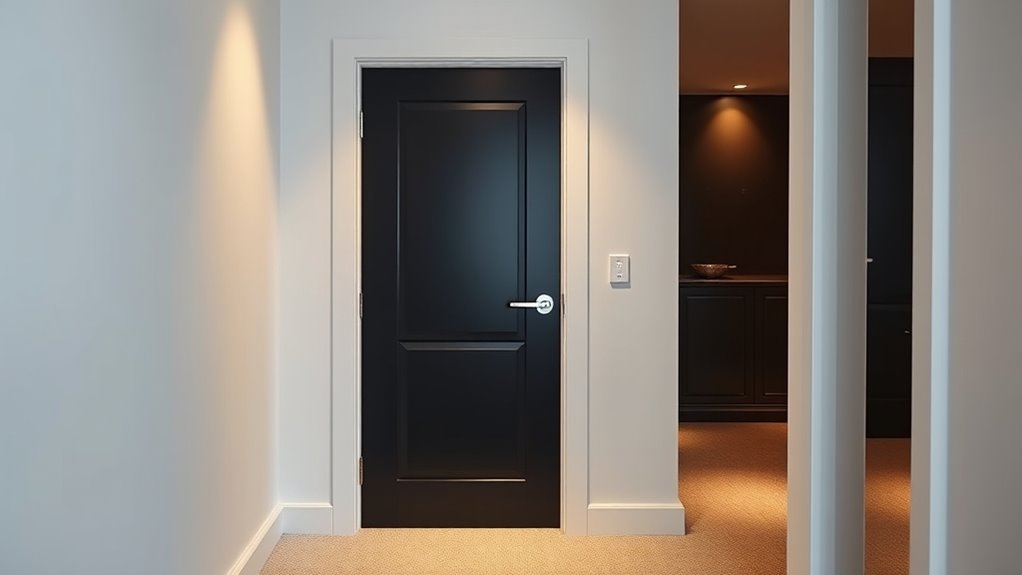

Replacing interior doors is a great way to boost your space’s style and soundproofing. Choose doors like solid core or wood options to block noise better and add durability. Simple slab doors are budget-friendly, while pre-hung or specialty styles can elevate your decor but may cost more. Proper installation and sealing can further reduce noise transfer. Keep exploring to discover how selecting the right door enhances both your home’s look and tranquility.
Key Takeaways
- Choose solid core or specialized soundproof doors for better noise reduction and durability.
- Consider door style (e.g., French, sliding) to match aesthetics while balancing soundproofing needs.
- Add weatherstripping and seals around the frame to enhance sound insulation.
- Incorporate acoustic treatments or soundproofing panels around the door for improved performance.
- Opt for doors with minimal glass or decorative features to maximize soundproofing effectiveness.
Replacing Interior Doors
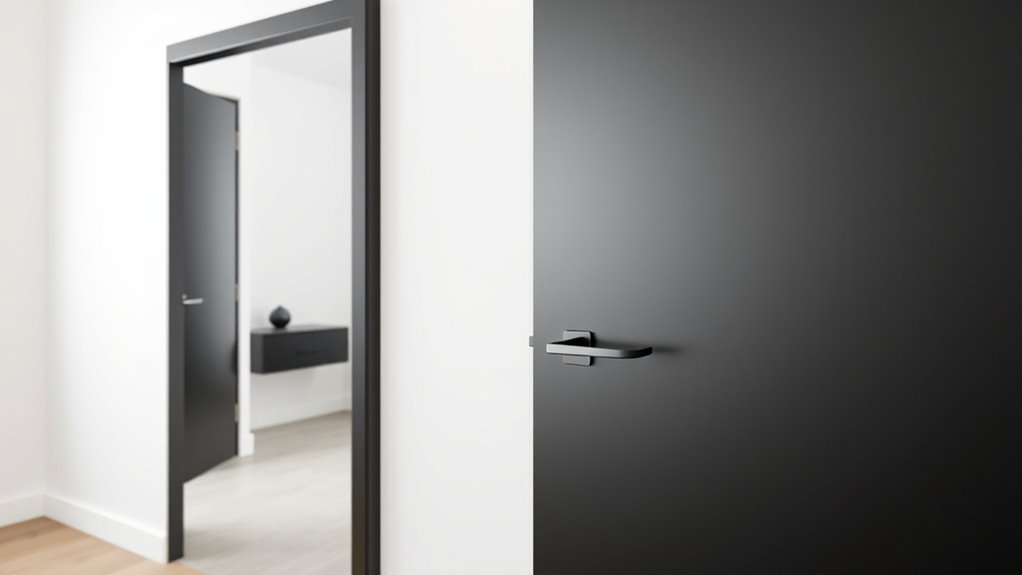
Are you considering replacing your interior doors but unsure about the costs and options? You’re not alone. Replacing interior doors can refresh your space, improve privacy, and even boost soundproofing, but understanding the costs and styles involved helps you make smarter choices. On average, homeowners spend between $226 and $824 for a complete replacement, including materials and labor. Most of that goes into labor, which averages around $350 per door, accounting for about half the total cost. The remaining expenses include the door itself—ranging from $100 to $500—and extra items like hardware, trim, and disposal fees. Costs vary depending on the door type, size, material, and installation complexity, especially if framing or modifications are needed. For example, installing a simple slab door may be cheaper, while pre-hung units or specialty doors like sliding or French styles tend to cost more.
Replacing interior doors costs $226 to $824, with labor around $350 per door.
When selecting a door, your choice impacts both style and soundproofing. Hollow core doors are budget-friendly but offer minimal sound insulation. If noise reduction matters to you, solid core composite or wood doors deliver better soundproofing and durability, though they usually cost more. Glass panels or French doors increase natural light but can reduce sound isolation, so consider your priorities. For enhanced noise control, you might opt for specialized soundproof doors or add acoustic treatments around the frame. The thickness of the door and seals around its edges also influence its ability to block sound, making these factors worth considering if quietness is important. Soundproofing options vary widely and can be integrated into your door selection to achieve better acoustic performance. Additionally, the installation process can be simplified by choosing doors that match your current opening dimensions, saving both time and money.
Frequently Asked Questions
How Do I Measure for the Perfect Interior Door Size?
To measure for the perfect interior door size, start by measuring the door slab’s height at three points and record the tallest. Do the same for width, using the widest measurement. Measure the door thickness by opening it, usually 1⅜ inches. Then, measure the rough opening in the wall, adding about 2½ inches to the width and 2 inches to the height. Round up measurements to standard sizes before ordering.
What Tools Are Essential for Replacing Interior Doors?
To replace interior doors, you need essential tools like a circular saw or handsaw to cut the door to size, a drill with bits for hinges and locks, and a hammer for hardware. A level guarantees proper alignment, screwdrivers help install hardware, and measuring tools like a tape measure and square give accurate measurements. Safety glasses protect your eyes, and a utility knife helps with precise marking and trimming.
How Long Does It Typically Take to Replace an Interior Door?
Replacing an interior door usually takes between 30 minutes to an hour if everything goes smoothly. Did you know a professional can install multiple doors in just half a day? If you’re doing it yourself, expect 3 to 6 hours per door, especially if you’re new to the process. Factors like door type, condition of the frame, and experience influence how long your project will actually take.
Can I Install a New Door Without Professional Help?
You can definitely install a new door without professional help if you’re comfortable with DIY projects. Make sure you have the right tools, like a level, saw, drill, and shims. Measure carefully, trim the jambs accurately, and take your time to check the door’s fit and swing. Patience is key. If you hit a snag or feel unsure, don’t hesitate to call in a pro—proper installation guarantees smooth operation and durability.
What Are Eco-Friendly Options for Interior Doors?
You’re interested in eco-friendly interior door options. You can choose doors made from sustainable wood or MDF certified by FSC or PEFC, ensuring responsible sourcing. Consider recycled wood composites or doors with bio-based resins to reduce formaldehyde emissions. Bamboo is a renewable material, while recycled glass or fiberglass doors also lower environmental impact. Metal doors like aluminum or steel are recyclable and durable, offering stylish, eco-conscious choices for your home.
Conclusion
Replacing your interior doors is like giving your home a fresh breath of life, blending style with silence. With each new door, you’re not just changing a panel of wood—you’re opening a gateway to tranquility and elegance. Think of it as tuning your home’s soundtrack, where soundproofing acts as the quiet whisper amidst chaos. So go ahead, embrace the transformation and let your doors be the silent storytellers of your space’s renewed personality.