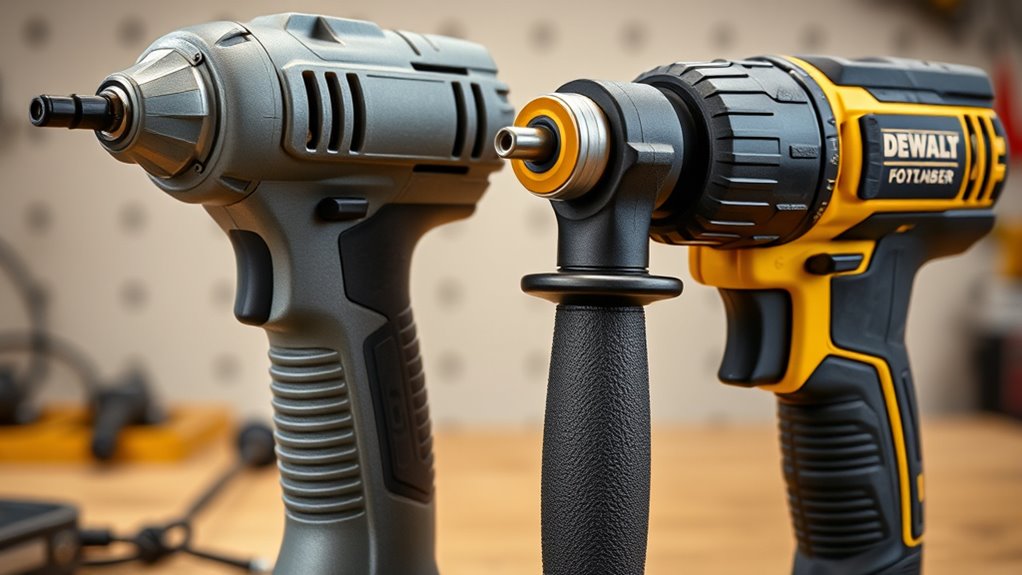

Choosing between an impact driver and a hammer drill depends on your project needs. Use an impact driver for fastening screws and bolts into wood or metal, thanks to its high torque and impact mechanism. A hammer drill is better suited for drilling into concrete, brick, or stone, combining rotation with hammering. Understanding their differences helps you pick the right tool for efficiency and safety—keep exploring to learn more about each tool’s best uses.
Open a free Amazon Business account
Business pricing, bulk buying and tax-exempt orders.
As an affiliate, we earn on qualifying purchases.
Key Takeaways
- Use impact drivers for fastening screws and bolts into wood or metal; choose hammer drills for drilling into masonry materials like concrete or brick.
- Impact drivers deliver high torque with rotational impacts, ideal for quick fastening; hammer drills combine rotation and hammering for hard surface drilling.
- Impact drivers accept hex-shank bits and minimize wrist torque; hammer drills handle various bits, including masonry bits, for tougher materials.
- Select impact drivers for repetitive fastening tasks; opt for hammer drills when penetrating hard surfaces or masonry.
- Proper tool choice enhances safety, efficiency, and reduces material or equipment damage during projects.
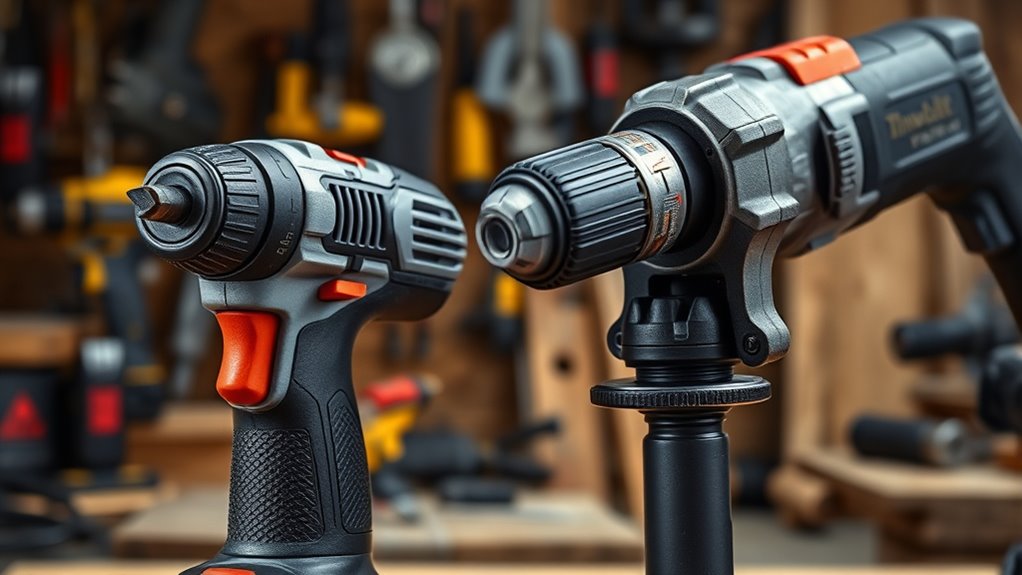
Are you unsure which drill is best for your project? Picking the right tool can make a significant difference in the efficiency, safety, and quality of your work. Impact drivers and hammer drills are designed for different tasks, so understanding their purpose and how they operate helps you choose wisely. Impact drivers excel at driving screws, bolts, and fasteners into dense wood and metal by applying rotational, concussive force. They deliver high torque, which makes fastening tasks easier, especially when working with tough materials. These tools are also great for repetitive fastening because their impact mechanism reduces reaction torque on your wrist, giving you better control and comfort during extended use. However, impact drivers aren’t meant for drilling into masonry or concrete. Their design and impact mechanism aren’t suited to break through hard surfaces.
Choosing the right drill—impact drivers excel at fastening, while hammer drills are designed for masonry work—ensures efficiency and safety on your project.
Hammer drills, on the other hand, are built specifically for masonry work. They combine rotation with a back-and-forth hammering motion that delivers axial force along the bit, mimicking a hammer striking the back of the drill bit. This mechanism allows them to drill into concrete, brick, stone, and tile effectively. They come with specialized masonry bits and adjustable clutches to control torque, helping prevent overdriving or damaging softer materials. If your project involves breaking through tough surfaces or drilling into concrete, a hammer drill is your best choice. Keep in mind, though, that hammer drills aren’t optimized for driving fasteners—using them for that purpose can be inefficient and may cause damage to the tool or fasteners.
Understanding the force direction and mechanism is key. Hammer drills deliver force along the bit’s axis with a hammering motion, while impact drivers apply rotational impacts perpendicular to the bit. This difference influences their application: hammer drills are primarily for masonry, whereas impact drivers are ideal for fastening tasks. Bit compatibility also varies; hammer drills and standard drills accept both round and hex-shank bits, but impact drivers use quick-release hex chucks limited to hex-shank bits. For drilling into concrete or stone, specialized masonry bits are necessary, and impact drivers are less effective with these compared to hammer drills.
Torque and power delivery further differentiate these tools. Hammer drills maximize force for penetrating hard surfaces but aren’t suited for high-torque fastening. Impact drivers deliver up to 50 impacts per second, providing high torque for driving stubborn fasteners with less reaction torque, which improves operator control. Clutch mechanisms in hammer drills help prevent overdriving softer materials, while impact drivers excel at driving long screws, lag bolts, and working through dense materials efficiently. Impact drivers contain specific internal components, such as a spring, impact mass, and anvil, which work together to produce their distinctive impact force. Interestingly, their design also reduces operator fatigue, making them preferable for extended fastening tasks. Choosing the wrong tool can lead to frustration, damaged materials, or safety issues, so assess your specific needs carefully.
In most projects, having both tools on hand is ideal. Use a hammer drill for masonry work and heavy-duty drilling, and turn to an impact driver for fastening tasks. Recognizing their differences ensures you select the right tool for each task, making your work more efficient and safer.
Frequently Asked Questions
Can Impact Drills Be Used for Masonry Work?
Impact drills aren’t ideal for heavy masonry work, but you can use them for light tasks. They work well for drilling small holes, tightening fasteners, or removing rusted bolts in masonry. However, for drilling deep or large holes, a hammer drill or rotary hammer is better suited. Keep in mind, impact drills deliver rotational impacts, so they’re limited when it comes to penetrating dense masonry materials.
How Does Drill Weight Affect Usability?
You might not realize it, but the weight of your drill directly influences how easily you handle it. A well-balanced, appropriately weighted drill gives you better control, reduces fatigue, and improves accuracy. If it’s too heavy, you’ll tire quickly, risking safety and lowering productivity. Too light, and you might struggle with power or stability. Choosing the right weight guarantees smoother operation, comfort, and efficiency, making your drilling tasks safer and more effective.
Are Cordless Impact Drills as Powerful as Corded Ones?
You’re wondering if cordless impact drills pack the same punch as corded ones. While cordless models with brushless motors can deliver high torque and impressive power, corded impact drills often provide more consistent, reliable performance, especially for heavy-duty tasks. However, advancements in battery technology have narrowed the gap. Overall, for portability and convenience, cordless impact drills work well, but for maximum power, corded models still hold an edge.
What Safety Gear Should I Wear When Using These Drills?
Imagine you’re stepping into the workshop in a time machine, ready to drill. You should wear safety goggles to shield your eyes from debris, a dust mask for inhaling harmful particles, and ear protection to guard against noise. Gloves help with grip and hand safety, while non-slip footwear prevents slips. Always follow safety guidelines, tighten your drill chuck, and secure workpieces to stay safe during operation.
How Do I Maintain and Store My Drill Properly?
To maintain and store your drill properly, clean it after each use by removing dust and debris, and wipe the exterior with a damp cloth. Store it in a cool, dry place, keeping batteries separate and in a stable position. Regularly inspect for damage, lubricate moving parts, and organize accessories in labeled, protected compartments. Proper storage and routine maintenance will extend your drill’s lifespan and guarantee ideal performance.
Conclusion
So, now that you’ve weighed the differences between impact and hammer drills, which one will you choose for your next project? Remember, selecting the right tool depends on the task at hand—whether you need precision or power. Don’t settle for a drill that doesn’t meet your needs; after all, isn’t investing in the right equipment the key to successful results? Make your choice wisely and get ready to tackle any job with confidence.
Flea & tick season Picks
flea and tick prevention
As an affiliate, we earn on qualifying purchases.