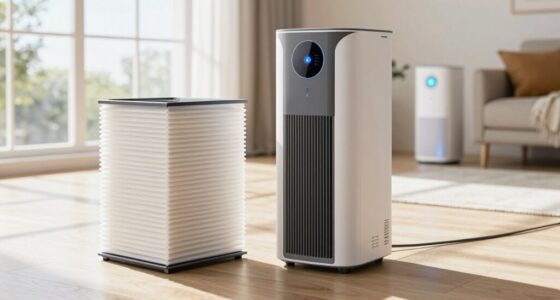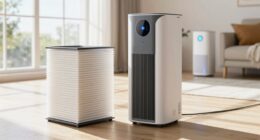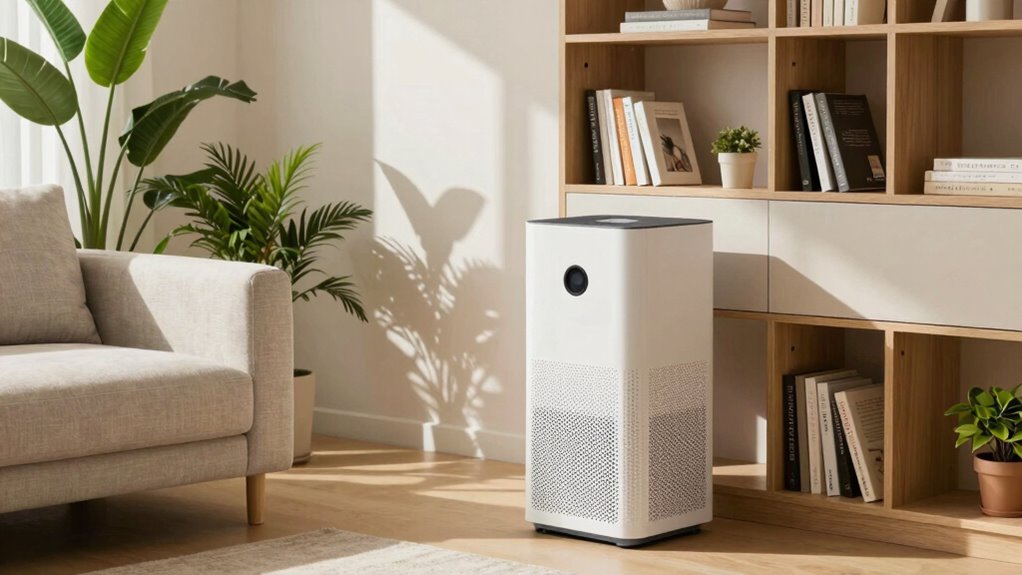
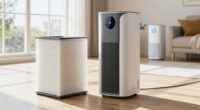
To maximize your air purifier’s impact, place it in a central spot away from walls, furniture, or vents that block airflow. Elevate it on a table or shelf about 3 to 5 feet above ground to improve circulation. Keep it at least 2 feet from walls and avoid corners or cluttered areas. Adjust placement based on room size, pollutant sources, or specific needs. Continuing here reveals more tips to optimize air quality effectively.
Key Takeaways
- Place the purifier away from walls, furniture, and vents to prevent airflow obstruction and ensure efficient circulation.
- Elevate the unit on a table or shelf to improve airflow and reach pollutant sources more effectively.
- Position the purifier near pollution hotspots like kitchens, pet areas, or sleeping zones for targeted air cleaning.
- Avoid corner placement; instead, choose a central location that promotes even distribution of clean air throughout the room.
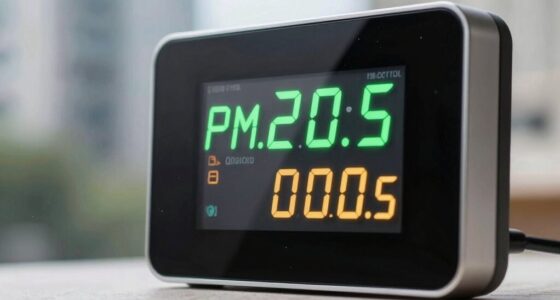
- Use air quality sensors to identify stagnant or polluted zones and adjust placement for optimal pollutant removal.
Why Placement Matters for Your Air Purifier’s Effectiveness

The placement of your air purifier directly impacts how well it cleans the air in your space. If you position it poorly, it won’t improve your air quality as much as it could. Proper placement guarantees good air circulation, allowing the purifier to draw in contaminated air and release clean air efficiently. Keep the device away from corners or obstructions that block airflow, because stagnant air reduces its effectiveness. Instead, place it in a central location where air moves freely around it. This promotes better circulation, helping the purifier capture pollutants like dust, pollen, and pet dander more effectively. Remember, the goal is to maximize contact between the air purifier and the air you breathe daily. Additionally, considering the importance of airflow can further optimize its performance. To select the right spot, understanding how air circulation works within your space can be incredibly beneficial. Evaluating room size and layout can also help in choosing the most effective placement for your air purifier. Recognizing the impact of airflow patterns can lead to smarter positioning and improved air quality overall.
Where Are the Best Spots to Place Your Air Purifier?
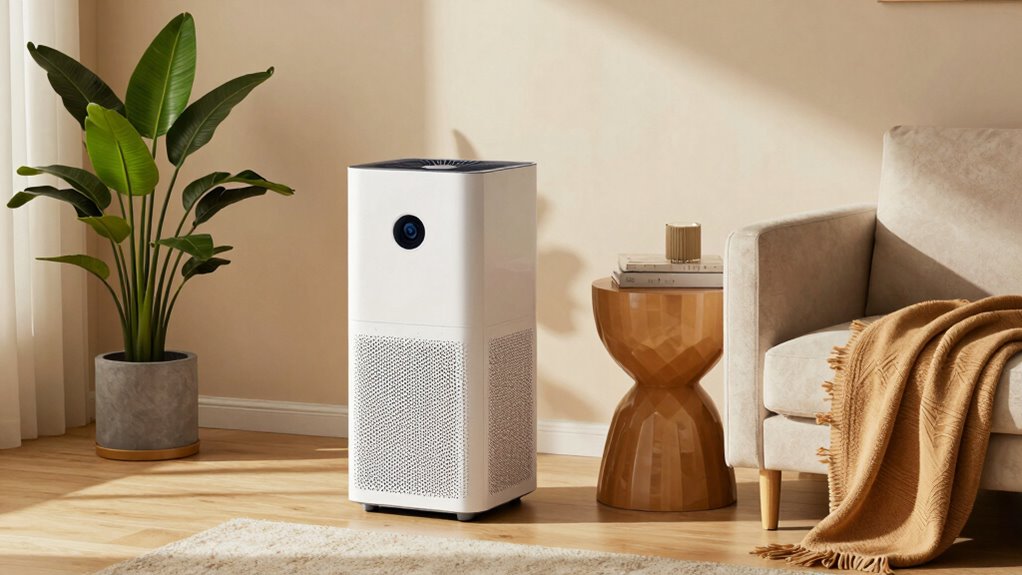
Where should you place your air purifier for maximum benefit? Position it in a central location within the room, ideally where you spend the most time, to guarantee ideal air circulation. Keep it away from walls or furniture that could block airflow, which can hinder its effectiveness. Regular air purifier maintenance is vital, so place it where you can easily access filters for timely replacement. Adhering to the recommended filter replacement schedules helps maintain peak performance. Avoid placing it near sources of moisture or heat, as this can damage the unit or reduce its efficiency. For the best results, guarantee the purifier isn’t obstructed and can draw in and expel air freely, maximizing its ability to clean the air effectively in your space. Additionally, understanding the importance of proper placement can significantly enhance your air quality improvements. Proper placement is also crucial for airflow efficiency, ensuring the purifier works as intended and provides the maximum health benefits. Ensuring correct placement can also prevent potential device damage caused by unsuitable environments. To achieve optimal results, consider environmental factors that may influence the purifier’s performance, such as room size and layout. Being mindful of air circulation patterns can further optimize the purifier’s effectiveness and ensure cleaner air throughout your space.
Common Placement Mistakes That Reduce Air Quality
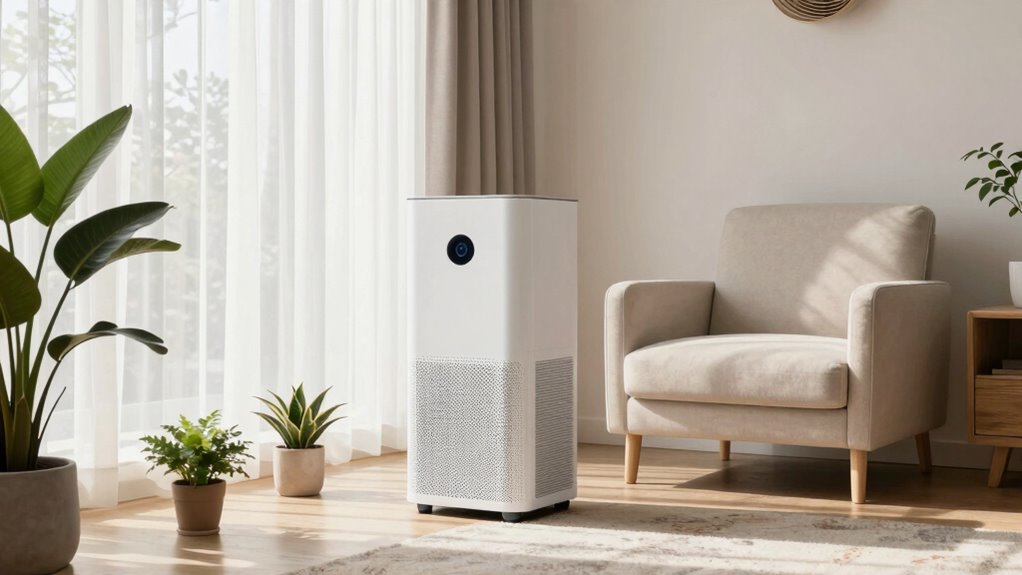
Avoid blocking airflow paths or placing your purifier too close to walls, as this can limit circulation. If you set it in a corner or against a wall, it won’t clean the air effectively. Also, make sure the room size matches your purifier’s capacity to ensure maximum performance. Proper air circulation is essential for optimal air purification. Additionally, ensuring your purifier is positioned to avoid dead zones can significantly improve its efficiency in removing pollutants. Maintaining balanced airflow throughout the space helps prevent stagnation and ensures pollutants are evenly removed.
Blocking Airflow Paths
Blocking airflow paths is a common mistake that can substantially reduce your air purifier’s effectiveness. When you block airflow pathways, the device can’t circulate air properly, limiting its ability to capture pollutants. To guarantee proper airflow, avoid placing objects around the purifier that cause obstruction avoidance. Keep the area free of furniture and clutter nearby. Proper placement also includes considering the location of vents, as they can influence how well the purifier performs in different parts of a room. | Placement Tip | Why It Matters |
| ————————— | ——————————————- |
|---|---|
| Keep clear of curtains | Curtains can block airflow pathways. |
| Avoid placing behind furniture | Furniture obstructs air intake. |
| Leave space around the unit | Prevents airflow restriction. |
| Don’t block vents or registers | Ensures unimpeded airflow. |
| Elevate slightly off the ground | Improves circulation efficiency. |
Proper placement ensures your air purifier works at maximum capacity, improving air quality effectively.
Placing Near Walls
Placing an air purifier too close to walls can considerably hinder its performance. Poor wall placement limits airflow, reducing the unit’s effectiveness. Keep the purifier at least a few feet away from walls to guarantee proper circulation. Avoid corner positioning, as it traps airflow and prevents the purifier from evenly cleaning the air. Instead, position it in a central location within the room for maximum impact. If you place it against a wall or in a corner, airflow becomes restricted, and pollutants may not be captured efficiently. Remember, the goal is to allow unrestricted airflow around the device. Proper placement ensures the air purifier works as intended, providing cleaner air and healthier indoor environments. Additionally, understanding airflow circulation can help optimize placement for better air quality results.
Overlooking Room Size
Many people overlook the importance of choosing a room size that matches their air purifier models, which can substantially reduce its effectiveness. If your purifier is too small for a large space, it won’t filter the air efficiently, leaving pollutants behind. Conversely, oversized units in small rooms can cause unnecessary noise and energy waste. To optimize air quality, select a model rated for your room’s square footage and consider the airflow capacity. Proper placement also involves considering air circulation to ensure even distribution throughout the space. Incorporating proper positioning techniques can further enhance the purifier’s efficiency across the entire area. Additionally, understanding room layout can help in strategic placement to maximize purification. Also, keep in mind maintenance tips: regularly replacing filters ensures your purifier performs at its best. Ignoring room size can lead to ineffective purification and wasted resources. Properly matching your air purifier’s capacity to your space helps maximize its impact, so don’t neglect this key factor when planning your setup. Additionally, choosing a Vetted model from reputable brands can ensure long-term performance and reliability.
How to Optimize Air Circulation With Proper Height and Distance
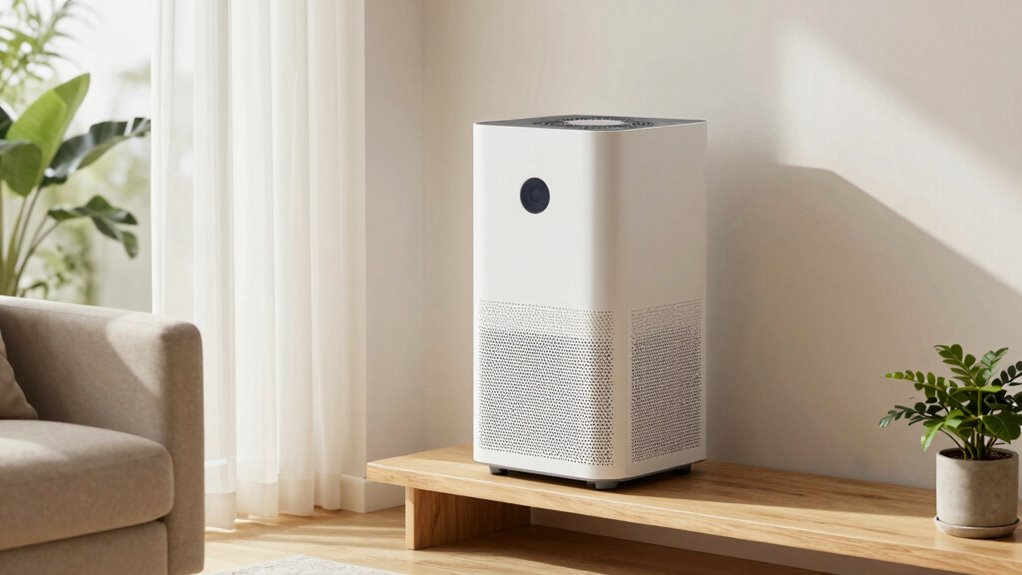
To guarantee your air purifier works effectively, you need to optimize its height and distance from other objects. Proper placement enhances air circulation and ensures the device height promotes ideal airflow. Think of your purifier as a central hub:
Optimize your air purifier placement for better airflow and efficiency.
- Place it about 3 to 5 feet above the ground, avoiding low spots where air stagnates.
- Keep it at least 2 feet away from walls or furniture to prevent airflow blockages.
- Position it away from electronics or sources of heat that could interfere with operation.
- Ensure it’s not directly in the path of drafts or air vents to maximize circulation.
- Remember that proper air quality depends on strategic placement to optimize airflow and filtration efficiency.
- Incorporating proper placement techniques can significantly improve the purifier’s performance and the overall indoor air environment.
- Be mindful of air circulation patterns, which play a crucial role in distributing clean air evenly throughout the space.
- Additionally, understanding airflow dynamics within your space can help you choose the most effective placement for your purifier.
How Room Layout and Size Influence Air Purifier Placement

The layout and size of your room directly impact where you should position your air purifier. Larger rooms require placement that maximizes airflow dynamics, ensuring air circulates efficiently throughout the space. Avoid placing the purifier in corners or behind furniture, as this can disrupt airflow and reduce effectiveness. Open areas promote better air exchange and allow the purifier to work at its best. Additionally, room acoustics can influence perceived noise levels; placing the device away from quiet zones like bedrooms minimizes disturbance. Consider central locations that allow air to flow freely in all directions. Proper placement based on room size and layout ensures your air purifier captures pollutants effectively, improving overall air quality without creating dead zones or airflow bottlenecks.
Choosing the Best Spot Based on Your Needs: Allergies, Odors, Dust

To get the most out of your air purifier, place it where it can best address your specific needs, like allergies or odors. For allergies, position it near your sleeping area or common allergy triggers, such as pets or pollen sources. If odors are a concern, locate it close to kitchens or areas where smells linger to keep the air fresh.
Optimizing Placement for Allergies
When aiming to reduce allergies effectively, placing your air purifier in the right spot makes all the difference. To improve air quality and prolong filter life, position it where it can circulate the most air. Imagine:
- Near your bed, so you breathe cleaner air overnight.
- In the living room, where dust and pet dander tend to accumulate.
- Close to a central location, ensuring even coverage across the space.
- Away from walls or furniture, to prevent airflow blockages.
This placement enhances allergen removal and reduces the need for frequent filter maintenance. Proper positioning ensures the purifier works efficiently, delivering cleaner air where you need it most. Remember, consistent filter checks are key to maintaining excellent air quality.
Managing Odor Control Spots
Choosing the right spot for your air purifier depends on your specific needs, whether you’re targeting odors, dust, or allergies. For odor control, place the purifier near sources like kitchens, pet areas, or trash cans. Use air quality sensors to monitor odor levels and adjust placement accordingly. Incorporate indoor plants nearby to naturally absorb odors, but don’t rely solely on them. Here’s a quick guide:
| Need | Best Spot | Additional Tips |
|---|---|---|
| Odors | Near sources, ventilation points | Use sensors to track effectiveness |
| Dust | Close to dust-generating areas | Keep doors/windows closed |
| Allergies | Living rooms, bedrooms with indoor plants | Monitor air quality sensors |
| General Use | Central location with good airflow | Regularly check sensor readings |
How to Test and Adjust Your Air Purifier Placement for Maximum Results

Testing and adjusting your air purifier’s placement is essential to guarantee it works effectively. To optimize air quality, start by observing how well the purifier covers your space. Move the unit to different spots and note changes in air quality. Consider these steps:
- Place it near sources of pollution, like pet areas or kitchens.
- Ensure it’s at least 3 feet away from walls or furniture to avoid airflow blockages.
- Elevate it on a table or shelf to improve circulation.
- Check purifier maintenance needs; clean or replace filters regularly for peak performance.
Frequently Asked Questions
Can Door Placement Affect Air Purifier Efficiency?
Yes, door placement can affect your air purifier’s efficiency. If doors are closed, they restrict air circulation, limiting the purifier’s ability to filter pollutants throughout the space. Keep doors open or partially open to allow better air flow and guarantee the purifier can circulate and clean the air evenly. Proper door placement optimizes air circulation, helping your air purifier work more effectively and improve indoor air quality.
Should I Turn off Vents When Using an Air Purifier?
Yes, you should turn off vents when using an air purifier to optimize its effectiveness. This prevents unfiltered air from circulating through your ventilation system and bypassing the purifier. Incorporate ventilation strategies like closing vents in rooms with the purifier and maintaining filters regularly. This guarantees the purifier works efficiently, improving indoor air quality and reducing allergens. Proper filter maintenance is key to maximizing your air purifier’s impact.
How Often Should I Move My Air Purifier?
You should move your air purifier every few months to maintain ideal air quality. Regular air quality monitoring helps you identify where pollutants are highest, guiding your placement. Keep up with purifier maintenance, like filter changes, to guarantee it works efficiently. Moving it periodically ensures even coverage, especially in different rooms or areas where air quality fluctuates, giving you cleaner, healthier air consistently.
Does Furniture Placement Impact Air Circulation?
Yes, furniture placement definitely affects airflow optimization. You might think it doesn’t matter, but cluttered or blocky arrangements can hinder air circulation, reducing your purifier’s effectiveness. To maximize impact, keep pathways clear and avoid pressing furniture against walls. This allows air to circulate freely, ensuring pollutants are filtered more efficiently. Carefully arranging furniture creates better airflow, improving overall air quality in your space.
Can Multiple Air Purifiers Work Better Than One?
Yes, using multiple air purifiers can improve air quality more effectively than just one. Place them strategically in different rooms or areas with high activity or pollution sources. Proper air purifier placement guarantees ideal air circulation, maximizing air quality improvement. By covering multiple spaces, you reduce pollutants more efficiently and create a healthier environment throughout your home. Just make sure each purifier isn’t blocking airflow and is appropriately sized for the space.
Conclusion
Remember, the right placement of your air purifier isn’t just about where it sits—it’s about how it works in harmony with your space. Think of it as a silent guardian, quietly transforming your air quality. By choosing the ideal spot, you activate its true potential, turning your environment into a sanctuary of fresh, clean air. After all, isn’t a healthier home worth the effort of finding that perfect spot? Your best air starts with the right placement.