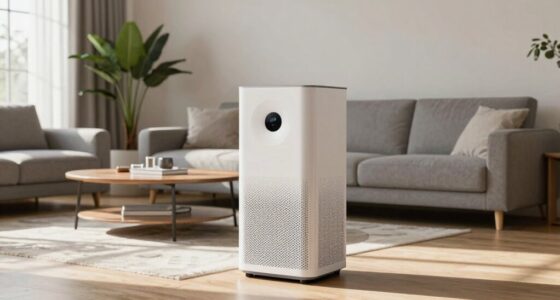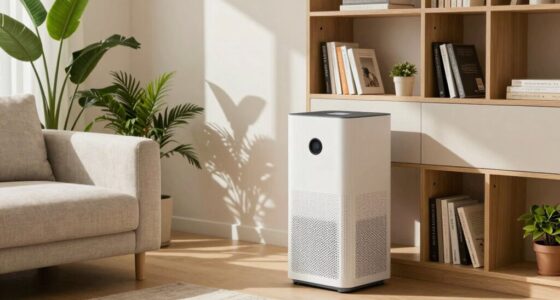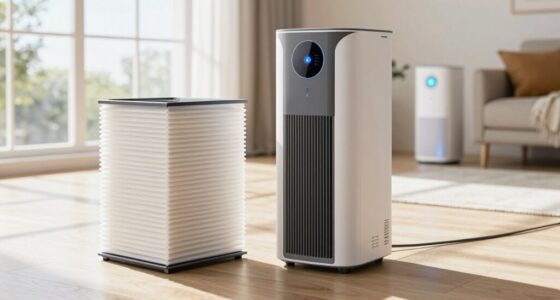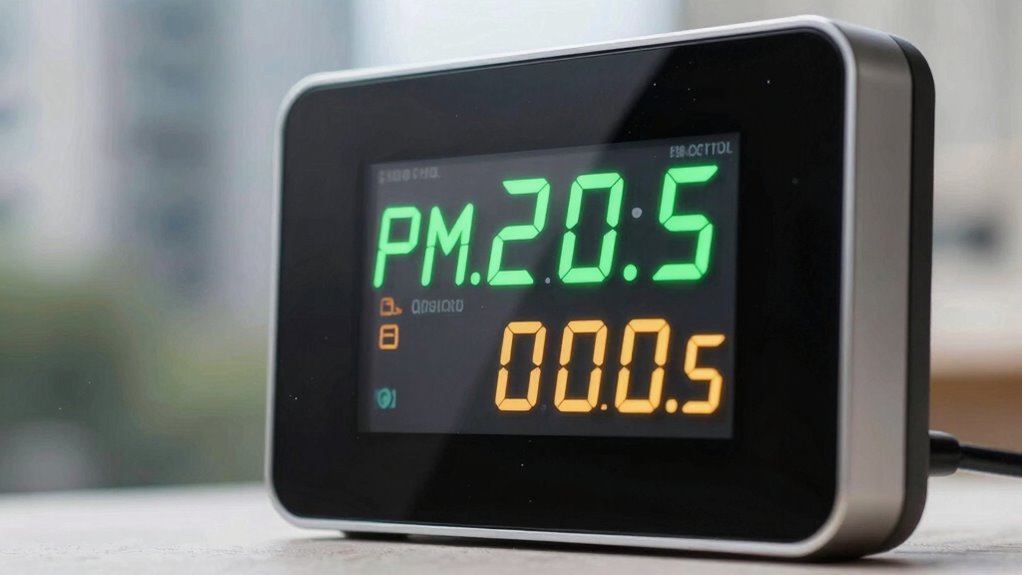

Your air monitor measures tiny particles called PM2.5, which can harm your lungs and heart when they’re in the air around you. The device detects the number of these small particles, giving you an idea of air quality. Higher levels mean more pollutants and potential health risks, while lower levels suggest cleaner air. To better understand what this means for your health and environment, keep reading as we explain how to interpret these numbers and improve your air quality.
Key Takeaways
- PM2.5 readings indicate the concentration of tiny particles in the air, affecting respiratory health.
- Higher readings signal increased pollution levels and potential health risks, especially for vulnerable groups.
- Accurate monitor readings depend on proper calibration, placement, and maintenance of sensors.
- Levels below 12 µg/m³ are considered safe indoors, while outdoor safety thresholds are below 35 µg/m³.
- Sudden spikes in PM2.5 suggest nearby pollution sources, prompting actions like ventilation or filtration.

GoveeLife Smart Air Quality Monitor with PM2.5, WiFi, Temperature & Humidity Sensors, LED Display, 2s Refresh, 2-Year Data Storage, for Home & Office Wired
High Accuracy & Fast Refresh Data: With this smart sensor, the PM2.5 accuracy is ±15 µg/m³ while temperature…
As an affiliate, we earn on qualifying purchases.
As an affiliate, we earn on qualifying purchases.
What Are PM2.5 Particles and Why Do They Matter?

Have you ever wondered what PM2.5 particles are and why they’re so essential? These tiny particles, measuring 2.5 micrometers or smaller, have a complex particle composition that includes soot, organic compounds, metals, and chemicals from vehicle emissions, industrial processes, and natural sources. Because of their small size, they can easily penetrate deep into your lungs and even enter your bloodstream. This makes PM2.5 particularly concerning for your health, as exposure has serious health implications. Short-term exposure can cause respiratory issues, allergies, and irritation, while long-term exposure increases the risk of heart disease, lung problems, and other chronic conditions. Understanding what PM2.5 particles are helps you grasp why monitoring air quality is so crucial for your well-being. particle composition can influence the toxicity and health effects of these tiny particles, especially considering their source diversity, which impacts their chemical makeup and potential health risks. Additionally, awareness of free floating particles emphasizes the importance of accurate air monitoring to protect public health. Recognizing the air quality levels through reliable measurements enables better health decisions and protective measures against harmful pollutants. Moreover, advancements in air monitoring technology have made it easier to detect and analyze PM2.5 levels accurately, allowing for more informed responses to pollution episodes.
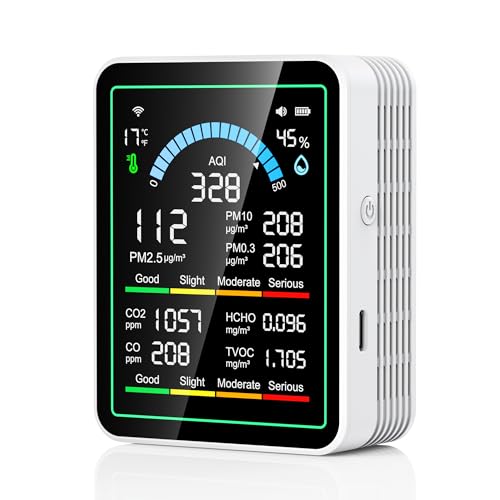
Air Quality Monitor Indoor, 10 in 1 Portable Smartair Quality Tester for CO2 | CO | TVOC | HCHO | Temp | AQI | PM0.3-1 Detection Suitable for Home, Cars, Plants, Pets and Hotels
【10-in-1 Smart Air Quality Monitor: Your All-Round Environmental Guardian】 This portable intelligent air quality tester delivers ultra-precise multi-gas…
As an affiliate, we earn on qualifying purchases.
As an affiliate, we earn on qualifying purchases.
How Do Air Quality Monitors Measure PM2.5 Levels?

Air quality monitors use advanced sensors and measurement techniques to determine PM2.5 levels accurately. These sensors detect tiny particles by drawing in air and analyzing particle properties through light scattering or electrochemical methods. To guarantee data accuracy, regular sensor calibration is essential, aligning readings with known standards. Sensor calibration helps minimize errors and enhances reliability. Additionally, understanding the sensor accuracy is crucial for interpreting the readings correctly. Regularly reviewing monitor performance ensures consistent and trustworthy data over time. Incorporating insights from sustainable textile care can also inform how indoor environments are managed to reduce particulate pollution effectively. Properly maintained sensors and a clear understanding of their measurement principles can lead to more informed decisions about air quality management.
Air Quality Monitor Indoor, 10 in 1 Portable Smartair Quality Tester for CO2 | CO | TVOC | HCHO | Temp | AQI | PM0.3-1 Detection Suitable for Home, Cars, Plants, Pets and Hotels
【10-in-1 Smart Air Quality Monitor: Your All-Round Environmental Guardian】 This portable intelligent air quality tester delivers ultra-precise multi-gas…
As an affiliate, we earn on qualifying purchases.
As an affiliate, we earn on qualifying purchases.
What Your PM2.5 Readings Really Mean

Your PM2.5 readings show how much fine particulate matter is in the air around you. Understanding what these numbers mean helps you gauge your exposure risks and take appropriate actions. Monitoring the right air quality indicators, such as PM2.5 levels, can also inform decisions about outdoor activity and health precautions. Let’s explore how to interpret these levels for better health and safety decisions. Monitoring the right automotive performance parts, such as flywheels and engine upgrades, can also enhance your vehicle’s efficiency and responsiveness.
What PM2.5 Measures
Ever wondered what those PM2.5 readings actually mean for your health? PM2.5 measures tiny airborne particles with a diameter of 2.5 micrometers or less. Because of their small particle size, these particles can bypass your body’s natural defenses and penetrate deep into your lungs and bloodstream. Your air filtration systems, including masks and air purifiers, are designed to capture or block these particles, reducing your exposure. When your monitor shows higher PM2.5 levels, it indicates a greater presence of these microscopic particles in your environment, which can worsen respiratory issues or trigger allergies. Particle size plays a crucial role in how these particles impact health, as smaller particles can reach more sensitive areas in your respiratory system. Understanding what PM2.5 measures helps you gauge the air quality and take appropriate steps to protect your health from harmful airborne pollutants. Understanding air quality empowers you to make informed decisions about your environment and health, especially when considering air filtration systems or improving ventilation. Recognizing the significance of PM2.5 levels can help you better interpret air quality data, and a clear understanding of airborne particles can further enhance your awareness of potential health risks.
Interpreting Air Quality
Have you ever wondered what your PM2.5 readings truly indicate about the air you breathe? Interpreting these numbers helps you decide if your environment needs action. Low readings suggest good air quality, but higher levels may signal pollution that could impact your health. To improve air quality, consider using an air purifier or upgrading your ventilation system. Keep these points in mind:
- Consistently high PM2.5 levels warrant increased ventilation.
- Sudden spikes indicate nearby pollution sources.
- Moderate readings may require additional filtration.
- Very high readings suggest immediate measures, like opening windows or using an air purifier.
- Regular monitoring helps track improvements or deteriorations in air quality.
- Understanding the contrast ratio of your air quality monitor can help you interpret the accuracy of your readings.
Understanding these readings empowers you to make smarter decisions for cleaner, healthier indoor air.

Temtop PM2.5 Monitor P600, Essential Air Particle Meter PM2.5 PM10 Air Quality Tester for Indoor/Outdoor Air Pollution Detection, Particle-Centric Detector w/Data Histogram Display
UPGRADED SENSOR: Adopting Temtop second-generation PM2.5 particle laser sensor, directly transform the PM2.5 & PM10 concentration into visual…
As an affiliate, we earn on qualifying purchases.
As an affiliate, we earn on qualifying purchases.
What Are Safe PM2.5 Levels for Indoor and Outdoor Air?

What are considered safe PM2.5 levels for indoor and outdoor air? Generally, a PM2.5 level below 12 micrograms per cubic meter (µg/m³) is considered safe indoors, while outdoor levels should stay below 35 µg/m³ to protect health. To maintain safe indoor air, you can use air filtration systems and add indoor plants, which help absorb some pollutants. These measures support better air quality, especially when PM2.5 levels rise outside. Keep in mind that prolonged exposure to higher PM2.5 levels can cause health issues, so monitoring and reducing indoor sources is key. Additionally, understanding air filtration can enhance your efforts to improve indoor air quality. Regularly checking your air quality monitor readings and understanding the air quality standards can help you stay within safe limits and safeguard your health. Being aware of pollutant sources can also help you identify and minimize factors that contribute to poor air quality. Staying within these safe limits helps safeguard your health and improves overall air quality in your environment.
Common Sources of PM2.5 Pollution You Should Know

Many common activities and sources contribute considerably to PM2.5 pollution, impacting both indoor and outdoor air quality. Understanding these sources helps you recognize pollution risks around you. Key contributors include:
- Industrial emissions from factories and power plants
- Vehicle exhaust from cars, trucks, and buses
- Burning wood or charcoal for heating or cooking
- Agricultural activities releasing dust and chemicals
- Construction and demolition sites stirring up dust
Both industrial emissions and vehicle exhaust release fine particles that linger in the air, posing health risks. Indoor sources like smoking, cooking, and burning candles also add to PM2.5 levels. Being aware of these sources allows you to take steps to reduce exposure and advocate for cleaner air policies. Proper ventilation can help mitigate indoor PM2.5 levels and improve air quality inside your home. Additionally, incorporating Indonesian decor masks and other cultural artifacts can enrich your space while promoting a balanced and serene environment.
How to Improve Air Quality Based on Your PM2.5 Data

To improve your indoor air quality, start by increasing your ventilation efficiency to reduce pollutant buildup. Using air purifiers properly can also make a significant difference in lowering PM2.5 levels. Together, these strategies help create a healthier environment based on your specific data.
Increase Ventilation Efficiency
When your PM2.5 readings indicate poor air quality, increasing ventilation efficiency can make a significant difference. You want to maximize airflow and reduce pollutant buildup through effective ventilation strategies. Focus on optimizing airflow by:
- Opening windows during low pollution times
- Using exhaust fans in kitchens and bathrooms
- Creating cross-ventilation with strategically placed vents
- Upgrading to ventilation systems with adjustable airflow controls
- Regularly maintaining and cleaning vents and filters
These steps help you enhance airflow optimization, removing indoor pollutants more efficiently. Proper ventilation strategies ensure that fresh air circulates effectively, reducing PM2.5 levels and improving overall air quality. By fine-tuning your ventilation, you create a healthier indoor environment while preventing stagnation and airborne contaminants.
Use Air Purifiers Effectively
If your PM2.5 levels are high, using air purifiers can substantially improve indoor air quality. To maximize their effectiveness, focus on proper air purifier placement—preferably in central locations away from walls or obstructions. Regular filter maintenance is essential; check and replace filters according to manufacturer instructions to guarantee optimal filtration. Avoid running purifiers in closed spaces; instead, keep doors or windows slightly open to enhance air circulation. Here’s a quick guide:
| Tip | Why it Matters | How to Implement |
|---|---|---|
| Proper placement | Ensures better air circulation | Place in the room’s center |
| Regular filter checks | Maintains filtration efficiency | Set reminders for replacements |
| Avoid obstructions | Prevents airflow blockages | Keep vents clear |
| Use appropriate filters | Filters PM2.5 effectively | Choose high-efficiency filters |
| Monitor performance | Adjust settings for best results | Track PM2.5 levels regularly |
When Should You Be Concerned About High PM2.5 Levels?

High PM2.5 levels become a concern when they consistently exceed health guidelines or air quality standards, especially if you notice symptoms like coughing, shortness of breath, or irritation in your eyes. When this happens, it’s vital to evaluate your indoor environment and outdoor pollution sources. Pay attention to these signs:
High PM2.5 levels pose health risks when exceeding standards and causing symptoms like coughing or eye irritation.
- Persistent coughing or wheezing
- Eye or throat irritation
- Increased respiratory issues
- Elevated readings despite good air filter maintenance
- Outdoor pollution sources nearby, like traffic or industrial activity
If your monitor shows high levels regularly, it’s time to act. Improving air filter maintenance can help, but addressing outdoor pollution sources is equally important to reduce overall PM2.5 exposure and protect your health.
Tips for Maintaining Healthy Indoor and Outdoor Air Quality
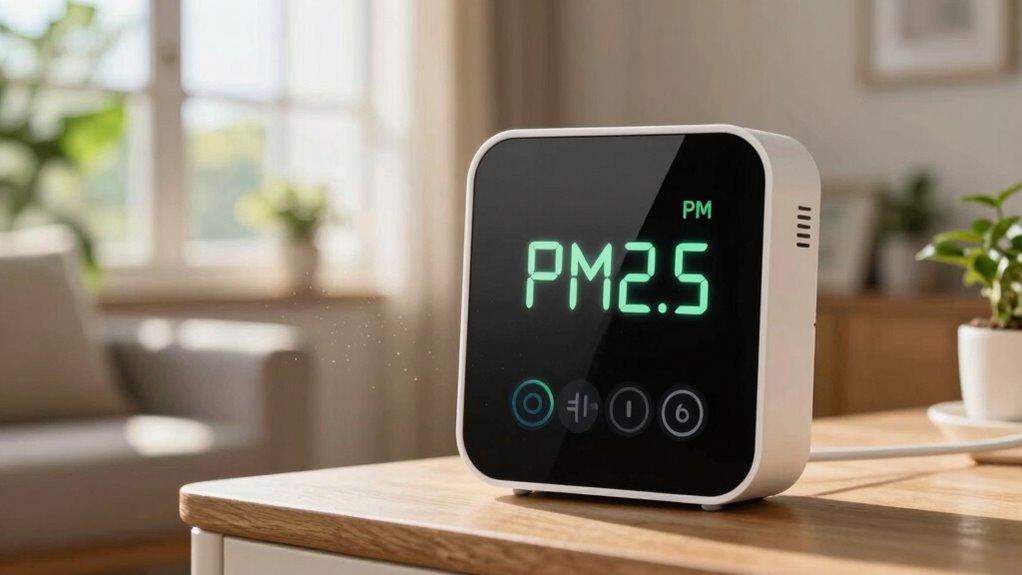
Maintaining healthy indoor and outdoor air quality requires consistent effort and mindful practices. Use air quality sensors to monitor pollutant levels regularly, helping you identify problems early. For indoor spaces, improve particle filtration by using high-efficiency filters in your HVAC system and air purifiers. Keep vents clean and replace filters according to manufacturer recommendations. Outdoors, reduce sources of pollution by avoiding idling vehicles and minimizing use of burning appliances. Planting trees and creating green spaces can also improve air quality naturally. Ventilate your home properly to dilute indoor pollutants, especially when outdoor air is cleaner. Staying informed about local air quality reports allows you to adjust activities accordingly, helping you maintain a healthier environment indoors and out.
Frequently Asked Questions
How Often Should I Calibrate My Air Quality Monitor?
You should calibrate your air quality monitor at least once every three to six months to guarantee accurate readings. Regular calibration is essential for proper sensor maintenance, especially if you notice inconsistent data. If your monitor is exposed to harsh conditions or uses sensors prone to drift, consider calibrating more frequently. Staying on top of calibration frequency helps maintain reliable measurements and prolongs your device’s lifespan.
Can Weather Conditions Affect PM2.5 Readings Accuracy?
Think of your air monitor as a sailor steering through fog; weather influence can impact its accuracy. Humidity, wind, or rain can distort PM2.5 readings, making them less reliable. These conditions interfere with sensor performance, causing fluctuations or false alarms. To guarantee monitoring accuracy, consider weather patterns and avoid relying solely on readings during extreme weather. Regular calibration and awareness of weather effects help you get the clearest picture of your air quality.
What Is the Difference Between PM2.5 and Other Particulate Sizes?
You should know that PM2.5 refers to particles with a diameter of 2.5 micrometers or smaller, which can penetrate deep into your lungs and pose serious health risks. Other particulate sizes, like PM10, are larger and typically stay in your upper respiratory system. Smaller particles like PM2.5 have greater health implications because they reach your lungs more easily, increasing risks of respiratory and cardiovascular issues.
Do All Air Monitors Detect Other Pollutants Besides PM2.5?
Not all air quality sensors detect pollutants beyond PM2.5. Many basic monitors focus on particulate matter, but advanced air monitors include features for detecting gases like CO2, VOCs, or ozone. If you want extensive pollutant detection, look for monitors with multiple sensors designed for various pollutants. This way, you get a clearer picture of your indoor air quality and can take targeted actions to improve it.
How Long Should I Track PM2.5 Levels to Identify Patterns?
Think of tracking your PM2.5 levels like watching a weather forecast. To spot reliable pattern recognition, you should monitor for at least two weeks. This tracking duration helps you identify daily and weekly fluctuations, revealing when pollution spikes happen. By consistently logging data, you gain insights into your air quality trends, so you can make informed decisions about ventilation or outdoor activities. Keep observing, and the patterns will become clear.
Conclusion
Understanding your PM2.5 readings helps you make informed decisions about your air quality. By staying aware of pollution sources and taking simple steps to improve your environment, you can protect your health and well-being. So, next time your monitor shows high levels, ask yourself: are you doing enough to breathe cleaner air? Remember, the power to improve your air quality is in your hands—don’t wait until it’s too late.