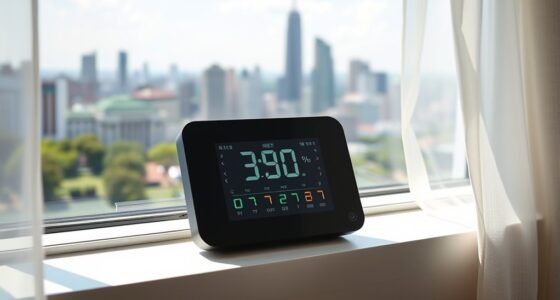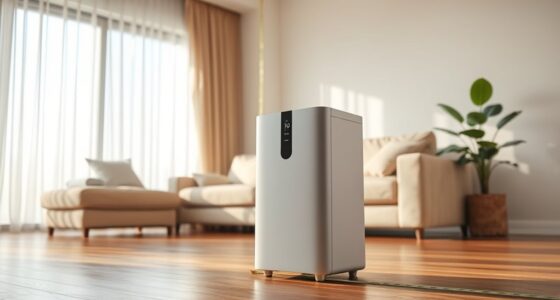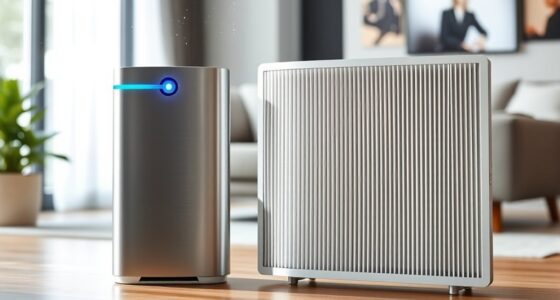

Integrating air purification into your HVAC system improves indoor air quality by actively reducing pollutants, mold, and airborne bacteria, creating a healthier environment. It lowers maintenance costs by eliminating the need for separate units and extends HVAC lifespan. You’ll also benefit from increased energy efficiency, as cleaner filters reduce system workload, lowering utility bills. Plus, it helps maintain consistent airflow and performance, ensuring safe and fresh indoor air—discover more ways this integration can benefit your home.
Key Takeaways
- Enhances indoor air quality by actively removing pollutants, allergens, and airborne bacteria.
- Lowers maintenance costs by integrating air purification, reducing need for separate units.
- Increases energy efficiency through improved air circulation and cleaner filters, reducing utility bills.
- Maintains optimal HVAC performance by preventing airflow issues and targeting specific indoor pollutants.
- Promotes healthier, safer indoor environments with cleaner air and sustainable operation.
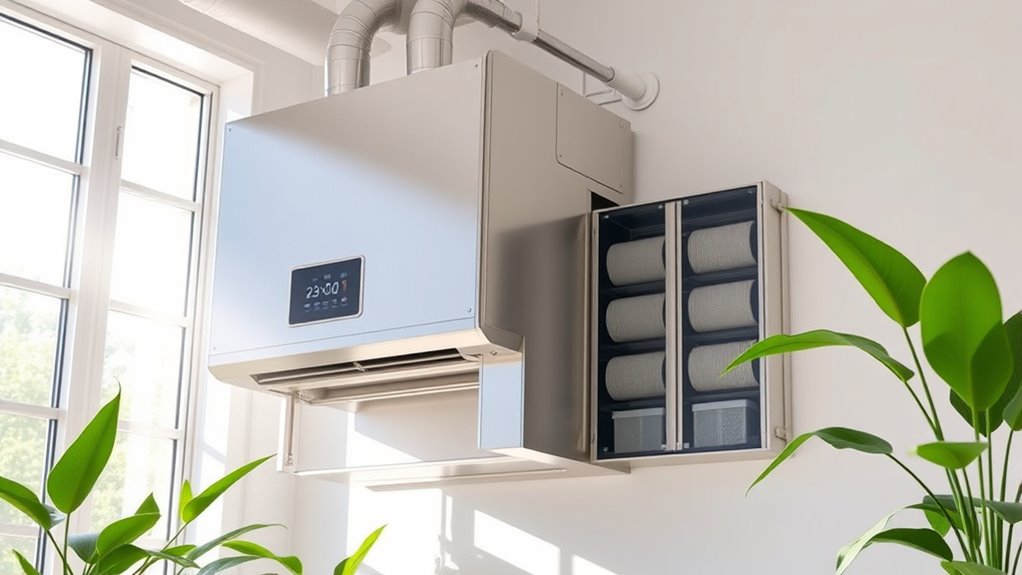
Integrating air purification with your HVAC system offers a seamless way to improve indoor air quality and create a healthier living environment. When you combine these systems, you’re not just filtering out dust and allergens; you’re actively enhancing the air you breathe daily. Better indoor air quality means fewer respiratory issues, reduced allergy symptoms, and a more comfortable home overall. Plus, it can help prevent mold growth and the buildup of airborne bacteria, which are common concerns in enclosed spaces. This integration guarantees that your home’s air stays cleaner without requiring separate units or ongoing maintenance that can be cumbersome or costly.
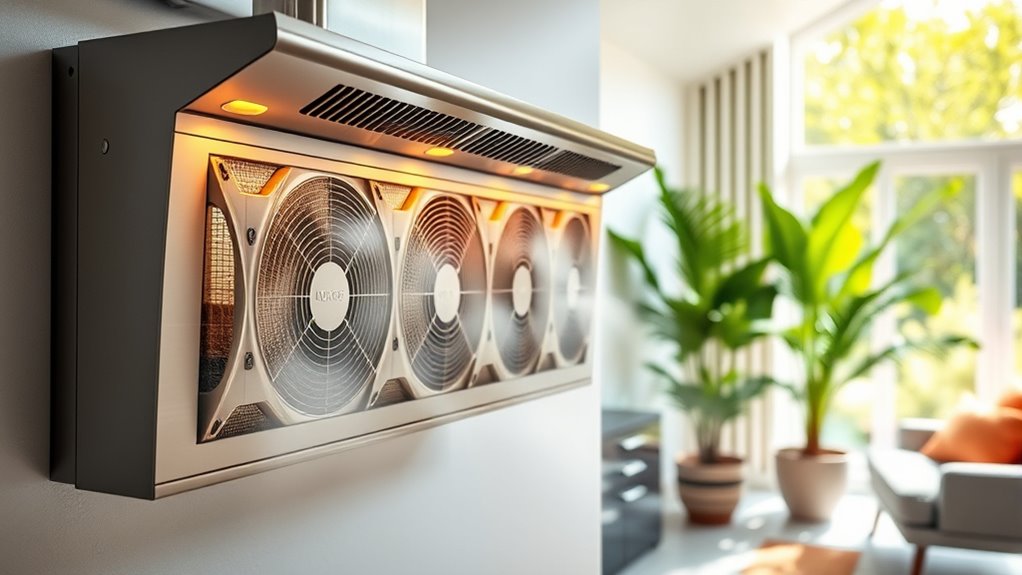
Seamlessly improve indoor air quality and reduce maintenance with integrated HVAC and air purification systems.
Another significant benefit of this integration is improved energy efficiency. When your HVAC system has a built-in air purifier, it works more effectively to circulate and clean air, reducing the burden on the system. With cleaner air filters and purifiers working in tandem, your HVAC doesn’t have to run as long or as hard to maintain a desired temperature and air quality level. This not only cuts down on energy consumption but also extends the lifespan of your HVAC components. As a result, you save money on utility bills and avoid frequent repairs or early replacements. Energy-efficient systems also contribute to a smaller carbon footprint, making your home more eco-friendly.
Furthermore, integrating air purification enhances the overall performance of your HVAC system. When air filters are optimized for both trapping pollutants and allowing proper airflow, your system maintains efficiency without sacrificing indoor air quality. This synergy prevents common problems like clogged filters or reduced airflow, which can cause your system to strain or overheat. Additionally, advanced air purification technologies can target specific indoor pollutants, such as volatile organic compounds (VOCs) or airborne pathogens, further boosting your home’s air safety. Because these systems are designed to work together, you’ll notice consistent air quality and comfort, regardless of external environmental conditions. Understanding how air quality impacts health can motivate maintenance and upgrades of your systems for optimal performance.
Incorporating air purification into your HVAC setup is a smart investment in your health and energy savings. It simplifies maintenance, minimizes the need for multiple devices, and ensures that every breath you take is cleaner and fresher. By prioritizing indoor air quality and energy efficiency through system integration, you’re creating a home environment that’s safer, more comfortable, and more sustainable for you and your family. This approach empowers you to enjoy the benefits of a healthier living space while keeping operational costs lower over time.
Frequently Asked Questions
How Does Air Purification Impact Energy Efficiency?
Integrating air purification with your HVAC system can boost energy savings by reducing strain on your system, as cleaner air means it doesn’t have to work as hard to filter out contaminants. Improved air quality also means less buildup on filters and coils, leading to more efficient operation. Consequently, you save energy, lower utility bills, and maintain a healthier indoor environment without sacrificing comfort or air quality.
Are There Specific Air Purifiers Compatible With All HVAC Systems?
Think of your HVAC system as a suit of armor, and the air purifier as a crucial shield. Not all purifiers fit every armor perfectly; compatibility challenges can arise. While some models are designed for universal compatibility, others may require filter customization or specific adapters. To guarantee seamless integration, you should choose purifiers that explicitly state compatibility with your system, or consult a professional to avoid mismatches and maximize effectiveness.
What Maintenance Is Required for Integrated Air Purification?
You need to regularly check and replace the filters in your integrated air purification system to keep it running efficiently. Typically, filters should be replaced every 3 to 6 months, depending on usage and air quality. Additionally, you might need to perform system calibration periodically to guarantee peak performance. Regular maintenance helps maintain air quality, prolongs system life, and ensures your HVAC and purifier work seamlessly together.
Can Air Purifiers Eliminate All Indoor Airborne Pollutants?
You might think air purifiers eliminate all indoor airborne pollutants, but that’s not entirely true. While they’re effective at indoor allergen removal and virus filtration, they can’t catch everything, especially larger particles or gases. However, integrating them with your HVAC system considerably reduces common pollutants, creating a healthier environment. To maximize benefits, choose high-quality units and maintain them regularly, ensuring peak performance for cleaner, safer indoor air.
How Does Integration Affect Overall HVAC System Lifespan?
Integrating air purification with your HVAC system can enhance system durability and component longevity. By reducing airborne pollutants and preventing buildup, it minimizes strain on system parts, leading to fewer breakdowns and longer lifespan. Properly maintained, this integration guarantees your system runs efficiently over time, saving you money on repairs and replacements. Overall, it promotes a more reliable, durable HVAC setup that keeps your indoor environment clean and healthy.
Conclusion
By integrating air purification with your HVAC system, you’re not just breathing cleaner air—you’re creating a sanctuary within your home. Imagine your space as a fortress, where harmful particles are the enemies, and your system is the shield defending your health. This seamless combination transforms your environment into a safe haven, offering you peace of mind and revitalized atmosphere every day. Embrace this upgrade and turn your home into a breath of fresh air you can truly trust.