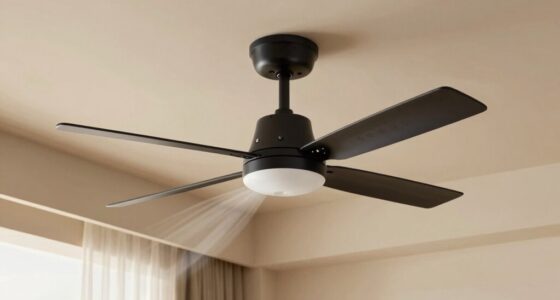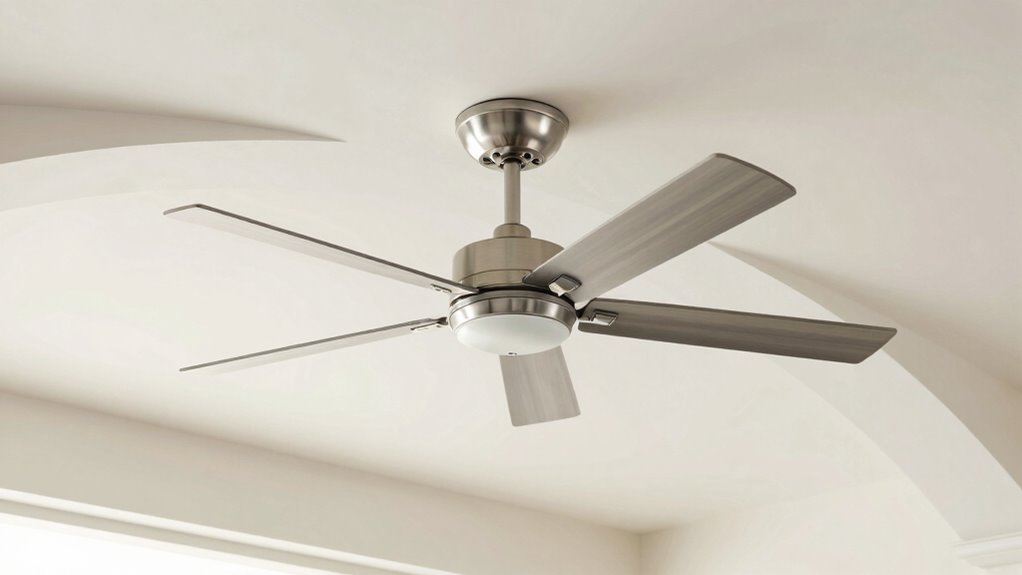

To hang a ceiling fan in a vaulted ceiling safely and effectively, selecting the right downrod length is key. Measure from the ceiling peak to where you want the blades to hang, ideally about 7 feet above the floor. Consider the ceiling’s slope and overall height to avoid wobbling or airflow issues. Properly choosing and installing the right downrod guarantees both safety and style—keep scrolling to learn how to get it just right.

Get home appliances delivered free with Prime
- Fast, free delivery on millions of items
- Prime Video, Amazon Music and more included
- Member-only deals all year
Key Takeaways
- Measure the overall ceiling height at the highest point to determine the appropriate downrod length.
- Ensure the fan blades hang about 7 feet above the floor for safety and optimal airflow.
- Account for the ceiling slope when selecting a downrod to keep blades level and balanced.
- Use a longer downrod for vaulted ceilings to compensate for increased height and slope.
- Verify the fan’s clearance and performance after installation, adjusting the downrod length as needed.
ceiling fan downrod for vaulted ceilings
As an affiliate, we earn on qualifying purchases.
As an affiliate, we earn on qualifying purchases.
Why Proper Downrod Length Matters for Vaulted Ceilings

Proper downrod length is essential for vaulted ceilings because it directly affects the ceiling fan’s performance and safety. When the downrod is too long or too short, fan blade spacing can become uneven, leading to wobbling or inefficient airflow. This improper spacing can cause noise and reduce the fan’s effectiveness. Additionally, vaulted ceilings often have a steep ceiling slope, requiring ceiling slope correction to ensure the fan hangs level and functions properly. Without the correct downrod length, the fan may not be positioned at the ideal height, diminishing airflow and increasing safety risks. Ensuring the right downrod length helps you achieve proper blade spacing, corrects ceiling slope issues, and guarantees safe, efficient operation of your ceiling fan. Understanding nail biology can also emphasize the importance of proper maintenance and care to keep fan components in optimal condition. Moreover, considering installation requirements ensures your fan setup adheres to safety standards and performs reliably over time. Proper hardware selection is also vital to maintain stability and safety in your setup.
As an affiliate, we earn on qualifying purchases.
How to Measure Your Vaulted Ceiling for the Right Downrod
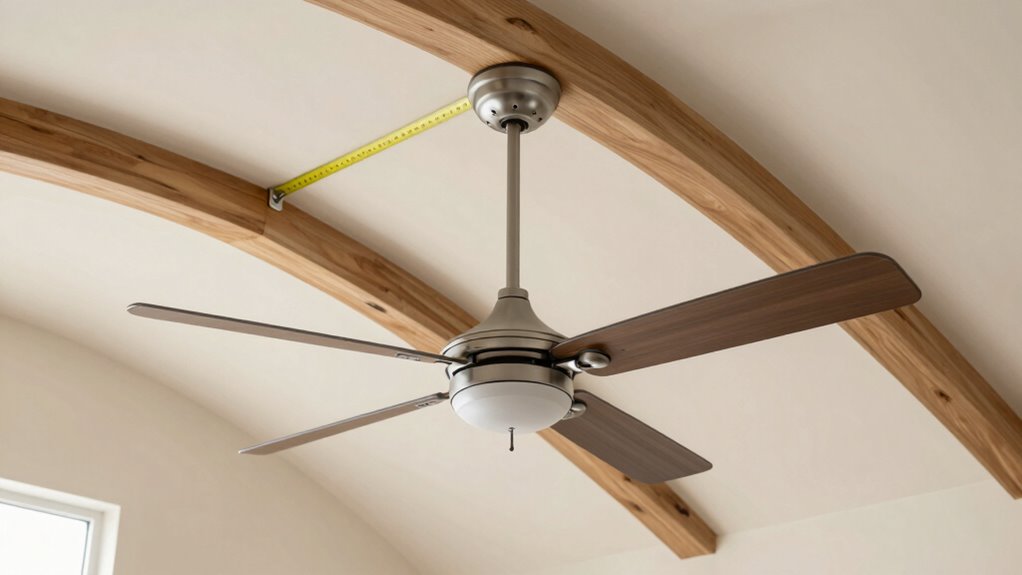
Measuring your vaulted ceiling accurately is essential to selecting the right downrod length for your ceiling fan. First, determine the overall ceiling height at the highest point. Then, decide on the desired fan placement—typically about 8-9 feet above the floor for ideal airflow. Use a tape measure to find the distance from the ceiling’s peak to where you want the fan’s blades to hang. Consider the slope of your vaulted ceiling, as it affects fan positioning. Here’s a quick visual guide:
| Ceiling Height | Fan Placement | Downrod Length |
|---|---|---|
| 12-15 ft | 8 ft above floor | Shorter (12-24 inches) |
| 15-20 ft | 9 ft above floor | Medium (24-36 inches) |
| 20+ ft | 10+ ft above floor | Longer (36+ inches) |
| Vaulted slope | Adjust accordingly | Custom length |
Additionally, understanding the proper downrod length is crucial for safety and optimal airflow performance. It’s important to also consider ceiling slope when selecting a downrod to ensure proper clearance and prevent accidents. Proper measurement techniques can help you avoid airflow inefficiencies and ensure your fan operates safely and effectively. Taking into account building codes related to ceiling fans can also help you choose the safest and most effective setup.
vaulted ceiling fan mounting kit
As an affiliate, we earn on qualifying purchases.
As an affiliate, we earn on qualifying purchases.
How to Calculate the Perfect Downrod Length for Safety and Style

To guarantee your ceiling fan is both safe and stylish, you need to calculate the perfect downrod length carefully. Start by considering your ceiling height—aim for the fan blades to hang about 7 feet above the floor for safety. Next, match the downrod length to your fan size; larger fans often need longer downrods to maintain proper clearance. Measure the height from the ceiling to where you want the blades, then subtract the fan’s mounting bracket and blade length to find the ideal downrod. Keep these tips in mind:
Calculate your downrod length to ensure safe, stylish ceiling fan installation.
- Use ceiling height as your primary guide
- Match downrod length to fan size for balance
- Ensure blades hang 7 feet above the floor
- Adjust based on vaulted ceiling angles
- Proper installation protocols are essential for safety and optimal airflow. For vaulted ceilings, it’s especially important to consider the angle of the ceiling to ensure the fan hangs correctly and functions efficiently.
This approach helps you achieve a safe, stylish look.
ceiling fan slope correction kit
As an affiliate, we earn on qualifying purchases.
As an affiliate, we earn on qualifying purchases.
Common Mistakes When Hanging Fans in Vaulted Ceilings

Hanging a ceiling fan in a vaulted ceiling can seem straightforward, but many overlook common pitfalls that compromise safety and style. One mistake is choosing a fan that’s too large or too small for the space, impacting both aesthetics and fan blade clearance. A fan that’s too big may hang too low, creating safety hazards, while a small fan might not circulate air effectively. Additionally, neglecting proper downrod length can result in inadequate fan blade clearance from the floor or ceiling, affecting performance and safety. It’s crucial to measure your ceiling height and room size accurately. Using the correct downrod length helps ensure optimal airflow and safety. Proper installation also involves considering ceiling height to prevent the fan from hanging too low or too high. Selecting the appropriate fan size based on room dimensions is essential for both efficiency and aesthetic balance. Ignoring these measurements can lead to inefficient airflow and safety concerns that could have been avoided with proper planning. To achieve a balanced look and optimal performance, consulting with a professional or using measurement tools can make all the difference. Avoid the temptation to use an inappropriate fan size or improper downrod length, as these errors can lead to inefficient airflow, safety issues, and an unbalanced look.
Step-by-Step: Installing Your Ceiling Fan at the Ideal Height

Achieving the perfect ceiling fan height requires careful planning and precise installation. First, ensure the fan blades are balanced to prevent wobbling and noise. Next, measure the distance from the ceiling to the fan blades to confirm they’re at the ideal height—typically 8-9 feet above the floor. When installing, pay close attention to electrical wiring, making sure all connections are secure and up to code. Use a sturdy ladder or scaffolding if needed. Before tightening everything, double-check the fan’s position and test the fan’s operation. Finally, verify the fan rotates smoothly without wobbling, adjusting the downrod length if necessary. This step-by-step approach guarantees your fan hangs safely and functions efficiently for years to come. Proper air fryer accessories can also enhance your installation environment by ensuring safety and stability.
Choosing the Best Material and Finish for Your Fan Downrod
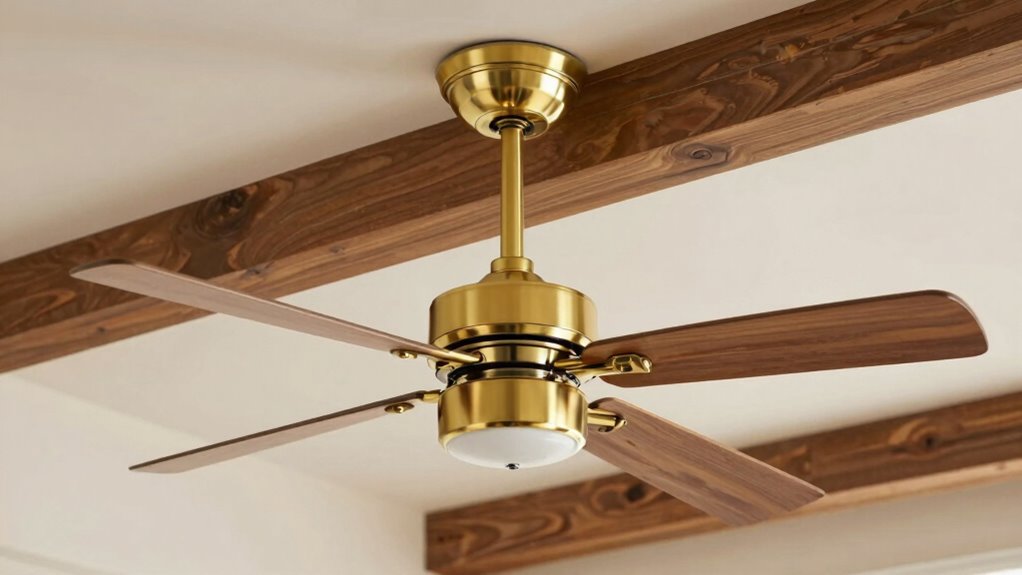
When selecting a downrod, consider how durable the material is and how it looks with your ceiling fan and room decor. You also want a finish that matches your style and is easy to preserve over time. Making the right choice ensures your fan stays attractive and functional for years to come. Additionally, choosing a material with a high strength-to-weight ratio can help support the fan effectively while minimizing unnecessary weight. This balance of strength and lightness is especially important when working with cost-effective materials, which can provide durability without significantly increasing your budget. Incorporating sound healing science principles, such as selecting materials that promote a calming environment, can also enhance the overall aesthetic and function of your space. Selecting materials that improve acoustic properties can contribute to a more peaceful and harmonious atmosphere. Furthermore, considering the environmental impact of your chosen materials can help create a space that is both sustainable and health-conscious.
Material Durability and Appearance
Choosing the right material and finish for your fan downrod is essential for both durability and aesthetic appeal. Your material selection influences how well the downrod withstands daily wear and tear while enhancing the overall look of your ceiling fan. Opt for sturdy metals like steel or brass for longevity, especially in high-traffic areas. The finish also plays a key role in appearance enhancement, giving your fan a sleek or rustic vibe depending on your style. Contemplate finishes like brushed nickel, oil-rubbed bronze, or polished chrome to match your decor. Here are some options to consider:
- Steel with powder coating for durability
- Brass for classic charm
- Matte black finish for modern appeal
- Copper for warmth and character
Material durability and finish selection are crucial factors to ensure your fan remains both functional and stylish over time. Additionally, choosing a high-quality finish can help prevent corrosion and maintain your fan’s appearance for years to come.
Finish Compatibility and Maintenance
Selecting a finish that is compatible with your ceiling fan’s existing decor and other hardware guarantees a cohesive look and easier upkeep. A matching finish helps maintain a consistent style, reducing visual clutter and simplifying cleaning. When choosing a material and finish, consider how it will fare over time—some finishes resist tarnishing, scratches, and dust better than others, making maintenance easier. Keep in mind that the downrod’s finish can impact your fan motor’s performance; a well-maintained finish prevents corrosion that could affect motor operation. Additionally, a balanced blade setup relies on a stable, corrosion-free downrod to minimize wobbling. Investing in a durable, easy-to-clean finish ensures your fan remains attractive and functional, reducing the need for frequent repairs and keeping your vaulted ceiling space looking polished.
Frequently Asked Questions
Can I Use a Longer Downrod for Better Airflow?
Yes, you can use a longer downrod for better airflow, but make sure it doesn’t diminish fan blade clearance. Proper clearance ensures the fan operates safely and efficiently. A longer downrod can help optimize airflow in vaulted ceilings by positioning the fan closer to the center of the room. Just be cautious not to hang it too low, which could interfere with movement or cause safety issues.
How Does Ceiling Height Affect Fan Blade Clearance?
Ceiling height greatly influences fan blade clearance, and you need to guarantee proper spacing. In tall ceilings, like vaulted ones, the blades should hang at least 8-10 feet above the floor for ideal airflow and safety. If your ceiling is higher, you might need a longer downrod to maintain this clearance, preventing the fan from wobbling and ensuring efficient circulation without obstructions.
Are Adjustable Downrods Better for Vaulted Ceilings?
Yes, adjustable downrods are better for vaulted ceilings because they offer flexible mounting options, helping you achieve proper fan blade alignment. With an adjustable downrod, you can set the fan at the ideal height to guarantee ideal air circulation and safety. This versatility makes installation easier and ensures your fan functions efficiently, even with high or angled ceilings. You’ll get better performance and a cleaner look with adjustable options.
What Safety Precautions Should I Take During Installation?
During installation, prioritize electrical safety by turning off the power at the circuit breaker before starting. Use a sturdy, proper ladder to reach high ceilings safely, ensuring it’s stable and positioned correctly. Wear gloves and safety goggles to protect yourself from sharp edges or debris. Double-check all connections, and if you’re unsure, consult a professional. Taking these precautions helps prevent accidents and guarantees a safe, successful fan installation.
How Often Should I Inspect My Fan’s Downrod for Wear?
Your fan’s downrod is like the backbone of your ceiling fan, so regular wear inspection is key. You should check it every 6 to 12 months during routine fan maintenance. Look for signs of rust, cracks, or looseness. If you notice any issues, replace the downrod immediately to keep your fan safe and operating smoothly. Consistent inspection guarantees your ceiling fan remains a reliable, cool companion in your space.
Conclusion
So, you’ve nailed the perfect downrod length—who knew hanging a ceiling fan could be so complicated? Ironically, the secret to cool comfort is just a few measurements away, yet many stumble here. Now, with your new knowledge, you’ll avoid the pitfalls of awkward airflow and unsafe setups. Just remember: the right downrod isn’t just about style, it’s about making sure you don’t turn your fan into a dangerous, awkward centerpiece. Happy hanging!
NFL season / tailgating Picks
team gear
As an affiliate, we earn on qualifying purchases.