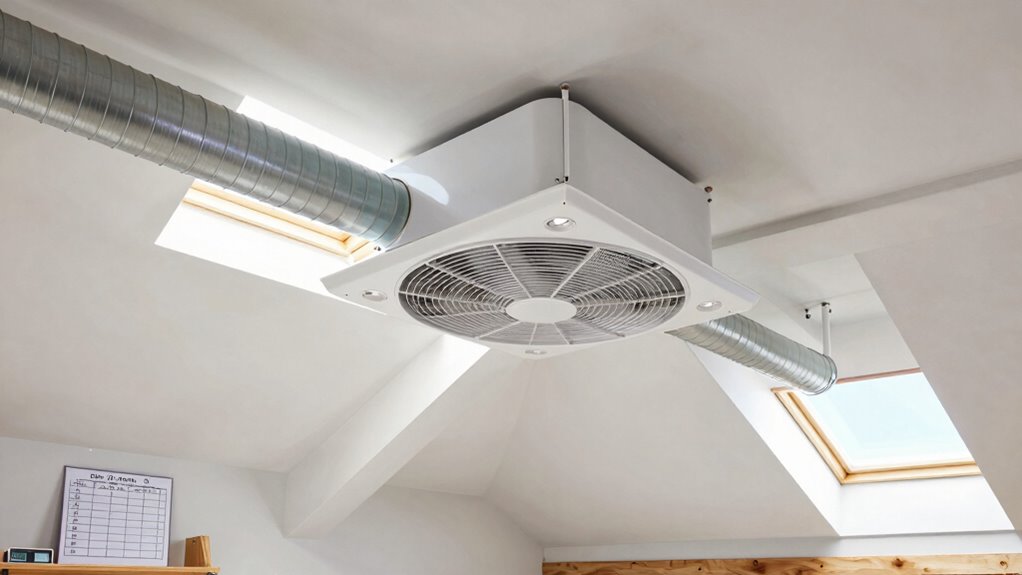
If your whole-house fan is too small, it won’t provide the cooling or ventilation you need, wasting your money and energy. To fix this, you should calculate your home’s total air volume and choose a fan that matches that capacity, ensuring it handles 15-20 air changes per hour. Proper sizing improves comfort and efficiency. Keep going to find out how to select the right fan size for your home’s needs.

Get home appliances delivered free — and shop member deals
- Fast, free delivery on millions of items
- Access to Prime Big Deal Days deals on October 6–7
- Prime Video, Amazon Music and more included
Key Takeaways
- Properly calculate your home’s total air volume to select a fan that provides 15-20 air changes per hour.
- Measure square footage and ceiling height accurately for precise fan sizing.
- Ensure the fan’s airflow capacity matches your home’s air exchange needs to prevent ineffective ventilation.
- Upgrade to a larger capacity fan if current airflow is insufficient, verifying ductwork compatibility.
- Consult a professional to determine the correct size and ensure proper installation for optimal performance.
As an affiliate, we earn on qualifying purchases.
Why Choosing the Right Whole-House Fan Size Matters

Have you ever considered how the size of your whole-house fan directly impacts its effectiveness? When selecting a fan, proper sizing guarantees ideal airflow and energy efficiency. If the fan is too small, it won’t move enough air to cool your home effectively, leading to wasted energy and higher costs. Conversely, a fan that’s too large can cause excessive noise and strain your ductwork design, increasing installation costs and the risk of damage. Correct sizing helps your system operate smoothly, reducing wear and tear. It also minimizes unnecessary expenses by preventing overbuilt systems. Taking the time to choose the right size ensures you get the best cooling performance without overspending on installation or future repairs. Proper sizing truly makes all the difference in your whole-house fan’s efficiency. Additionally, understanding the airflow capacity of your fan ensures optimal performance and energy savings. When selecting the right size, considering your home’s cooling load can significantly improve overall comfort and system longevity. To achieve proper fan sizing, consulting with HVAC professionals or using precise calculations can make all the difference in your home’s comfort. Properly matching fan capacity to your home’s specific needs is essential for maximizing efficiency and comfort. Recognizing the importance of correct fan sizing can help prevent costly mistakes and ensure your cooling system functions as intended.
best whole house fans for energy efficiency
As an affiliate, we earn on qualifying purchases.
As an affiliate, we earn on qualifying purchases.
How to Determine the Correct Fan Size for Your Home

To find the right fan size, start by calculating your home’s air volume. Then, match that number to a fan with an appropriate airflow rate to guarantee efficient cooling. Getting these details right helps you choose a fan that works effectively for your space. Additionally, understanding ventilation efficiency can help optimize overall home comfort and air quality. Recognizing signs of inadequate airflow ensures you select a fan that truly meets your home’s needs for optimal performance. Proper sizing also minimizes energy consumption, leading to better efficiency and cost savings over time. Considering environmental considerations can also support sustainable and eco-friendly home cooling solutions. Moreover, selecting a fan with appropriate airflow capacity ensures reliable performance and longevity.
Calculate Home’s Air Volume
Determining your home’s air volume is a crucial step in selecting the right-sized whole-house fan. To do this, measure the total living space in cubic feet—multiply the square footage by ceiling height. For example, a 2,000-square-foot home with an 8-foot ceiling has 16,000 cubic feet of air. Knowing this helps you estimate how much air needs to be exchanged during ventilation. Proper calculation improves ventilation efficiency, ensuring your fan can handle the volume and promote effective air exchange. Remember, a fan that’s too small won’t circulate enough air, reducing cooling and fresh air supply. Accurate air volume assessment guarantees you pick a fan capable of optimizing airflow, maximizing comfort, and maintaining healthy indoor air quality.
Match Fan Airflow Rate
Once you’ve calculated your home’s total air volume, the next step is to match that with an appropriate fan airflow rate. This guarantees ideal ventilation efficiency without over- or- under-ventilating your space. A fan that’s too small won’t circulate enough air, leading to poor cooling and stale air. Conversely, an oversized fan can create excessive noise levels and waste energy. To find the right size, aim for a fan with an airflow rate that can move 15 to 20 air changes per hour based on your home’s volume. This balance maximizes ventilation efficiency while keeping noise levels manageable. Understanding airflow rate is essential for selecting the right fan size and ensuring optimal home ventilation. Proper matching guarantees your whole-house fan works effectively without unnecessary noise or inefficiency. Additionally, selecting a fan with the appropriate airflow capacity can help prevent energy waste and prolong the lifespan of your equipment. For accurate sizing, consider consulting ventilation standards to meet your home’s specific needs.
As an affiliate, we earn on qualifying purchases.
Signs Your Whole-House Fan Is Too Small and Ineffective
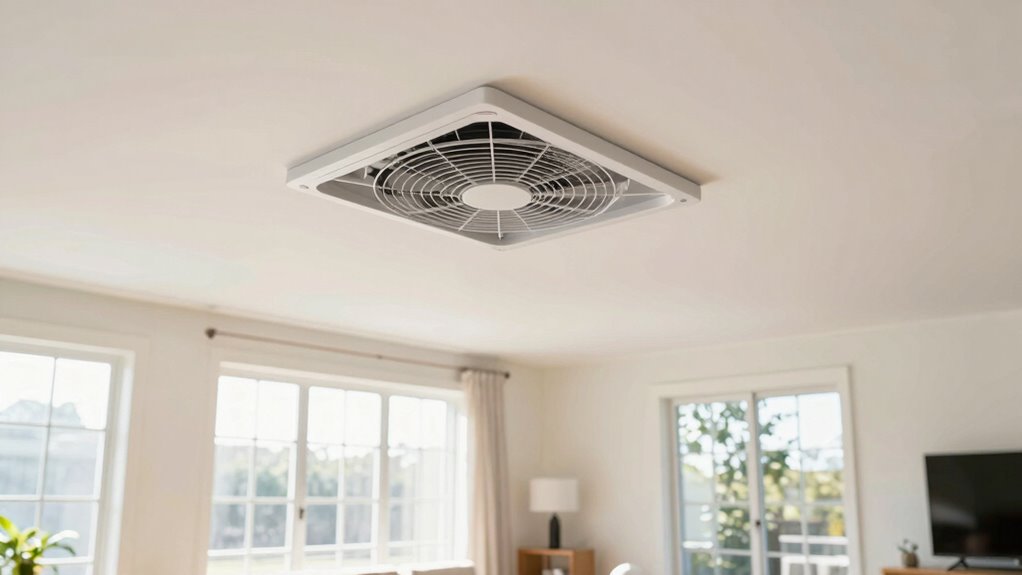
If your fan isn’t moving enough air, you’ll notice poor airflow throughout your home. You might also find that indoor temperatures stay high even when the fan runs constantly. These signs often mean your fan is too small to handle your home’s cooling needs. Using the correct whole-house fan sizing can significantly improve airflow and temperature control.
Poor Airflow Performance
A whole-house fan that’s too small won’t move enough air to effectively cool your home or improve ventilation. You’ll notice poor airflow performance, with stale air lingering and insufficient cooling during warmer months. This limits the fan’s ability to exchange indoor air with fresh outdoor air, reducing overall energy efficiency. Because the fan struggles to circulate air properly, you might also experience higher noise levels as it works harder without delivering the desired results. This inefficient operation wastes energy and can be frustrating, making your home feel less comfortable. If your fan isn’t delivering a noticeable breeze or invigorating airflow, it’s a clear sign it’s undersized and not suited for your space. Proper sizing ensures ideal airflow, energy savings, and quieter operation. Proper fan sizing is essential for optimal performance and energy efficiency. To achieve the best results, it’s important to consider airflow capacity when selecting a fan for your home.
Persistent Indoor Heat
When your whole-house fan is too small to handle your home’s airflow needs, you might notice persistent indoor heat even after running it for extended periods. This inefficiency hampers humidity control, leaving your home feeling stuffy and uncomfortable. The fan struggles to exchange indoor air effectively, so heat builds up instead of dissipating. You may also experience increased noise levels, as the fan runs constantly at higher speeds to compensate, creating disruptive sounds. If you find that the indoor temperature remains high despite prolonged operation, your fan isn’t large enough to manage your home’s cooling needs. Upgrading to a properly sized fan will improve airflow, better regulate humidity, and reduce noise, making your home more comfortable and energy-efficient. Additionally, selecting a fan with the correct airflow capacity ensures optimal performance and long-term efficiency.
As an affiliate, we earn on qualifying purchases.
What Are Your Options if Your Fan Is Too Small?

Noticing that your whole-house fan isn’t providing enough airflow can be frustrating. If your fan is too small, you might consider replacing it with a larger model. Keep in mind, a bigger fan can increase fan noise, so check noise levels before buying. Upgrading to a higher-capacity fan may also involve higher installation costs, especially if additional modifications are needed. Alternatively, you could boost airflow by improving attic ventilation or adding additional fans in strategic locations. Using multiple smaller fans can sometimes be more cost-effective and quieter than a single oversized unit. Remember, proper whole-house fan sizing is key—oversized fans can create unnecessary noise and energy use, while undersized fans just won’t cut it. Ensuring the fan size aligns with your home’s design and airflow requirements is crucial for efficiency. Proper whole-house fan sizing is essential to ensure optimal airflow without unnecessary noise or energy consumption. Additionally, considering battery inverter generators for backup power can help support your home’s ventilation needs during outages, ensuring continuous airflow when needed. When selecting a fan, consider airflow capacity to match your specific home size and ventilation needs for the best results. Evaluating ventilation strategies can also help optimize airflow and improve overall home comfort. Weigh your options carefully to find the best balance for your home’s needs.
How to Choose the Best Fan Size for Future Cooling Needs

Choosing the right fan size now can guarantee your home stays comfortable as your cooling needs change over time. To select the best size, consider your future plans, such as adding rooms or upgrading insulation. Larger fans may cost more initially but improve energy efficiency in the long run, reducing your cooling bills. When planning for DIY installation, ensure the fan’s capacity matches your home’s square footage and airflow requirements. Keep in mind that a fan that’s too small won’t cool effectively, while an oversized fan may waste energy. To make an informed decision:
- Evaluate your future home expansion plans
- Consider energy-efficient models for long-term savings
- Match fan capacity with your home’s size and layout
- Prioritize ease of DIY installation for a smoother setup
- Recognize aromatherapy benefits that can complement traditional cooling methods and enhance overall comfort during seasonal changes.
FAQs About Whole-House Fan Sizing and Upgrades

Have questions about selecting the right size or upgrading your whole-house fan? Proper fan installation is vital to guarantee maximum energy efficiency and cooling performance. If your current fan feels ineffective or causes noise issues, upgrading to a larger size might be necessary. Keep in mind, a fan that’s too small won’t move enough air, wasting energy and failing to cool your home properly. When considering upgrades, check if your existing ductwork and vents can support a larger fan. Also, consult with professionals to verify proper installation, maximizing energy savings and comfort. Remember, correctly sizing and installing your fan not only improves energy efficiency but also extends its lifespan, giving you better cooling and lower utility bills in the long run.
Frequently Asked Questions
Can a Larger Fan Increase Energy Costs Significantly?
A larger fan can increase your energy consumption and cost implications if it runs longer or more frequently. While it might cool your home more effectively, it uses more electricity, which raises your energy bills. To avoid unnecessary costs, choose a fan appropriately sized for your space. Proper sizing ensures efficient operation, balancing comfort and energy efficiency, so you don’t pay more than necessary for cooling.
How Long Does It Take to Install a New or Upgraded Fan?
You’ll typically spend a few hours on the installation timeline for a new or upgraded fan. The process involves removing the old unit, aligning the new fan with existing ductwork, and completing electrical connections. Depending on your home’s setup and the complexity of upgrade procedures, it can take anywhere from 2 to 4 hours. For a smooth install, consider hiring a professional to guarantee everything’s done correctly and efficiently.
Are There Specific Brands Known for Better Sizing Accuracy?
Brilliant brands boast better sizing accuracy, so you can confidently select a fan that fits your home’s needs. Look for reputable brands like QuietCool and Delta Breez, known for their reliability and precise sizing. These brands prioritize brand reputation and detailed specifications, making sure your fan is neither too small nor too large. Trusting these top-tier brands helps ensure efficient cooling, energy savings, and satisfied comfort without guesswork or wasted effort.
What Maintenance Is Required for Optimal Fan Performance?
You should regularly replace the filter to guarantee ideal airflow and maintain good indoor air quality. Cleaning and inspecting the fan blades also help maximize airflow, preventing dust buildup that can reduce efficiency. Check the motor and electrical connections periodically, making sure they’re secure and functioning correctly. By staying on top of filter replacement and keeping the components clean, you’ll keep your whole-house fan running smoothly and efficiently.
How Do Climate Conditions Influence the Ideal Fan Size?
Ever wondered how climate impact affects your fan size? Regional variations like hot, humid summers or cold, dry winters require you to select a fan that matches your climate. In warmer climates, opt for a larger fan to maximize cooling, while cooler regions might need a smaller one. Understanding these regional differences ensures your whole-house fan efficiently handles ventilation needs, providing comfort without wasting energy.
Conclusion
Choosing the right whole-house fan size makes all the difference in cooling efficiency. For example, if you install a too-small fan, you might spend more on energy without feeling cooler. Imagine upgrading to a properly sized fan and instantly noticing better airflow and comfort. Don’t settle for ineffective solutions—measure carefully and select your fan wisely. A properly sized fan transforms your home’s comfort, saving you money and frustration in the long run.
Fall yard work Picks
leaf blowers
As an affiliate, we earn on qualifying purchases.