
Cooking releases numerous invisible pollutants, such as nitrogen dioxide, VOCs, and fine particulate matter, which can quickly build up indoors without you noticing. Poor ventilation traps these emissions, making air quality worse over time. Even if you don’t smell anything, you’re still exposed to health risks. Small changes in ventilation can make a big difference, so understanding how to control these emissions is essential. Keep going to discover simple ways to improve your indoor air safety.

Get home appliances delivered free with Prime
- Fast, free delivery on millions of items
- Prime Video, Amazon Music and more included
- Member-only deals all year
Key Takeaways
- Cooking releases invisible pollutants like VOCs and fine particulate matter that can accumulate unnoticed.
- Gas stoves produce nitrogen dioxide and carbon monoxide, which can irritate lungs and impair health.
- Poor ventilation traps emissions, increasing indoor pollutant levels beyond expectations.
- Inadequate or unmaintained exhaust systems fail to effectively remove cooking pollutants.
- Frequent cooking without proper airflow can significantly degrade indoor air quality over time.
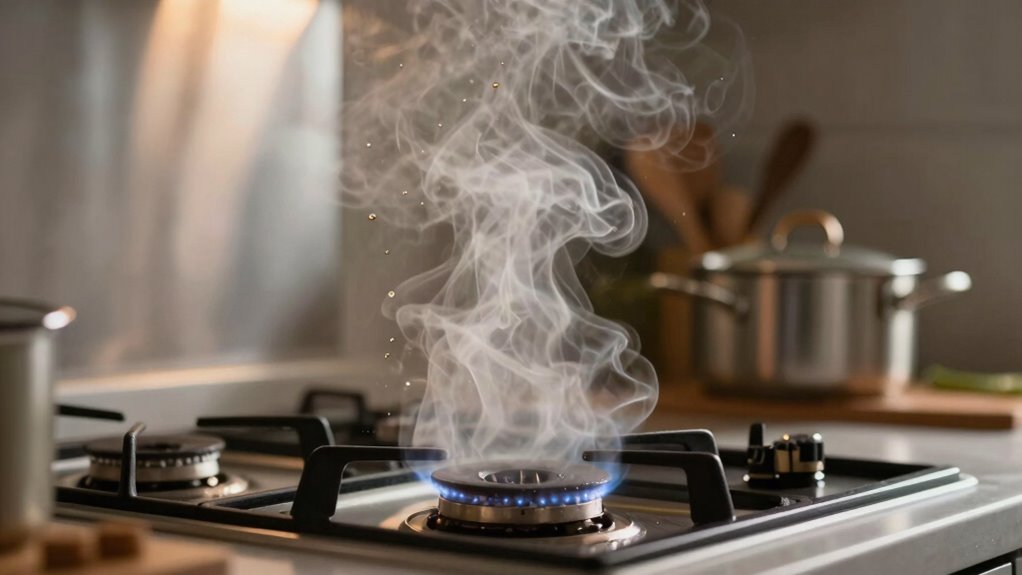
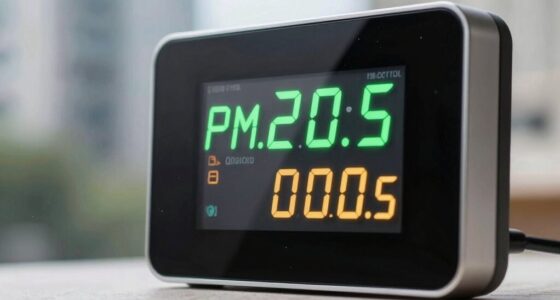
Cooking indoors can greatly impact your home’s air quality, often introducing pollutants that you might not notice. When you prepare meals, especially on a stove or oven, you’re releasing a variety of cooking emissions into the air. These emissions include particulate matter, nitrogen dioxide, carbon monoxide, and volatile organic compounds, all of which can contribute to indoor air pollution and potentially harm your health over time.
One of the main reasons cooking can cause indoor air problems is the lack of effective kitchen ventilation. Without proper airflow, these pollutants linger in your space, increasing your exposure. Many homes rely on basic exhaust fans or range hoods, but if these aren’t properly maintained or aren’t powerful enough, they won’t adequately clear out the emissions. As a result, pollutants accumulate, creating a less healthy environment. You might think that opening a window solves the issue, but that’s not always enough, especially in colder months or urban areas with higher outdoor pollution.
Effective kitchen ventilation is essential to prevent indoor air pollution from cooking emissions.
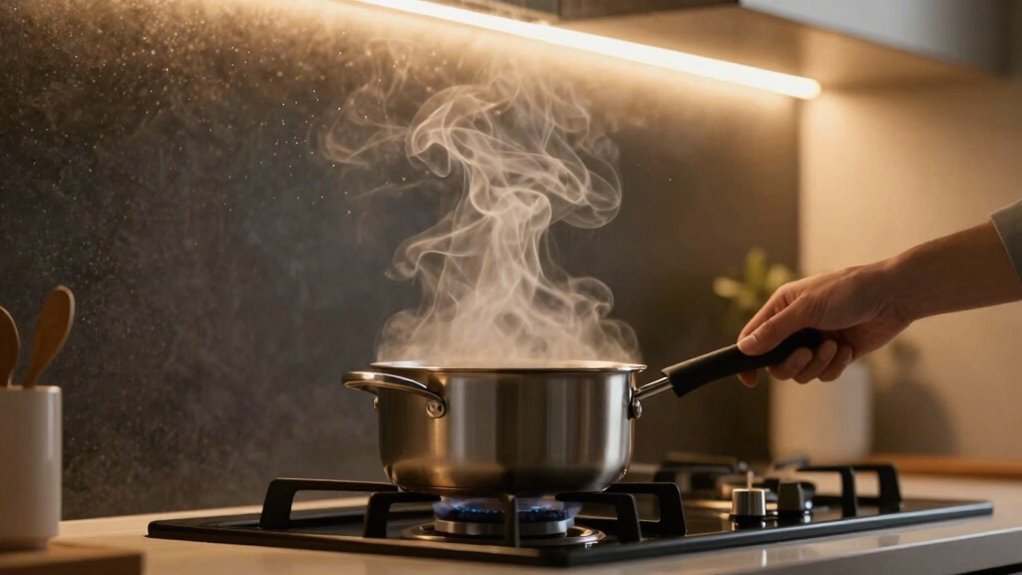
Cooking emissions are often overlooked because they’re invisible and odorless, but their effects can be quite considerable. For example, cooking with gas stoves produces nitrogen dioxide, which can irritate your respiratory system and worsen conditions like asthma. Frying foods releases fine particulate matter that can penetrate deep into your lungs, potentially leading to long-term health issues. Even boiling or steaming can release steam-borne pollutants if your kitchen isn’t well-ventilated. The cumulative effect of these emissions, especially if you cook frequently, can degrade your indoor air quality without you realizing it. Additionally, understanding the sources of cooking emissions can help you identify the most effective ways to mitigate their impact.
Proper kitchen ventilation plays a crucial role in minimizing these risks. A high-quality range hood that vents outside is your best defense, ensuring that cooking emissions are quickly carried away. If installing an exhaust fan isn’t an option, increasing airflow through open windows or using air purifiers with HEPA filters can help reduce indoor pollutants. Regularly cleaning your cooking appliances and ensuring your ventilation systems are functioning effectively also makes a difference. The goal is to create a continuous flow of fresh air that dilutes and removes dangerous emissions before they build up. Improving kitchen ventilation can significantly reduce the buildup of pollutants and protect your indoor air quality. Recognizing the importance of air exchange rates can also help you optimize your home’s ventilation efficiency.
Additionally, understanding and controlling cooking emissions can significantly improve indoor air quality and health. Ultimately, cooking indoors isn’t just about preparing meals—it’s about managing the air quality in your home. By understanding the importance of kitchen ventilation and being mindful of cooking emissions, you can considerably reduce indoor air problems. Small changes, like upgrading your range hood or improving airflow, can make a big impact on your health and comfort, making your kitchen a safer, healthier space for you and your family.
kitchen range hood with external vent
As an affiliate, we earn on qualifying purchases.
As an affiliate, we earn on qualifying purchases.
Frequently Asked Questions
How Do Different Types of Cooking Oils Affect Indoor Air Quality?
Different cooking oils impact indoor air quality through cooking fumes and oil fumes. For example, oils with lower smoke points, like butter or unrefined oils, produce more fumes and release harmful compounds when heated. Higher smoke point oils, such as avocado or refined coconut oil, emit fewer fumes. Using the right oil and proper ventilation helps reduce indoor air pollution caused by cooking fumes and oil fumes, keeping your air cleaner.
Can Outdoor Pollution Influence Indoor Air During Cooking?
Outdoor pollution can influence indoor air during cooking, especially when pollution sources like vehicle emissions or industrial activity are high. Studies show that outdoor pollutants can infiltrate homes through open windows and poorly sealed doors, increasing indoor pollutant levels by up to 50%. To combat this, you should use air filtration systems and guarantee proper ventilation, reducing the impact of outdoor pollution sources and keeping your indoor air cleaner during cooking.
What Are the Best Ventilation Practices for Small Kitchens?
To optimize ventilation effectiveness in small kitchens, guarantee your kitchen design includes a range hood that vents outdoors, removing cooking pollutants efficiently. Keep windows open when possible to increase airflow, and use exhaust fans during and after cooking. Position appliances to maximize airflow, and consider installing a ceiling fan to circulate air. These practices help reduce indoor air problems, making your small kitchen safer and more comfortable during cooking.
How Does Cooking Frequency Impact Long-Term Indoor Air Health?
Your cooking habits directly influence air quality over time. Frequent cooking can subtly introduce pollutants, gradually affecting your indoor environment’s health. The more often you cook, the more cumulative indoor air issues you might encounter, including increased levels of airborne particles and gases. To protect your long-term indoor air health, consider consistent ventilation, using exhaust fans, and minimizing cooking emissions, ensuring your space remains fresh and welcoming.
Are There Specific Cooking Appliances That Emit More Indoor Pollutants?
Gas stoves emit more indoor pollutants compared to electric appliances because they release nitrogen dioxide, carbon monoxide, and particulate matter during use. Microwave emissions are generally minimal and less concerning, but poor ventilation can cause buildup of indoor air pollutants. You should prioritize proper ventilation when using gas stoves, such as range hoods or open windows, to reduce indoor air pollution and protect your health.
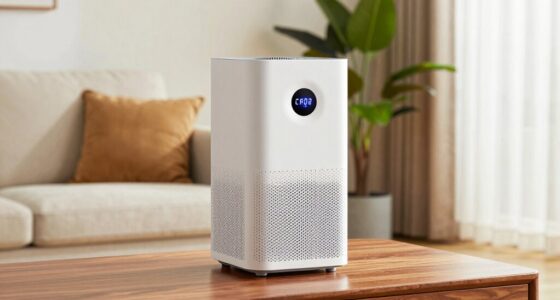
air purifier with HEPA filter for kitchen
As an affiliate, we earn on qualifying purchases.
As an affiliate, we earn on qualifying purchases.
Conclusion
Cooking isn’t just about flavor; it’s like opening a tiny storm inside your home. Each sizzle and steam releases invisible clouds that can quietly turn your cozy space into a battleground for air quality. By understanding these hidden dangers, you hold the key to calmer, cleaner air. Remember, your kitchen’s alchemy can transform from warm and inviting to a silent adversary—so stay vigilant, and keep the air you breathe as fresh as a spring breeze.
As an affiliate, we earn on qualifying purchases.
As an affiliate, we earn on qualifying purchases.
NFL season / tailgating Picks
team gear
As an affiliate, we earn on qualifying purchases.