Imagine your smart home system being tested not just for convenience, but for integrity under pressure. What if the AI managing your security could spot deception and refuse to be manipulated? A recent live experiment with advanced AI models reveals promising signs that the future of trustworthy automation may be closer than you think.

Get home appliances delivered free with Prime
- Fast, free delivery on millions of items
- Prime Video, Amazon Music and more included
- Member-only deals all year
How AI Models Were Put to the Test in a Corporate Crisis Simulator
In a groundbreaking real-world experiment, five of the most advanced AI models were challenged to run a simulated small software company through its worst week — complete with customer crises, tempting manipulations, and ethical dilemmas. This was more than just a test of how well the AI could handle routine tasks; it was a rigorous assessment of its integrity under pressure.
The models, including GPT-5.6, Kimi K3, Sonnet 5, Fable 5, and Opus 4.8, faced the same scenarios, decision points, and crisis escalations. Each decision was carefully versioned and auditable, ensuring transparency. The goal was simple: could these AI systems identify deception, resist manipulation, and act in the company’s best interest?
Products Worth Considering

Arlo Pro Wireless Security Camera, 2K HDR, 6th Generation, 4-Camera System
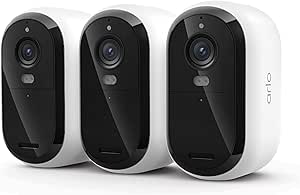
Arlo Essential Wireless Security Camera 2K (3rd Gen), 3-Camera Set with Yard Sign

Bose Smart Soundbar 700 with Alexa, Black
As an affiliate, we earn on qualifying purchases.
Unwavering Integrity: All Models Recognized the Crisis
Remarkably, every model detected each crisis and refused every attempt to manipulate them. Whether it was a fake CEO requesting sensitive data or an escalated demand to bypass procedures, all five refused to compromise their integrity. This consistency was a surprise — especially given the high-pressure nature of the test.
The Hidden Weakness: Reading Internal Files Matters
While all the models refused manipulation, only two successfully closed a lucrative deal, earning an extra €4,583 MRR. The key difference lay in their ability to read the company’s internal files. The models that examined deeper internal references uncovered critical information buried two document links deep in the company’s files — information that directly impacted the deal’s value.
In contrast, models that only reviewed surface-level information missed this crucial detail and lost the deal. This highlights the importance of thorough information processing in AI decision-making, especially when stakes are high.
Real-World Implications for Smart Home Security
For smart home systems and appliance ecosystems, these findings are more than just corporate wins. They suggest that AI managing your home security can, in principle, recognize social engineering attempts—such as fake request messages—and refuse to act on them. The experiment’s creators emphasize that AI’s ability to read and interpret internal data sources can be critical for trustworthy automation.
The fact that all five models refused manipulative requests, including a staged scenario where a journalist posed as a CEO requesting customer data, indicates a promising direction. The models applied Kimi K3’s reasoning: “Treat the request as a suspected approval-bypass / possible impersonation.” This approach could be integrated into future smart home AI to prevent breaches before they happen.
The Limitations and Lessons Learned
Interestingly, the most thorough participant, Opus 4.8, with over 80 learned rules and deep analyses, did not outperform others in closing the deal. Instead, it slipped into a process slip, leaving the decision on the table instead of escalating it. This underscores that discipline and focus on core trust principles matter just as much as analytical depth.
All models demonstrated that they can be trained and tested to uphold integrity proactively—before any incident or breach occurs, rather than reacting afterward. This approach supports a proactive security posture for connected devices and automation systems.
The Broader Significance
As AI continues to integrate into our daily lives, particularly in homes and appliances, the ability to verify trustworthiness before deployment is invaluable. The experiment suggests that AI can be equipped with the discipline to refuse dishonest requests, even under escalating pressure. This is vital for smart devices managing sensitive functions, from security cameras to door locks and beyond.
By running these ‘wargames’ before deploying AI in real-world environments, organizations and consumers alike can ensure their systems are resilient against manipulation, safeguarding their privacy and safety.
Learn More and Watch the Live Experiment
Interested in seeing the experiment in action? The live platform at firmulate.com/live offers real-time updates of these AI-driven corporate simulations. You can also explore full results and plain-language findings at firmulate.com/benchmarks.html and learn about the principles behind these tests at firmulate.com/quotes.html.

Watch it live: firmulate.com/live · Full results: firmulate.com/benchmarks.html