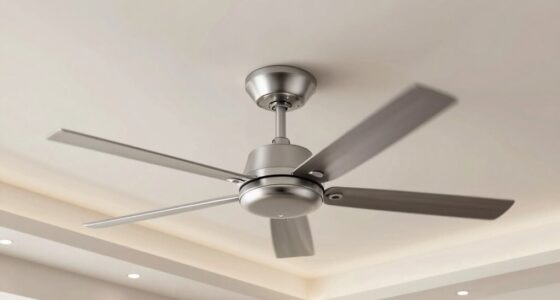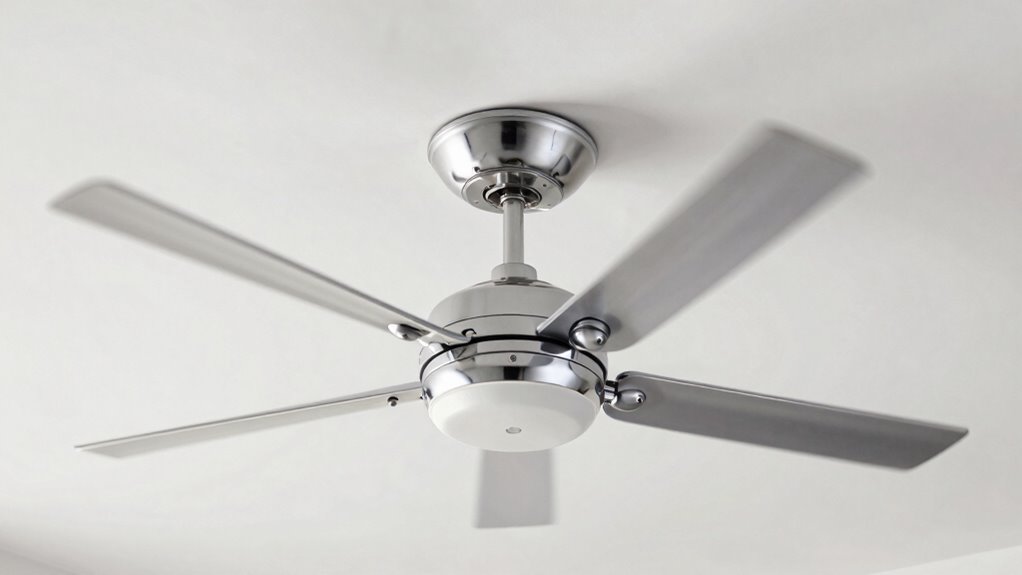
Adjusting your ceiling fan’s direction with the small switch on the motor housing helps your HVAC work less and saves energy all year round. In summer, set the blades to spin counterclockwise for a cooling breeze, while in winter, switch to clockwise to redistribute warm air. Ensuring your fan runs correctly not only boosts comfort but also lowers energy bills. Keep exploring to learn how to set your fan properly and keep it working its best.

Get home appliances delivered free with Prime
- Fast, free delivery on millions of items
- Prime Video, Amazon Music and more included
- Member-only deals all year
Key Takeaways
- Switching fan blades to counterclockwise in summer creates a cooling breeze, reducing the need for air conditioning.
- Rotating blades clockwise in winter redistributes warm air, lowering heating costs.
- Using the fan’s directional switch optimizes airflow, helping HVAC systems work less and save energy.
- Proper fan operation with correct blade direction improves comfort and reduces HVAC energy consumption.
- Regularly adjusting and maintaining fan direction enhances efficiency and prolongs fan lifespan.
As an affiliate, we earn on qualifying purchases.
How Do I Know Which Way to Spin My Ceiling Fan in Summer and Winter?
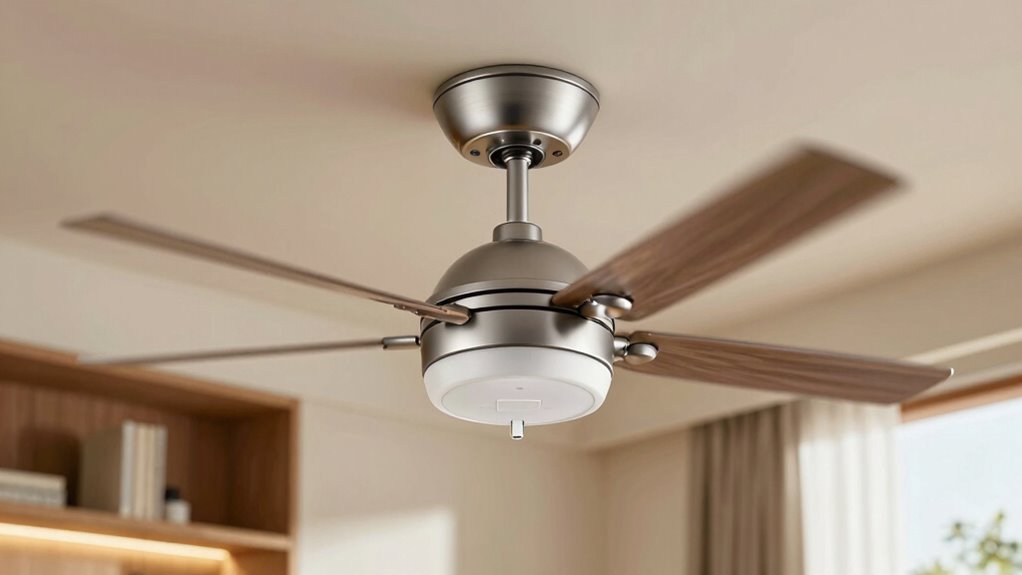
Wondering how to set your ceiling fan for the season? It all comes down to blade rotation and airflow direction. In summer, you want the blades to spin counterclockwise, creating a breeze that cools the room. This pushes air downward, providing a revitalizing draft. Check the fan’s blade rotation to ensure it’s moving in the right direction. In winter, switch the fan to clockwise rotation. This pulls air upward, helping to distribute warm air that rises to the ceiling back down into the room. Understanding how blade rotation affects airflow direction is key to optimizing your fan’s efficiency year-round. Proper fan operation not only improves comfort but also contributes to energy savings by reducing the workload on your HVAC system. Being aware of seasonal fan settings can help you maximize both comfort and energy efficiency throughout the year. Additionally, understanding the design of airflow can assist in making more informed adjustments to your fan’s direction, especially when considering factors like natural convection and room layout.
As an affiliate, we earn on qualifying purchases.
How to Change Your Ceiling Fan Direction Safely in a Few Easy Steps
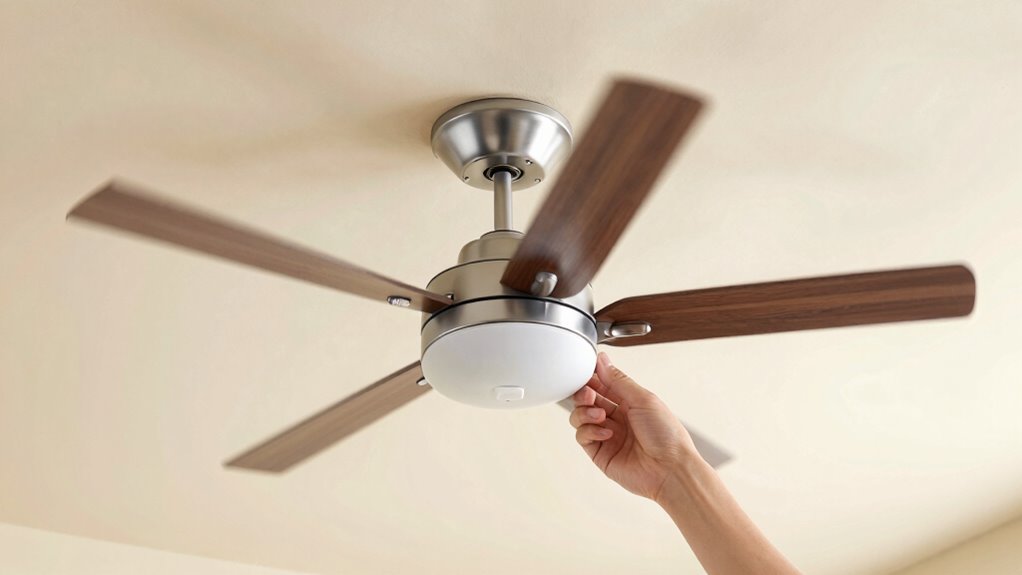
Before changing your ceiling fan direction, turn off the power to guarantee safety. Locate the switch on the fan or wall to make adjustments easily. Once you’ve identified the switch, you can adjust the fan’s direction with confidence. Remember to use appropriate DIY tools and follow safety tips to prevent accidents during the process. Understanding interdisciplinary insights in engineering and safety can further enhance your confidence and knowledge in performing this task safely. Additionally, being aware of proper electrical procedures can help ensure the task is completed without risk. Incorporating energy-efficient practices can also maximize your home’s overall comfort and savings. Gaining knowledge of electrical safety standards can further improve your confidence and ensure a secure adjustment process.
Turn Off Power
To safely change your ceiling fan’s direction, you first need to turn off the power. This step prevents accidents in case of a power outage or unexpected electrical issues. Cutting the power also stops the fan from wobbling or moving unexpectedly while you’re working on it. Locate the wall switch or the circuit breaker that controls the fan’s power supply. If you notice any flickering or signs of an unstable power connection, turn off the breaker completely for extra safety. Never attempt to change the fan’s direction while it’s still powered on. Turning off the power guarantees you won’t accidentally get shocked or damage the fan’s motor. Additionally, understanding the electrical safety principles involved can help prevent potential hazards. Ensuring proper power shutdown procedures is essential before working on electrical fixtures. Confirming the correct procedure minimizes the risk of electrical shock or component damage. Being familiar with electrical safety protocols can further enhance your safety during maintenance. Once the power is off, you’re ready to proceed with changing the fan’s direction safely.
Locate Switch Properly
Finding the switch that controls your ceiling fan is a crucial step before making any adjustments. To do this, start by inspecting the fan itself and nearby wall switches. Here are some tips:
- Check the fan’s canopy — many fans have a small pull chain or switch on the motor housing.
- Look for wall switch placement — some fans have dedicated fan switches mounted on the wall, often labeled.
- Identify the fan switch — if you see a switch separate from your regular light switch, it’s likely the fan switch.
- Understanding fan control mechanisms can help you identify the right switch easily and avoid confusion. Additionally, being aware of electrical wiring setups can assist in safely locating the correct switch for your fan. Knowing how home electrical systems are configured can also prevent accidental power issues while making adjustments. Being familiar with circuit breaker locations can ensure you turn off power safely before working on electrical components. Ensure the switch is easily accessible and correctly marked. Proper switch placement makes it easier and safer to change the fan direction later. Confirm you’ve located the right switch before proceeding.
Adjust Fan Direction
Wondering how to change your ceiling fan’s direction safely? First, turn off the fan and wait a few minutes for the blades to stop completely. Locate the switch on the motor housing—most fans have a small toggle. Flipping this switch adjusts the blade rotation, improving energy efficiency for different seasons. During summer, set it to spin counterclockwise for a breeze that cools you down; in winter, switch to clockwise for gentle warm air circulation. Regular fan maintenance, like cleaning blades and checking the switch, ensures ideal performance and safety. Changing fan direction is quick and simple, helping you reduce your HVAC workload and lower energy costs. Just follow these steps, and you’ll maximize your fan’s efficiency safely and effectively.
As an affiliate, we earn on qualifying purchases.
Common Mistakes to Avoid When Setting Your Fan’s Direction
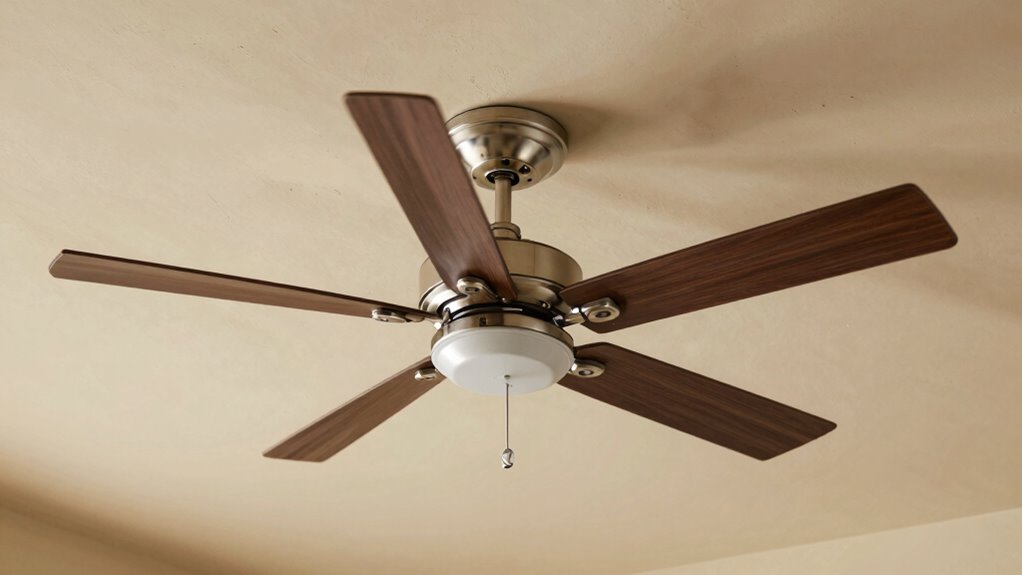
Many people make simple mistakes when setting their fan’s direction that can reduce comfort and efficiency. For example, using the wrong seasonal setting, ignoring ceiling height, or not adjusting blade direction can all cause issues. Being aware of these common errors helps guarantee your fan works at its best year-round. Additionally, understanding the rules of the road for ceiling fans ensures safe and effective operation. Proper fan placement is also crucial, as incorrect positioning can affect airflow and cooling efficiency. Recognizing how ceiling fan design impacts airflow can further enhance performance and comfort.
Incorrect Seasonal Settings
Are you aware that setting your ceiling fan in the wrong direction for the season can actually make your space less comfortable and increase energy costs? Incorrect seasonal settings disrupt the fan’s effectiveness, especially if you ignore the ideal fan blade angle and seasonal temperature. To avoid this, remember:
- During winter, set the fan to spin clockwise at a low speed to gently push warm air downward.
- In summer, switch to counterclockwise at a higher speed to create a cooling breeze.
- Always adjust the fan blade angle accordingly; a steeper angle works better for moving air in warmer months, while a flatter angle is suited for redistribution during colder periods.
- Understanding the importance of seasonal fan settings can help you optimize comfort and energy efficiency throughout the year.
- Regularly checking and maintaining your fan ensures it operates at the proper fan blade angle and settings, maximizing performance and savings.
Proper seasonal settings optimize comfort and reduce HVAC workload.
Overlooking Ceiling Height
Ceiling height considerably impacts how your fan should be set to maximize comfort and efficiency. If your ceiling is particularly high, your fan needs to be installed with adequate overhead clearance to guarantee proper airflow. Overlooking ceiling height can lead to improper fan placement, reducing its effectiveness. For tall ceilings, a longer downrod helps position the blades at the ideal height, around 10 to 12 inches below the ceiling. This prevents the fan from circulating air inefficiently or causing a draft. Conversely, low ceilings require fans with closer mounting options to avoid hitting the ceiling or obstructing overhead clearance. Failing to contemplate ceiling height can result in poor airflow, making your heating or cooling efforts less effective and increasing energy costs.
Ignoring Fan Blade Direction
Ignoring fan blade direction is a common mistake that can undermine your efforts to optimize airflow and comfort. When you set the wrong blade angle or overlook fan size, you limit the fan’s effectiveness. For example:
- Using a blade angle designed for cooling in winter reduces airflow, making your fan less efficient.
- Ignoring fan size means you might select a fan that’s too small for your room, resulting in poor circulation.
- Not adjusting blade direction seasonally prevents you from maximizing energy savings and comfort.
ceiling fan blade direction switch
As an affiliate, we earn on qualifying purchases.
As an affiliate, we earn on qualifying purchases.
Why Proper Fan Direction Saves Money and Keeps Your Home Comfortable
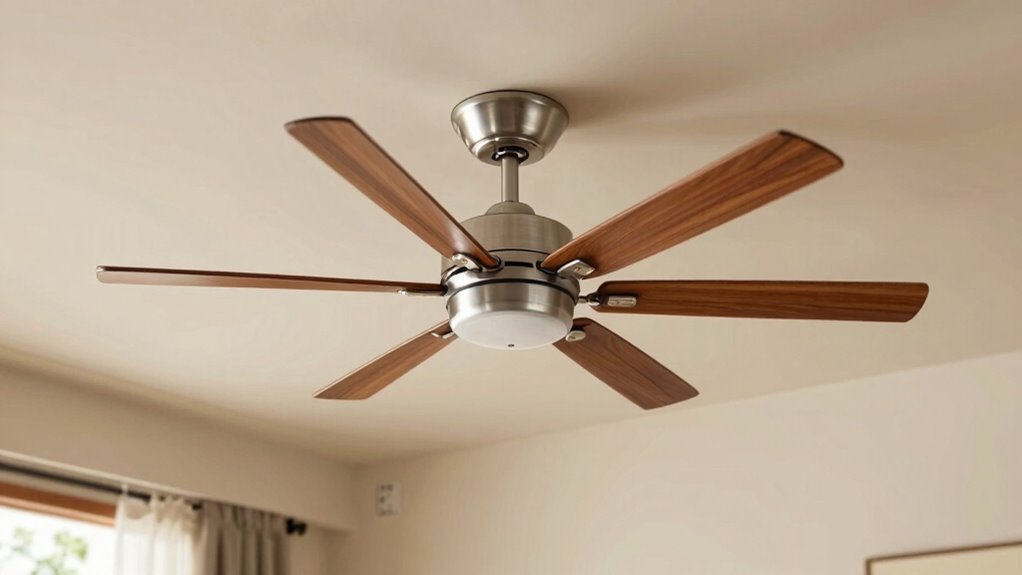
Proper fan direction can substantially reduce your energy bills while maintaining a comfortable home environment. When you set your ceiling fan to rotate clockwise in winter, it gently pushes warm air down, improving energy efficiency by reducing the load on your heating system. In summer, switching to counterclockwise creates a cooling breeze, allowing you to raise your thermostat without sacrificing comfort. This simple adjustment lessens your dependence on HVAC, saving money over time. Regular fan maintenance, including cleaning blades and checking the switch, ensures ideal airflow and prevents unnecessary strain on the motor. By being mindful of fan direction and keeping it well-maintained, you maximize energy savings and keep your home consistently comfortable year-round.
Troubleshooting Your Ceiling Fan If It’s Not Moving Air Properly
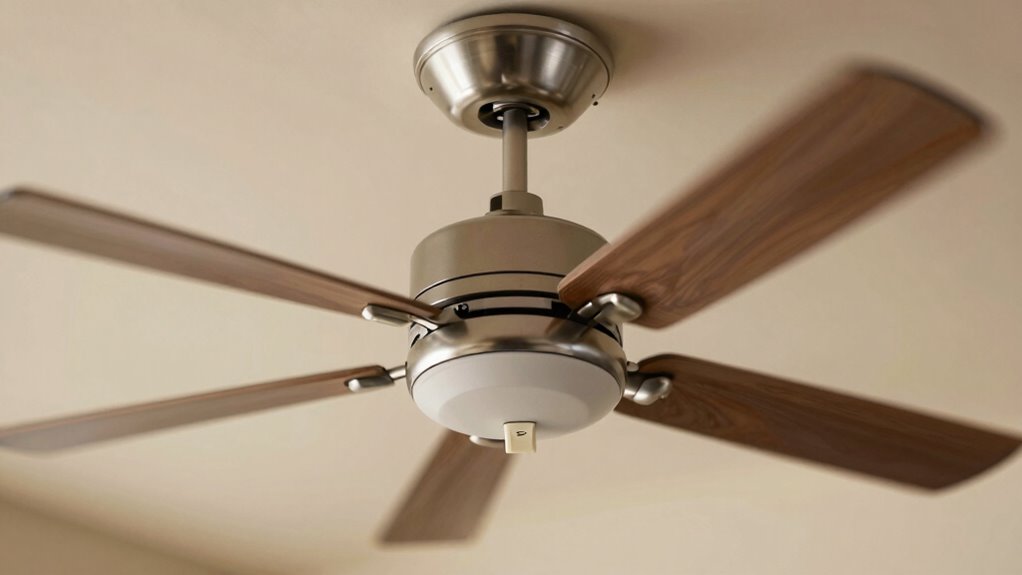
When your ceiling fan isn’t moving air effectively, the problem could stem from several common issues. First, check if the blades need cleaning, as dust and dirt can reduce airflow. Second, listen for motor noise; unusual sounds might indicate a worn-out or loose motor. Third, ensure the blades are balanced and securely attached, since wobbling can hinder proper airflow. Regularly cleaning the blades improves efficiency, while addressing motor noise prevents further damage. If the fan still isn’t circulating air properly, inspect for loose screws or bent blades. Fixing these issues can restore ideal airflow and help your fan work effectively without overburdening your HVAC system.
Tips to Keep Your Ceiling Fan Working Its Best Year-Round
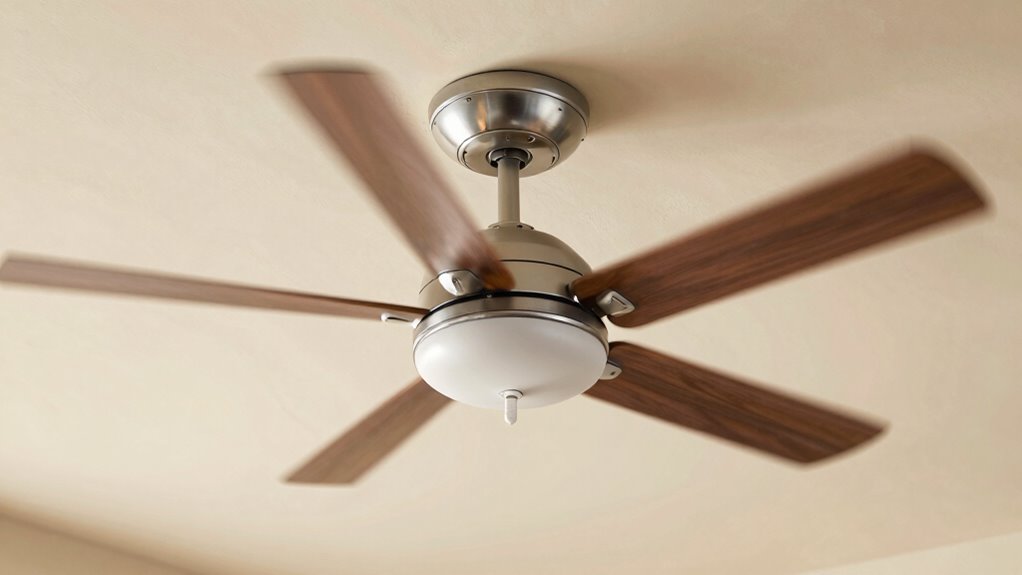
Keeping your ceiling fan in top shape throughout the year requires consistent maintenance and mindful usage. Regular fan blade maintenance is essential—clean the blades with a damp cloth to prevent dust buildup that can cause wobbling or noise. Check for any wobbling and tighten mounting screws as needed. Understanding your ceiling fan styles helps you choose the right model for your space, guaranteeing maximum performance and aesthetic appeal. If you have a modern, traditional, or contemporary style, tailor your maintenance routine accordingly. For instance, some styles have decorative blades that require gentle cleaning. Always turn off the fan before cleaning or adjusting, and consider balancing the blades periodically. Proper upkeep ensures your fan runs smoothly, efficiently, and quietly year-round.
Frequently Asked Questions
Can Ceiling Fan Direction Affect Room Temperature Perception?
Yes, changing your ceiling fan direction affects how you perceive room temperature. When you set it to rotate counterclockwise in summer, it creates a breeze that improves air circulation and enhances thermal comfort, making you feel cooler. In winter, switching it to clockwise helps distribute warm air evenly, maintaining comfort without adjusting your thermostat. Proper fan direction optimizes air flow and reduces your reliance on heating and cooling systems.
Is It Safe to Change Fan Direction While the Fan Is On?
It’s safe to change fan direction while it’s on, but you should do it carefully to guarantee fan safety. Many fans have a switch for quick direction changes, making it easy to adjust without turning off. Regular fan maintenance helps prevent issues. Just be gentle, and avoid forcing the blades. If you’re unsure, turn off the fan first—this reduces risk and keeps your fan in good shape.
How Often Should I Check My Ceiling Fan’s Rotation for Efficiency?
You should check your ceiling fan’s rotation during regular fan maintenance, ideally every few months. This helps you verify it’s operating efficiently and saving energy. If you notice uneven airflow or strange noises, it’s time to inspect the rotation more often. Regularly monitoring the fan’s rotation frequency keeps your HVAC system working less and maintains comfort. Don’t wait for problems—stay proactive with simple, routine checks.
Do Different Ceiling Fan Models Have Different Directional Settings?
Yes, different ceiling fan models have varying directional settings due to differences in fan blade design and motor settings. Some fans use a simple switch to change direction, while others might have more advanced controls. Always check your fan’s manual or look for a switch near the motor housing. Adjusting the direction based on your fan’s specific design helps improve airflow and energy efficiency, making your HVAC work less.
Can Improper Fan Direction Increase My Energy Bills?
Imagine a fan spinning against the flow, wasting energy instead of boosting your comfort. Improper fan direction can increase your energy bills by making your HVAC work harder. When you set your ceiling fan correctly, you maximize energy savings and fan efficiency, helping you stay cool in summer and warm in winter without extra costs. Properly aligned, your fan becomes a smart tool for reducing energy use and lowering bills.
Conclusion
Adjusting your ceiling fan’s direction can cut your cooling costs by up to 14%, according to energy experts. By switching the fan to spin clockwise in winter and counterclockwise in summer, you’ll keep your home comfortable year-round while saving money. Remember to change directions safely and avoid common mistakes. With these simple tips, your fan will work efficiently all year long, helping you stay cozy in winter and cool in summer without extra energy bills.
NFL season / tailgating Picks
team gear
As an affiliate, we earn on qualifying purchases.