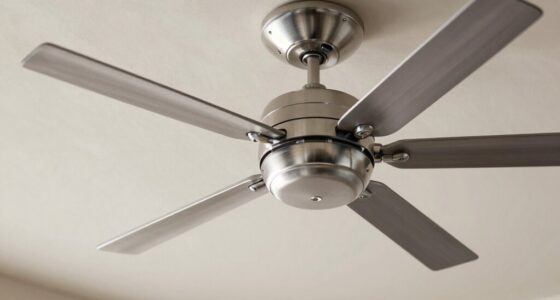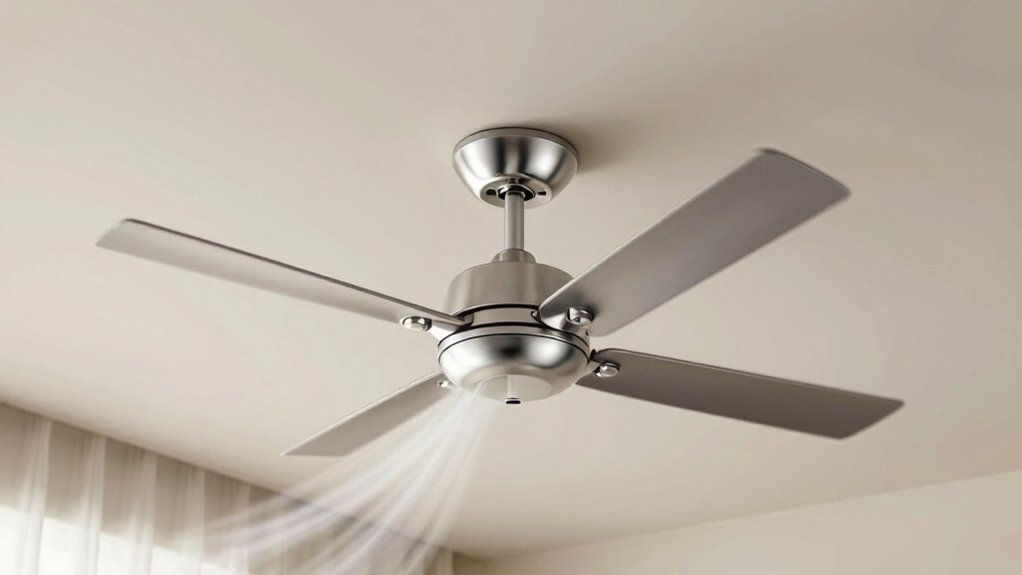
Ceiling fan CFM measures how much air a fan moves each minute, directly affecting how strong the breeze feels in your space. A higher CFM indicates more airflow and better cooling, especially in larger rooms. Picking the right CFM guarantees you get a comfortable breeze without wasting energy or creating excess noise. To understand how CFM impacts your comfort and which level suits your room size, keep exploring further details.
Key Takeaways
- CFM measures the volume of air a ceiling fan moves per minute, directly affecting how much breeze you feel.
- Higher CFM ratings indicate stronger airflow, which can create a noticeable breeze in a room.
- Selecting the right CFM for your room size ensures effective cooling without excessive noise or energy use.
- Properly matched CFM enhances comfort, airflow distribution, and overall fan performance.
- CFM is measured under standardized conditions, making it a reliable indicator of a fan’s airflow capacity.
Top picks for "ceil explain spec"
As an affiliate, we earn on qualifying purchases.
What Is Ceiling Fan CFM and Why Does It Matter?
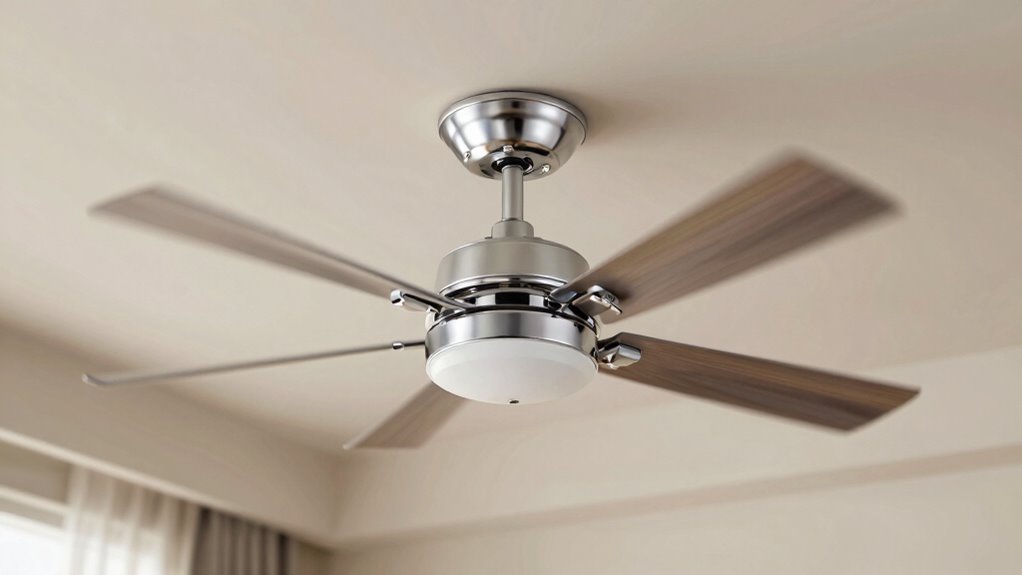
Understanding what ceiling fan CFM is helps you choose the right fan for your space. CFM, or cubic feet per minute, measures how much air a fan moves, directly impacting airflow efficiency and fan performance. A higher CFM indicates a more powerful fan that can circulate air more effectively, keeping you cooler. Knowing this number helps you match your fan to the room size—larger rooms need fans with higher CFM to ensure sufficient airflow. Conversely, smaller spaces may require fans with lower CFM to prevent excessive air movement. By focusing on CFM, you guarantee your fan performs at its best, providing a comfortable environment. Additionally, understanding airflow efficiency can help you select fans that save energy while maintaining comfort. Recognizing the relationship between CFM and room size ensures optimal airflow and energy use. Ultimately, understanding CFM lets you select a ceiling fan that maximizes airflow efficiency, making your space more comfortable and energy-efficient. Considering fan placement can further enhance airflow and overall comfort in your space. For example, proper placement of the fan can improve air circulation and reduce hot spots in the room.
How Is CFM Measured in Ceiling Fans?

To understand how CFM is measured in ceiling fans, you need to look at the testing methods used. These tests are conducted under standard conditions to guarantee consistent results. By knowing these techniques, you can better compare fan performance across different models.
Measurement Techniques Used
Ever wondered how manufacturers determine the airflow of a ceiling fan? They use specific airflow measurement techniques during testing procedures to guarantee accuracy. Typically, they place the fan in a controlled environment, often a test chamber that simulates typical room conditions. Instruments like an anemometer or flow hood are employed to measure the air velocity at different points around the fan blades. These readings are then integrated to calculate the total airflow, or CFM. Precise testing procedures ensure consistent results, accounting for factors like blade pitch and rotational speed. By standardizing these methods, manufacturers can reliably compare fan performance and provide consumers with trustworthy airflow data. This process ensures that the CFM ratings reflect real-world airflow capabilities.
Standard Testing Conditions
Standard testing conditions are essential for accurately measuring a ceiling fan’s airflow, or CFM. These conditions guarantee consistent results, allowing you to compare fans effectively. During testing, the fan operates at a specified speed, usually in a controlled environment free of drafts. This setup helps assess energy efficiency and noise levels accurately. To ensure reliable measurements, manufacturers typically follow these standards: 1. Maintain a consistent ambient temperature and humidity. 2. Use a calibrated anemometer placed at a fixed distance from the blades. 3. Test at specific fan speeds, usually low, medium, and high settings. Consistent testing procedures are vital to obtaining precise airflow data that reflects real-world performance. Additionally, adhering to these standards helps account for variations in environmental conditions, ensuring the data remains comparable across different testing scenarios. Proper testing protocols further enhance the accuracy and reliability of airflow measurements. Incorporating standardized testing environments also minimizes external influences, leading to more dependable results. Moreover, controlling external factors such as airflow disruptions ensures the measurements accurately represent the fan’s true performance.
How Does CFM Impact Breeze and Comfort?

Have you noticed how some fans make the room feel cooler almost instantly, while others seem less effective? That’s largely due to CFM’s impact on airflow patterns. Higher CFM fans move more air, creating a stronger breeze that cools you directly and improves overall comfort. This airflow efficiency also depends on proper filter sizing and flow, ensuring the fan operates optimally. Proper fan placement can further enhance airflow and cooling efficiency throughout a space. Additionally, fans with the right CFM can be more energy-efficient—they circulate air effectively without needing to run at maximum speed all the time. Airflow optimization plays a crucial role in maximizing cooling performance and energy savings. When airflow is optimized, you get better cooling with less energy use. Optimizing airflow is essential for maximizing comfort and efficiency. So, choosing a fan with appropriate CFM ensures you feel a revitalizing breeze while also saving on energy costs, making your space more comfortable and efficient.
What CFM Should I Look for Based on My Room Size?
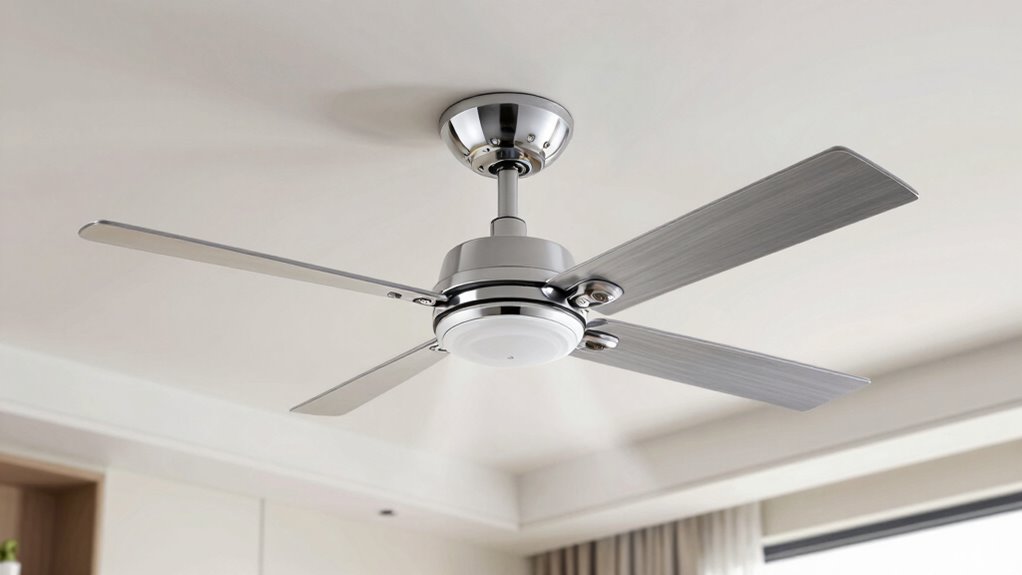
Choosing the right CFM depends on your room size to guarantee comfort. For small rooms, aim for 250-400 CFM, while medium spaces need 400-700 CFM. Large areas typically require fans with over 700 CFM to keep airflow effective. Additionally, considering the air circulation capacity ensures that the fan performs efficiently in your specific space. Proper airflow distribution can prevent hot spots and improve overall comfort.
Small Rooms: 250-400 CFM
Are you wondering what CFM rating is ideal for small rooms? For spaces up to about 400 square feet, a ceiling fan with 250-400 CFM provides ideal air circulation without wasting energy. This range helps you stay comfortable while maximizing energy efficiency. To choose the right fan, consider these tips:
- Aim for the lower end (250-300 CFM) if your room is well-ventilated or has ceiling height issues.
- Opt for higher CFM (350-400) if your room tends to feel stuffy or lacks natural airflow.
- Ensure the fan’s airflow matches your room size to balance air circulation and energy use effectively.
- Remember that soundproofing solutions can also enhance overall comfort by reducing noise disturbances, complementing your ventilation choices.
- Understanding airflow ratings can help you make more informed decisions to optimize both comfort and energy efficiency.
- Familiarizing yourself with large number conversions can assist in better understanding and comparing product specifications in the context of the Indian numbering system.
- Additionally, considering energy-saving features can further improve your fan’s efficiency and reduce electricity costs.
- Recognizing the impact on energy consumption of different CFM ratings can guide you toward more sustainable choices.
Selecting the right CFM enhances comfort and keeps energy costs down, making sure you feel a gentle breeze without overdoing it.
Medium Spaces: 400-700 CFM
For medium-sized rooms between 400 and 700 square feet, selecting a ceiling fan with 400-700 CFM guarantees effective air circulation without excessive energy use. To maximize comfort, focus on fan blade efficiency, which influences airflow and energy consumption. A well-designed blade ensures you get the right breeze without overworking the motor. Noise level considerations are also vital; look for fans with quiet operation features to avoid disrupting your space. Fans with efficient blades often operate more smoothly and quietly, making them ideal for living rooms, bedrooms, or home offices. Additionally, proper airflow management helps maintain a consistent temperature and enhances overall comfort. Choosing a fan within this CFM range is also important for energy efficiency, ensuring you get effective cooling without unnecessary power consumption. By choosing a fan within this CFM range, you balance airflow, energy efficiency, and noise, creating a comfortable environment without unnecessary disturbance.
Large Areas: 700+ CFM
When it comes to large rooms exceeding 700 square feet, a ceiling fan with 700+ CFM becomes essential for effective air circulation. Higher CFM fans boost airflow efficiency, ensuring you feel a invigorating breeze across the entire space. However, larger fans can sometimes generate more noise, so choosing models with quieter operation is important. Here are some tips:
- Look for fans designed for high airflow efficiency to maximize circulation without wasting energy.
- Check noise level ratings—aim for fans with low decibel levels for a quieter environment.
- Consider fans with adjustable speeds to balance airflow and noise based on your comfort needs.
A 700+ CFM fan helps evenly distribute air, maintaining comfort in big areas while keeping noise levels manageable.
Do Higher CFM Fans Always Perform Better?
Higher CFM (cubic feet per minute) ratings often suggest a fan can move more air, but that doesn’t automatically mean it will perform better in every situation. A higher CFM might improve airflow, but it can also impact energy efficiency and noise levels. For example, a powerful fan in a small room might be loud and waste energy, while a lower CFM fan could circulate air quietly and efficiently. Imagine this table:
| CFM Range | Performance Focus | Ideal Use Case |
|---|---|---|
| 500-800 | Moderate airflow, quiet | Small bedrooms or offices |
| 800-1500 | Strong airflow, some noise | Living rooms, larger spaces |
| 1500+ | Maximum airflow, loud | Warehouses, industrial spaces |
Choosing a higher CFM isn’t always better; consider your room size and noise tolerance.
How to Choose the Right CFM for Your Space

Choosing the right CFM for your space involves understanding how much airflow is necessary to keep the room comfortable without wasting energy or creating excessive noise. To do this effectively:
- Measure room size—larger rooms need higher CFM ratings to circulate air properly.
- Consider ceiling height—higher ceilings may require fans with increased CFM to reach all areas.
- Balance energy efficiency and noise levels—select a fan with a CFM that provides adequate airflow without making the room loud or wasting power.
FAQs About Ceiling Fan CFM
Are you wondering what ceiling fan CFM really means or how to select the right one for your space? CFM, or cubic feet per minute, measures how much air a fan moves, impacting both energy efficiency and noise levels. Higher CFM usually means better airflow but can also create more noise. To help you visualize, here’s a quick comparison:
| Fan Type | Typical CFM Range | Noise Level | Energy Efficiency |
|---|---|---|---|
| Small Room Fan | 1,000–4,000 | Low | High |
| Large Room Fan | 4,000–8,000 | Moderate | Moderate |
| Tower Fan | 2,000–5,000 | Low | High |
| Ceiling Fan | 3,000–10,000 | Varies | Varies |
| Industrial Fan | 10,000+ | High | Varies |
Choosing the right CFM balances airflow needs with noise and efficiency.
Frequently Asked Questions
Can a Fan With High CFM Be Too Powerful for Small Rooms?
Yes, a fan with high CFM can be too powerful for small rooms. You might notice excessive fan noise and feel uncomfortable, as the airflow is too strong for the space. For small rooms, choose a fan with a lower CFM to guarantee a comfortable breeze without noise or overpowering airflow. This way, you get effective cooling without making the room feel drafty or noisy.
How Does Blade Pitch Affect CFM and Airflow?
Blade pitch directly influences CFM and airflow efficiency. For example, increasing the blade angle from 12 to 15 degrees can boost airflow by 20%, making the fan feel more powerful. A steeper blade pitch captures more air, but if too steep, it can cause motor strain. You want a balanced blade angle that maximizes airflow without sacrificing efficiency or motor longevity, ensuring a comfortable breeze.
Is Higher CFM Better for Energy Efficiency?
Higher CFM doesn’t necessarily mean better energy efficiency. While it increases airflow, it can also lead to higher energy consumption if the fan uses more power to move larger volumes of air. To maximize airflow efficiency, look for fans with a high CFM rating but low energy use. This balance guarantees you get a comfortable breeze without wasting energy, making your ceiling fan both effective and energy-efficient.
Do Ceiling Fans With Adjustable CFM Exist?
Yes, ceiling fans with adjustable CFM do exist. You can find models with variable fan speeds that allow you to control airflow easily. This feature lets you customize the breeze to your comfort level, making the fan versatile for different seasons or preferences. By adjusting the airflow, you optimize comfort without sacrificing energy efficiency, ensuring you get the right amount of breeze whenever you need it.
How Often Should I Clean Fan Blades to Maintain Airflow?
You should clean your fan blades every 1-2 months to prevent dust buildup that can turn your breeze into a weak whisper. Neglecting blade maintenance lets grime cling to the blades, choking airflow and making your fan work harder. Regularly wiping down the blades keeps airflow strong, fan noise low, and your cooling experience invigorating. Don’t wait for dust to turn your fan into a sluggish, squeaky monster—stay ahead with consistent blade cleaning!
Conclusion
Understanding ceiling fan CFM helps you pick a fan that truly cools your space. Remember, it’s not always about the highest number but finding the right fit for your room size and comfort needs. Don’t just chase after the biggest CFM — sometimes, less is more. When you choose wisely, you’ll be able to enjoy a invigorating breeze without wasting energy. Keep this in mind, and you’ll be well on your way to a cooler, more comfortable home.