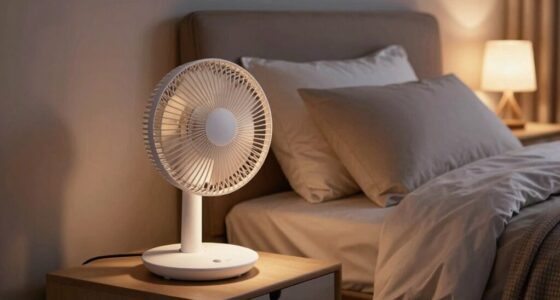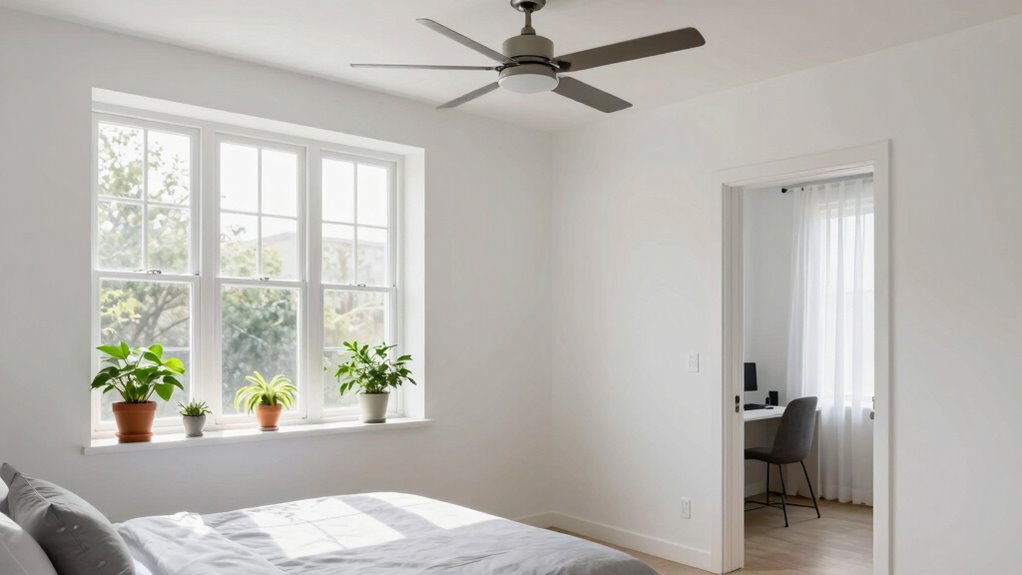

To reduce stale air in bedrooms, offices, and dens, you should improve ventilation by opening windows or using exhaust fans to let fresh air in. Incorporate air purifiers with HEPA filters to trap dust and pollutants, and add indoor plants like snake plants or pothos to naturally cleanse the air. Regularly monitor air quality with sensors, and keep filters clean. Continuing this approach helps guarantee continuous fresh airflow and better indoor air quality.

Get home appliances delivered free with Prime
- Fast, free delivery on millions of items
- Prime Video, Amazon Music and more included
- Member-only deals all year
Key Takeaways
- Increase natural ventilation by opening windows regularly to introduce fresh air.
- Use exhaust fans or air purifiers with HEPA filters to remove indoor pollutants and stale air.
- Incorporate indoor plants that promote air circulation and absorb toxins.
- Ensure proper mechanical ventilation or air exchange systems are functioning effectively.
- Monitor air quality levels and adjust ventilation or purification methods accordingly.

Stale air can make your indoor spaces feel stuffy and uncomfortable, but the good news is that you can improve air quality with simple steps. One effective solution is investing in an air purifier. These devices actively filter out dust, allergens, and other airborne pollutants, helping you breathe easier. When choosing an air purifier, look for models with HEPA filters, as they’re proven to trap tiny particles that contribute to stale air. Place your air purifier in the rooms where you spend the most time, such as bedrooms, offices, or dens, and run it continuously for the best results. Regularly changing or cleaning the filters guarantees it operates efficiently and maintains fresh air.
Another natural way to combat stale air is by incorporating indoor plants. Plants like snake plants, pothos, or peace lilies not only add a touch of greenery but also improve air quality. They naturally absorb toxins and release oxygen, creating a more invigorating environment. Plus, indoor plants can help maintain humidity levels, reducing dryness that often accompanies stale, stagnant air. Just make sure to choose plants that thrive indoors and are easy to care for, so they remain healthy and effective over time. Placing plants near windows or well-ventilated areas maximizes their air-purifying benefits. Ensuring good ventilation is essential in maintaining a steady flow of fresh air, which further reduces stale indoor environments. Proper air circulation can help disperse indoor pollutants more effectively and keep the air feeling fresher. Incorporating air quality measures, such as monitoring levels with sensors, can help you identify when additional steps are needed to restore a healthy indoor environment. Additionally, **proper ventilation** can prevent the buildup of pollutants and reduce indoor humidity, further enhancing air freshness. Adequate **air exchange** is also vital to keep indoor air clean and prevent the accumulation of pollutants over time.
As an affiliate, we earn on qualifying purchases.
Frequently Asked Questions
Can Plants Improve Indoor Air Quality Effectively?
Plants can definitely improve indoor air quality by filtering out pollutants and increasing humidity, which benefits your environment. Their natural plant benefits include absorbing toxins and providing oxygen, making the air fresher and more breathable. While they won’t completely eliminate stale air, adding a few well-chosen plants can make a noticeable difference, especially in small rooms like bedrooms, offices, or dens. So yes, plants are a simple, effective way to enhance air quality indoors.
How Often Should Windows Be Opened to Prevent Stale Air?
You should open your windows at least twice a day for about 10-15 minutes each time to maintain fresh air. Some might worry about energy loss, but consistent window timing helps establish effective ventilation routines that prevent stale air buildup. By making this a regular habit, you refresh indoor air, reduce indoor pollutants, and create a healthier environment. Incorporate these simple ventilation routines into your daily schedule for the best indoor air quality.
Do Air Purifiers Remove All Indoor Pollutants?
Air purifiers don’t remove all indoor pollutants because of their limitations in filtering certain particles and gases. Their pollutant removal efficiency varies depending on the filter type and device quality. While they effectively reduce dust, pollen, and some VOCs, they can’t eliminate everything, like odors or airborne viruses. To improve air quality, combine purifiers with good ventilation and regular cleaning, understanding their limitations to achieve the best results.
What Are the Signs of Poor Indoor Air Quality?
A picture is worth a thousand words, and poor indoor air quality shows clear signs. You might notice persistent odors, stuffiness, or lingering smells that air circulation fails to remove. You could also experience symptoms like headaches, sneezing, or fatigue. If your space smells off or feels stagnant, it’s time to improve ventilation and odor removal. Recognizing these signs helps you take action before indoor air quality impacts your health.
Are There Specific Ventilation Systems Recommended for Small Spaces?
For small spaces, you should consider ventilation techniques like using compact exhaust fans or air purifiers with HEPA filters. These systems improve air circulation without taking up much room, helping with space optimization. Additionally, installing a small, energy-efficient ventilation system or using window vents can boost airflow. Regularly opening windows and doors also enhances ventilation, ensuring fresh air circulates and stale air disperses effectively in your cozy space.
indoor air quality monitor sensor
As an affiliate, we earn on qualifying purchases.
As an affiliate, we earn on qualifying purchases.
Conclusion
To breathe fresh life into your space, remember that ventilation is your best ally. Open windows, use fans, or invest in air purifiers—each a means to release the stale air’s grip. Don’t let your rooms become silent witnesses to stagnation. Instead, fill them with vitality, with movement, with air that dances and refreshes. In the fight against stagnation, your actions turn the tide—because fresh air isn’t just a breath, it’s your sanctuary’s heartbeat.
As an affiliate, we earn on qualifying purchases.
kitchen exhaust fan for ventilation
As an affiliate, we earn on qualifying purchases.
As an affiliate, we earn on qualifying purchases.
NFL season / tailgating Picks
team gear
As an affiliate, we earn on qualifying purchases.