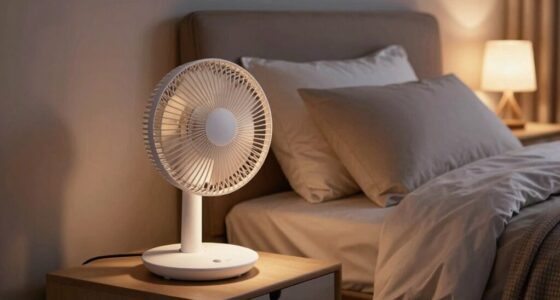
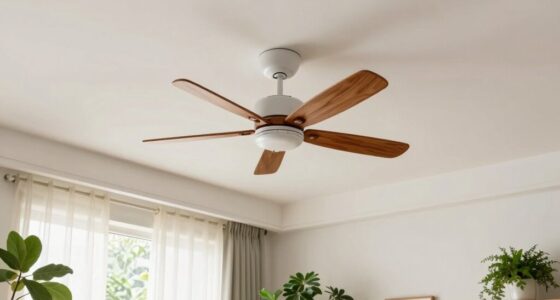
You need a different airflow plan for big rooms because larger spaces have more complex air movements and tendency to stratify, creating dead zones and stuffiness. Small rooms allow quick, even air circulation with fewer vents, while big rooms require strategic placement of multiple vents and fans at various heights. Proper airflow guarantees better temperature control, reduces stagnation, and improves comfort. If you want to understand how to optimize airflow in large spaces, keep exploring these key strategies.
Open a free Amazon Business account
Business pricing, bulk buying and tax-exempt orders.
As an affiliate, we earn on qualifying purchases.
Key Takeaways
- Larger rooms have complex airflow patterns and stratification, requiring specialized planning to ensure proper ventilation.
- Small rooms achieve quick, even airflow with fewer vents, unlike big rooms needing strategic placement for effective circulation.
- Big spaces are prone to stagnation zones, necessitating multiple air inlets and outlets at different heights for uniform airflow.
- Ventilation methods effective in small rooms are insufficient for large rooms, which need tailored designs to prevent stuffiness.
- Proper airflow management in large rooms ensures temperature, humidity control, and overall occupant comfort and safety.

Big rooms require a different airflow plan than small ones because their size and volume considerably impact how air circulates and refreshes. When dealing with larger spaces, you can’t simply scale up the same ventilation methods used in smaller rooms. You find that air circulation patterns in big rooms are more complex, requiring strategic placement of vents, fans, and air inlets to promote even airflow. Without proper planning, large spaces can become stuffy, with poor air exchange leading to discomfort and potential health issues.
In smaller rooms, air moves quickly and evenly because the volume is limited, making it easier to achieve good ventilation efficiency with fewer vents or fans. But in larger rooms, the air tends to stratify, creating layers and dead zones where stale air lingers. To combat this, you need to design a system that encourages continuous airflow throughout the entire space. This often involves positioning multiple air inlets and outlets at different heights and locations, creating a flow that minimizes stagnation. The goal is to establish a pattern of air circulation that reaches all parts of the room without creating drafts or uneven air distribution.
In large rooms, strategic placement of vents and outlets ensures continuous, even airflow and prevents stagnant zones.
The key is understanding how air moves within large spaces and adjusting your ventilation system accordingly. For example, you might use a combination of high and low vents to promote vertical mixing, preventing air from settling at the top or bottom. Fans can be strategically placed to guide airflow along specific routes, ensuring that fresh air replaces stale air efficiently. Proper placement not only boosts ventilation efficiency but also helps control temperature and humidity levels, which are vital in large rooms used for gatherings, workspaces, or storage. Additionally, considering airflow patterns can help optimize the system for efficiency and comfort. Recognizing airflow dynamics is essential to designing an effective ventilation system for large environments.
Furthermore, understanding airflow behavior in large spaces can assist in predicting potential problem areas and adjusting your system preemptively. Incorporating airflow simulations during planning can provide valuable insights into how air will move and help identify possible dead zones before installation. Developing a comprehensive understanding of ventilation design principles can significantly improve the overall effectiveness of your system. Ultimately, your goal is to create a balanced airflow that keeps the entire space fresh, comfortable, and safe. Achieving this requires understanding the nuances of air movement in large environments and tailoring your ventilation system to fit those unique demands.
large room air ventilation system
As an affiliate, we earn on qualifying purchases.
As an affiliate, we earn on qualifying purchases.
Frequently Asked Questions
How Does Ceiling Height Affect Airflow Design?
Ceiling height greatly influences airflow design because taller ceilings require you to take into account airflow distribution differently. With higher ceilings, warm air rises, creating stratification, so you need to guarantee proper air circulation and mixing to maintain comfort. You might use higher or more strategically placed vents and fans to promote even airflow. This helps prevent hot or cold spots, ensuring the entire space maintains a consistent, comfortable temperature.
What Are Common Mistakes in Large Room Airflow Planning?
You often make the mistake of neglecting proper airflow zoning in large rooms, leading to uneven ventilation efficiency. Failing to segment the space causes air to circulate poorly, creating drafts or stagnant zones. Additionally, oversimplifying the airflow plan ignores the room’s complexity, decreasing overall ventilation efficiency. To fix this, implement strategic zoning and tailor your airflow distribution, ensuring consistent air quality and comfort throughout the entire large space.
How Do Temperature Variations Impact Airflow in Big Spaces?
Did you know that temperature variations can be as much as 15°F in large spaces? Temperature stratification and thermal layering greatly impact airflow, causing warm air to rise and cold air to settle. You need to design your airflow plan to minimize these effects, ensuring even temperature distribution. Proper ventilation strategies help manage these variations, improving comfort and energy efficiency in big rooms.
Can Portable Fans Improve Airflow in Large Rooms?
Yes, portable fans can improve airflow efficiency in large rooms. They help circulate air more evenly, reducing hot spots and stagnant areas. By strategically placing portable fans, you can enhance ventilation and make the environment more comfortable. Just make certain you select fans with sufficient power for the room size and position them effectively to maximize airflow coverage. This simple upgrade can considerably improve air circulation in big spaces.
What Safety Considerations Are Unique to Large Airflow Systems?
You must prioritize safety by adhering to ventilation standards specific to large airflow systems. Regularly inspect and maintain equipment to prevent malfunctions or hazards like carbon monoxide buildup. Guarantee proper air quality management by installing adequate sensors and alarms. Be mindful of airflow velocities to avoid drafts or discomfort. Proper training for staff on system operation and emergency protocols is essential, helping you maintain a safe, healthy environment in large spaces.
industrial ceiling fans for big rooms
As an affiliate, we earn on qualifying purchases.
As an affiliate, we earn on qualifying purchases.
Conclusion
In summary, understanding that larger rooms require a tailored airflow plan is key to maintaining comfort and air quality. Did you know that poor airflow in big spaces can increase indoor pollutants by up to 30%? By customizing your airflow strategy, you guarantee even air distribution, reduce energy costs, and create a healthier environment. So, don’t apply the same plan everywhere—your space’s size truly makes a difference in airflow needs.
multi-zone air vents for large spaces
As an affiliate, we earn on qualifying purchases.
As an affiliate, we earn on qualifying purchases.
airflow optimization fans for large rooms
As an affiliate, we earn on qualifying purchases.
As an affiliate, we earn on qualifying purchases.
Evergreen bestsellers Picks
bestsellers
As an affiliate, we earn on qualifying purchases.