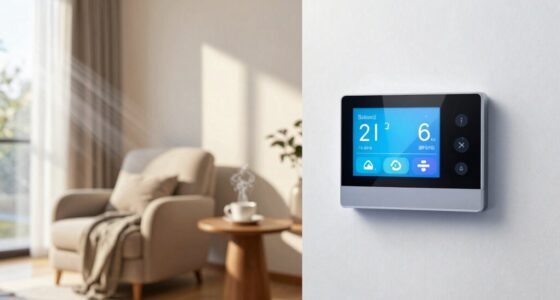
High humidity makes your home feel warmer because moisture in the air traps heat near your skin, making it harder for your body to cool down through sweating. When the air is heavy with moisture, it feels sticky and oppressive, even if the thermometer shows a comfortable temperature. This lingering heat can cause discomfort and a sense of increased warmth. Keep exploring how controlling humidity can help you stay cooler and more comfortable inside.

Get home appliances delivered free with Prime
- Fast, free delivery on millions of items
- Prime Video, Amazon Music and more included
- Member-only deals all year
Key Takeaways
- High humidity impairs the evaporation of sweat, reducing the body’s natural cooling process.
- Moist air traps heat near the skin, increasing the sensation of warmth even at lower temperatures.
- Elevated moisture levels make indoor air feel heavier and more oppressive, contributing to perceived heat.
- Poor ventilation in humid environments prevents moisture removal, intensifying the feeling of warmth.
- Humid conditions can cause the air to feel warmer because moisture affects how temperature is perceived.
Humidity plays a crucial role in how warm or cool your home feels, often impacting comfort more than the actual temperature setting on your thermostat. When moisture levels are high, your body’s natural cooling process—sweating—becomes less effective. This reduction in evaporative cooling makes the air feel warmer than it truly is, even if the thermometer reads a moderate temperature. Essentially, humidity influences your perception of thermal comfort, which is how comfortable you feel in your environment, regardless of the actual temperature.
When moisture levels are elevated, the air feels heavier and more oppressive. You might notice this during humid summer days or in areas with poor ventilation. The increased moisture in the air can trap heat near your skin, preventing your body from cooling down efficiently. As a result, you may feel sticky, sweaty, or just generally uncomfortable, even if your home isn’t particularly hot. This sensation of increased warmth isn’t just psychological; it’s rooted in how moisture interacts with your body’s cooling mechanisms. Additionally, high humidity levels can lead to mold growth, which further impacts indoor air quality and comfort. Proper humidity management can help prevent these issues and improve overall indoor health.
In environments with high humidity, the air can also affect how your heating and cooling systems work. If the air is excessively moist, your air conditioner might struggle to reduce temperature effectively because it also has to dehumidify the space, which can lead to longer run times and increased energy consumption. This can cause your systems to work harder than necessary, resulting in higher utility bills. Conversely, in very dry environments, the body’s ability to cool itself is enhanced, making you feel cooler at the same temperature. This dynamic shows how essential controlling moisture levels is for maintaining a comfortable indoor climate. Furthermore, air circulation can influence humidity levels and overall comfort by promoting better airflow and moisture distribution throughout your home.
Controlling humidity isn’t just about comfort; it’s also about maintaining the right thermal environment. Too much moisture can lead to problems like mold growth and structural damage, while too little can cause dry skin and respiratory irritation. Therefore, balancing moisture levels through humidifiers or dehumidifiers helps you achieve ideal thermal comfort. When humidity is kept within a comfortable range—typically between 30% and 50%—your home feels more naturally comfortable, and your heating or cooling systems operate more efficiently. Proper ventilation also plays a key role in managing indoor humidity levels effectively.
In the end, understanding how humidity makes your home feel warmer than it is can help you make smarter decisions about managing moisture levels. By regulating humidity, you can improve your overall comfort, save energy, and protect your home from moisture-related issues. It’s a simple yet powerful way to influence how warm or cool your environment feels, beyond just adjusting your thermostat. Proper humidity control is essential for optimizing indoor climate comfort and energy efficiency.
As an affiliate, we earn on qualifying purchases.
Frequently Asked Questions
Can Humidity Levels Affect Indoor Air Quality?
Yes, humidity levels can affect indoor air quality. When humidity is high, it creates a perfect environment for indoor mold to grow, which can cause health issues. Additionally, excess moisture can trap allergens and irritants in the air, worsening allergies and respiratory problems. Maintaining balanced humidity helps reduce mold growth and keeps allergens and irritants at bay, ensuring healthier indoor air and a more comfortable living space.
How Does Humidity Influence Heating Costs?
Humidity can considerably raise your heating costs by affecting energy efficiency. When indoor moisture levels are high, your heating system works harder to maintain comfort, increasing energy consumption. For example, reducing humidity to ideal levels can cut heating bills by up to 15%. Proper moisture control not only improves comfort but also makes your heating more efficient. Keeping humidity in check helps your home stay warm without overburdening your heating system.
What Are Ideal Humidity Levels for Comfort?
You should aim for a humidity level between 30-50% for comfort. Humidity control within this range helps maintain a proper moisture balance, preventing your home from feeling too damp or dry. When humidity is too high, your home can feel warmer and stuffy, while low levels cause dryness and discomfort. Keeping it in this range guarantees a comfortable, healthy environment, reducing energy use and improving overall well-being.
Does Humidity Impact Furniture and Home Materials?
Humidity effects can profoundly impact your furniture and home materials. For example, high humidity levels might cause wooden furniture to swell and warp, while low humidity can lead to cracking and splitting. Maintaining balanced humidity is key to furniture preservation. If you don’t, the fluctuating moisture levels will weaken materials over time, damaging your belongings and reducing their lifespan. So, controlling humidity helps keep your home’s interior intact and looking great.
How Can I Measure Indoor Humidity Accurately?
To measure indoor humidity accurately, use a hygrometer, which is the best tool for this purpose. Make certain to calibrate it regularly, following the manufacturer’s instructions, to guarantee precise readings. Check the dew point, which indicates moisture levels, by noting where condensation might form. Proper calibration and monitoring dew point help you maintain ideal humidity levels, making your home more comfortable and protecting your furniture and walls from excess moisture.
As an affiliate, we earn on qualifying purchases.
Conclusion
So, next time your home feels warmer than the thermostat says, remember humidity’s role. It tricks your senses into feeling hotter, making you sweat more and feel uncomfortable. By controlling moisture levels, you can cool down your space naturally and save on energy bills. Isn’t it worth adjusting humidity levels to stay comfortable without cranking up the AC? Keep an eye on moisture, and you’ll enjoy a more balanced, cozy home year-round.
As an affiliate, we earn on qualifying purchases.
As an affiliate, we earn on qualifying purchases.
Fall yard work Picks
leaf blowers
As an affiliate, we earn on qualifying purchases.