
If your basement isn’t well-ventilated, it can cause musty odors, excess moisture, and mold growth, making the whole house feel damp, stale, and uncomfortable. Poor airflow traps humid air, leading to damage and health risks, while a lack of proper ventilation lets moisture spread upstairs. Installing exhaust fans, using dehumidifiers, and ensuring vents stay clear can make a big difference. Keep going to learn more about fixing this common issue and improving your home’s air quality.
Key Takeaways
- Poor basement ventilation causes moisture buildup, leading to musty odors that spread throughout the entire house.
- Inadequate airflow increases indoor humidity, making the whole home feel damp and uncomfortable.
- Mold and mildew growth in the basement can release spores, affecting indoor air quality throughout the house.
- Trapped humid air from the basement can cause paint damage, warping, and structural issues in upper floors.
- Insufficient ventilation allows moisture to circulate, creating a stale, stuffy atmosphere that impacts overall home comfort.

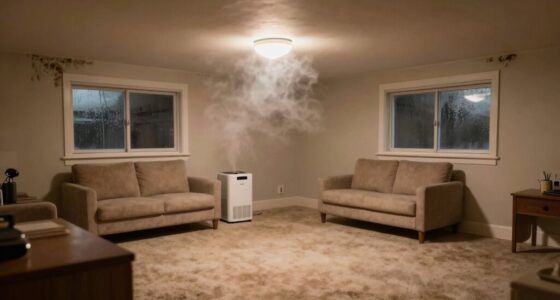
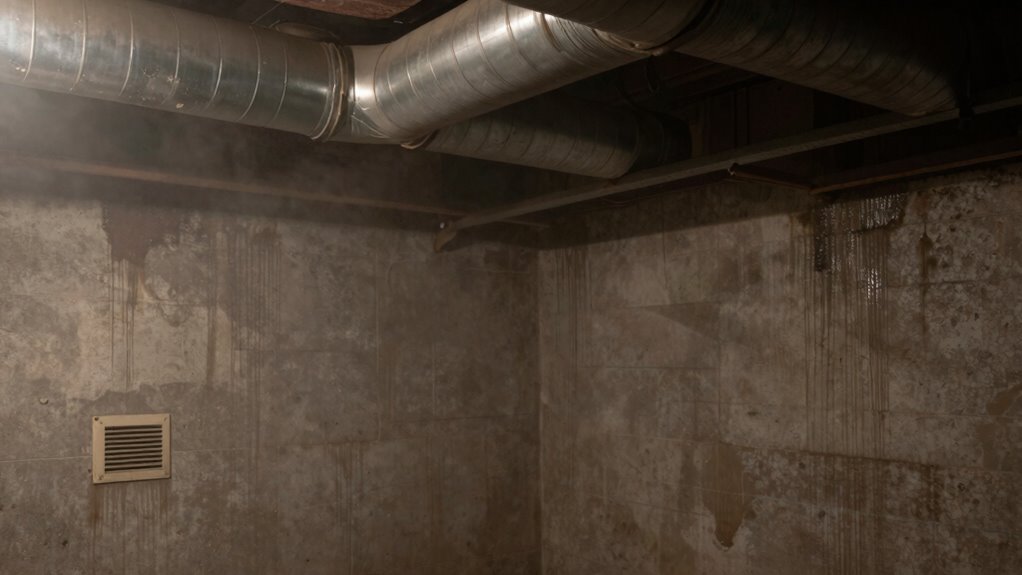
Have you ever noticed a damp, musty smell lingering in your basement? That scent is often a sign of more than just poor cleanliness. It points to underlying ventilation problems that allow moisture buildup, which can quickly spread throughout your home. When your basement doesn’t have proper airflow, humid air becomes trapped, creating an environment where mold, mildew, and bacteria thrive. This moisture buildup doesn’t stay confined; it seeps into walls, floors, and even finds its way into your living spaces, affecting your comfort and health.
Poor basement airflow leads to moisture, mold, and health risks spreading throughout your home.
You might not realize it, but your basement’s ventilation system plays an essential role in maintaining a healthy indoor environment. If vents are blocked, or if you rely solely on passive airflow, the stale, humid air has nowhere to escape. Instead, it recirculates, raising the overall humidity levels inside your house. Over time, this excess moisture can cause paint to peel, wood to warp, and even structural damage. It also creates a perfect breeding ground for allergens and mold spores, which can trigger respiratory issues or allergies for you and your family.
Addressing ventilation issues requires more than just opening windows here and there. It’s about implementing a reliable system that actively extracts moist air from your basement and replaces it with fresh outdoor air. Installing exhaust fans, ensuring vents aren’t blocked, or adding dehumidifiers can greatly reduce moisture buildup. If your basement has little to no natural airflow, mechanical solutions become essential. These devices work continuously to pull damp air out, helping to keep humidity levels in check and preventing the musty smell from returning. Proper air circulation is a key factor in maintaining a healthy indoor environment. Additionally, understanding how ventilation systems function can help you choose the most effective solution for your specific space.
You should also pay attention to signs of excess moisture, like water stains, condensation on windows, or a persistent damp feeling on walls and floors. These signs indicate that your ventilation isn’t doing enough, and moisture is accumulating faster than it can be removed. Improving airflow isn’t just about comfort; it preserves the integrity of your home and safeguards your health. When your basement’s air quality improves, so does the overall atmosphere of your entire house. Better ventilation reduces the risk of mold growth and keeps the indoor air fresh, making your home a healthier, more comfortable place to live.
In the end, tackling ventilation issues and moisture buildup in your basement isn’t complicated, but it’s vital. When you take steps to improve airflow, you’re not just eliminating that musty smell—you’re creating a more stable, healthier environment for everyone under your roof. Proper ventilation and purification solutions can significantly enhance indoor air quality and prevent long-term damage caused by excess moisture. Ensuring adequate airflow is also an important aspect of biodiversity preservation within your home, as it helps maintain a balanced environment that discourages mold and bacteria growth.
As an affiliate, we earn on qualifying purchases.
Frequently Asked Questions
How Can I Tell if My Basement Air Is Affecting My Entire Home?
You can tell if your basement air is affecting your entire home by noticing musty odors, excess humidity, or respiratory issues. Check ventilation strategies—poor ventilation often causes stale air to circulate. Also, monitor moisture control; high humidity or mold growth in the basement signals air quality problems. Improving ventilation and moisture management can help prevent these issues from spreading, ensuring your whole house feels fresher and healthier.
What Are the Health Risks of Poor Basement Air Quality?
Poor basement air is like a silent predator, risking your health daily. You might unknowingly expose yourself to basement mold spores, which can trigger allergies and respiratory issues, or radon exposure, increasing lung cancer risk. Breathing contaminated air weakens your immune system and worsens asthma. Protect your health by addressing these hidden dangers, ensuring your basement isn’t a gateway for harmful substances that threaten your overall well-being.
Are There DIY Solutions to Improve Basement Air Circulation?
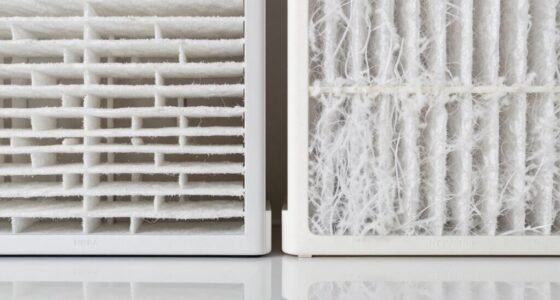
Yes, you can improve basement air circulation yourself. Start by placing air purifiers with HEPA filters to remove pollutants. Enhance ventilation by opening windows when weather permits, and consider installing exhaust fans or ventilation upgrades to promote airflow. Regularly clean these devices and ensure vents aren’t blocked. These simple DIY steps can greatly improve air quality, reducing musty odors and improving the overall comfort of your basement.
How Often Should I Test My Basement Air for Pollutants?
You should test your basement air for pollutants at least every three to six months to guarantee good air quality. Incorporate air purification and effective ventilation strategies to reduce pollutants and improve airflow. Regular testing helps identify issues early, so you can adjust your ventilation systems or add purifiers as needed. Consistent monitoring keeps your basement fresh, healthy, and prevents it from negatively impacting your entire home’s air quality.
Can Basement Air Issues Cause Long-Term Structural Damage?
Surprisingly, basement air issues can indeed cause long-term structural damage if ignored. Mold prevention becomes essential, as unchecked moisture promotes mold growth that weakens foundation materials over time. Proper ventilation techniques help control humidity and prevent deterioration. Ignoring these problems might seem minor now, but the silent damage can compromise your home’s stability in the long run. Address basement air quality promptly to protect your investment and guarantee a healthy living environment.
As an affiliate, we earn on qualifying purchases.
Conclusion
If you ignore basement air issues, the whole house can feel off, like an unseen weight dragging you down. Imagine a family who noticed persistent musty smells and stuffy air, only to discover poor basement ventilation was pulling dampness and odors upstairs. Once they improved airflow and sealed leaks, their home’s atmosphere instantly brightened, and everyone felt more comfortable. Don’t let basement problems quietly spoil your home’s comfort—address them before they affect your entire living space.
As an affiliate, we earn on qualifying purchases.
As an affiliate, we earn on qualifying purchases.