
Smart climate control starts with better sensor placement because it guarantees your system accurately monitors the environment, leading to more efficient heating and cooling. Proper placement prevents false readings caused by heat sources or drafts, helping you maintain consistent comfort. Position sensors at a central height and keep them away from windows and appliances. When you optimize sensor locations, your system works smarter, saving energy and money. Keep going to discover tips that make your setup even better.
Key Takeaways
- Proper sensor placement ensures accurate temperature readings, enabling effective climate adjustments.
- Strategic placement prevents interference from localized heat sources, improving system responsiveness.
- Even sensor distribution in large spaces allows for tailored zone control and energy efficiency.
- Correct height and central positioning help sensors reflect overall room conditions accurately.
- Regular maintenance and calibration maintain sensor accuracy, maximizing comfort and energy savings.
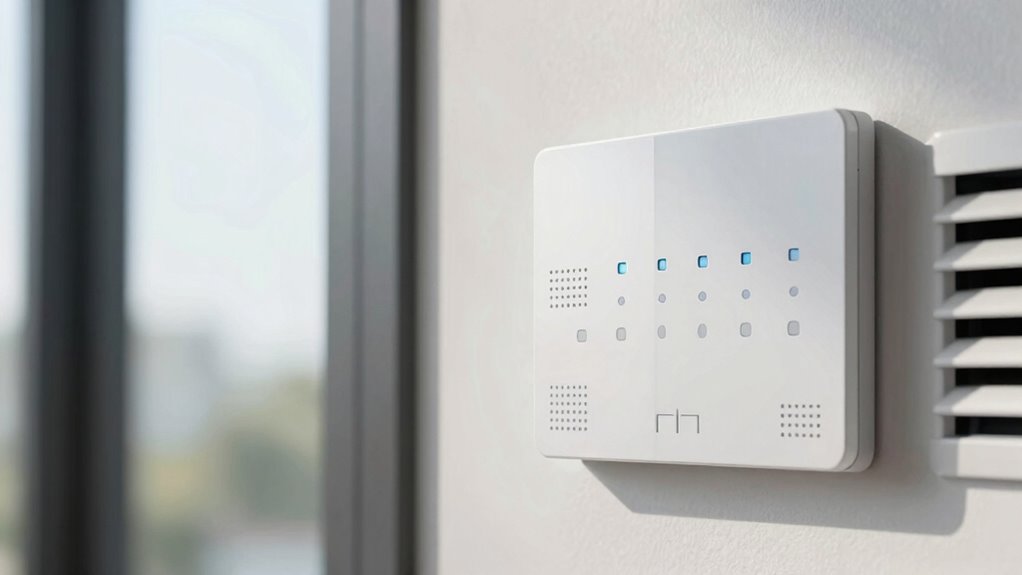
Smart climate control systems are revolutionizing how we manage indoor environments, but their effectiveness depends heavily on strategic sensor placement. When sensors are positioned thoughtfully, you enhance both energy efficiency and user comfort, making your HVAC system smarter and more responsive. Poor placement can lead to uneven temperatures, unnecessary energy consumption, and frustration. That’s why understanding where and how to position sensors is critical for maximizing the benefits of these advanced systems.
Strategic sensor placement boosts energy efficiency and comfort in smart climate control systems.
Your goal is to place sensors where they can accurately monitor the environment without being influenced by localized heat or cold sources. For example, avoid installing sensors near windows, vents, or direct sunlight, as these spots can give skewed readings that don’t reflect the room’s overall temperature. Instead, position sensors at a central location in the space, ideally at a height of about 4 to 6 feet, where they can detect the overall climate conditions more precisely. This placement allows the system to make more accurate adjustments, reducing energy waste and maintaining consistent comfort levels.
Another key consideration is the layout of your space. In larger or multi-zone environments, multiple sensors are essential. Distribute them evenly across different areas to ensure each zone receives tailored climate control. For instance, if you have a living room and a bedroom, placing sensors in both areas helps the system understand and respond to each space’s distinct needs. This targeted approach not only improves user comfort but also prevents the system from overworking, which can lead to higher energy bills. Proper sensor placement also contributes to efficient system operation, helping your smart climate control work at its best. Additionally, understanding sensor placement best practices can significantly improve the accuracy of environmental readings and system responsiveness. Being aware of airflow patterns and how they influence temperature distribution can further optimize sensor locations for better overall performance.
You also want to think about the placement of sensors relative to heat-producing appliances or electronics. Devices like ovens, computers, or lighting fixtures can cause localized temperature fluctuations, which might mislead the system into unnecessary heating or cooling. Position sensors away from these sources to ensure the readings reflect ambient conditions rather than temporary heat bursts.
Additionally, considering the placement of sensors in relation to the building’s insulation and airflow patterns can further enhance system accuracy. Proper placement reduces the likelihood of drafts or temperature stratification affecting sensor readings, ensuring the system responds appropriately across different zones. Incorporating knowledge of thermal dynamics can help optimize sensor locations for consistent climate management.
Finally, consider the importance of regular maintenance and calibration. Over time, sensors can drift or get covered with dust, affecting their accuracy. Keeping sensors clean and calibrated ensures your system continues to operate efficiently and comfortably. Proper sensor placement combined with regular upkeep maximizes energy savings and enhances user comfort, helping you get the most out of your smart climate control system.
smart thermostat sensor placement
As an affiliate, we earn on qualifying purchases.
As an affiliate, we earn on qualifying purchases.
Frequently Asked Questions
How Often Should Sensors Be Recalibrated for Optimal Performance?
You should recalibrate sensors at least once a year to guarantee ideal performance. Regular sensor calibration helps maintain accuracy, preventing inefficient climate control. Keep an eye on performance monitoring data; if you notice inconsistencies or unusual readings, recalibrate sooner. Proper calibration ensures your smart climate system responds correctly to environmental changes, saving energy and enhancing comfort. Consistent maintenance guarantees your sensors deliver precise data for effective climate management.
Can Sensor Placement Affect Energy Efficiency Significantly?
Yes, sensor placement can considerably impact energy efficiency. Proper placement guarantees accurate readings, reducing unnecessary heating or cooling. When you focus on sensor calibration and regular sensor maintenance, you keep your climate control system running efficiently. Poorly placed sensors may cause your system to overwork, wasting energy. By strategically positioning sensors and maintaining them, you optimize energy use, lower utility bills, and enhance overall comfort in your space.
Are There Specific Sensor Types Best Suited for Certain Environments?
Yes, certain sensor types are best suited for specific environments. For example, durable sensors are ideal for harsh conditions like industrial settings, while sensors resistant to environmental interference work well in areas with dust, humidity, or electromagnetic noise. Choosing sensors designed for your environment guarantees reliable readings, reduces maintenance, and improves overall energy efficiency. Proper sensor selection helps your smart climate system respond accurately, optimizing comfort and saving energy.
How Does Sensor Placement Impact Overall Climate Control Accuracy?
You might think sensor calibration alone guarantees perfect climate control, but placement actually matters more. Poor placement ignores environmental factors like drafts or sunlight, skewing readings. When sensors aren’t ideally positioned, your system misinterprets conditions, leading to inefficient adjustments. Proper placement guarantees accurate data collection, accounting for environmental factors, and improves overall climate control. Ironically, a simple shift in sensor position can make your smart system much smarter and more precise.
What Are Common Mistakes to Avoid When Installing Sensors?
When installing sensors, avoid common mistakes like ignoring placement guidelines, which can lead to inaccurate readings. Guarantee proper sensor calibration before installation to improve accuracy. Don’t place sensors near heat sources, vents, or direct sunlight, as these can distort data. Also, skip hasty installation; take your time to position sensors in ideal spots, making sure they accurately reflect your environment for smarter climate control.
temperature sensors for HVAC system
As an affiliate, we earn on qualifying purchases.
As an affiliate, we earn on qualifying purchases.
Conclusion
By carefully choosing where to place your sensors, you’re laying the groundwork for a more harmonious and comfortable environment. Think of sensors as gentle guides, subtly steering your climate system to respond just right—like a breeze whispering through leaves or a warm sunlight touch. When positioned thoughtfully, they help your home breathe easier, creating a space that feels naturally just right, all while quietly working behind the scenes to keep you perfectly comfortable.
multi-zone climate control sensors
As an affiliate, we earn on qualifying purchases.
As an affiliate, we earn on qualifying purchases.
best placement for temperature sensors
As an affiliate, we earn on qualifying purchases.
As an affiliate, we earn on qualifying purchases.