
ERVs play a vital role in balanced ventilation by efficiently exchanging stale indoor air with fresh outdoor air, reducing energy loss. They recover up to 80-90% of heat and moisture from exhausted air, helping maintain comfort and indoor air quality. Properly installed and maintained ERVs guarantee healthy airflow and energy savings. Want to discover how to optimize your ERV system for ideal ventilation? Keep exploring to learn more.
Key Takeaways
- ERVs facilitate balanced indoor air quality by exchanging stale indoor air with fresh outdoor air efficiently.
- They recover energy from exhausted air, reducing heating and cooling loads for balanced ventilation.
- Proper ERV placement and system integration ensure consistent airflow and optimal indoor environment.
- Regular maintenance of filters and heat exchange cores sustains ERV efficiency and air quality.
- ERVs support a healthy, comfortable indoor environment while conserving energy through effective ventilation.
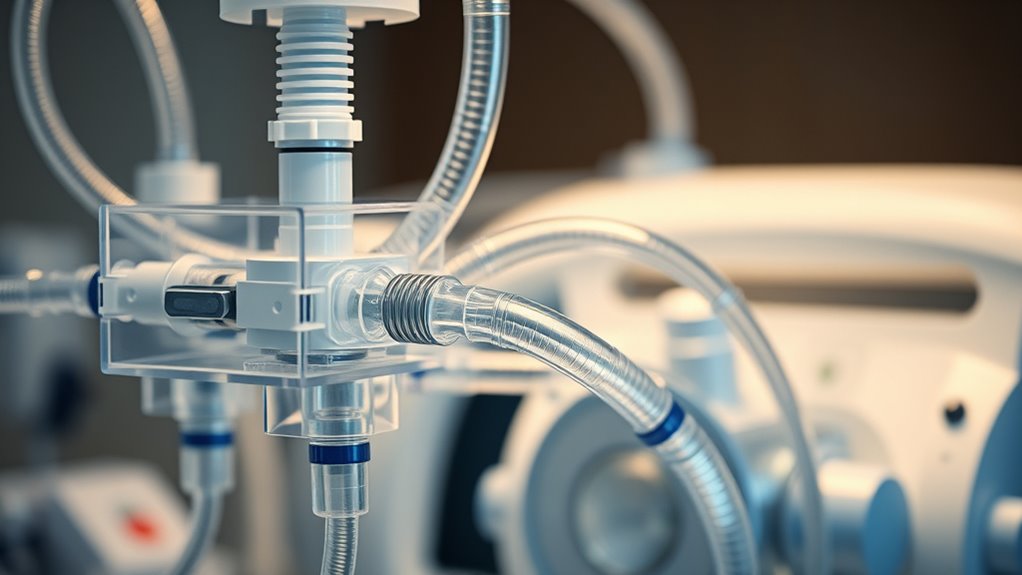
Energy Recovery Ventilators (ERVs) play a crucial role in modern indoor air quality management by efficiently exchanging stale indoor air with fresh outdoor air while conserving energy. When considering ERV efficiency, you’ll find that these systems are designed to recover a significant portion of the energy from outgoing air to pre-condition incoming air. This means you can maintain a comfortable indoor environment without overloading your heating or cooling systems, which saves you money and reduces energy consumption. High-efficiency ERVs can recover up to 80-90% of the energy in exhausted air, making them a smart investment for both residential and commercial spaces.
Energy Recovery Ventilators recover up to 90% of energy, ensuring efficient, cost-effective indoor air quality.
However, maximizing ERV efficiency depends heavily on proper installation. Installation considerations are critical because even the most advanced ERV won’t perform at its best if it’s poorly installed. You need to ensure the unit is properly sized for your space; an undersized or oversized unit will struggle to provide balanced ventilation and energy recovery. Placement is also essential—install the ERV in a location that allows for easy access for maintenance and minimizes duct runs. Proper sealing of ductwork prevents air leaks that can diminish efficiency and compromise indoor air quality. Additionally, you should consider the local climate when installing an ERV; in very humid or cold environments, specific models or additional features might be necessary to prevent issues like moisture buildup or heat loss.
Another key aspect of installation considerations involves integrating the ERV with your existing HVAC system. You want to ensure that controls and sensors are correctly set up so the ERV operates when needed without interfering with your primary heating or cooling systems. Proper ventilation zoning can also enhance overall efficiency, allowing you to target specific areas that require fresh air more than others. Proper installation practices are essential to ensure the ERV performs optimally and delivers the expected energy savings.
It’s worth noting that regular maintenance is essential to keep your ERV running at peak efficiency. Filters need to be checked and replaced periodically, and the heat exchange core should be cleaned according to manufacturer instructions. Neglecting these considerations can lead to reduced ERV efficiency, higher energy costs, and compromised indoor air quality.
Frequently Asked Questions
How Do ERVS Systems Compare to Traditional Ventilation Methods?
ERVS systems typically outperform traditional ventilation methods by enhancing air quality and providing better moisture control. They actively remove stale air and introduce fresh air efficiently, reducing indoor pollutants. Plus, ERVS units operate quietly, offering noise reduction benefits that make your environment more comfortable. Unlike standard systems, they balance ventilation and energy use, ensuring you get clean air without high energy costs. This makes ERVS a smarter, more effective choice for maintaining healthy indoor spaces.
What Maintenance Is Required for ERVS in Ventilation Systems?
You need to regularly replace filters in your ERVS to ensure ideal air quality and system efficiency. Additionally, you should calibrate the system periodically to maintain proper airflow and performance. Keep an eye on filter conditions and schedule calibration checks as recommended by the manufacturer. By performing these maintenance tasks, you help extend your ERVS’s lifespan and keep your ventilation system functioning smoothly.
Can ERVS Be Integrated With Existing Building HVAC Systems?
Yes, ERVS can be integrated with your existing building HVAC system, improving air quality and maintaining system compatibility. You’ll want to assess your current system’s design and capacity to guarantee seamless integration. It’s advisable to work with professionals who can help you modify controls and ductwork if needed, ensuring the ERV efficiently exchanges indoor and outdoor air without compromising your system’s performance or air quality standards.
What Are the Energy Efficiency Benefits of ERVS Technology?
Did you know ERVS technology can cut energy use by up to 40%? You’ll benefit from significant energy savings because ERVS recycles and filters indoor air efficiently, reducing the load on your HVAC system. This not only lowers your energy bills but also lessens your environmental impact by decreasing greenhouse gas emissions. By upgrading to ERVS, you make a smart choice for both your wallet and the planet.
Are ERVS Systems Suitable for All Types of Buildings?
ERVS systems aren’t suitable for every building type. Your building design and climate considerations play a big role in determining their effectiveness. If you have a well-insulated, airtight structure in a moderate climate, an ERV can improve energy efficiency and air quality. However, in extreme climates or buildings with complex designs, you might need additional or alternative ventilation solutions. Always assess your specific needs before choosing an ERV system.
Conclusion
In short, ERVs are absolutely game-changers in balanced ventilation, transforming indoor air quality faster than you can blink. By efficiently managing humidity and heat, they guarantee your space stays comfortable and healthy all year round. Without ERVs, you’d be battling air quality issues more intimidating than climbing Mount Everest. So, embrace ERVs and let them revolutionize your ventilation system—because your home deserves nothing less than the best airflow on the planet.