
Single-stage HVAC systems operate at full capacity or turn off, making them simpler and often less expensive initially, but they can cause temperature fluctuations and higher energy bills. Two-stage systems run at a lower capacity most of the time, offering better temperature control, improved humidity regulation, and energy savings over time—though they cost more upfront. To understand which system suits your needs and budget best, you’ll find key differences and benefits as you continue exploring.

Get home appliances delivered free — and shop member deals
- Fast, free delivery on millions of items
- Access to Prime Big Deal Days deals on October 6–7
- Prime Video, Amazon Music and more included
Key Takeaways
- Single-stage systems operate at full capacity or off, while two-stage units modulate between low and high speeds for better efficiency.
- Two-stage HVAC systems generally consume less energy and provide more consistent indoor temperature and humidity control.
- Single-stage units are simpler and cheaper to install but may cause temperature fluctuations in mild weather.
- Two-stage systems have higher upfront costs due to complex components but offer long-term energy savings and enhanced comfort.
- The choice depends on budget, climate, and comfort preferences, balancing initial investment versus ongoing operational benefits.
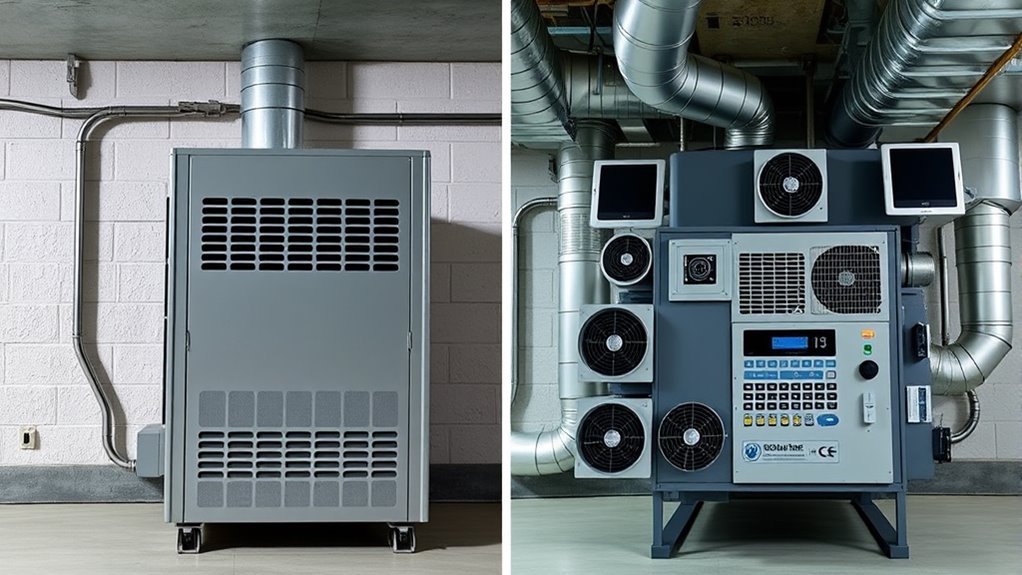
When choosing an HVAC system, understanding the difference between single-stage and two-stage units can help you make a smarter decision. These systems vary considerably in how they operate, which directly impacts energy efficiency and installation costs. A single-stage system operates at full capacity whenever it’s turned on. This means it either runs at 100% or is completely off, making it simple and typically less expensive upfront. However, because it runs at full power regardless of the actual cooling or heating needs, it can lead to higher energy bills over time. You might notice more fluctuations in temperature and humidity, especially during mild weather, since the system isn’t modulating its output to match the demand.
Single-stage HVAC systems run at full capacity, leading to higher energy bills and temperature fluctuations during mild weather.
On the other hand, two-stage HVAC systems are designed to run at a lower capacity most of the time, with the ability to switch to full power when necessary. This allows for more precise temperature control and improved energy efficiency. Because they modulate their operation, two-stage units often consume less energy, especially during moderate weather, helping you save on utility bills. Although these systems tend to have higher installation costs initially, the savings in energy bills over the long term can offset that difference. Plus, the consistent operation results in better humidity control and less wear and tear on the system, potentially extending its lifespan.
Furthermore, modern HVAC technology includes features that enhance system performance and reliability, making two-stage units a popular choice among homeowners seeking long-term value. When considering installation costs, single-stage units are generally less expensive upfront, both in terms of the equipment and installation labor. They are simpler to install because they have fewer components and less complex controls. Two-stage systems, however, require more sophisticated parts and controls, which can increase the complexity and labor involved in installation. Despite this, many homeowners find that the increased comfort and ongoing energy savings make the higher initial investment worthwhile.
If you prioritize lower upfront costs and don’t mind some fluctuations in comfort, a single-stage HVAC might suit your needs. But if you’re looking for enhanced energy efficiency, better indoor climate control, and long-term savings, a two-stage system could be the better choice. Remember, the right system for you depends on your budget, climate, and comfort preferences. Evaluating these factors will help you weigh the initial installation costs against potential energy savings and overall comfort improvements. Ultimately, understanding these differences ensures you make a well-informed decision that aligns with your home’s needs and your financial goals.
As an affiliate, we earn on qualifying purchases.
Frequently Asked Questions
How Do Maintenance Costs Compare Between Single-Stage and Two-Stage Systems?
You’ll find that the cost comparison shows two-stage systems often have higher upfront maintenance costs due to their complexity. However, they tend to have a lower repair frequency because they operate more efficiently and experience less wear and tear. Single-stage systems usually cost less to maintain initially but may need repairs more often over time. Overall, two-stage systems can save you money on repairs in the long run.
Which System Is Better Suited for Extremely Cold Climates?
In extremely cold climates, a two-stage HVAC system is better suited because it can adjust to lower temperatures more efficiently. You’ll benefit from improved humidity control and consistent comfort, even in humid conditions. Although it’s more complex to install, the system’s ability to operate at different stages helps save energy and keeps your home warmer. Overall, its adaptability makes it a smarter choice for harsh winter environments.
Are Two-Stage Systems More Energy-Efficient Than Single-Stage Systems?
Two-stage systems are more energy-efficient than single-stage ones because they adjust their operation based on demand, leading to significant energy savings. You’ll also notice improved system durability since running at lower capacity reduces wear and tear. This means your system can last longer and perform more reliably. If you want better energy efficiency and increased longevity, a two-stage HVAC system is a smart choice for your home.
How Does System Size Impact Performance in Each Type?
You’ll find that system size substantially impacts performance in both single-stage and two-stage HVAC systems. If the system capacity is too large, it may cycle on and off frequently, reducing efficiency and comfort. Conversely, an appropriately sized system optimizes efficiency by maintaining consistent temperature control. Two-stage systems, with their ability to operate at lower capacity, better adapt to size, enhancing efficiency optimization, especially in variable weather conditions, compared to single-stage units.
Can a Single-Stage System Be Upgraded to a Two-Stage System Later?
Yes, you can upgrade a single-stage system to a two-stage system, but it depends on system compatibility and upgrade feasibility. Often, the existing wiring and control systems need modifications, and some components may require replacement. It’s like transforming a basic car into a luxury vehicle—you’ll need to verify all parts work together seamlessly. Consult an HVAC professional to evaluate if your current setup can handle the upgrade without a full replacement.
As an affiliate, we earn on qualifying purchases.
Conclusion
Choosing between a single-stage and a two-stage HVAC system depends on your comfort needs and budget. While single-stage units are simple and affordable, they may leave you feeling less consistent. Two-stage systems, though pricier, offer smoother temperature control and energy savings. It’s like comparing a basic switch to a dimmer—one offers simplicity, the other flexibility. Decide which fits your lifestyle best, and enjoy a more comfortable, efficient home no matter what you choose.
As an affiliate, we earn on qualifying purchases.
HVAC system with humidity control
As an affiliate, we earn on qualifying purchases.
As an affiliate, we earn on qualifying purchases.
NFL season / tailgating Picks
team gear
As an affiliate, we earn on qualifying purchases.